TR
TR EN
EN

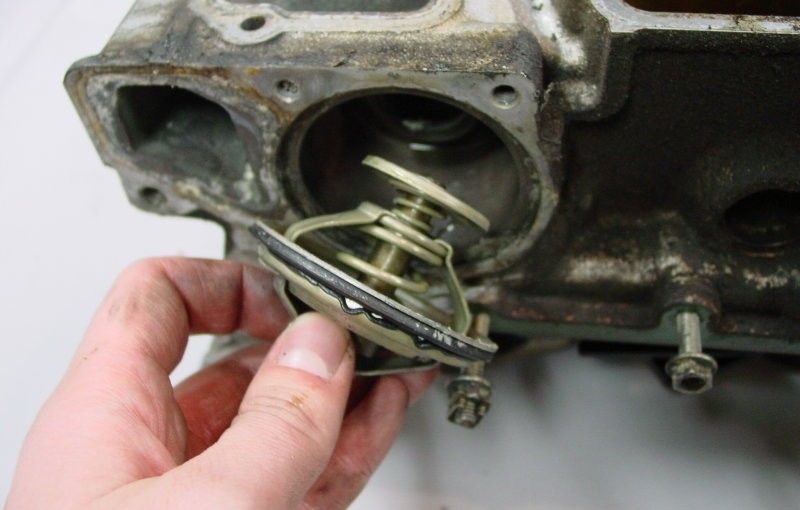
What Is a Thermostat? What Are the Symptoms of Thermostat Failure?
A car thermostat is a relatively small component, but it plays a major role in keeping the engine at the correct operating temperature. It controls the flow of coolant between the engine and the radiator, helping the engine warm up quickly after starting and preventing it from overheating once it reaches operating temperature.
When the thermostat becomes stuck open or closed, the engine may run too cold or overheat. In some cases, thermostat failure can also increase fuel consumption, reduce heater performance, trigger warning lights, and contribute to serious engine damage.
What Does a Thermostat Do?
The thermostat is part of the engine cooling system. Its main job is to regulate coolant circulation according to engine temperature.
When the engine is cold, the thermostat normally remains closed or mostly closed. This limits coolant flow to the radiator and allows the engine to reach its operating temperature more quickly.
As the coolant temperature rises, the thermostat gradually opens. Hot coolant can then flow toward the radiator, where heat is transferred to the outside air before the coolant returns to the engine.
This process helps maintain a relatively stable engine temperature under different driving conditions.
How Does a Car Thermostat Work?

Most conventional automotive thermostats operate using a temperature-sensitive wax element.
When the coolant is cold, the wax remains contracted and the thermostat stays closed. As temperature increases, the wax expands and pushes a mechanism that opens the thermostat valve.
The exact opening temperature varies depending on the engine and thermostat design. Therefore, there is no single temperature that applies to every vehicle.
Modern vehicles may also use electronically controlled thermostat systems. These can provide more precise temperature management and may work together with the engine control unit, cooling fans, and other thermal management components.
What Happens When the Thermostat Fails?
Thermostat problems generally fall into two major categories:
Thermostat stuck open:
Coolant circulates through the radiator too early or too much. The engine may struggle to reach its normal operating temperature.
Thermostat stuck closed:
Coolant circulation to the radiator is restricted. Engine temperature can rise rapidly, potentially causing overheating.
A thermostat does not always fail completely. It can also become slow, partially stuck, mechanically damaged, or operate outside its intended temperature range.
Symptoms of a Bad Thermostat
A failing thermostat can produce several different symptoms depending on how it has failed.
1. Engine overheating
One of the most serious symptoms is overheating.
If the thermostat remains closed when the engine is hot, coolant cannot circulate properly through the radiator. Engine temperature can rise significantly, especially during traffic, climbing, heavy acceleration, or hot weather.
An overheating engine should not be ignored. Continued operation at excessive temperature can damage the head gasket, cylinder head, pistons, or other engine components.
2. Engine takes too long to reach operating temperature
If the thermostat is stuck open, coolant can circulate through the radiator even when the engine is still cold.
As a result, the engine may take much longer than normal to warm up.
You may notice that the temperature gauge remains unusually low during normal driving, particularly in cold weather or at higher speeds.
3. Temperature gauge remains lower than normal
A thermostat stuck open can prevent the engine from reaching its designed operating temperature.
The temperature gauge may stay below its usual position or fluctuate differently from normal.
However, the gauge itself should not be used as the only diagnostic method because temperature sensors, wiring, instrument clusters, and coolant level can also cause unusual readings.
4. Temperature gauge rises rapidly
A thermostat that is stuck closed can cause the engine temperature to increase quickly.
If the gauge moves toward the overheating zone, or an overheating warning appears, the vehicle should be stopped safely as soon as possible.
Do not open the coolant reservoir or radiator cap while the engine is hot because the cooling system may be pressurized.
5. Poor cabin heater performance
The thermostat can also affect the vehicle's heating system.
If the engine remains too cold because the thermostat is stuck open, the heater may produce only lukewarm air, especially during cold weather.
Poor heater performance can also be caused by low coolant, air in the cooling system, a restricted heater core, a faulty heater control system, or other cooling-system problems.
6. Increased fuel consumption
An engine that operates below its intended temperature may not operate as efficiently as designed.
On modern vehicles, the engine control system uses coolant temperature information to adjust fuel mixture, ignition timing, emissions control, and other parameters.
If the engine remains too cold for an extended period, fuel consumption can increase.
However, increased fuel consumption alone does not prove that the thermostat is faulty.
7. Check Engine Light
Some thermostat-related problems can trigger the Check Engine Light.
A common example on certain vehicles is a coolant-temperature-related code such as P0128, which can indicate that the engine is not reaching the expected operating temperature within the expected time.
P0128 does not automatically mean that the thermostat itself is defective. The coolant temperature sensor, wiring, coolant level, cooling fan operation, or other components can also contribute to this type of fault.
8. Temperature fluctuates abnormally
A faulty thermostat can sometimes cause unstable coolant temperature.
The temperature may rise and fall more than expected, particularly during changes in driving conditions.
However, air trapped in the cooling system, low coolant level, a failing water pump, cooling fan problems, or a faulty temperature sensor can produce similar symptoms.
Can a Bad Thermostat Cause Overheating?
Yes.
A thermostat stuck closed or failing to open properly can restrict coolant flow to the radiator and contribute to overheating.
However, thermostat failure is only one possible cause of overheating.
Other possibilities include:
-
Low coolant level
-
Coolant leaks
-
Failed radiator fan
-
Faulty water pump
-
Blocked radiator
-
Air trapped in the cooling system
-
Damaged head gasket
-
Faulty coolant temperature sensor
-
Collapsed or restricted coolant hose
For this reason, replacing the thermostat without diagnosing the entire cooling system may not solve an overheating problem.
Can a Bad Thermostat Cause High Fuel Consumption?
It can.
If the thermostat remains open and the engine operates below its normal temperature, the engine management system may keep the engine in a warm-up strategy longer than intended.
This can affect fuel economy and emissions.
A faulty coolant temperature sensor can produce similar symptoms, so the sensor and live coolant temperature data should also be checked during diagnosis.
How Is a Thermostat Diagnosed?
Thermostat diagnosis should begin with the complete cooling system rather than immediately replacing the component.
A technician can check the coolant level, inspect for leaks, scan for diagnostic trouble codes, and monitor coolant temperature using a diagnostic scanner.
Live data is particularly useful. The coolant temperature can be monitored from a cold start while the engine warms up.
The technician can then compare the observed temperature behavior with the manufacturer's expected operating characteristics.
The upper radiator hose and other cooling-system components can also be checked for temperature changes, but this should be done carefully because coolant and components can become extremely hot.
In some cases, the thermostat can be removed and tested separately according to the manufacturer's specifications.
Thermostat vs. Coolant Temperature Sensor
These two components are often confused.
The thermostat is a mechanical or electronically controlled valve that regulates coolant flow.
The coolant temperature sensor, often called the ECT sensor, measures coolant temperature and sends information to the engine control unit.
A faulty temperature sensor can cause:
-
Incorrect temperature readings
-
Poor fuel economy
-
Hard starting
-
Cooling fan problems
-
Check Engine Light
-
Incorrect fuel mixture
-
Emissions-related problems
Therefore, a temperature-related fault code does not automatically mean that the thermostat needs to be replaced.
Can a Bad Thermostat Damage the Engine?
Yes, especially if it causes prolonged overheating.
Severe or repeated overheating can lead to:
-
Head gasket failure
-
Cylinder head distortion
-
Cracks in engine components
-
Engine oil degradation
-
Lubrication problems
-
Piston and cylinder damage
-
Severe engine failure
A thermostat stuck open is generally less immediately dangerous than one stuck closed, but it should still be repaired because prolonged operation at an incorrect temperature can affect fuel economy, emissions, lubrication conditions, and engine efficiency.
Should You Keep Driving With a Bad Thermostat?
It depends on the failure mode.
If the engine is overheating, continuing to drive is not recommended. Stop the vehicle safely and allow the engine to cool. If the temperature continues to rise or coolant is leaking, professional assistance may be necessary.
If the thermostat is stuck open and the engine simply runs too cool, the vehicle may still be driveable for a limited period, but the problem should not be ignored.
The risk is much higher when the engine is overheating than when it is operating below its normal temperature.
Why Does a Thermostat Fail?
Common causes include:
Age and wear:
The thermostat operates through repeated heating and cooling cycles.
Coolant contamination:
Rust, corrosion, deposits, or contaminated coolant can interfere with proper thermostat operation.
Incorrect coolant:
Using an unsuitable coolant or mixing incompatible coolants can contribute to cooling-system problems.
Overheating:
Previous overheating can damage cooling-system components.
Mechanical failure:
The valve, spring, housing, or temperature-sensitive element can become damaged.
Poor installation:
Incorrect installation or fitting the wrong thermostat can cause cooling-system problems.
Thermostat Replacement
When replacing a thermostat, the correct part must be selected according to the engine and vehicle specification.
Depending on the design, replacing the thermostat may also involve replacing a gasket, O-ring, thermostat housing, or other sealing components.
The cooling system must be filled with the correct coolant and properly bled according to the manufacturer's procedure.
After replacement, the engine should be brought to operating temperature and checked for leaks and abnormal temperature behavior.
Thermostat Failure Should Not Be Diagnosed by One Symptom
A low temperature gauge does not automatically mean a bad thermostat.
Likewise, overheating does not automatically mean the thermostat is responsible.
A proper diagnosis should consider the entire cooling system, including:
-
Thermostat
-
Coolant temperature sensor
-
Coolant level
-
Radiator
-
Cooling fan
-
Water pump
-
Hoses
-
Expansion tank and cap
-
Heater circuit
-
Cooling-system pressure
-
Wiring and electrical connections
The diagnostic scan data can be especially helpful when determining whether the engine is actually reaching its expected operating temperature.
Conclusion
A thermostat is a small but essential part of an engine's cooling system. It controls coolant circulation and helps the engine reach and maintain its intended operating temperature.
The most common thermostat failure symptoms include engine overheating, unusually low engine temperature, slow warm-up, poor cabin heating, abnormal temperature fluctuations, increased fuel consumption, and temperature-related Check Engine Light codes.
Because many other cooling-system components can produce similar symptoms, thermostat replacement should ideally follow a proper diagnosis rather than being based on a single symptom or fault code.