TR
TR EN
EN

What Is a Headlight Relay? What Are the Symptoms of Failure?
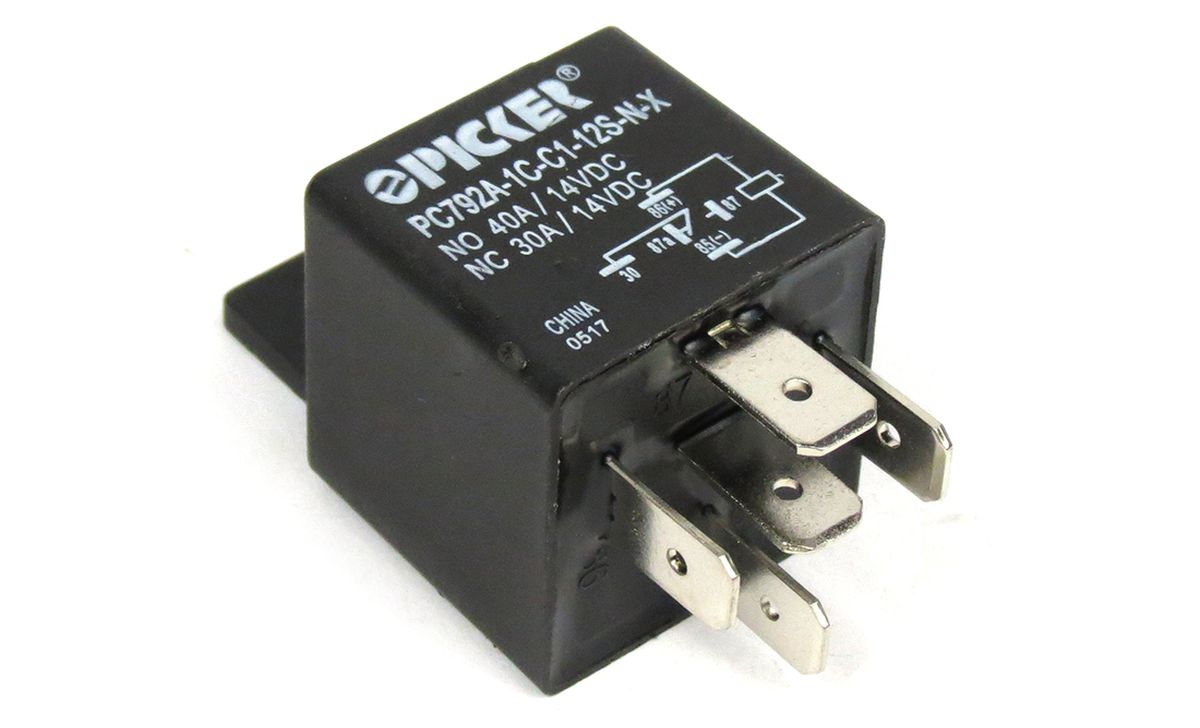
A headlight relay is an electrically controlled switch used to manage the power supplied to the vehicle's headlights. Instead of sending the full headlight current directly through the dashboard switch, steering-column switch, or control module, the system can use a relay to control a higher-current circuit safely and efficiently.
Although many modern vehicles control headlights through body control modules and electronic drivers rather than traditional relays, conventional headlight relays are still found in many vehicles and aftermarket lighting systems.
A faulty headlight relay can cause one or more headlights to stop working, operate intermittently, flicker, or remain switched on unexpectedly.
However, a headlight problem does not automatically mean that the relay is defective. The bulb, fuse, wiring, ground connection, headlight switch, control module, connector, or charging system can produce very similar symptoms.
How Does a Headlight Relay Work?
A relay essentially allows a low-current electrical signal to control a higher-current circuit.
A conventional relay contains an electromagnetic coil and switching contacts.
When the headlight circuit sends voltage to the relay coil, the coil creates a magnetic field. This moves an internal contact and connects power from the battery or fuse supply to the headlights.
The basic sequence is:
-
The driver switches on the headlights.
-
The control circuit sends a signal to the relay.
-
The relay coil becomes energized.
-
The internal contacts close.
-
Battery voltage reaches the headlight circuit.
-
The headlights illuminate.
When the headlights are switched off, the relay coil is de-energized and the contacts open.
This design reduces the amount of current that must pass through the headlight switch and associated control wiring.
Why Do Cars Use Headlight Relays?
Headlights can require significant electrical current, especially when using conventional halogen bulbs.
If all of that current were routed directly through a dashboard or steering-column switch, the switch and wiring would have to handle the full load.
A relay allows the control circuit to handle a relatively small current while the relay contacts handle the higher headlight current.
This can:
-
Reduce electrical load on switches.
-
Reduce voltage loss in the control circuit.
-
Improve reliability.
-
Protect delicate control components.
-
Allow higher-current lighting circuits to be controlled safely.
Modern vehicles may accomplish the same basic function electronically using a body control module or semiconductor driver instead of a traditional mechanical relay.
Where Is the Headlight Relay Located?
The location depends on the vehicle.
A conventional headlight relay may be located inside:
-
The engine-compartment fuse box
-
The interior fuse/relay box
-
A body control module assembly
-
A dedicated lighting control unit
-
An aftermarket relay harness
The fuse-box cover or vehicle wiring diagram usually identifies the relevant relay.
Some vehicles do not have a separate, replaceable headlight relay because the lighting circuit is controlled electronically.
This distinction is important when diagnosing a headlight fault.
What Are the Symptoms of a Bad Headlight Relay?
A failing relay can produce several different symptoms depending on how it fails.
Common symptoms include:
-
Headlights do not turn on.
-
One headlight circuit stops working.
-
Both headlights stop working.
-
Headlights work intermittently.
-
Headlights flicker.
-
Headlights turn off while driving.
-
Headlights remain on after being switched off.
-
High beam or low beam stops working.
-
Headlights work after tapping or moving the relay.
-
Relay makes abnormal clicking sounds.
-
Relay or fuse-box area becomes unusually hot.
The exact symptoms depend on the relay design and which internal component has failed.
Both Headlights Stop Working
If both headlights suddenly stop working at the same time, the relay is one possible cause.
However, it is not the only possibility.
Other potential causes include:
-
Blown fuse
-
Failed headlight switch
-
Control-module fault
-
Loss of power supply
-
Poor ground
-
Damaged wiring
-
Battery or charging-system problem
-
Connector failure
-
Incorrect aftermarket wiring
If both headlights fail simultaneously, checking the common power and control components is usually more logical than immediately replacing individual bulbs.
One Headlight Does Not Work
If only one headlight is not working, the relay may or may not be responsible.
Many vehicles use a common relay to supply both headlights, while the individual bulbs may have separate fuses or control circuits.
Therefore, a single headlight that stops working can be caused by:
-
Burned-out bulb
-
Loose connector
-
Corroded socket
-
Damaged wiring
-
Poor ground
-
Individual fuse
-
LED driver failure
-
Headlight assembly problem
The circuit design of the specific vehicle should be checked before blaming the relay.
Headlights Work Intermittently
An intermittent headlight problem is one of the classic signs of an electrical connection problem.
A relay with worn or burned contacts can work correctly at one moment and fail at another.
Heat and vibration can make the problem worse.
For example, a relay may operate normally when cold but lose electrical contact after the engine compartment becomes hot.
Intermittent operation can also be caused by:
-
Loose relay terminals
-
Corroded contacts
-
Damaged wiring
-
Loose connectors
-
Poor ground
-
Failing headlight switch
-
Body control module problems
-
Voltage fluctuations
Therefore, intermittent headlights should be diagnosed as a complete electrical circuit rather than assuming the relay is defective.
Headlights Flicker
Flickering headlights can occur when electrical power is repeatedly interrupted.
A relay with damaged or unstable contacts can cause this behavior.
However, flickering headlights can also indicate:
-
Alternator problems
-
Voltage regulator problems
-
Loose battery terminals
-
Poor ground connections
-
Battery problems
-
Damaged wiring
-
Headlight control-module issues
-
LED driver failure
If multiple electrical systems flicker at the same time, the charging system should be checked.
If only one lighting circuit flickers, the problem may be closer to that specific circuit.
Headlights Turn Off While Driving
A relay with failing contacts can occasionally interrupt the headlight power supply.
This can be particularly dangerous because the headlights may suddenly disappear while driving at night.
Other possible causes include:
-
Loose relay connection
-
Failing headlight switch
-
Broken wiring
-
Poor ground
-
Control-module failure
-
Overheated connector
-
Charging-system voltage problem
A headlight that shuts off while driving should be treated as a safety-related electrical fault and repaired promptly.
Headlights Remain On After Switching Them Off
A relay can also fail in the opposite direction.
If the internal contacts become stuck together, the headlight circuit may remain energized even after the control signal is removed.
Possible causes include:
-
Relay contacts welded together
-
Faulty headlight switch
-
Body control module problem
-
Short circuit
-
Incorrect aftermarket lighting installation
-
Control-system malfunction
If the headlights remain on continuously, they can eventually discharge the vehicle battery.
Can a Bad Relay Cause a Clicking Sound?
Yes.
A relay normally makes a small clicking sound when its contacts operate.
One click when the circuit is switched on or off can be completely normal.
Repeated or rapid clicking is more significant.
Possible causes include:
-
Low system voltage
-
Poor relay ground
-
Unstable control signal
-
Damaged relay
-
Faulty control module
-
Poor electrical connection
A clicking relay does not automatically mean that the relay itself is bad.
The control voltage and supply voltage should also be measured.
What Causes a Headlight Relay to Fail?
Relays can fail for several reasons.
Electrical contact wear
The internal contacts carry current whenever the headlights are operating. Over time, they can become worn, pitted, oxidized, or burned.
Excessive current
A circuit drawing more current than intended can overheat relay contacts.
This may happen because of an incorrect bulb, damaged wiring, a short circuit, or an electrical modification.
Heat
High temperatures inside the engine compartment can accelerate relay deterioration.
Moisture and corrosion
Water entering the fuse box or relay area can corrode electrical terminals and internal components.
Poor connections
Loose relay terminals create resistance and heat, which can damage the relay and surrounding wiring.
Aftermarket lighting modifications
High-power bulbs, LED conversions, HID systems, auxiliary lights, and poorly designed wiring modifications can place additional stress on the original lighting circuit.
Can a Blown Fuse Look Like a Bad Relay?
Yes.
A blown fuse can produce exactly the same basic symptom: the headlights do not work.
The fuse is designed to protect the wiring and electrical components from excessive current.
If a fuse has blown, the reason should be investigated before simply replacing it repeatedly.
A new fuse that blows immediately usually indicates an unresolved electrical problem.
Never install a higher-rated fuse to prevent it from blowing.
Doing so can allow excessive current to flow through wiring that was not designed to handle it, potentially causing wiring damage or even a fire.
Can a Weak Battery Cause Headlight Problems?
Yes, although a weak battery is not normally the first thing blamed for a single headlight failure.
Low battery voltage can cause:
-
Dim headlights
-
Slow electrical components
-
Relay chatter
-
Electronic control-module faults
-
Difficulty starting
-
Multiple warning lights
A failing alternator or voltage regulator can produce similar symptoms because the vehicle may not receive stable charging voltage while the engine is running.
If the headlights become brighter or dimmer with engine speed, the charging system deserves attention.
How Can You Test a Headlight Relay?
A relay can be tested in several ways.
The first step is to identify the relay and understand the wiring diagram.
Depending on the relay design, a technician may check:
-
Coil resistance
-
Coil power supply
-
Ground/control signal
-
Contact continuity
-
Voltage at the relay output
-
Voltage at the headlight connector
-
Voltage drop across the relay contacts
A multimeter can be useful for these measurements.
Some relays can also be temporarily swapped with another identical relay if the vehicle manufacturer permits it and the replacement relay has exactly the same specifications.
However, randomly swapping relays is not a substitute for proper diagnosis.
Voltage-Drop Testing Is Important
A relay can appear to work mechanically while still causing an electrical problem.
For example, the relay may click when energized, but its internal contacts may have excessive resistance.
This can reduce the voltage reaching the headlights.
A voltage-drop test under load can reveal this type of problem.
The technician can compare:
-
Battery voltage
-
Relay input voltage
-
Relay output voltage
-
Headlight connector voltage
If there is a significant voltage loss across the relay or its connections, the affected section of the circuit requires further investigation.
How Do You Know Whether the Relay or Bulb Is Bad?
The easiest approach is to determine whether power is actually reaching the headlight.
If the correct voltage reaches the bulb but the bulb does not illuminate, the bulb or headlight assembly becomes a stronger suspect.
If power does not reach the bulb, the technician should work backward through the circuit:
-
Bulb connector
-
Wiring
-
Fuse
-
Relay
-
Relay control signal
-
Headlight switch
-
Body control module
-
Power supply
-
Ground
This prevents unnecessary replacement of working components.
Do Modern Cars Still Use Headlight Relays?
Not always.
Modern vehicles increasingly use electronic body control modules to manage lighting.
Instead of a traditional mechanical relay, the module may use electronic switching components.
This allows the vehicle to control:
-
Low beam
-
High beam
-
Daytime running lights
-
Automatic headlights
-
Adaptive lighting
-
Cornering lights
-
Follow-me-home lighting
In these systems, there may be no conventional headlight relay that can simply be removed and replaced.
A diagnostic scanner may be needed to communicate with the lighting or body control module.
Can an OBD Scanner Detect a Headlight Relay Problem?
Sometimes, but not always.
A basic OBD scanner primarily focuses on emissions-related engine and powertrain systems.
A headlight relay failure may not generate a standard generic OBD-II trouble code.
However, modern vehicles can store body-control or lighting-related diagnostic faults.
A more advanced diagnostic scanner may be able to identify:
-
Lighting control faults
-
Communication errors
-
Output-stage faults
-
Short circuits
-
Open circuits
-
Control-module problems
-
Voltage-related faults
Even when no diagnostic code is stored, physical electrical testing remains important.
What About LED Headlights?
LED headlights change the diagnosis considerably.
An LED headlight may not use a conventional replaceable bulb or relay in the same way as an older halogen system.
Instead, the assembly may contain an electronic driver.
A failure can therefore be caused by:
-
LED driver
-
Control module
-
Headlight assembly
-
Wiring
-
Connector
-
Ground
-
Power supply
-
Body control module
Replacing a relay will not solve a problem caused by an integrated LED driver.
Can a Headlight Relay Cause a Battery to Go Flat?
Yes.
If the relay contacts become stuck closed, the headlights may remain on even after the vehicle is parked.
This can discharge the battery.
However, battery drain can have many other causes, including:
-
Interior lights
-
Trunk lights
-
Aftermarket alarms
-
Dash cameras
-
Infotainment systems
-
Faulty control modules
-
USB accessories
-
Stuck relays
-
Other electrical components
A battery repeatedly going flat should therefore be diagnosed with a proper parasitic-current test.
Is It Safe to Drive With a Bad Headlight Relay?
If the relay causes the headlights to stop working, driving at night or in poor visibility can be extremely dangerous.
Headlights are an important safety system, and legal requirements vary between countries.
If the headlights are intermittent, unexpectedly switching off, or not operating correctly, the vehicle should be repaired before normal driving.
If the problem occurs while already driving at night, reduce speed, move to a safe location, and avoid continuing the journey if proper lighting cannot be restored.
How Should a Headlight Relay Problem Be Diagnosed?
A logical diagnostic procedure is more reliable than immediately replacing the relay.
A technician can follow this sequence:
-
Confirm which headlights are affected.
-
Check whether the problem affects low beam, high beam, or both.
-
Inspect the bulbs or LED assemblies.
-
Check the relevant fuses.
-
Inspect relay terminals and connectors.
-
Check for corrosion or overheating.
-
Verify relay control voltage.
-
Check relay output voltage.
-
Measure voltage at the headlight connector.
-
Check the ground circuit.
-
Perform voltage-drop testing.
-
Inspect the headlight switch or control module.
-
Scan relevant body-control modules when appropriate.
-
Check the charging system if voltage fluctuations are present.
-
Inspect aftermarket lighting modifications.
This approach helps distinguish a faulty relay from a problem elsewhere in the circuit.
Should You Replace the Relay Immediately?
Not necessarily.
A relay is relatively inexpensive compared with many electronic control modules, but replacing parts without testing can still waste money.
For example, if a relay is repeatedly failing because the headlight circuit is drawing excessive current, installing another relay will only provide a temporary solution.
The underlying cause must be found.
Likewise, if the real problem is a poor ground or corroded connector, replacing the relay will not solve the fault.
What Is the Difference Between a Headlight Relay and a Headlight Fuse?
The two components have different purposes.
The fuse protects the circuit against excessive current. It is designed to open the circuit when current exceeds its specified limit.
The relay is an electrically controlled switch. It allows a low-current control signal to operate a higher-current lighting circuit.
A vehicle can therefore have both a fuse and a relay in the same headlight circuit.
A failed fuse usually stops power from reaching the protected circuit, while a failed relay can prevent the circuit from being switched on or can cause it to remain energized.
The Most Important Point
A headlight that does not work does not automatically mean the headlight relay is faulty.
The same symptom can be caused by a blown fuse, burned-out bulb, corroded connector, damaged wiring, poor ground, faulty headlight switch, body control module problem, LED driver failure, or charging-system issue.
A relay that clicks is not necessarily healthy, and a relay that does not click is not automatically the cause either.
The most reliable diagnosis is based on measuring voltage, checking the control signal, testing the relay contacts under load, inspecting wiring and grounds, and understanding the vehicle's actual lighting circuit design.
On older vehicles, the relay itself may be a straightforward replaceable component. On newer vehicles, however, the same function may be integrated into an electronic lighting or body control module.
Therefore, the correct repair starts with diagnosing the complete headlight circuit rather than replacing parts based solely on the symptom.