TR
TR EN
EN

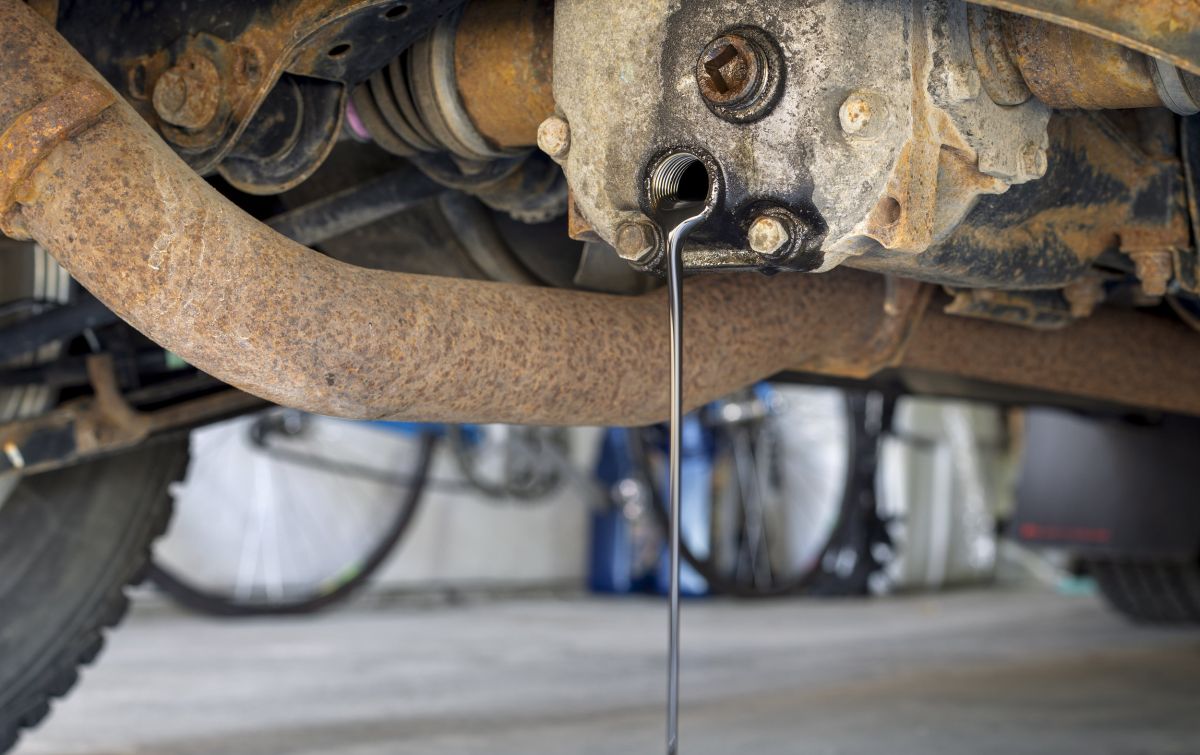
When Should Differential Oil Be Changed?
Differential oil is one of the most overlooked fluids in a vehicle. Engine oil and transmission fluid are usually replaced according to a clearly defined maintenance schedule, while differential oil is often forgotten until noise, vibration, or leakage appears.
The differential contains gears and bearings that operate under considerable mechanical load. The oil inside the differential reduces friction, carries heat away from the gears, and protects the gear surfaces from wear.
Although differential oil can last for a long time, it does not last forever. The correct replacement interval depends on the vehicle, differential design, oil specification, driving conditions, and whether the vehicle is regularly exposed to heavy loads.
What Does Differential Oil Do?
The differential transfers engine torque to the drive wheels while allowing the wheels on the same axle to rotate at different speeds when cornering.
Inside the differential are components such as:
-
Ring gear
-
Pinion gear
-
Side gears
-
Differential gears
-
Bearings
-
Shafts and other supporting components
These parts operate under significant pressure. Differential oil forms a protective lubricating film between the metal surfaces.
It also helps:
-
Reduce friction
-
Reduce gear wear
-
Control operating temperature
-
Protect against corrosion
-
Reduce noise
-
Carry away small wear particles
-
Protect bearings and gears
If the oil becomes degraded or contaminated, the differential may gradually become noisier and wear more quickly.
How Often Should Differential Oil Be Changed?
There is no single replacement interval that applies to every vehicle.
Depending on the manufacturer and differential type, replacement may be recommended at intervals such as:
-
Around 40,000–60,000 km
-
Around 60,000–100,000 km
-
Around 100,000 km or more
-
Only after a specified period of time
-
More frequently under severe operating conditions
Some manufacturers may describe the differential fluid as a long-life or lifetime fluid. However, "lifetime" does not necessarily mean that the oil can never deteriorate.
The manufacturer's specified fluid type and maintenance schedule should take priority over a generic mileage recommendation.
Does Every Car Have Differential Oil?
No.
Traditional rear-wheel-drive and four-wheel-drive vehicles generally have differentials containing gear oil.
However, the arrangement varies significantly between vehicles.
A front-wheel-drive vehicle may have a differential integrated into the transaxle or transmission. In this case, the differential may share fluid with the transmission or use a separate lubricant depending on the design.
All-wheel-drive and four-wheel-drive vehicles can have additional differential units, such as:
-
Front differential
-
Rear differential
-
Center differential
-
Transfer case
Therefore, "differential oil" does not always refer to just one fluid or one component.
When Should Differential Oil Be Changed Earlier?
The normal maintenance interval may not be appropriate if the vehicle is used under severe conditions.
Differential oil may need to be replaced earlier when the vehicle frequently experiences:
-
Towing
-
Heavy loads
-
Off-road driving
-
Deep mud
-
Sand
-
Snow
-
Steep terrain
-
Frequent high-temperature operation
-
Long-distance driving under heavy load
-
Repeated wheel slip
-
Water crossings
These conditions can increase heat, mechanical load, and contamination.
Vehicles used for towing or off-road driving may therefore require significantly more frequent differential fluid service than vehicles used primarily for normal highway driving.
Water Contamination Is a Serious Problem
Water is one of the most important reasons to replace differential oil early.
A differential that has been submerged or exposed to significant water during off-road driving can potentially allow water to enter through seals, breathers, or other openings.
Water contamination can reduce the oil's lubricating ability and promote:
-
Rust
-
Bearing damage
-
Gear wear
-
Corrosion
-
Premature differential failure
If a vehicle has been through deep water, the differential should be inspected even if the vehicle seems to operate normally.
In some cases, changing the differential oil after water exposure is inexpensive compared with repairing damaged gears and bearings.
What Are the Symptoms of Old Differential Oil?
Old or degraded differential oil does not always produce an obvious warning light.
Instead, mechanical symptoms may gradually appear.
Possible signs include:
-
Whining noise
-
Humming noise
-
Grinding sounds
-
Clunking during acceleration or deceleration
-
Increased mechanical noise
-
Vibration
-
Noise that changes when cornering
-
Oil leakage around the differential
-
Excessive heat
-
Metallic particles in the old oil
However, these symptoms do not automatically mean that the oil is the problem.
For example, a differential bearing or gear may already be worn. Changing the oil may reduce noise temporarily, but it will not repair mechanically damaged components.
What Does Differential Whining Mean?
A whining sound from the differential can have several causes.
Possible causes include:
-
Incorrect gear contact
-
Worn ring and pinion gears
-
Bearing wear
-
Incorrect gear backlash
-
Low oil level
-
Incorrect oil viscosity
-
Degraded lubricant
-
Previous improper differential adjustment
The timing of the noise can provide useful diagnostic information.
A noise during acceleration may have a different cause from a noise during deceleration or when the vehicle is coasting.
For this reason, differential noise should be diagnosed rather than assuming that an oil change will solve it.
Can Low Differential Oil Cause Damage?
Yes.
Low oil level can be more dangerous than simply having old oil.
A differential may lose oil because of:
-
Damaged seals
-
Gasket leakage
-
Housing damage
-
Loose or damaged plugs
-
Breather problems
-
Previous incorrect servicing
If the oil level becomes too low, gears and bearings may not receive adequate lubrication.
This can cause excessive heat, accelerated wear, noise, and eventually severe mechanical damage.
If you notice oil around the differential housing, the leak should be repaired rather than simply adding oil repeatedly.
What Happens If the Wrong Differential Oil Is Used?
Using the wrong lubricant can cause serious problems.
Differentials do not all use the same oil.
Depending on the design, the manufacturer may specify a particular:
-
Viscosity
-
Gear-oil specification
-
API classification
-
Additive package
-
Limited-slip differential formulation
For example, a limited-slip differential may require a specific lubricant or friction modifier.
Using an unsuitable oil can result in:
-
Increased noise
-
Poor limited-slip operation
-
Clutch-pack chatter
-
Accelerated wear
-
Incorrect differential operation
Therefore, differential oil should never be selected based only on viscosity.
The exact manufacturer specification is more important.
What Is Limited-Slip Differential Oil?
Limited-slip differentials, often called LSDs, use a mechanism that limits the speed difference between the drive wheels under certain conditions.
Some LSD designs use clutch packs that require a specific friction characteristic from the lubricant.
If the wrong oil is installed, the differential may produce:
-
Chattering
-
Shuddering
-
Jerking during tight turns
-
Unusual noises
This is one reason why the correct lubricant specification is especially important for limited-slip differentials.
Does Differential Oil Have a Filter?
Most conventional differentials do not have a replaceable oil filter like an engine or some automatic transmissions.
Instead, the oil remains inside the differential housing and lubricates the gears and bearings.
Some differentials may have magnetic drain plugs designed to collect fine metallic particles.
During a fluid change, the technician can inspect the drain plug and old oil for unusual contamination.
What Should Be Checked During a Differential Oil Change?
A proper differential service should involve more than simply draining and filling the housing.
The technician should check:
-
Oil level
-
Oil condition
-
Oil color
-
Unusual odor
-
Metallic particles
-
Drain plug condition
-
Filler plug condition
-
Seals
-
Differential housing
-
Breather
-
Signs of leakage
The amount and type of metallic debris can provide useful information about internal wear.
A small amount of fine metallic material may occur through normal wear, while excessive metal fragments or larger particles may indicate a mechanical problem.
Is Dark Differential Oil Always Bad?
Not necessarily.
Oil color alone cannot determine whether differential oil is still suitable.
The lubricant may darken over time because of heat, oxidation, normal wear, and contamination.
More important factors include:
-
Manufacturer's service interval
-
Oil level
-
Oil specification
-
Water contamination
-
Metallic debris
-
Operating conditions
-
Differential noise
A very dark fluid accompanied by a burnt smell or significant metallic contamination deserves further investigation.
Can You Change Differential Oil Yourself?
On some vehicles, differential oil replacement is relatively straightforward.
However, several important points must be considered.
The vehicle must be safely supported, and the correct oil must be used. The filler plug should normally be opened before completely draining the old oil. This prevents a situation where the old oil has been drained but the filler plug cannot be removed.
The differential should also be filled to the manufacturer's specified level.
Overfilling can be just as undesirable as underfilling.
What Happens If the Differential Is Overfilled?
Overfilling can cause the lubricant to aerate or escape through the breather or seals as the oil expands with temperature.
This can potentially create:
-
Oil leakage
-
Foaming
-
Increased internal pressure
-
Lubrication problems
The correct filling procedure and fluid level should therefore be followed rather than simply adding as much oil as possible.
Can Differential Oil Change Fix Differential Noise?
Sometimes, but not always.
If the problem is caused by:
-
Low oil level
-
Severely degraded oil
-
Incorrect lubricant
-
Contaminated fluid
correcting the fluid problem may reduce the noise.
However, an oil change cannot repair:
-
Worn bearings
-
Damaged gears
-
Incorrect gear backlash
-
Broken components
-
Damaged differential bearings
-
Incorrect ring-and-pinion adjustment
If a differential has already developed significant mechanical wear, changing the oil may not eliminate the noise.
Should Differential Oil Be Changed by Time or Mileage?
Both can matter.
Even when a vehicle has covered relatively few kilometers, differential oil can deteriorate over time because of:
-
Moisture
-
Temperature changes
-
Oxidation
-
Condensation
-
Contamination
For vehicles that are driven very little, a time-based service interval can therefore be relevant.
The best approach is to follow the manufacturer's mileage and time recommendations.
Do Electric Cars Have Differential Oil?
Some electric vehicles also use reduction gears and differential mechanisms that require specialized lubricants.
However, their drivetrain design is different from a conventional internal-combustion vehicle.
An electric vehicle may use a reduction gearbox and differential in a compact drive unit, and the manufacturer may specify a specialized fluid and service procedure.
Therefore, conventional differential-oil recommendations should not automatically be applied to an electric vehicle.
Why Is Differential Oil Often Forgotten?
One reason is that differential oil usually does not have a dashboard warning light.
Engine oil may trigger an oil-pressure warning, and modern transmissions may generate fault codes when problems occur.
A conventional differential generally does not have the same level of electronic monitoring.
As a result, the vehicle can accumulate significant mileage while the differential oil is gradually degrading without producing an obvious warning.
Regular maintenance is therefore important even when there is no warning light.
What Is the Best Differential Oil Change Interval?
There is no universal interval that applies to every vehicle.
For a normally driven passenger vehicle, the manufacturer's recommended maintenance interval should be the starting point. If the vehicle is used for towing, heavy loads, off-road driving, frequent high-temperature operation, or water crossings, the fluid may need to be changed considerably earlier.
A vehicle with multiple differentials or a transfer case may also require separate fluid services.
The most important points are:
-
Use the exact lubricant specification.
-
Check the manufacturer's maintenance schedule.
-
Inspect the oil level periodically.
-
Look for leaks.
-
Change the fluid after significant water contamination.
-
Consider shorter intervals for severe use.
-
Check the drain plug and old oil for abnormal metal debris.
-
Investigate differential noise instead of assuming the oil is the only problem.
Final Thoughts
Differential oil is a critical lubricant that protects gears and bearings from friction, heat, and wear. Although it generally lasts much longer than engine oil, it should not automatically be considered a lifetime fluid.
The correct replacement interval depends on the vehicle and differential design, but many vehicles fall somewhere within the broad range of approximately 40,000 to 100,000 km, while some manufacturers specify longer intervals or different service requirements.
Heavy towing, off-road driving, water exposure, high temperatures, and other severe conditions can justify more frequent changes.
Most importantly, do not choose differential oil based only on viscosity and do not assume that differential noise automatically means the oil needs changing. The correct specification, fluid level, differential design, and mechanical condition all need to be considered. A properly maintained differential can operate quietly and reliably for many years, while neglected or incorrectly lubricated components can suffer expensive gear and bearing damage.