TR
TR EN
EN

What Is a Wheel Lug Nut? Is It Safe to Drive With a Missing Lug Nut?
A wheel lug nut is one of the most important fasteners connecting a vehicle's wheel to the wheel hub. It may look like a simple metal nut, but its job is critical because it helps keep the wheel firmly attached to the vehicle while driving.
When a wheel is installed, the lug nuts are tightened to a specific torque specified by the vehicle manufacturer. The correct clamping force keeps the wheel securely pressed against the hub.
Driving with one missing lug nut does not necessarily mean the wheel will immediately come off, but it does reduce the designed clamping force and should not be treated as a normal or permanent condition.
The safety of driving with a missing lug nut depends on several factors, including the number of remaining fasteners, the wheel design, the vehicle, how far the vehicle needs to travel, and whether the remaining lug nuts are correctly tightened.
What Is a Wheel Lug Nut?
A wheel lug nut is a threaded fastener used to secure a wheel to the wheel hub or wheel studs.
Depending on the vehicle, the wheel may be attached using:
-
Wheel studs and lug nuts
-
Wheel bolts
-
Special locking wheel nuts
-
Center-lock wheel systems on some performance vehicles
In the most common system, threaded wheel studs extend from the hub and the wheel is secured using lug nuts.
The lug nut itself is not simply holding the wheel in place. When tightened correctly, it creates clamping force between the wheel and hub.
This clamping force is essential for maintaining a secure connection while the vehicle is moving.
What Does a Lug Nut Actually Do?
The main purpose of a lug nut is to generate and maintain the correct clamping force.
When the lug nut is tightened, the stud is placed under tension and the wheel is pressed firmly against the hub.
This allows the wheel and hub to work together as a properly clamped assembly.
The wheel fasteners must withstand forces generated by:
-
Vehicle weight
-
Acceleration
-
Braking
-
Cornering
-
Road impacts
-
Potholes
-
Uneven surfaces
-
Wheel vibration
For this reason, wheel fasteners are safety-critical components.
Is It Safe to Drive With One Missing Lug Nut?
It is not recommended to continue driving normally with a missing lug nut.
If a vehicle has four, five, or more wheel fasteners and only one is missing, the remaining fasteners may still be capable of holding the wheel temporarily.
However, this does not mean the vehicle is operating as designed.
The missing fastener changes the distribution of clamping force around the wheel. The remaining fasteners may experience greater loads, and the wheel may be more susceptible to movement if the assembly is not properly secured.
A missing lug nut should therefore be replaced as soon as possible.
Can a Wheel Fall Off Because of One Missing Lug Nut?
A single missing lug nut does not automatically mean the wheel will fall off.
However, the risk depends on the condition of the remaining wheel fasteners and the wheel assembly.
If the other lug nuts are correctly installed and torqued, the wheel may remain securely attached.
The situation becomes much more dangerous if:
-
More than one lug nut is missing
-
Remaining lug nuts are loose
-
A wheel stud is damaged
-
The wheel has been incorrectly installed
-
The wheel has been driven while loose
-
The wheel or hub mounting surface is damaged
-
The wrong lug nuts are being used
-
The wheel has excessive movement
Therefore, the number of missing fasteners is only one part of the assessment.
What Happens If Two Lug Nuts Are Missing?
Driving with two missing lug nuts is significantly more concerning.
The answer also depends on the total number of wheel fasteners.
For example, losing two fasteners from a five-lug wheel is a much more serious condition than losing one from a six-lug wheel.
With fewer fasteners securing the wheel, the remaining fasteners have to maintain the assembly with less evenly distributed clamping force.
If two or more fasteners are missing, the safest approach is to avoid driving the vehicle until the wheel has been inspected and the correct fasteners have been installed and torqued properly.
What If All the Lug Nuts Are Loose?
This is a much more dangerous situation than having one missing lug nut.
A loose wheel can move relative to the hub.
Once movement begins, the wheel mounting surfaces and fasteners can become damaged.
Possible consequences include:
-
Wheel vibration
-
Steering shake
-
Abnormal noises
-
Damaged wheel holes
-
Damaged wheel studs
-
Damaged hub
-
Increased fastener loosening
-
Loss of wheel attachment
A wheel that has been driven while loose should be inspected even after the lug nuts are tightened.
Simply tightening the fasteners may not be sufficient if the wheel or hub has already been damaged.
Can a Missing Lug Nut Cause Wheel Vibration?
Yes, although a missing lug nut is not the only possible cause of wheel vibration.
A missing fastener can change the clamping condition between the wheel and hub.
If the wheel is not sitting correctly against the hub, vibration can develop.
Wheel vibration can also be caused by:
-
Wheel imbalance
-
Bent wheel
-
Damaged tire
-
Incorrect tire mounting
-
Hub damage
-
Wheel bearing problems
-
Loose wheel fasteners
-
Incorrect wheel installation
Therefore, if vibration appears after a lug nut is lost, the entire wheel assembly should be inspected rather than assuming that balancing is the only problem.
Can Driving With a Missing Lug Nut Damage the Wheel?
Yes.
If the wheel is not properly clamped, movement can occur between the wheel and hub.
That movement can enlarge or deform the mounting holes in the wheel.
Depending on the wheel design, it may also damage:
-
Wheel studs
-
Hub threads
-
Lug nut seats
-
Wheel mounting surfaces
-
Brake components
A damaged wheel mounting hole may prevent the wheel from being correctly secured even after a new lug nut is installed.
Why Do Lug Nuts Sometimes Become Loose?
Wheel fasteners can become loose for several reasons.
Possible causes include:
-
Incorrect tightening torque
-
Failure to retorque after wheel installation
-
Dirty or damaged mounting surfaces
-
Rust or corrosion
-
Incorrect lug nut type
-
Damaged wheel studs
-
Damaged threads
-
Wheel movement
-
Incorrect installation
-
Improper use of impact tools
One important issue is incorrect torque.
A lug nut that is too loose may not provide sufficient clamping force.
A lug nut that is excessively tight can also create problems, including damaged threads, distorted components, and difficulty removing the wheel during an emergency.
What Is the Correct Lug Nut Torque?
There is no universal torque value for all vehicles.
The correct torque depends on the vehicle, wheel, wheel stud or bolt design, and manufacturer's specifications.
For this reason, you should use the torque specification provided for the specific vehicle.
A typical passenger car may have a wheel-fastener torque somewhere in the general range of approximately 90–140 Nm, but this is only a broad example and should not be used as a substitute for the manufacturer's specification.
Always check the vehicle owner's manual, manufacturer's service information, or an appropriate technical specification.
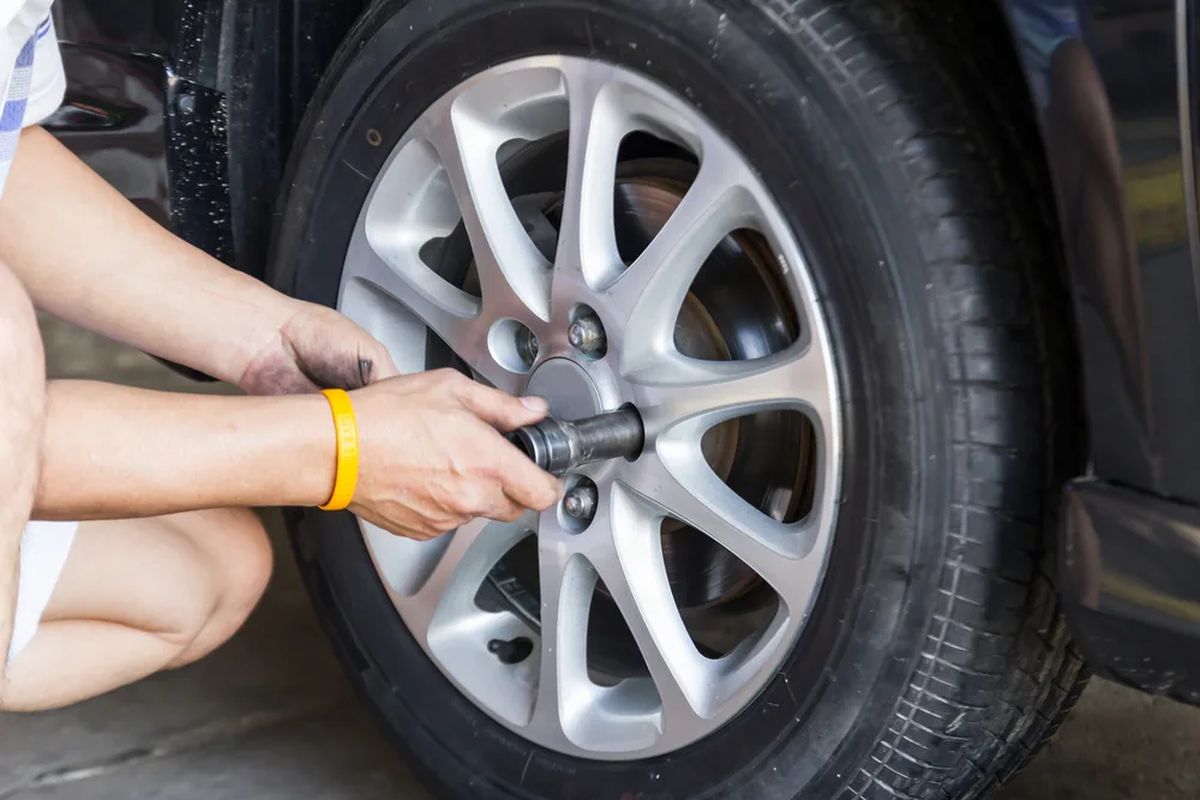
Should Lug Nuts Be Tightened With an Impact Wrench?
An impact wrench can be useful for removing or initially installing wheel fasteners, but it should not be relied upon as the final method of determining torque.
The final tightening should normally be performed using a properly calibrated torque wrench.
This is especially important because impact tools can produce significantly different torque depending on:
-
Tool setting
-
Air pressure
-
Battery condition
-
Socket condition
-
Fastener condition
-
Operator technique
The final torque should be verified according to the manufacturer's specification.
What Should You Do If You Notice a Missing Lug Nut?
If you discover a missing lug nut before driving, the safest option is to replace it before using the vehicle.
The replacement should be the correct type for that specific wheel and vehicle.
Do not assume that any lug nut with the same thread diameter will work.
Lug nuts can differ in:
-
Thread size
-
Thread pitch
-
Seat shape
-
Overall dimensions
-
Material
-
Washer design
-
Locking mechanism
For example, a conical-seat lug nut should not automatically be substituted for a ball-seat lug nut.
The seat must match the wheel.
Can You Drive to a Tire Shop With One Missing Lug Nut?
This depends on the vehicle and the condition of the remaining fasteners.
If one lug nut is missing but all remaining fasteners are correctly installed and securely torqued, a very short, slow trip to have the problem repaired may sometimes be possible.
However, this should not be interpreted as permission to continue normal driving.
Avoid:
-
High speeds
-
Long-distance travel
-
Heavy loads
-
Hard acceleration
-
Aggressive cornering
-
Sudden braking
-
Rough roads
-
Potholes
If any of the remaining lug nuts are loose, multiple fasteners are missing, the wheel is vibrating, or there is visible wheel movement, the vehicle should not be driven.
What If the Lug Nut Keeps Coming Loose?
If a replacement lug nut repeatedly becomes loose, there is probably an underlying problem.
Possible causes include:
-
Damaged wheel stud
-
Damaged threads
-
Incorrect lug nut
-
Incorrect wheel seat
-
Damaged wheel
-
Corrosion between mounting surfaces
-
Incorrect torque
-
Wheel movement
-
Hub problems
Simply replacing the lug nut repeatedly without investigating the reason it loosens is not a proper repair.
What Is a Locking Lug Nut?
A locking lug nut, often called a wheel lock, is designed to make unauthorized wheel removal more difficult.
It normally requires a special key or adapter for removal.
A vehicle may have one locking fastener on each wheel instead of standard lug nuts.
If a locking lug nut is lost, replacing it requires the correct replacement key or identification of the lock pattern.
A locking lug nut should never be replaced with an ordinary fastener unless the wheel manufacturer and vehicle specifications permit that configuration.
Lug Nut vs Wheel Bolt: What Is the Difference?
The terms are sometimes confused.
A lug nut is normally screwed onto a threaded wheel stud.
A wheel bolt passes through the wheel and screws directly into a threaded hub.
Many European vehicles use wheel bolts rather than traditional wheel studs and lug nuts.
The principle is similar: the fastener must generate the correct clamping force and the wheel must be securely mounted against the hub.
Therefore, if a vehicle uses wheel bolts, the same safety principle applies to a missing wheel bolt.
What Happens If You Drive With a Missing Wheel Bolt?
The situation is similar to a missing lug nut.
The remaining bolts may still secure the wheel temporarily, but the wheel is no longer secured using the full number of fasteners specified by the manufacturer.
If the wheel bolt is missing, it should be replaced with the correct specification as soon as possible.
Do not install an incorrectly sized or incorrectly seated bolt simply because its thread appears to fit.
Can a Missing Lug Nut Cause Brake Problems?
A missing lug nut does not directly operate the braking system, but a loose or improperly secured wheel can create secondary problems.
Wheel movement can affect the relationship between the wheel, hub, brake disc, and other components.
In severe cases, abnormal movement can contribute to:
-
Vibration during braking
-
Brake noise
-
Uneven component loading
-
Damage to the wheel or hub
If a vehicle has been driven with a loose wheel, the wheel mounting area and brake components should be inspected.
What Should Be Checked After Losing a Lug Nut?
After discovering a missing lug nut, the following areas should be checked:
-
Remaining lug nut tightness
-
Wheel studs
-
Lug nut threads
-
Wheel mounting holes
-
Lug nut seating surfaces
-
Wheel-to-hub contact surface
-
Hub condition
-
Signs of wheel movement
-
Wheel damage
-
Tire condition
If there is evidence that the wheel was loose while driving, simply installing a new lug nut may not be enough.
Can Rust Cause Lug Nut Problems?
Yes.
Rust and corrosion can affect the relationship between the wheel, hub, studs, and lug nuts.
Corrosion on the wheel mounting surface can prevent the wheel from sitting correctly against the hub.
Corroded or damaged threads can also affect tightening and clamping force.
This is why wheel mounting surfaces should be clean and free from excessive corrosion before installation.
However, lubricating wheel studs or threads should only be done when specifically permitted by the vehicle or fastener manufacturer. Changing the friction conditions can affect the actual clamping force produced by a given torque value.
How Often Should Lug Nuts Be Checked?
Wheel fasteners should be checked whenever the wheels are removed and reinstalled.
This is particularly important after:
-
Tire replacement
-
Seasonal tire changes
-
Wheel replacement
-
Brake work
-
Suspension repairs
-
Wheel alignment work
Some manufacturers and tire-service procedures also recommend checking or retorquing wheel fasteners after driving a short distance following wheel installation.
The correct procedure depends on the vehicle and wheel manufacturer.
Is a Missing Lug Nut an MOT or Inspection Problem?
A missing or insecure wheel fastener can be considered a serious safety issue during vehicle inspection.
Inspection requirements differ between countries, but wheel security is generally an important safety consideration.
A vehicle with missing, loose, damaged, or incorrectly fitted wheel fasteners may fail an inspection depending on the applicable regulations and severity of the defect.
It is therefore better to repair the problem rather than waiting until the next inspection.
Final Thoughts
A wheel lug nut is a small component, but it performs a critical safety function. Its primary purpose is to create the correct clamping force that securely connects the wheel to the hub.
Driving with one missing lug nut is not recommended as a normal practice. The remaining fasteners may still hold the wheel temporarily, but the wheel is no longer secured in the configuration intended by the manufacturer.
If one lug nut is missing and the remaining fasteners are correctly tightened, a short and careful trip to have the problem repaired may sometimes be possible. However, if multiple fasteners are missing, any fastener is loose, the wheel has visible movement, or vibration and unusual noises are present, the vehicle should not be driven.
Most importantly, replacing the missing fastener with the correct lug nut and the correct torque is essential. If the fastener became loose or disappeared while driving, the wheel, studs, threads, and mounting surfaces should also be inspected to determine why it happened in the first place.