TR
TR EN
EN

What Is a Battery Temperature Sensor? What Are the Symptoms of Failure?
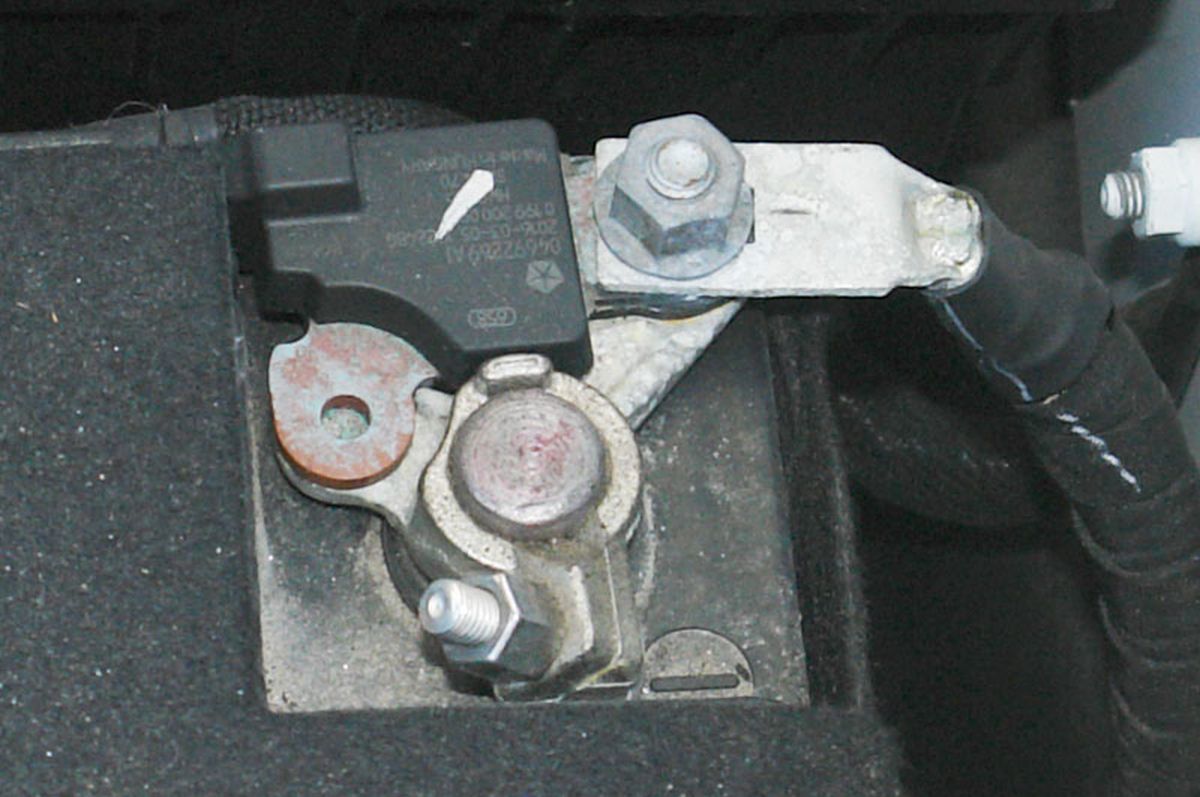
The battery temperature sensor is a component used in many modern vehicles to monitor the temperature of the battery or the area around it. The information provided by this sensor can be used by the vehicle's charging and energy-management systems to determine how the alternator should charge the battery.
Battery temperature is important because a battery does not behave the same way at all temperatures. Charging requirements can change significantly between a cold battery and a hot battery.
If the battery temperature sensor provides incorrect information, the charging system may operate incorrectly. This can result in battery charging problems, warning lights, starting difficulties, or premature battery deterioration.
What Does a Battery Temperature Sensor Do?
The primary function of the battery temperature sensor is to measure battery temperature and send this information to the vehicle's electronic control system.
Depending on the vehicle, the sensor may be:
-
Integrated into the battery monitoring sensor
-
Mounted on or near the battery
-
Located on the negative battery terminal
-
Installed inside a battery management module
-
Positioned near the battery housing
The exact design varies between manufacturers and vehicle models.
The sensor's information can be used by the charging system to adjust charging voltage according to battery temperature.
Why Is Battery Temperature Important?
Battery temperature has a direct effect on charging.
A battery that is cold may require different charging conditions than a battery that is already hot.
If the charging voltage is not properly adjusted for temperature, several problems can occur.
For example, excessive charging of a hot battery can accelerate battery degradation, while insufficient charging of a cold battery can result in poor battery performance.
The battery temperature sensor therefore helps the vehicle's charging system operate within appropriate conditions.
How Does a Battery Temperature Sensor Work?
Many battery temperature sensors use a thermistor.
A thermistor is an electronic component whose resistance changes according to temperature.
The vehicle's control module monitors the electrical signal from the sensor and uses it to estimate battery temperature.
As the temperature changes, the sensor's resistance changes accordingly.
The control module can then adjust charging-system operation based on the measured temperature.
The exact electrical characteristics depend on the sensor design and manufacturer.
Where Is the Battery Temperature Sensor Located?
The location varies considerably between vehicles.
On some vehicles, the battery temperature sensor is located directly on the battery terminal or integrated into a battery monitoring sensor.
On other vehicles, it may be mounted underneath the battery or close to the battery tray.
Some modern vehicles combine battery temperature measurement with a Battery Monitoring System (BMS) or intelligent battery sensor.
Because of these differences, the exact location should be determined using the vehicle's service information rather than assuming that every vehicle uses the same design.
Battery Temperature Sensor vs Battery Monitoring Sensor
These two terms are sometimes used interchangeably, but they do not always describe exactly the same component.
A battery temperature sensor primarily measures temperature.
A battery monitoring sensor can monitor several parameters, such as:
-
Battery voltage
-
Battery current
-
Battery temperature
-
Battery state of charge
-
Battery state of health
Modern vehicles may combine these functions into a single intelligent battery sensor.
This is particularly common in vehicles equipped with start-stop systems and sophisticated energy-management systems.
What Happens If the Battery Temperature Sensor Fails?
If the sensor fails, the vehicle may no longer have reliable information about battery temperature.
Depending on the vehicle's control strategy, the system may use a default temperature value or enter a protective charging strategy.
The exact symptoms vary between vehicles.
Possible symptoms include:
-
Battery warning light
-
Charging system warning
-
Check engine light
-
Start-stop system disabled
-
Battery not charging correctly
-
Overcharging
-
Undercharging
-
Difficult starting
-
Electrical system warnings
-
Reduced charging voltage
-
Increased battery wear
A sensor fault does not always cause all of these symptoms.
1. Battery Warning Light Comes On
One of the most noticeable symptoms can be a battery or charging-system warning light on the instrument cluster.
However, this warning does not necessarily mean that the battery temperature sensor itself has failed.
The same warning can be caused by:
-
Alternator failure
-
Weak battery
-
Loose battery connection
-
Damaged wiring
-
Faulty voltage regulator
-
Charging-system problem
Diagnostic testing is therefore necessary before replacing the sensor.
2. Incorrect Charging Voltage
A faulty battery temperature signal can affect how the charging system controls voltage.
Depending on the fault and vehicle design, the charging voltage may be too high or too low.
A charging system that consistently operates outside the manufacturer's specified range should be investigated.
However, charging voltage must be evaluated according to the vehicle's specific charging strategy.
Modern vehicles may intentionally vary alternator voltage rather than maintaining one fixed voltage at all times.
3. Battery Overcharging
If the control system incorrectly believes that the battery is colder than it actually is, it may command a higher charging voltage than appropriate for the actual battery temperature.
Persistent overcharging can cause:
-
Battery overheating
-
Electrolyte loss in conventional batteries
-
Battery swelling
-
Reduced battery life
-
Electrical system problems
This is why an incorrect temperature signal should not be ignored.
4. Battery Undercharging
The opposite problem can also occur.
If the vehicle incorrectly determines that the battery is very hot, the charging system may reduce charging voltage.
If the battery is actually not sufficiently charged, repeated undercharging can lead to:
-
Weak battery
-
Slow cranking
-
Starting problems
-
Low state of charge
-
Premature battery deterioration
Again, the exact behavior depends on the vehicle's charging strategy.
5. Start-Stop System Stops Working
Modern vehicles equipped with start-stop technology continuously monitor battery condition.
If the battery management system detects an abnormal battery temperature signal or cannot reliably determine battery condition, the start-stop system may be disabled.
The driver may see a message such as:
"Start-Stop Unavailable"
or a similar warning.
This does not necessarily mean that the start-stop system itself is faulty.
The system may simply be protecting the battery because its condition or temperature cannot be reliably determined.
6. Difficult Engine Starting
A faulty battery temperature sensor does not usually prevent an engine from starting by itself.
However, if the sensor problem causes incorrect charging management over time, the battery may become undercharged or deteriorated.
This can eventually result in:
-
Slow starter motor operation
-
Weak cranking
-
Intermittent starting problems
-
Complete battery discharge
Therefore, starting problems can sometimes be an indirect consequence of a battery-temperature or battery-management fault.
7. Electrical System Warning Messages
Modern vehicles can display various electrical-system warnings when the battery management system detects abnormal conditions.
Depending on the vehicle, the driver may see messages related to:
-
Battery charging
-
Electrical system
-
Energy management
-
Start-stop
-
Battery condition
These messages should be diagnosed rather than simply cleared.
8. Check Engine Light
In some vehicles, a battery temperature sensor or battery monitoring system fault can cause the check engine light to illuminate.
The ECU or another control module may store a diagnostic trouble code.
Possible codes depend entirely on the manufacturer and system architecture.
Therefore, there is no single universal OBD code that always means "battery temperature sensor failure."
9. Battery Life Becomes Shorter
Incorrect temperature information can contribute to inappropriate charging behavior.
Repeated overcharging or undercharging can accelerate battery deterioration.
The effect can be particularly important with modern batteries used in vehicles with:
-
Start-stop systems
-
Intelligent alternators
-
Battery management systems
-
High electrical loads
If a replacement battery repeatedly fails earlier than expected, the charging system and battery management system should be checked.
10. Corrosion or Battery Damage
Excessive charging in some battery designs can increase heat and electrolyte loss.
Over time, this may contribute to corrosion around the battery terminals or other visible signs of battery deterioration.
However, corrosion can also have many other causes, so it should not automatically be attributed to the temperature sensor.
What Causes a Battery Temperature Sensor to Fail?
Several problems can affect the sensor or its signal.
Common causes include:
-
Sensor internal failure
-
Damaged wiring
-
Corroded connector
-
Loose electrical connection
-
Short circuit
-
Open circuit
-
Moisture contamination
-
Battery leakage
-
Physical damage
-
Battery replacement performed incorrectly
-
Damage during battery removal or installation
In many cases, the sensor itself is not the problem. The wiring or connector may be responsible.
Can a Bad Battery Cause a Battery Temperature Sensor Fault?
Yes, it can sometimes create confusing symptoms.
A weak or damaged battery can cause abnormal voltage conditions that affect electronic systems.
Similarly, a battery with physical damage or leakage may damage a nearby sensor or connector.
Therefore, when a battery temperature-related fault is detected, the battery itself should also be tested.
Can a Loose Battery Terminal Cause Similar Symptoms?
Yes.
A loose or corroded battery connection can cause charging problems and electrical faults that may look similar to a battery sensor problem.
The following should be inspected:
-
Positive battery terminal
-
Negative battery terminal
-
Battery ground connection
-
Battery monitoring sensor
-
Sensor connector
-
Wiring harness
-
Alternator connections
A poor electrical connection can produce intermittent sensor signals and misleading diagnostic codes.
How Is a Battery Temperature Sensor Diagnosed?
Diagnosis should begin with a scan of the vehicle's control modules.
A diagnostic scanner can help identify:
-
Stored fault codes
-
Pending fault codes
-
Battery temperature data
-
Battery voltage
-
Charging voltage
-
Battery current
-
State of charge
-
Battery monitoring information
If the scan tool reports an obviously unrealistic battery temperature, the sensor circuit should be investigated.
For example, if the battery has been sitting in a moderate environment but the scan tool reports an extremely high or extremely low temperature, the sensor signal may be incorrect.
Checking the Sensor With a Multimeter
Depending on the sensor design, a multimeter can be used to check resistance or voltage.
If the sensor is a thermistor, its resistance should change as temperature changes.
However, the correct resistance values must come from the vehicle manufacturer's service information.
There is no universal resistance value for every battery temperature sensor.
The technician should compare the measured value with the manufacturer's specifications at a known temperature.
Checking the Wiring
The wiring between the battery temperature sensor and the control module should also be inspected.
Possible wiring problems include:
-
Broken wire
-
Short to ground
-
Short to power
-
Corrosion
-
Damaged insulation
-
Loose terminal
-
Poor connector contact
An intermittent wiring fault can be particularly difficult to diagnose because the problem may disappear temporarily when the wiring is moved.
How Is a Battery Temperature Sensor Replaced?
Replacement procedures vary according to the vehicle.
On some vehicles, the sensor is a separate component.
On others, it is integrated into the battery monitoring sensor or battery terminal assembly.
The general process may involve:
-
Turning off the vehicle and electrical systems.
-
Disconnecting the battery according to the manufacturer's procedure.
-
Removing the sensor or battery monitoring assembly.
-
Installing the replacement component.
-
Reconnecting the battery.
-
Clearing stored fault codes if necessary.
-
Performing battery or BMS initialization if required.
-
Checking charging-system operation.
Some vehicles require a battery registration or battery management reset after battery replacement.
Does a Battery Temperature Sensor Need Calibration?
Not every vehicle requires a separate sensor calibration.
However, some vehicles require battery-management initialization, battery registration, or relearning after battery replacement or replacement of a battery monitoring component.
The exact procedure depends on the manufacturer.
This is especially important on vehicles with intelligent charging systems.
Can You Drive With a Bad Battery Temperature Sensor?
The answer depends on the symptoms.
If the sensor fault is accompanied by a charging warning, abnormal charging voltage, repeated battery discharge, or electrical-system warnings, the vehicle should be diagnosed as soon as possible.
Continuing to drive with a charging system that is overcharging or undercharging the battery can result in more serious problems.
If the vehicle is not charging correctly, the problem should not be treated as a minor sensor issue.
Battery Temperature Sensor Fault vs Alternator Failure
These problems can produce similar symptoms.
A battery warning light, low voltage, or starting problem does not automatically mean the battery temperature sensor has failed.
The charging system should be tested as a whole.
The technician may need to check:
-
Battery condition
-
Battery temperature signal
-
Alternator output
-
Voltage regulator
-
Battery current
-
Wiring
-
Ground connections
-
Charging voltage
-
Battery management system
This prevents unnecessary replacement of expensive components.
Battery Temperature Sensor Fault vs Bad Battery
A weak battery can cause many of the same symptoms as a charging-system fault.
If the battery repeatedly becomes discharged, both the battery and the charging system should be tested.
Installing a new battery without identifying why the previous battery failed can result in the replacement battery developing the same problem.
Can a Battery Temperature Sensor Cause a Battery to Drain?
It can contribute indirectly in some vehicle designs.
If the battery management or charging system receives incorrect temperature information, charging may not be optimized.
Over time, insufficient charging can leave the battery with a low state of charge.
However, a battery that goes completely flat should not automatically be blamed on the temperature sensor.
Other possible causes include:
-
Parasitic electrical drain
-
Interior lights remaining on
-
Faulty alternator diode
-
Electronic module not entering sleep mode
-
Weak battery
-
Excessive electrical consumption
These possibilities should be tested.
How Can Battery Temperature Sensor Problems Be Prevented?
The sensor itself generally requires little maintenance.
However, several practices can reduce the risk of related problems.
Keep the battery terminals clean and properly tightened.
Avoid damaging battery-monitoring components during battery replacement.
Inspect wiring and connectors if the battery has leaked or the battery compartment has been exposed to moisture.
Use the correct battery type and specification for the vehicle.
If the vehicle requires battery registration or BMS initialization, perform the procedure after battery replacement.
Final Thoughts
The battery temperature sensor is an important part of the charging and energy-management system in many modern vehicles.
Its job is to provide the vehicle with information about battery temperature so that charging can be adjusted appropriately.
When the sensor or its wiring fails, the vehicle may experience:
-
Charging warnings
-
Incorrect charging voltage
-
Battery overcharging or undercharging
-
Start-stop system deactivation
-
Starting difficulties
-
Electrical-system warnings
-
Reduced battery life
-
Diagnostic trouble codes
However, these symptoms are not exclusive to the battery temperature sensor.
A weak battery, alternator problem, voltage regulator failure, poor ground connection, corroded terminal, damaged wiring, or battery monitoring system fault can produce similar symptoms.
For this reason, the battery temperature sensor should not be replaced simply because a battery or charging warning appears.
The correct approach is to scan the vehicle, examine live battery-management data, check the sensor signal, inspect the wiring and connectors, and test the battery and charging system together.
On modern vehicles, the battery is no longer simply a component that stores electricity. It is part of a sophisticated energy-management system, and accurate battery temperature information can be essential for keeping that system operating correctly.