TR
TR EN
EN

What Is a Windshield Washer Fluid Level Sensor? What Are the Symptoms of Failure?
A windshield washer fluid level sensor is a component that monitors the amount of washer fluid inside the vehicle’s windshield washer reservoir. Its main purpose is to inform the driver when the washer fluid level becomes low.
Depending on the vehicle, the sensor may activate a warning light or display a message such as “Washer Fluid Low” on the instrument cluster.
Although the sensor performs a relatively simple function, a failure can cause incorrect warnings or prevent the vehicle from notifying the driver when the reservoir is empty.
What Does the Windshield Washer Fluid Level Sensor Do?
The sensor detects whether the washer fluid level is above or below a predetermined point.
When the fluid level is sufficient, the system normally does not display a warning.
As the fluid level drops, the sensor changes its electrical signal or switching state. The vehicle's body control module, instrument cluster, or another control unit can then determine that the washer fluid is low.
Depending on the vehicle, the system may:
-
Turn on a warning light
-
Display a low washer fluid message
-
Activate a warning symbol
-
Store a diagnostic fault
-
Provide no warning if the sensor or circuit has failed
Not every vehicle is equipped with a washer fluid level sensor. Some vehicles simply rely on the driver to check the reservoir and refill it when necessary.
Where Is the Windshield Washer Fluid Level Sensor Located?
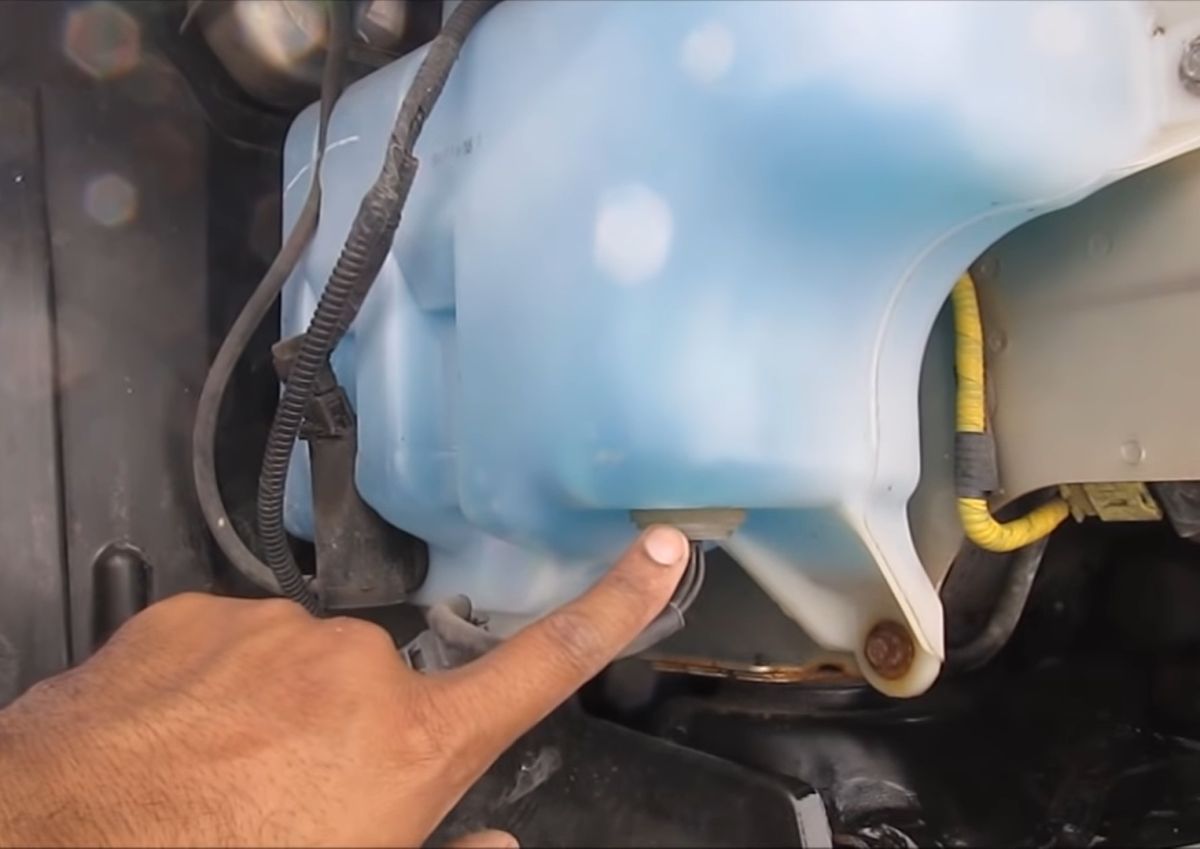

The sensor is normally installed directly into the windshield washer fluid reservoir.
The washer reservoir is generally located in the engine compartment, although its exact position varies by vehicle.
On some vehicles, the reservoir may be partially hidden behind:
-
Wheel arch liners
-
Front bumpers
-
Fender areas
-
Engine compartment covers
The level sensor is usually installed toward the lower portion of the reservoir so that it can detect when the fluid drops below a specific level.
How Does a Washer Fluid Level Sensor Work?
There are several sensor designs.
A common design uses a float mechanism.
The float moves according to the fluid level. As the washer fluid decreases, the float moves downward and changes the position of a switch or magnetic component.
Another design can use a magnetic reed switch or similar electrical arrangement.
The basic operating principle is:
Washer fluid level → Float/sensor → Electrical signal → Control module → Dashboard warning
The exact electrical operation depends on the vehicle manufacturer.
What Are the Symptoms of a Bad Washer Fluid Level Sensor?
A defective washer fluid level sensor can cause several symptoms.
Common symptoms include:
-
Washer fluid warning stays on
-
Low washer fluid warning appears when the reservoir is full
-
No warning when the reservoir is empty
-
Warning appears intermittently
-
Washer fluid level reading is incorrect
-
Dashboard message appears unexpectedly
-
Warning disappears after driving over bumps
-
Diagnostic trouble code may be stored
-
Sensor-related electrical fault may be detected
The most common complaint is usually a low washer fluid warning even though the reservoir is full.
Low Washer Fluid Warning Stays On When the Reservoir Is Full
If the warning remains active after filling the reservoir, several causes are possible.
The most likely possibilities include:
-
Faulty level sensor
-
Stuck float
-
Dirty sensor
-
Damaged sensor connector
-
Corroded terminals
-
Broken wiring
-
Short circuit
-
Open circuit
-
Faulty BCM
-
Incorrect sensor installation
In some cases, the sensor itself may be perfectly functional but the float may be stuck because of contamination inside the reservoir.
No Washer Fluid Warning When the Reservoir Is Empty
If the reservoir becomes empty but the dashboard never warns the driver, the level sensor or its electrical circuit may be faulty.
Possible causes include:
-
Failed sensor
-
Stuck float
-
Broken wiring
-
Poor electrical connection
-
Corroded connector
-
Blown fuse, depending on the system
-
BCM or instrument cluster problem
-
Incorrect sensor signal
If the vehicle normally has a washer fluid warning but it never appears, the sensor circuit should be inspected.
Why Does the Washer Fluid Warning Come and Go?
An intermittent warning can be caused by an unstable electrical connection or a sensor/float that is moving incorrectly.
Possible causes include:
-
Loose connector
-
Corroded terminals
-
Damaged wiring
-
Sticking float
-
Internal sensor wear
-
Fluid movement inside the reservoir
-
Sensor mounting problem
If the warning appears when driving over bumps and disappears again on smooth roads, the float or sensor connection should be inspected carefully.
Can Dirty Washer Fluid Cause Sensor Problems?
Yes.
Washer reservoirs can accumulate dirt, sediment, algae, or deposits, particularly if inappropriate fluids or plain water have been used for extended periods.
Contamination can interfere with a float-type sensor and prevent the float from moving freely.
In this situation, the sensor may appear to be defective even though the actual problem is contamination inside the reservoir.
Cleaning the reservoir and checking the sensor mechanism may solve the problem in some cases.
Can a Washer Fluid Level Sensor Leak?
The sensor is mounted through the washer fluid reservoir and normally uses a seal or grommet.
If the seal deteriorates, washer fluid can leak around the sensor.
Signs may include:
-
Washer fluid level repeatedly drops
-
Fluid is visible around the reservoir
-
Wetness around the sensor
-
Washer fluid smell
-
Warning appears shortly after filling
A leak around the sensor does not necessarily mean that the electrical sensor itself has failed. The seal or grommet may be the actual problem.
Does the Washer Fluid Level Sensor Affect the Washer Pump?
Normally, the level sensor and washer pump perform different functions.
The washer pump pressurizes and delivers fluid to the windshield washer nozzles.
The level sensor only monitors the amount of fluid in the reservoir.
Therefore, a faulty level sensor normally does not prevent the washer pump from operating.
If the washer pump does not spray fluid, possible causes include:
-
Empty reservoir
-
Faulty washer pump
-
Blown fuse
-
Damaged wiring
-
Blocked nozzle
-
Frozen washer fluid
-
Blocked hose
-
Faulty washer switch
-
BCM or control circuit problem
Can a Bad Level Sensor Prevent the Washer Pump From Working?
On most vehicles, the washer fluid level sensor does not directly control the washer pump.
However, some modern vehicles may use electronic control strategies that monitor fluid level and other conditions.
Therefore, the exact behavior depends on the vehicle.
If the washer pump does not operate, the pump circuit should be diagnosed separately rather than automatically blaming the level sensor.
Does a Washer Fluid Level Sensor Trigger an OBD Fault Code?
It can on some modern vehicles, but not necessarily.
Many washer fluid level sensors are simple switches and may not be directly monitored by the engine ECU.
If the sensor is connected to the BCM or another body electronics module, a fault may be stored in that module.
Possible faults may relate to:
-
Washer fluid level sensor circuit
-
Open circuit
-
Short circuit
-
Signal plausibility
-
Body control module communication
A standard engine-focused OBD scan may not always show body-control faults. A diagnostic tool capable of accessing the vehicle's BCM may be required.
How Is a Washer Fluid Level Sensor Diagnosed?
Diagnosis should begin with the simplest checks.
First, verify the actual washer fluid level.
If the reservoir is full but the low-fluid warning remains active, inspect:
-
Sensor connector
-
Wiring
-
Sensor mounting
-
Float movement
-
Reservoir condition
-
Electrical terminals
A multimeter can be used to check continuity or electrical resistance where the sensor design allows it.
However, not every sensor works as a simple switch. Some systems use electronic signals that require a wiring diagram and manufacturer-specific testing procedure.
A diagnostic scan tool can also be useful on vehicles where the BCM monitors the sensor.
Can You Clean a Washer Fluid Level Sensor?
Sometimes.
If the sensor uses a float mechanism and the float has become contaminated or stuck, cleaning the reservoir and sensor may restore normal operation.
However, care should be taken not to damage:
-
Float mechanism
-
Magnetic components
-
Electrical contacts
-
Sensor seal
-
Connector
If the sensor has an internal electrical failure, cleaning it will not repair the problem.
Should the Washer Fluid Level Sensor Be Replaced?
Replacement is appropriate when the sensor has been confirmed to be defective.
Before replacing it, however, the technician should check the wiring and connector.
A faulty connector can create exactly the same symptoms as a failed sensor.
On some vehicles, the sensor is separately replaceable.
On others, the sensor may be integrated into the washer reservoir or may be difficult to access. In those cases, replacing the complete reservoir may be required depending on the vehicle's design.
Can You Drive With a Faulty Washer Fluid Level Sensor?
Generally, a faulty washer fluid level sensor does not affect the engine, transmission, steering, or braking system.
The vehicle can usually still be driven.
However, there is an important practical issue: you may not receive a warning when the washer fluid runs out.
This can become inconvenient or even a visibility concern during:
-
Rain
-
Snow
-
Muddy road conditions
-
Long-distance driving
-
Heavy road spray
Keeping the washer reservoir adequately filled is therefore important even if the level sensor is not functioning.
Final Thoughts
The windshield washer fluid level sensor monitors the amount of washer fluid in the reservoir and informs the driver when the fluid level becomes low.
A faulty sensor can cause the low washer fluid warning to remain on when the reservoir is full, or it may prevent the warning from appearing when the reservoir is empty.
Before replacing the sensor, it is important to inspect the float mechanism, reservoir, connector, wiring, and electrical circuit. Dirt or contamination can sometimes cause a float to stick, while corrosion or a damaged connector can create intermittent warnings.
The washer fluid level sensor is generally unrelated to the operation of the washer pump. If the windshield washer does not spray fluid, the pump, fuse, wiring, hoses, nozzles, and washer control circuit should be diagnosed separately.
On vehicles equipped with sophisticated body electronics, a diagnostic scan of the BCM can also help determine whether the vehicle is correctly receiving the level sensor signal.