TR
TR EN
EN

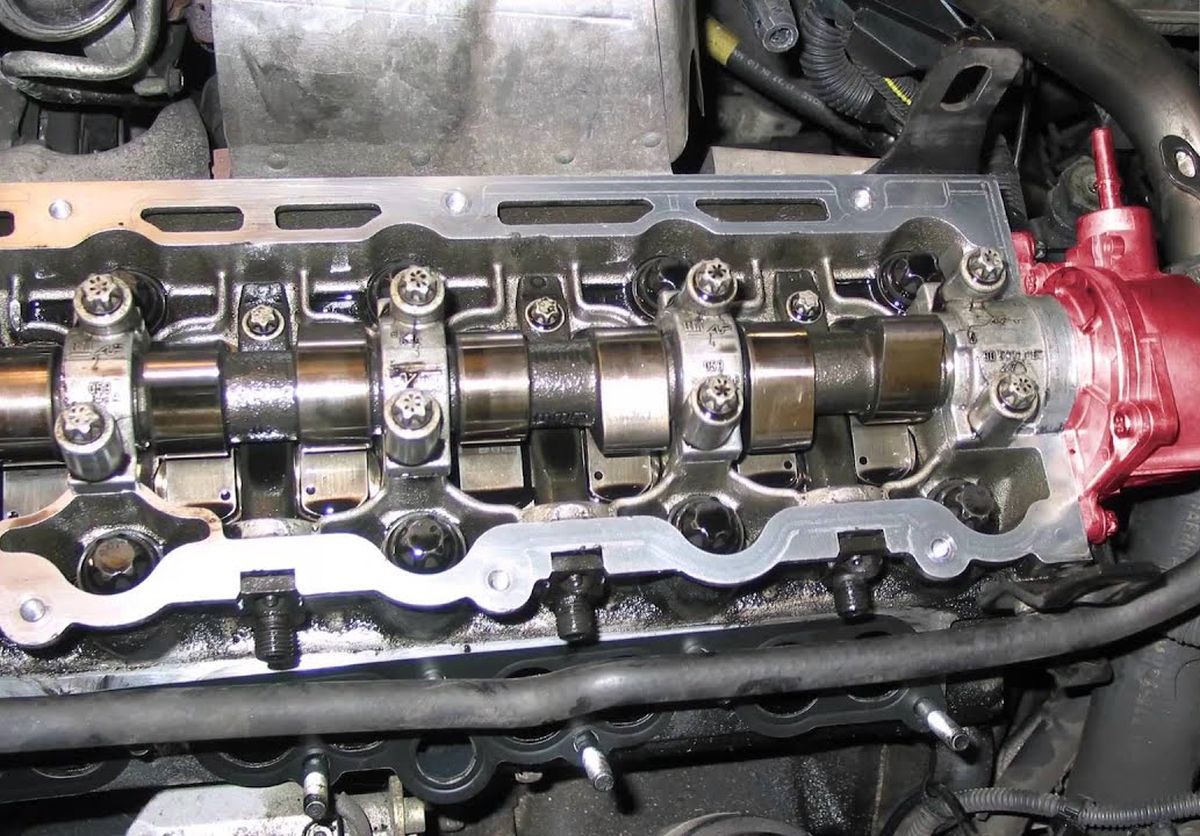
What Is a Vacuum Pump? What Are the Symptoms of Vacuum Pump Failure?
A vacuum pump is a mechanical or electrically driven component that generates vacuum pressure for systems that need negative pressure to operate. Depending on the vehicle, the vacuum pump can support the brake booster, turbocharger control, EGR system, emissions components, engine control systems, and other vacuum-operated mechanisms.
Vacuum pumps are particularly important in modern diesel engines because diesel engines generally produce less intake-manifold vacuum than gasoline engines. Some gasoline engines can also use dedicated vacuum pumps when the available intake vacuum is insufficient or when additional vacuum is required.
A vacuum pump failure should not be ignored, especially when the pump supplies vacuum to the brake booster. A problem in this area can affect braking assistance and therefore become a safety issue.
What Does a Vacuum Pump Do?
The main purpose of a vacuum pump is to create and maintain the vacuum required by different vehicle systems.
Depending on the engine and vehicle design, the pump may provide vacuum for:
-
Brake booster
-
Turbocharger actuator
-
EGR control
-
Vacuum solenoids
-
Air control valves
-
Emissions systems
-
Engine control functions
-
Four-wheel-drive control systems on some vehicles
-
Other vacuum-operated actuators
The exact function depends on the vehicle.
Some vehicles use a single vacuum pump for several systems, while others use separate vacuum sources or electric vacuum pumps.
How Does a Vacuum Pump Work?
The operating principle depends on the type of pump.
A mechanical vacuum pump is usually driven by the engine. It may be driven by the camshaft, timing mechanism, auxiliary shaft, or another engine-driven component.
As the pump rotates, its internal mechanism creates an area of low pressure. Atmospheric pressure then causes air to move from the connected vacuum system toward the pump.
The pump continuously removes air from the vacuum circuit, allowing the required vacuum level to be maintained.
An electric vacuum pump, on the other hand, uses an electric motor and can operate independently of engine speed.
This can be particularly useful when vacuum demand changes or when the engine itself cannot provide sufficient vacuum.
What Is a Brake Vacuum Pump?
One of the most important applications of a vacuum pump is supplying vacuum to the brake booster.
The brake booster uses vacuum to multiply the force applied by the driver to the brake pedal.
When the driver presses the brake pedal, the brake booster uses the pressure difference between vacuum and atmospheric pressure to assist the driver's pedal effort.
If sufficient vacuum is not available, the brake pedal can become much harder to press.
This is why a vacuum pump problem can sometimes become a serious safety issue.
What Are the Symptoms of Vacuum Pump Failure?
A failing vacuum pump can produce different symptoms depending on which vehicle systems depend on it.
Common symptoms include:
-
Hard brake pedal
-
Reduced brake assist
-
Increased braking effort
-
Longer braking distance in severe cases
-
Vacuum-related warning messages
-
Check Engine Light
-
Reduced engine performance
-
Turbocharger control problems
-
EGR-related problems
-
Rough or unstable engine operation
-
Poor acceleration
-
Limp mode
-
Vacuum-related diagnostic trouble codes
-
Unusual noise from the pump
-
Oil leakage around a mechanical vacuum pump
-
Vacuum level that is too low
-
Vacuum that cannot be maintained
-
Multiple vacuum-operated systems malfunctioning at the same time
Not every symptom will appear on every vehicle.
Hard Brake Pedal and Vacuum Pump Failure
A hard brake pedal is one of the most important symptoms to take seriously.
If the brake booster does not receive sufficient vacuum, the assistance provided to the driver can decrease.
The driver may notice that significantly more force is required to slow the vehicle.
Possible causes include:
-
Vacuum pump failure
-
Vacuum hose leak
-
Faulty brake booster
-
Faulty check valve
-
Vacuum reservoir problem
-
Vacuum solenoid problem
-
Damaged vacuum line
-
Incorrect vacuum connection
Therefore, a hard brake pedal does not automatically prove that the vacuum pump itself has failed.
If the brake pedal suddenly becomes much harder than normal, the vehicle should be inspected immediately.
Can a Vacuum Pump Cause Turbocharger Problems?
Yes, on vehicles where the turbocharger uses a vacuum-controlled actuator.
Some turbocharger systems use vacuum to control components such as a variable geometry mechanism or wastegate actuator.
If the vacuum supply becomes too low, the actuator may not move as commanded.
This can result in:
-
Low boost pressure
-
Excessive boost
-
Poor acceleration
-
Slow turbo response
-
Reduced engine power
-
Limp mode
-
Check Engine Light
-
Turbocharger control fault codes
However, turbocharger performance problems can also be caused by the turbocharger itself, boost leaks, pressure sensors, electronic actuators, solenoids, exhaust restrictions, or other engine-management problems.
Can a Vacuum Pump Cause EGR Problems?
It can, depending on the vehicle.
Some EGR systems use vacuum-controlled actuators or vacuum-operated control valves.
If the vacuum supply is insufficient, the EGR system may not operate as commanded.
Possible symptoms include:
-
Rough idle
-
Hesitation
-
Reduced power
-
Increased emissions
-
Check Engine Light
-
EGR-related diagnostic trouble codes
Modern EGR systems can also be fully electronic, so not every EGR problem is related to a vacuum pump.
What Causes a Vacuum Pump to Fail?
Several factors can lead to vacuum pump failure.
Mechanical Wear
A mechanically driven vacuum pump contains moving components that wear over time.
Internal wear can reduce the pump's ability to create sufficient vacuum.
Oil Contamination or Lubrication Problems
Some mechanical vacuum pumps are lubricated by engine oil.
Incorrect lubrication, contaminated oil, or insufficient oil supply can accelerate internal wear.
Seal Failure
A mechanical pump may develop oil leaks when its seals or gaskets deteriorate.
Internal Component Damage
Worn vanes, pistons, diaphragms, bearings, or other internal components can reduce pump performance.
The exact internal design varies between pumps.
Electric Motor Failure
Electric vacuum pumps can suffer from electric motor wear, brush or bearing problems, electronic control failures, or power-supply issues.
Electrical Problems
An electric pump may fail because of:
-
Blown fuse
-
Faulty relay
-
Damaged wiring
-
Poor ground
-
Low battery voltage
-
Connector corrosion
-
Control module problems
Vacuum Pump Noise
An abnormal noise from the vacuum pump can be an important warning sign.
Depending on the design, a failing pump may produce:
-
Whining
-
Grinding
-
Clicking
-
Rattling
-
Squealing
-
Humming
A mechanical vacuum pump may become noisy because of internal bearing, vane, piston, or drive-component wear.
However, noise should always be diagnosed carefully because nearby components can produce similar sounds.
Can a Vacuum Pump Leak Oil?
Some mechanical vacuum pumps are lubricated by engine oil and can develop external oil leaks.
Oil may appear around:
-
Pump housing
-
Gasket
-
Shaft seal
-
Mounting surface
-
Vacuum pump connections
An oil leak does not automatically mean the entire pump needs to be replaced.
The source of the leak should first be identified.
If the pump is internally worn and leaking because of shaft or housing damage, replacement may be necessary.
Vacuum Pump vs. Vacuum Hose
These two components should not be confused.
The vacuum pump generates the vacuum.
The vacuum hose transports the vacuum to another component.
A cracked, loose, collapsed, or disconnected hose can therefore create symptoms that look very similar to a failed pump.
For example, if a vacuum hose connected to the brake booster is leaking, the vacuum level may be insufficient even though the pump itself is operating correctly.
Vacuum Pump vs. Brake Booster
The vacuum pump and brake booster perform different functions.
The vacuum pump creates the vacuum.
The brake booster uses vacuum to assist brake pedal force.
If the brake pedal becomes hard, both components and the connecting vacuum circuit should be inspected.
A defective brake booster can cause vacuum loss even when the pump is functioning correctly.
How Is a Vacuum Pump Diagnosed?
The most important part of diagnosis is measuring the actual vacuum.
A technician can use a suitable vacuum gauge to determine whether the pump is producing the vacuum specified by the manufacturer.
The system should be checked for:
-
Vacuum level
-
Vacuum stability
-
Vacuum leaks
-
Hose condition
-
Check valve operation
-
Pump operation
-
Solenoid operation
-
Electrical supply on electric pumps
-
Ground connections
-
Pump control signal
On modern vehicles, a diagnostic scan tool can also provide useful information.
Stored fault codes and live data may indicate problems with:
-
Brake vacuum
-
Turbocharger control
-
EGR
-
Vacuum pressure
-
Engine management
-
Electrical control
However, an OBD fault code does not automatically prove that the vacuum pump is defective.
How Can You Test a Vacuum Pump?
The exact test procedure depends on the vehicle.
For a mechanical pump, a vacuum gauge can be connected to the appropriate vacuum circuit and the measured vacuum can be compared with manufacturer specifications.
For an electric vacuum pump, the technician may additionally check:
-
Battery voltage
-
Fuse
-
Relay
-
Power supply
-
Ground
-
Connector
-
Control signal
-
Pump current draw
-
Actual vacuum output
A pump that receives correct electrical power but fails to generate the required vacuum is more suspicious than a pump that is not receiving power.
Why Should You Check the Vacuum Hoses Before Replacing the Pump?
Vacuum leaks are relatively common and can be much less expensive to repair than replacing a vacuum pump.
A diagnostic inspection should therefore include:
-
Cracked hoses
-
Loose connections
-
Split rubber lines
-
Damaged plastic pipes
-
Faulty check valves
-
Leaking vacuum reservoirs
-
Faulty vacuum solenoids
-
Damaged actuators
A new vacuum pump cannot compensate for a major leak somewhere else in the system.
If a leak remains after pump replacement, the new pump may also be forced to operate excessively.
Can a Vacuum Pump Cause Limp Mode?
Yes, depending on the vehicle.
If vacuum is required to control the turbocharger, EGR system, or another important engine-management function, insufficient vacuum can prevent the system from reaching the commanded position.
The engine control module may detect a difference between the requested and actual operating condition and activate a protection strategy.
The driver may then experience:
-
Reduced engine power
-
Limited boost
-
Poor acceleration
-
Check Engine Light
-
Limp mode
However, limp mode can have many causes, so a vacuum pump should not be replaced based solely on this symptom.
Does a Vacuum Pump Failure Trigger an OBD Code?
It can, but not always.
A modern vehicle may detect the consequences of insufficient vacuum through pressure sensors, actuator position sensors, turbocharger control, EGR monitoring, or brake vacuum monitoring.
Depending on the vehicle, the ECU or another control module may store a fault code.
However, many vacuum pumps are not directly monitored.
In that situation, the vehicle may store a code related to the system affected by low vacuum rather than a specific “vacuum pump failure” code.
This is why the diagnostic code should be treated as a starting point rather than final proof of pump failure.
Can You Drive With a Bad Vacuum Pump?
If the vacuum pump supplies the brake booster, driving with a suspected vacuum pump failure can be dangerous.
A hard brake pedal or significantly reduced brake assistance should be treated as a safety-critical problem.
Do not continue driving if:
-
The brake pedal suddenly becomes very hard
-
Brake assistance is reduced
-
Braking requires unusually high pedal force
-
The vehicle does not stop normally
-
Multiple vacuum-operated systems have failed
-
The engine enters severe limp mode
-
There is a major oil leak from the pump
-
The pump is making severe mechanical noise
The vehicle should be inspected and repaired before normal driving resumes.
How Can Vacuum Pump Problems Be Prevented?
There is usually no universal replacement interval for a vacuum pump.
Preventive maintenance should focus on the systems around it.
Regularly inspect:
-
Vacuum hoses
-
Vacuum connections
-
Check valves
-
Pump mounting area
-
Electrical connectors
-
Fuses and wiring
-
Engine oil condition
-
Signs of oil leakage
-
Unusual pump noise
For mechanically driven pumps, using the correct engine oil and maintaining the proper oil level can also help protect components that depend on engine lubrication.
Final Thoughts
A vacuum pump is an important component that creates the negative pressure required by several vehicle systems. Depending on the vehicle, it may support the brake booster, turbocharger control, EGR system, emissions equipment, and other vacuum-operated components.
The symptoms of a failing vacuum pump can vary significantly. A hard brake pedal can indicate a serious loss of brake assistance, while turbocharger problems, EGR faults, reduced engine power, unusual pump noise, or vacuum-related diagnostic codes can point toward a problem elsewhere in the vacuum system.
Most importantly, a vacuum-related symptom does not automatically mean the vacuum pump is defective. Vacuum hoses, check valves, solenoids, actuators, the brake booster, electrical circuits, and other components should be checked before replacing the pump.
A proper diagnosis should measure the actual vacuum and compare it with the manufacturer's specifications. This approach helps distinguish a genuinely weak vacuum pump from a leak or another fault in the system.