TR
TR EN
EN

What Is a Turn Signal Stalk? What Are the Symptoms of Turn Signal Stalk Failure?
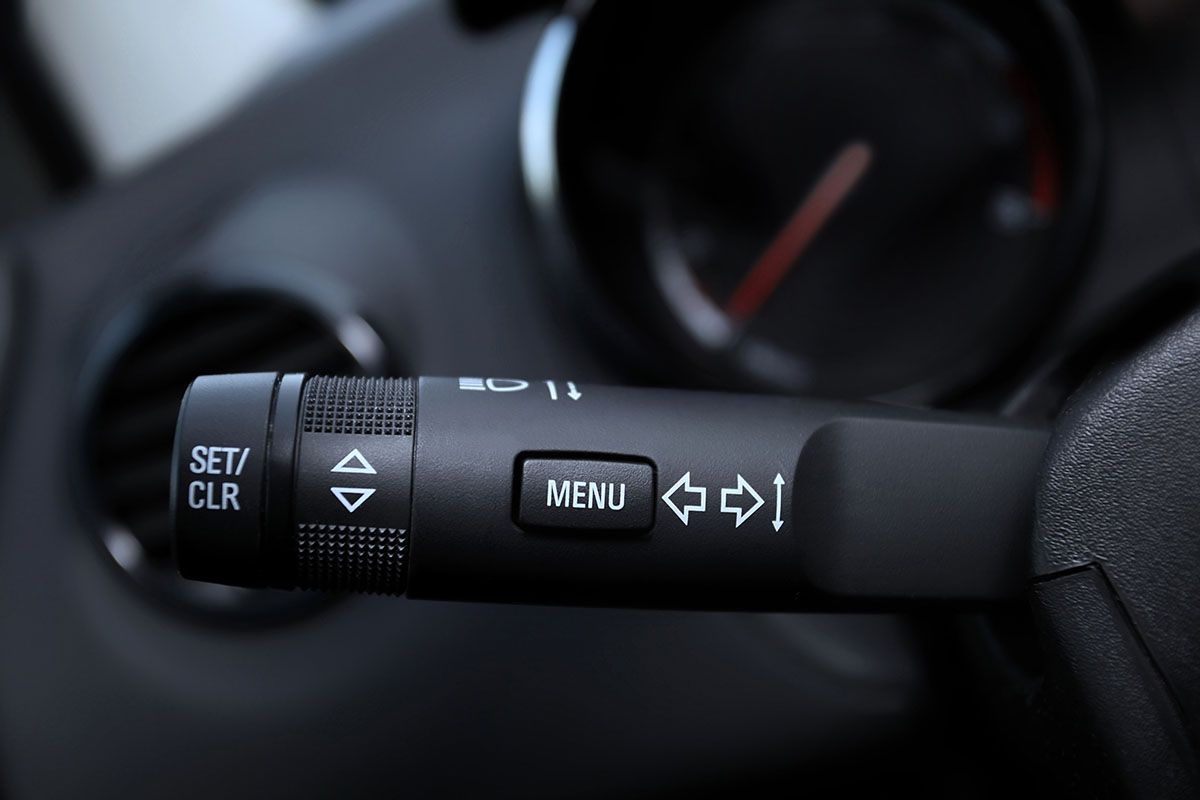
The turn signal stalk, also known as the indicator stalk or turn signal switch, is a control located next to the steering wheel that allows the driver to operate the vehicle’s turn signals. Depending on the vehicle, the same stalk may also control the headlights, high beams, headlight flashing, parking lights, and other lighting functions.
Although the turn signal stalk is a relatively simple control from the driver's perspective, modern vehicles can use it as part of a much more complex electrical and electronic system.
In older vehicles, the stalk may directly control electrical circuits through internal contacts. In newer vehicles, the stalk may send a signal to a Body Control Module (BCM) or steering column electronics, which then activates the appropriate lights.
What Does the Turn Signal Stalk Do?
The primary function of the turn signal stalk is to tell the vehicle that the driver wants to indicate a left or right turn.
When the driver moves the stalk:
-
The stalk detects the selected direction.
-
An electrical signal is generated.
-
The signal is sent either directly to the lighting circuit or to a control module.
-
The turn signal control system activates the corresponding lights.
-
The instrument cluster usually displays a flashing indicator.
-
A clicking sound may be produced electronically or mechanically, depending on the vehicle.
The stalk normally has a spring-loaded position for signaling a turn. On many vehicles, moving it slightly activates a lane-change or momentary signal, while moving it fully engages the turn signal until the steering wheel returns toward the center.
Where Is the Turn Signal Stalk Located?
The turn signal stalk is normally mounted on the steering column, within easy reach of the driver's hand.
Depending on the vehicle, there may be:
-
A turn signal stalk on the left side
-
A separate wiper stalk on the opposite side
-
A combined lighting and turn signal stalk
-
Multiple steering column control switches
-
Electronic steering column control modules
The exact configuration varies considerably between manufacturers.
Some vehicles combine the turn signals with headlight controls, while others use a separate lighting control stalk.
What Are the Symptoms of a Bad Turn Signal Stalk?
A failing turn signal stalk can cause several different electrical or operational problems.
Common symptoms include:
-
Left turn signal does not work
-
Right turn signal does not work
-
Turn signals work intermittently
-
Turn signal activates only when the stalk is held
-
Turn signal does not stay engaged
-
Turn signal works in one direction but not the other
-
High beams do not activate
-
Headlight flashing function does not work
-
Turn signals activate unexpectedly
-
Lane-change signal does not work
-
Stalk feels loose or unusually stiff
-
Stalk does not return correctly
-
Multiple lighting functions stop working
-
Turn signal works after moving the stalk repeatedly
-
Instrument cluster indicators behave abnormally
The exact symptoms depend on the internal design of the stalk and the vehicle's electrical architecture.
Turn Signal Works Sometimes and Sometimes Does Not
An intermittent turn signal is a common symptom of worn internal contacts.
Inside a conventional stalk are electrical contacts that can become worn, contaminated, oxidized, or damaged.
The signal may therefore work when the stalk is moved to one position but fail when moved slightly.
This can produce a situation where:
-
The signal works if you push the stalk harder.
-
It stops when the stalk is touched.
-
It works on some occasions but not others.
-
It works temporarily after moving the stalk several times.
However, an intermittent signal does not automatically prove that the stalk is defective.
A loose connector, damaged wiring, BCM problem, fuse, lighting module, or poor electrical connection can create similar symptoms.
Why Does Only One Direction Stop Working?
If the left turn signal works normally but the right turn signal does not, or vice versa, the stalk can be one possible cause.
The internal contacts responsible for each direction may be separate.
However, the problem can also be located elsewhere in the circuit.
Possible causes include:
-
Turn signal stalk contacts
-
Wiring
-
Connector
-
BCM or lighting control module
-
Fuse
-
Turn signal relay on older systems
-
Individual lamp
-
LED lamp assembly
-
Ground connection
-
Communication problem
The lights and wiring should therefore be checked before replacing the stalk.
What If All Turn Signals Stop Working?
If the left and right signals suddenly stop working at the same time, a problem affecting a shared part of the system should be considered.
Possible causes include:
-
Blown fuse
-
BCM fault
-
Lighting control module problem
-
Power supply problem
-
Ground problem
-
Wiring issue
-
Stalk failure
-
Communication fault
-
Low system voltage
On older vehicles, a dedicated turn signal flasher or relay can also be responsible.
Modern vehicles often do not use a traditional mechanical flasher relay. The BCM or another electronic module may control the flashing function.
Can a Bad Turn Signal Stalk Affect the High Beams?
Yes.
On many vehicles, the turn signal stalk also controls the high beams and headlight flashing function.
Therefore, a problem inside the stalk can potentially affect both the turn signals and high-beam operation.
For example, if the internal contacts responsible for high-beam switching become worn, the high beams may:
-
Fail to activate
-
Work intermittently
-
Activate only when the stalk is pulled or pushed in a certain position
-
Turn off unexpectedly
-
Work for flashing but not for continuous high-beam operation
However, a high-beam problem can also originate from the lighting module, wiring, fuse, relay, bulb, LED driver, BCM, or another component.
What Causes Turn Signal Stalk Failure?
Several factors can cause a turn signal stalk to fail.
Internal Contact Wear
Every time the stalk is operated, internal electrical contacts move against each other.
Over many years, these contacts can wear or develop resistance.
Oxidation and Contamination
Dust, moisture, and contamination can affect electrical contacts.
Oxidized contacts may cause intermittent operation.
Mechanical Wear
The stalk mechanism contains moving components, springs, detents, and mechanical parts.
With age, the mechanism can become loose, stiff, or fail to return correctly.
Broken Internal Components
A spring or internal plastic component can break, changing the feel or operation of the stalk.
Connector Problems
The electrical connector at the steering column can become loose, contaminated, or damaged.
Wiring Damage
Wires near the steering column can become damaged due to movement, previous repairs, incorrect installation, or physical damage.
Can a Turn Signal Stalk Be Repaired?
Sometimes, but replacement is generally preferred when the internal mechanism or contacts have failed.
A stalk may technically be opened and cleaned in some designs, but this is not always a reliable repair.
Modern steering-column switch assemblies can contain multiple functions and delicate components.
Depending on the vehicle, the complete assembly may include:
-
Turn signal switch
-
Headlight switch
-
High-beam control
-
Wiper controls
-
Cruise-control switches
-
Steering column electronics
-
Steering angle-related components
Because of this, replacing the correct assembly according to the vehicle's design may be safer than attempting an internal repair.
Turn Signal Stalk vs. Turn Signal Relay
These components perform different functions.
The turn signal stalk is the driver's control input.
The flasher relay or electronic flasher circuit controls the flashing operation of the turn signals.
In an older vehicle, the stalk may send power or a switching signal to a flasher relay.
In a modern vehicle, the stalk may simply send an electronic request to the BCM, which then controls the lamps.
Therefore, a turn signal that does not flash does not automatically mean the stalk is bad.
What Causes Rapid Turn Signal Flashing?
Rapid flashing, sometimes called hyperflash, is commonly associated with a lighting circuit problem rather than a failed stalk.
Possible causes include:
-
Burned-out turn signal bulb
-
Incorrect bulb
-
LED conversion
-
LED load incompatibility
-
Wiring problem
-
Poor ground
-
Lighting control module issue
On older systems, the flasher relay may detect reduced electrical load from a failed bulb and increase the flashing frequency.
On modern vehicles, the BCM may detect the electrical condition electronically.
A rapid flash should therefore be investigated before replacing the turn signal stalk.
Why Does the Turn Signal Not Cancel Automatically?
Most conventional turn signal systems use a cancellation mechanism connected to steering wheel movement.
After completing a turn, the steering wheel returns toward the center and the mechanism releases the turn signal stalk.
If the signal remains active, possible causes include:
-
Worn cancellation mechanism
-
Damaged stalk
-
Steering column component failure
-
Incorrectly installed steering wheel
-
Clock spring or related steering-column component problem
-
Previous steering-column repair
The stalk itself should be inspected together with the cancellation mechanism.
Can a Turn Signal Stalk Cause a Dashboard Warning?
It can, particularly in modern vehicles.
If the stalk communicates electronically with the BCM or steering column control module, an electrical or communication problem may be detected.
Depending on the vehicle, diagnostic trouble codes may relate to:
-
Steering column control module
-
BCM
-
Lighting control
-
Communication
-
Switch input
-
Electrical circuit
-
Steering column electronics
However, a conventional mechanical stalk normally does not generate a dedicated OBD fault code.
How Is a Turn Signal Stalk Diagnosed?
Diagnosis should begin by identifying exactly what is and is not working.
Check:
-
Left turn signal
-
Right turn signal
-
Hazard lights
-
High beams
-
Headlight flashing
-
Lane-change function
-
Automatic cancellation
-
Instrument cluster indicators
The hazard lights are particularly useful for diagnosis.
If the hazard lights work correctly but the normal turn signals do not, the problem may be in the stalk input circuit, BCM logic, or related control path rather than the lamps themselves.
The bulbs, fuses, connectors, grounds, wiring, and control modules should also be checked.
On modern vehicles, a scan tool can be useful for viewing live switch-status data.
For example, the diagnostic tool may show whether the BCM recognizes:
-
Left turn request
-
Right turn request
-
High-beam request
-
Flash-to-pass request
If the stalk is physically moved but the module does not recognize the command, the stalk, connector, wiring, or input circuit becomes more suspicious.
Can You Test the Turn Signal Stalk With a Multimeter?
Yes, on systems where the stalk provides conventional electrical switching.
Depending on the design, you can check:
-
Continuity
-
Switch resistance
-
Power supply
-
Ground
-
Individual switch outputs
-
Connector terminals
-
Wiring continuity
However, modern electronic stalks may not operate as simple on/off switches.
Some use resistor networks, digital signals, LIN communication, or steering-column electronics.
For these systems, measuring resistance alone may provide misleading results.
The vehicle's wiring diagram and manufacturer specifications should be used.
Should You Replace the Turn Signal Stalk Immediately?
No.
A turn signal problem should first be diagnosed.
Replacing the stalk without checking the rest of the circuit can waste money because similar symptoms can be caused by:
-
Bulbs
-
LED modules
-
Fuses
-
Wiring
-
Connectors
-
Grounds
-
BCM
-
Flasher circuit
-
Steering column module
-
Low battery voltage
-
Communication faults
The correct repair depends on the actual cause.
Is It Safe to Drive With a Faulty Turn Signal Stalk?
Driving with a turn signal that does not work correctly is not recommended.
Turn signals are an important part of communicating your intentions to other road users.
The situation becomes more serious if:
-
Neither direction works
-
The signal activates randomly
-
The high beams operate unexpectedly
-
The stalk interferes with other lighting functions
-
The stalk is physically broken
-
Multiple steering-column controls have stopped working
If the turn signals are unreliable, the vehicle should be inspected as soon as possible.
Final Thoughts
The turn signal stalk is the driver's primary control for activating the vehicle's direction indicators. On many vehicles, it also controls the high beams and headlight flashing function.
A worn stalk can cause intermittent signals, one-direction failures, high-beam problems, incorrect cancellation, or multiple lighting-control issues.
However, the stalk should not automatically be blamed whenever a turn signal stops working. Bulbs, wiring, connectors, fuses, grounds, BCMs, flasher circuits, and steering-column control modules can produce very similar symptoms.
On modern vehicles, the most reliable approach is to determine whether the control module actually recognizes the driver's stalk command. This helps separate a switch/input problem from a lighting output problem and prevents unnecessary parts replacement.