TR
TR EN
EN

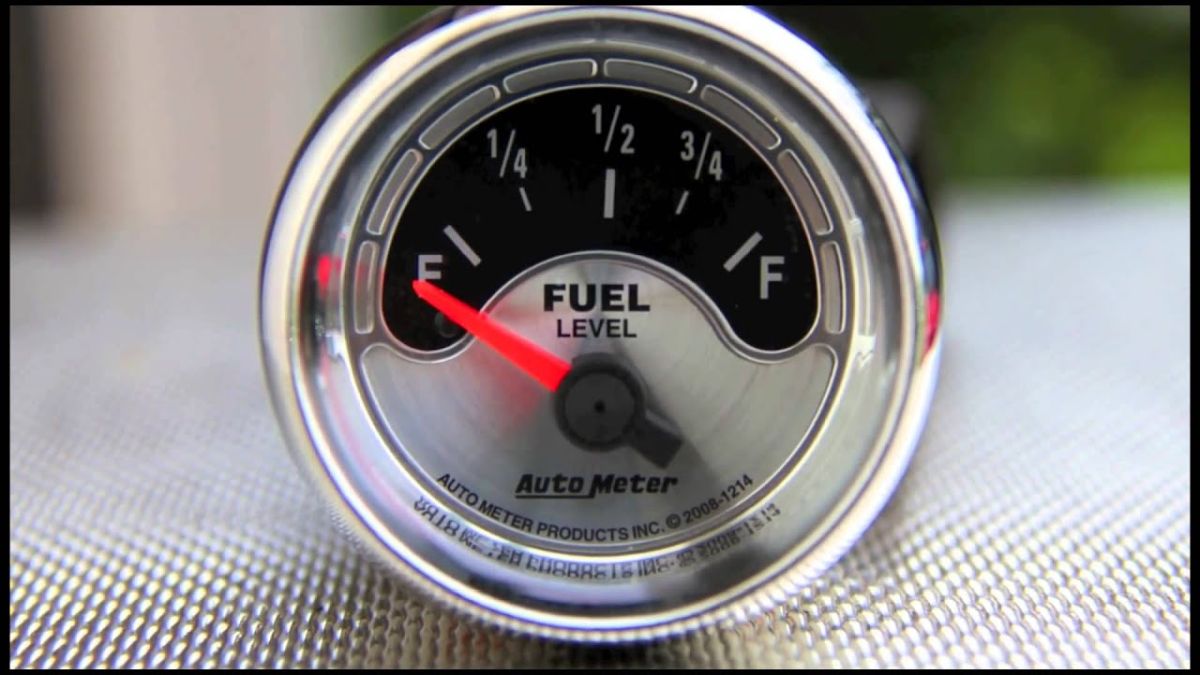
What Is a Fuel Gauge? What Are the Symptoms of Fuel Gauge Failure?
The fuel gauge is the system that shows how much fuel remains in a vehicle's fuel tank. It allows the driver to monitor the approximate fuel level and estimate when refueling is necessary.
Although the dashboard fuel gauge looks like a simple instrument, the system behind it can include several components, such as the fuel level sensor, fuel tank sending unit, wiring, connectors, instrument cluster, body control module (BCM), and ECU, depending on the vehicle.
A problem in any of these components can cause the fuel gauge to show an incorrect fuel level.
A fuel gauge that suddenly drops to empty, remains permanently full, fluctuates while driving, or stops responding completely may indicate a fault in the fuel-level measurement system.
How Does a Fuel Gauge Work?
The fuel-level measurement system generally uses a fuel level sender installed inside the fuel tank.
The sender usually consists of a float attached to an arm and a variable electrical resistance mechanism.
As the fuel level changes, the float moves up or down.
That movement changes the electrical resistance of the sender.
The vehicle then interprets this electrical signal and displays the corresponding fuel level on the dashboard.
In a basic system, the sender signal may go relatively directly to the instrument cluster.
In newer vehicles, the signal can pass through another control module, such as the BCM or a fuel-pump control module, before the dashboard displays the information.
This is why diagnosing a modern fuel gauge can involve more than simply replacing the sender.
What Is a Fuel Level Sensor?
The fuel level sensor is the component that measures the amount of fuel inside the tank.
It is commonly integrated into the fuel pump module.
The sensor normally uses a float that follows the surface of the fuel.
When the tank is full, the float is positioned higher.
As fuel is consumed, the float moves downward.
The electrical resistance changes according to the float's position, allowing the vehicle to determine the approximate fuel level.
The fuel level sensor does not measure the fuel volume with laboratory-level precision. It provides an electrical representation of the fuel level that the vehicle's electronics convert into the dashboard reading.
What Is a Fuel Sending Unit?
The fuel sending unit is the assembly responsible for measuring fuel level and transmitting the corresponding signal.
Depending on the vehicle, the sending unit may be:
-
A separate fuel-level sensor
-
Integrated into the fuel pump module
-
Combined with the fuel pump and fuel filter assembly
-
Part of a saddle-tank fuel-level system
The terminology varies between manufacturers, so "fuel level sensor," "fuel sender," and "fuel sending unit" are sometimes used interchangeably.
What Are the Symptoms of Fuel Gauge Failure?
A faulty fuel gauge system can produce several different symptoms.
The most common include:
-
Fuel gauge always shows empty
-
Fuel gauge always shows full
-
Fuel gauge does not move
-
Fuel level suddenly drops
-
Fuel level suddenly increases
-
Gauge fluctuates while driving
-
Fuel gauge gives inconsistent readings
-
Low-fuel warning appears incorrectly
-
Low-fuel warning does not appear
-
Fuel range calculation becomes inaccurate
-
Fuel gauge works intermittently
-
Fuel gauge works after restarting the vehicle
-
Fuel gauge becomes inaccurate after refueling
The symptom can provide an important clue about which part of the system may be malfunctioning.
Fuel Gauge Always Shows Empty
If the fuel gauge remains on E even after filling the tank, there may be a problem with the fuel level signal.
Possible causes include:
-
Failed fuel level sensor
-
Broken sender wiring
-
Poor electrical connection
-
Corroded connector
-
Open circuit
-
Instrument cluster problem
-
BCM or control-module communication problem
-
Incorrect sender resistance
-
Damaged fuel pump module
An open circuit in the sender circuit can cause the dashboard to interpret the signal as an empty tank on some vehicles.
However, the exact behavior depends on the electrical design.
Fuel Gauge Always Shows Full
A gauge that remains at F regardless of the actual fuel level can also indicate a sender or wiring problem.
A shorted circuit or a fuel level sensor stuck in the full position can produce this symptom.
A damaged float can also become stuck at the top of the tank.
For example, if the float arm is mechanically jammed, the sensor may continue reporting a high fuel level even after fuel has been consumed.
Fuel Gauge Does Not Move
Sometimes the fuel gauge remains at one position.
It may stay at half, one-quarter, three-quarters, or another level.
This can happen when the fuel sender becomes mechanically stuck.
The float may be unable to move because of:
-
Physical damage
-
Contamination
-
Deformation inside the tank
-
A damaged float arm
-
Internal sender wear
Electrical problems can produce the same symptom.
Fuel Gauge Fluctuates While Driving
A fuel gauge that moves significantly while driving can be caused by a problem with the sender, but some movement can be normal.
Fuel inside the tank moves as the vehicle:
-
Accelerates
-
Brakes
-
Turns
-
Climbs hills
-
Travels over uneven roads
Modern vehicles generally use software filtering or a damped gauge to prevent constant movement.
If the gauge suddenly moves from half to empty and then back to half during normal driving, however, this is not normal behavior.
Possible causes include:
-
Worn fuel-level sensor
-
Loose sender connection
-
Damaged wiring
-
Poor grounding
-
Float movement problems
-
Internal fuel tank movement affecting the sender
-
Control-module or instrument-cluster problems
Fuel Gauge Drops Suddenly
If the fuel gauge suddenly falls from a high reading to empty, there may be an intermittent electrical problem.
A worn section of the sender's resistor track can sometimes cause an unstable signal.
The wiring or connector may also lose contact when the vehicle vibrates.
This is particularly important if the gauge changes when driving over bumps.
If the gauge moves dramatically after hitting a pothole or uneven road, the sender wiring and connector should be inspected.
Fuel Gauge Rises Suddenly
A sudden increase in the displayed fuel level without refueling is another sign that the fuel-level signal may be unstable.
This can happen when the sender's electrical resistance changes unexpectedly.
It can also occur because the float is moving incorrectly or because the control module receives an intermittent signal.
A temporary change after cornering or climbing a steep slope can be normal because fuel moves inside the tank.
The distinction is whether the reading quickly returns to its previous position or remains inaccurate.
Fuel Gauge Is Wrong After Refueling
Some vehicles do not update the fuel gauge immediately after refueling.
The system may require:
-
Ignition cycling
-
A short period of driving
-
A certain change in fuel level
-
Stable sensor readings
before the displayed fuel level is recalculated.
However, if the gauge consistently shows the wrong level after refueling, the fuel sender should be investigated.
For example, a tank that has just been filled but continues to display half-full is not behaving normally.
Fuel Gauge Works Intermittently
An intermittent fault can be more difficult to diagnose than a completely failed gauge.
The gauge may work normally for several days and then suddenly show empty or full.
Common causes include:
-
Worn fuel sender
-
Loose connector
-
Corrosion
-
Broken wire
-
Poor ground
-
Fuel pump module connection problem
-
Instrument cluster fault
-
Control-module communication problem
Heat and vibration can make intermittent electrical problems more noticeable.
Low Fuel Warning Is Incorrect
Many vehicles have a separate low-fuel warning controlled by the same fuel-level measurement system.
A faulty sender can therefore cause the low-fuel warning to appear when the tank still contains substantial fuel.
It may also prevent the warning from appearing when the fuel level is genuinely low.
This is important because the driver may rely on the warning system to avoid running out of fuel.
Can a Bad Fuel Gauge Cause the Engine to Stop?
Normally, a defective fuel gauge itself does not stop the engine.
The gauge is responsible for displaying fuel-level information.
However, a faulty fuel level sensor can cause the driver to believe there is more fuel remaining than there actually is.
The vehicle can then run out of fuel unexpectedly.
A no-start or engine-stalling problem should therefore not automatically be attributed to the fuel gauge.
The fuel pump, fuel pressure, injectors, ignition system, crankshaft position sensor, immobilizer, and other systems may need to be checked.
Fuel Gauge Failure and Fuel Pump Problems
The fuel level sensor is often located inside the same fuel tank module as the fuel pump.
This can create confusion during diagnosis.
A vehicle can have:
-
A working fuel pump but a failed fuel level sensor
-
A failed fuel pump but a working fuel level sensor
-
Problems with both
-
A wiring problem affecting one or both circuits
Therefore, a fuel gauge problem does not automatically mean that the fuel pump is defective.
Similarly, an engine that does not start does not automatically mean that the fuel-level sender has failed.
Can the Fuel Level Sensor Be Replaced Separately?
This depends on the vehicle.
Some fuel pump modules allow the fuel-level sensor to be replaced separately.
On other vehicles, the sender is integrated into the complete fuel pump assembly.
The correct replacement procedure therefore depends on the tank and fuel-pump-module design.
Replacing the entire fuel pump module when only the sender is defective may be unnecessary if the sender is separately serviceable.
How Is a Fuel Gauge Fault Diagnosed?
A proper diagnosis starts by comparing the dashboard reading with the actual fuel level.
The technician can then inspect the fuel-level sender and its electrical circuit.
Important checks include:
-
Scan for diagnostic trouble codes
-
Check live fuel-level data if available
-
Inspect sender wiring
-
Inspect connectors
-
Check electrical supply and ground
-
Measure sender resistance
-
Compare resistance with manufacturer specifications
-
Check whether the float moves correctly
-
Test the instrument cluster
-
Check BCM or other module communication
-
Compare displayed fuel level with actual tank condition
A scan tool can be particularly useful on modern vehicles because some systems report the calculated fuel level electronically.
Testing the Fuel Level Sensor With a Multimeter
A multimeter can be used to check the electrical behavior of many conventional fuel-level sensors.
The sensor's resistance should change as the float moves.
However, there is no universal resistance value for all vehicles.
One vehicle may use a sender with a completely different resistance range from another.
Therefore, the measured resistance must be compared with the manufacturer's specifications.
If the resistance remains fixed when the float moves, the sender may be defective.
If the resistance suddenly jumps or drops at certain positions, the internal resistor track may be worn or damaged.
Fuel Gauge Problems Caused by Wiring
The fuel sender itself may be perfectly functional while the wiring between the tank and the vehicle electronics is damaged.
Possible wiring problems include:
-
Broken wires
-
Corroded terminals
-
Loose connectors
-
Poor grounding
-
Water intrusion
-
Damaged insulation
-
High electrical resistance
-
Short circuits
This is why replacing the fuel sender without checking the circuit can sometimes fail to solve the problem.
Fuel Gauge and Instrument Cluster Problems
The dashboard instrument cluster is responsible for displaying the fuel level on many vehicles.
A faulty cluster can therefore produce an inaccurate or non-functional fuel gauge even when the sender is working correctly.
Other cluster symptoms may help identify the problem.
For example, if several gauges or dashboard functions fail simultaneously, the issue may be related to the cluster's power supply, ground, communication network, or internal electronics rather than the fuel sender.
Fuel Gauge and BCM or ECU Problems
Modern vehicles use electronic networks to exchange information.
Depending on the vehicle architecture, fuel-level information may be processed by the BCM, ECU, fuel-pump control module, instrument cluster, or another control unit.
A communication problem can therefore cause an apparently faulty fuel gauge.
This is one reason why a diagnostic scan of the relevant modules can be useful.
A basic OBD scanner may not have access to every body-control or instrument-cluster function.
Why Does a Fuel Level Sensor Fail?
Fuel-level sensors operate inside or near the fuel tank and are exposed to a demanding environment.
Possible causes of failure include:
Wear of the resistor track
Repeated movement of the float can wear the electrical contact surface.
Float damage
A damaged or fuel-saturated float may no longer move correctly.
Mechanical sticking
The float arm can become stuck or restricted.
Electrical corrosion
Moisture or contamination can affect terminals and connectors.
Wiring damage
Vibration, heat, and physical damage can interrupt the signal.
Fuel pump module deterioration
The sender is often integrated into the pump assembly, so deterioration of the assembly can affect fuel-level measurement.
Does a Fuel Gauge Need Calibration?
Some vehicles can require a calibration or initialization procedure after replacing a fuel-level sensor or fuel tank module.
Others automatically learn or calculate the fuel level without a special procedure.
The exact process depends on the vehicle.
On certain systems, the control module may also apply filtering and fuel-level learning to prevent the gauge from reacting excessively to fuel movement.
Therefore, a replacement sender should be configured according to the manufacturer's procedure when required.
Why Does the Fuel Gauge Not Show the Exact Fuel Level?
A fuel gauge is generally an approximate indicator, not a precision measuring instrument.
The shape of the fuel tank can make the relationship between float position and actual fuel volume non-linear.
The gauge may also intentionally remain near "full" for a while and then move more quickly through another part of the scale.
Manufacturers also use damping and software filtering so that the gauge does not constantly move when fuel sloshes inside the tank.
Therefore, a gauge showing slightly more or less than expected does not automatically indicate a fault.
Can Fuel Level Change While the Car Is Parked on a Slope?
Yes.
If the vehicle is parked on an incline or uneven surface, fuel can move toward one side of the tank.
This can temporarily change the float position.
As a result, the fuel gauge may show a different reading than it does when the vehicle is parked on level ground.
This is especially noticeable when the tank is near empty.
A temporary difference caused by the parking angle is not necessarily a fuel gauge failure.
Fuel Gauge Failure After Fuel Pump Replacement
If the fuel gauge starts behaving incorrectly immediately after a fuel pump replacement, the installation should be checked carefully.
Possible causes include:
-
Incorrect fuel pump module
-
Incorrect sender specification
-
Bent float arm
-
Incorrectly installed sender
-
Damaged connector
-
Pinched wiring
-
Poor electrical connection
-
Incorrect orientation of the module inside the tank
The fuel pump may work perfectly while the fuel-level system has been affected during installation.
Is It Safe to Drive With a Faulty Fuel Gauge?
A vehicle can often continue operating with a faulty fuel gauge, but it is not a good idea to ignore the problem.
The biggest risk is unexpectedly running out of fuel.
Running completely out of fuel can also create additional problems on some vehicles, particularly certain diesel fuel systems that require proper priming after the tank has been emptied.
Until the gauge is repaired, the driver should monitor fuel consumption and refuel based on mileage rather than relying on the faulty gauge.
Final Thoughts
The fuel gauge may appear to be a simple dashboard instrument, but the system behind it can involve the fuel level sensor, sending unit, fuel pump module, wiring, connectors, BCM, instrument cluster, ECU, and communication network.
The most common symptoms of a fuel gauge problem include always showing empty, always showing full, inaccurate readings, sudden changes, excessive fluctuation, failure to update after refueling, and intermittent operation.
The fuel level sensor is one of the most common components involved, but it should not automatically be blamed.
A proper diagnosis should compare the actual fuel level with the displayed value and then test the sender, wiring, power supply, ground, control modules, and instrument cluster as necessary.
In particular, a fuel gauge that changes dramatically over bumps, suddenly jumps from full to empty, or consistently displays an incorrect level should be inspected rather than simply ignored.