TR
TR EN
EN

What Is a Radiator? What Are the Symptoms of Radiator Failure?
The radiator is one of the most important components of a vehicle's cooling system. Its primary function is to remove excess heat from the engine coolant and transfer that heat to the surrounding air.
As the engine operates, combustion generates a significant amount of heat. The cooling system carries this heat away from the engine through coolant. The heated coolant then reaches the radiator, where it is cooled before returning to the engine.
A radiator problem can therefore affect engine temperature, cooling performance, cabin heating, fuel economy, and overall engine reliability. In severe cases, radiator failure can lead to overheating and expensive engine damage.
What Does a Car Radiator Do?
The radiator acts as a heat exchanger.
Coolant absorbs heat from the engine and circulates through the cooling system. When the hot coolant reaches the radiator, it flows through narrow passages and tubes surrounded by cooling fins.
Air passing through these fins removes heat from the coolant.
The cooled coolant then returns to the engine, where the cycle continues.
The radiator does not work alone. Proper cooling depends on several components working together, including:
-
Thermostat
-
Water pump
-
Cooling fan
-
Coolant temperature sensor
-
Radiator cap or expansion tank
-
Coolant hoses
-
Heater core
-
Engine control system
A problem with any of these components can produce symptoms that may initially appear to be a radiator problem.
How Does a Radiator Work?
A typical radiator consists of coolant passages, fins, tanks, and connections for the cooling-system hoses.
When the engine reaches operating temperature, the thermostat allows hot coolant to circulate toward the radiator.
The hot coolant enters the radiator and transfers heat to the radiator material and fins. Air flowing through the radiator carries this heat away.
At low vehicle speeds, the electric cooling fan helps move air through the radiator. At higher speeds, natural airflow through the front of the vehicle provides a significant portion of the cooling.
The cooled coolant then returns to the engine.
This continuous circulation allows the engine to operate within its intended temperature range.
Symptoms of a Bad or Failing Radiator
Radiator problems can develop gradually or suddenly. Some symptoms are easy to notice, while others may initially appear to be unrelated to the cooling system.
1. Engine overheating
Overheating is one of the most important warning signs.
A radiator that is blocked, damaged, leaking, or unable to transfer heat efficiently may not cool the coolant sufficiently.
The temperature gauge may rise above its normal position, an overheating warning may appear, or the vehicle may enter a reduced-power strategy.
Overheating should never be ignored because excessive engine temperature can cause severe mechanical damage.
2. Coolant leakage
A visible coolant leak can indicate a damaged radiator, radiator hose, connection, radiator drain plug, or other cooling-system component.
Coolant may appear underneath the front of the vehicle, although the exact location depends on the vehicle's design and the location of the leak.
Coolant can be green, pink, red, orange, blue, yellow, or another color depending on the coolant type.
However, color alone should not be used to identify the type of coolant because manufacturers use different formulations and colors.
3. Low coolant level
A radiator leak can gradually reduce the amount of coolant in the system.
If the coolant level repeatedly drops, there is likely an underlying problem that needs to be identified.
Possible causes include:
-
Radiator leaks
-
Hose leaks
-
Water pump leaks
-
Expansion tank leaks
-
Radiator cap problems
-
Heater core leaks
-
Internal engine coolant leaks
Simply adding coolant without finding the reason for the loss is not a proper repair.
4. Coolant smell
A sweet or unusual coolant smell around the vehicle can indicate a leak.
The smell may be more noticeable after driving when the engine and cooling system are hot.
If coolant is leaking onto a hot engine component, the smell may become particularly strong.
A coolant smell inside the cabin can also indicate a heater-core problem rather than a radiator problem.
5. Coolant temperature fluctuates abnormally
A damaged or partially blocked radiator can contribute to unstable engine temperature.
The temperature may rise during traffic or when the engine is under heavy load and then fall when the vehicle starts moving faster.
However, fluctuating temperature can also be caused by:
-
A faulty thermostat
-
Air trapped in the cooling system
-
Water pump problems
-
Cooling fan problems
-
Low coolant
-
A faulty temperature sensor
Therefore, this symptom requires proper diagnosis.
6. Cooling fan runs excessively
A cooling fan that runs more frequently or for unusually long periods can indicate that the engine is struggling to remove heat.
A restricted radiator can be one possible cause.
However, the fan itself, fan control module, coolant temperature sensor, thermostat, air-conditioning system, or wiring can also be responsible.
7. Visible radiator damage
A physical inspection may reveal:
-
Bent radiator fins
-
Cracked plastic tanks
-
Corrosion
-
Damaged mounting points
-
Broken hose connections
-
Coolant stains
-
Leaks
-
Debris blocking the radiator surface
Bent fins do not necessarily mean the radiator must be replaced. Minor fin damage may have little effect, while severe blockage can significantly reduce airflow.
8. Rust or contamination in the coolant
Dirty, rusty, or contaminated coolant can indicate problems inside the cooling system.
Corrosion and deposits can restrict coolant passages and reduce heat transfer.
This can occur when the wrong coolant is used, incompatible coolants are mixed, coolant is not changed according to the manufacturer's requirements, or corrosion has developed inside the system.
9. Engine overheats mainly in traffic
If the engine temperature rises primarily when the vehicle is stationary or moving slowly, airflow should be investigated.
Possible causes include:
-
Cooling fan failure
-
Fan control problems
-
Blocked radiator
-
Low coolant
-
Faulty thermostat
-
Water pump problems
A radiator may be involved, but the radiator itself is not automatically the cause.
10. Engine overheats at higher speeds or under heavy load
If overheating occurs during highway driving, climbing, towing, or heavy acceleration, insufficient coolant circulation or inadequate heat transfer should be investigated.
A partially blocked radiator, failing water pump, thermostat problem, low coolant, or internal engine problem can produce this behavior.
Can a Bad Radiator Cause Engine Overheating?
Yes.
A radiator that cannot properly remove heat from the coolant can cause the engine temperature to rise.
This can happen because of:
-
Internal blockage
-
External blockage
-
Coolant leaks
-
Damaged radiator fins
-
Cracked radiator tanks
-
Restricted coolant flow
-
Severe corrosion
-
Insufficient airflow
However, overheating should always be diagnosed as a complete cooling-system problem.
Replacing the radiator without checking the thermostat, water pump, cooling fan, coolant level, and other components may not solve the problem.
Internal and External Radiator Blockage
Radiator blockage can occur in two different ways.
Internal blockage
Deposits, corrosion, sludge, or contamination can restrict coolant passages inside the radiator.
This reduces coolant flow and heat transfer.
External blockage
Leaves, dirt, insects, mud, plastic debris, or other material can cover the radiator fins.
This reduces airflow through the radiator.
External blockage can sometimes be corrected by carefully cleaning the radiator and condenser area, but aggressive pressure washing can damage delicate fins.
Radiator vs. Thermostat: What Is the Difference?
The radiator and thermostat perform completely different jobs.
The thermostat controls coolant flow according to engine temperature.
The radiator removes heat from the coolant.
A thermostat stuck closed can cause overheating even when the radiator is in perfect condition.
Similarly, a radiator with severe blockage can cause overheating even if the thermostat works correctly.
This is why replacing one component based only on an overheating symptom can lead to unnecessary repairs.
Can a Bad Radiator Cause Coolant Loss?
Yes.
A cracked radiator tank, damaged core, leaking connection, or damaged hose fitting can cause coolant to escape.
Some leaks are easy to see when the engine is cold, while others only appear when the cooling system becomes hot and pressurized.
A pressure test can help identify leaks that are difficult to locate during a visual inspection.
Can a Bad Radiator Cause Poor Cabin Heating?
It can indirectly affect heating performance if coolant circulation or coolant level is affected.
However, weak cabin heating is more commonly associated with problems such as:
-
Low coolant
-
Air in the cooling system
-
Thermostat problems
-
Heater-core restriction
-
Heater control valve problems
-
HVAC blend-door problems
The radiator should therefore not be blamed solely because the cabin heater is not producing enough heat.
How Is a Radiator Problem Diagnosed?
A proper radiator diagnosis starts with a visual inspection.
A technician may check the radiator, hoses, expansion tank, connections, and surrounding components for signs of leakage or damage.
The cooling system can also be pressure-tested to identify leaks.
Coolant temperature can be monitored using a diagnostic scanner, especially on modern vehicles.
The technician may also check:
-
Thermostat operation
-
Cooling fan operation
-
Water pump performance
-
Coolant circulation
-
Radiator temperature differences
-
Coolant condition
-
Radiator airflow
-
Cooling-system pressure
If necessary, the radiator can be inspected for internal restrictions or removed for further examination.
Can You Repair a Radiator or Does It Need Replacement?
It depends on the type and location of the damage.
Some metal radiators can potentially be repaired or professionally re-cored.
However, many modern radiators use plastic tanks combined with aluminum cores. Cracked plastic tanks or severely damaged cores are often more practical to replace than repair.
A radiator with significant internal blockage may also require replacement if proper cleaning cannot restore adequate coolant flow.
The correct repair depends on the radiator design, damage, vehicle specification, and cost.
What Causes Radiator Failure?
Common causes include:
Age and corrosion:
Radiators are exposed to heat, pressure, vibration, and coolant chemicals for years.
Poor coolant maintenance:
Old or contaminated coolant can contribute to corrosion and deposits.
Physical damage:
Road debris can damage the radiator fins or core.
Overheating:
Repeated overheating can place additional stress on cooling-system components.
Incorrect coolant:
Using an unsuitable coolant or mixing incompatible products can create cooling-system problems.
Low coolant level:
Operating with insufficient coolant can increase thermal stress.
Blocked airflow:
Dirt and debris can prevent sufficient air from passing through the radiator.
Electrical or fan problems:
A failed cooling fan can make the radiator appear ineffective, even when the radiator itself is healthy.
Can You Drive With a Bad Radiator?
Driving with a suspected radiator leak or overheating problem can be risky.
If the engine temperature is rising above normal, the vehicle should not continue to be driven unnecessarily.
Continuing to operate an overheating engine can turn a relatively simple cooling-system repair into a major engine repair.
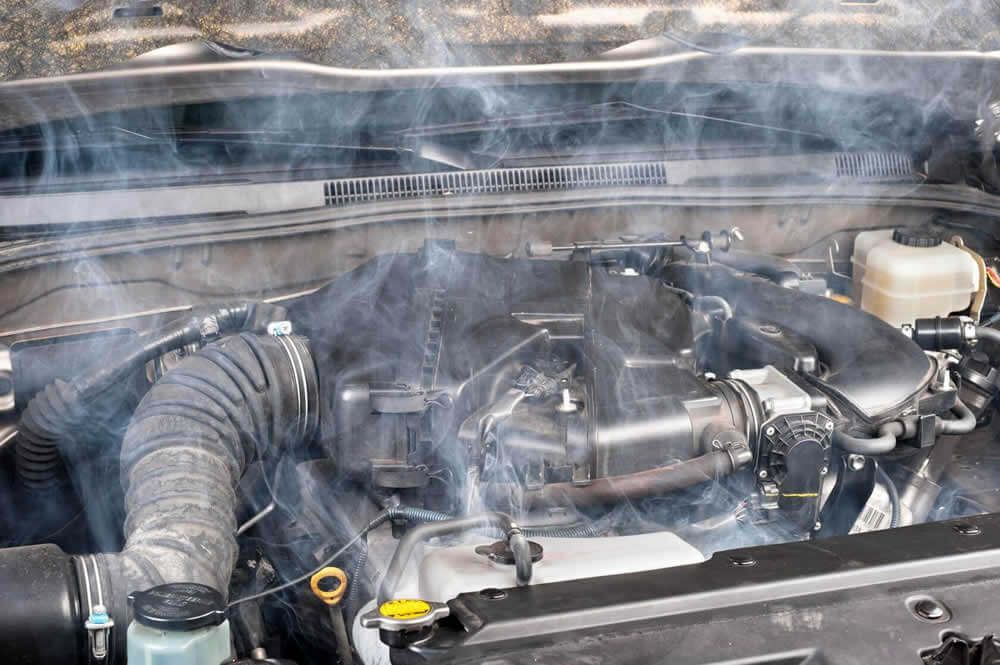
If the coolant warning appears, the temperature gauge enters the overheating range, steam is visible, or coolant is leaking heavily, stop safely and allow the vehicle to cool.
Never remove a radiator cap or pressurized coolant reservoir cap while the engine is hot.
Radiator Maintenance
A radiator does not normally require constant maintenance, but the cooling system should be inspected periodically.
Useful preventive checks include:
-
Checking coolant level
-
Inspecting for leaks
-
Using the correct coolant specification
-
Following the manufacturer's coolant service interval
-
Keeping the radiator and condenser area reasonably clean
-
Checking radiator hoses
-
Checking cooling fan operation
-
Inspecting for corrosion
-
Monitoring engine temperature
Preventing coolant loss and overheating is generally much cheaper than repairing an engine damaged by excessive heat.
Final Thoughts
The radiator is a critical part of the engine cooling system. Its job is to transfer heat from the coolant to the surrounding air and help maintain the engine within its intended operating temperature range.
Common radiator-related symptoms include engine overheating, coolant leaks, low coolant level, coolant smell, abnormal temperature fluctuations, visible radiator damage, and reduced cooling performance.
However, these symptoms can also be caused by the thermostat, water pump, cooling fan, coolant temperature sensor, hoses, or other components. For that reason, a radiator should not be replaced simply because an engine overheats.
A proper cooling-system diagnosis can identify the actual cause and prevent unnecessary parts replacement while protecting the engine from expensive overheating damage.