TR
TR EN
EN

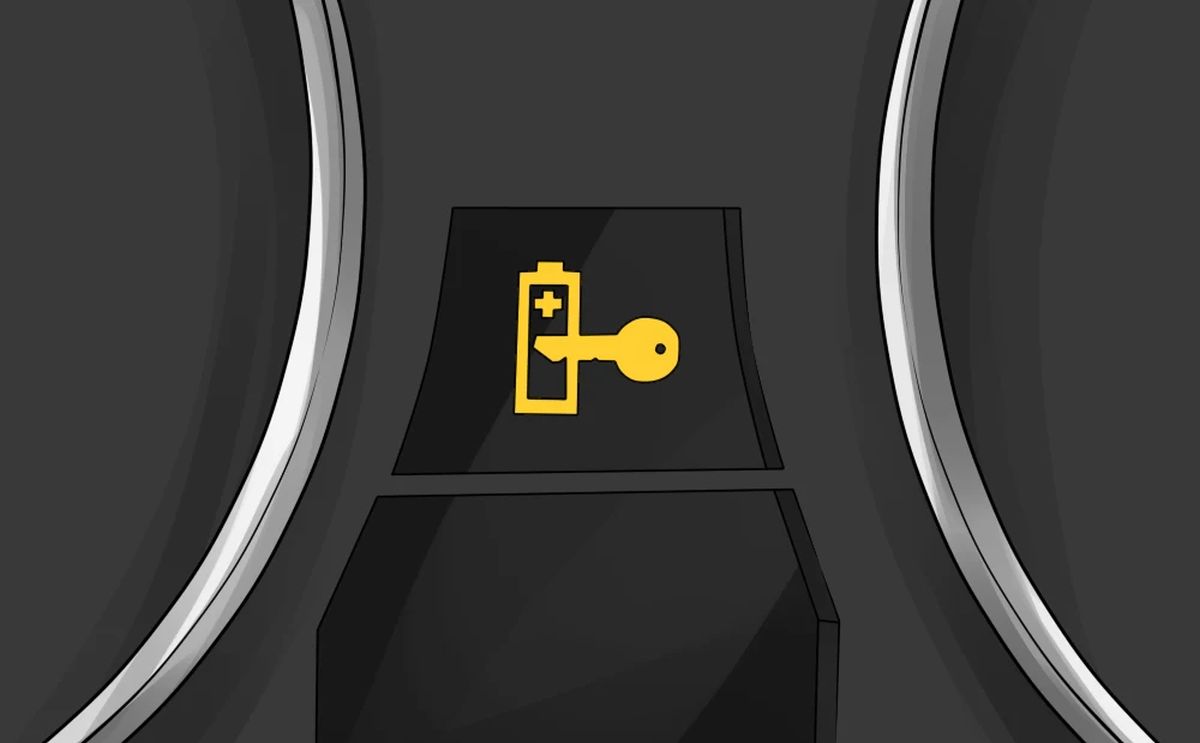
What Does the Key Fob Battery Low Warning Light Mean?
Modern vehicles rely heavily on key fobs for locking, unlocking, starting the engine, and communicating with the vehicle’s security system. Because the key fob communicates wirelessly with the vehicle, it needs its own small battery to operate.
When the key fob battery becomes weak, many vehicles display a Key Fob Battery Low warning message or a warning light on the instrument cluster. This warning generally means that the battery inside the key fob is losing its charge and should be replaced soon.
Although the warning does not normally indicate a problem with the vehicle itself, ignoring it for too long can eventually leave you with a key fob that cannot communicate reliably with the car.
What Is a Key Fob Battery?
A key fob battery is a small coin-cell battery installed inside the vehicle's remote key.
Depending on the vehicle and key design, common battery types include:
-
CR2032
-
CR2025
-
CR2016
-
CR2450
The exact battery specification varies by manufacturer and key fob design. The correct battery should always be confirmed from the owner's manual or the markings on the existing battery.
The battery supplies power to the electronic circuitry inside the key fob, including the transmitter used to communicate with the vehicle.
What Does the Key Fob Battery Low Warning Mean?
The warning means that the vehicle has detected that the key fob's battery voltage is becoming too low.
In many vehicles, the key fob does not continuously report its battery voltage directly. Instead, the vehicle may recognize that the wireless signal from the key is becoming weaker or that communication is becoming less reliable.
The vehicle can then display a message such as:
-
Key Fob Battery Low
-
Replace Key Battery
-
Key Battery Low
-
Key Battery Weak
-
Low Key Battery
-
Key Battery Needs Replacement
The exact wording depends on the manufacturer.
This warning usually refers to the battery inside the key fob, not the vehicle's main 12-volt battery.
Why Does the Key Fob Battery Become Weak?
Key fob batteries are consumable components and gradually lose their capacity over time.
Several factors can affect battery life.
Normal battery aging
Coin-cell batteries have a limited service life. Even when the key is rarely used, the battery can gradually lose its ability to maintain sufficient voltage.
Frequent button use
If the lock, unlock, trunk, panic, or remote-start buttons are used many times every day, the battery may drain faster.
Remote-start systems
Key fobs equipped with remote-start functions may consume more energy because additional wireless communication may be required.
Extreme temperatures
Very cold or very hot conditions can temporarily reduce battery performance and may accelerate battery deterioration.
Accidental button activation
A key fob kept in a pocket or bag can sometimes have its buttons pressed repeatedly without the owner noticing.
What Are the Symptoms of a Weak Key Fob Battery?
The warning light is not always the first indication of a weak battery.
You may notice several changes in the operation of the key fob.
Reduced operating range
One of the most common symptoms is that the remote works only when you are closer to the vehicle.
For example, the doors may previously have locked or unlocked from several meters away, but the key may now need to be much closer to the vehicle.
Intermittent locking and unlocking
The key fob may work normally one time and fail the next time you press the button.
This can happen when the battery voltage is close to the minimum required by the transmitter.
You need to press the button repeatedly
If you have to press the lock or unlock button several times before the vehicle responds, the key fob battery should be considered as one possible cause.
Key not detected message
Vehicles with keyless entry and push-button starting may display messages such as "Key Not Detected" or "Place Key Near Start Button."
A weak key fob battery can cause this, although several other faults can produce the same message.
Remote-start stops working
If the vehicle is equipped with remote start, this function may become unreliable before other key fob functions stop working.
Can a Low Key Fob Battery Prevent the Car From Starting?
It can, depending on the vehicle.
Modern keyless-start systems need to detect the electronic key before allowing the engine to start. If the key fob battery becomes extremely weak or completely discharged, normal wireless communication may no longer work.
However, most manufacturers provide an emergency key detection method.
The vehicle may be designed so that the key fob can still be detected when it is placed:
-
Near the start button
-
In a specific location inside the center console
-
Inside a dedicated key holder
-
Near the steering column
-
In another specified emergency detection area
The exact procedure varies between vehicles.
This is possible because the immobilizer and emergency key detection system can use communication methods that do not depend entirely on the normal operating range of the key fob battery.
Does a Key Fob Battery Warning Mean the Immobilizer Is Faulty?
Usually, no.
A key fob battery warning should not automatically be interpreted as an immobilizer failure.
The key fob contains several different functions. The remote buttons, passive keyless entry, immobilizer authentication, and emergency detection system may not all operate in exactly the same way.
A vehicle may therefore continue to start even when the remote-control range has become very short.
Conversely, a completely discharged key fob battery can cause a key-not-detected condition on some vehicles.
This is why the warning should first be treated as a key fob battery maintenance warning, rather than immediately replacing immobilizer components.
What Causes the Warning Light to Appear After Replacing the Battery?
Sometimes the warning remains after installing a new battery.
This does not necessarily mean that the vehicle has a serious electrical problem.
Possible reasons include:
Incorrect battery type
A battery that physically fits inside the key may still have the wrong specification.
Battery installed upside down
Coin-cell batteries have positive and negative sides. Installing the battery with the wrong polarity can prevent the key fob from operating.
Poor battery contact
The metal contacts inside the key fob can become bent, dirty, or damaged.
If the battery does not make firm contact, the key fob may behave as though the battery is weak.
Low-quality or old replacement battery
A replacement battery can sometimes have insufficient voltage or capacity, particularly if it has been stored for a long time.
Key fob damage
Water intrusion, corrosion, cracked circuit boards, or damaged components can interfere with normal operation.
Vehicle has not updated the warning
Some vehicles may need time or several ignition cycles before the warning disappears. Others may store a diagnostic message until the vehicle detects normal key-fob communication again.
How Do You Replace a Key Fob Battery?
Replacing the battery is usually straightforward, but the procedure varies between key designs.
A typical procedure is:
-
Remove the mechanical emergency key if the fob has one.
-
Open the key fob housing using the designated slot.
-
Carefully separate the two halves of the housing.
-
Identify the battery orientation.
-
Remove the old coin-cell battery.
-
Install the new battery with the correct polarity.
-
Reassemble the key fob.
-
Test the lock and unlock functions.
-
Check whether the warning message disappears.
Do not force the housing apart. Plastic clips inside the key can break if excessive force is used.
Which Key Fob Battery Should You Use?
The correct battery should be selected according to the vehicle manufacturer's specification.
For example, two visually similar key fobs may use different battery sizes.
A CR2032 should not automatically be substituted for a CR2025 simply because both batteries have the same diameter.
Differences in thickness and electrical characteristics can affect how the battery fits and how reliably it contacts the terminals.
The safest approach is to check:
-
The owner's manual
-
The existing battery marking
-
The manufacturer's key-fob specification
Does Replacing the Battery Require Key Reprogramming?
Normally, simply replacing the battery does not erase the key's programming.
The key's electronic identification and immobilizer information are generally stored in non-volatile memory. Removing the coin-cell battery does not normally erase this information.
However, some vehicles may require a synchronization procedure if the remote buttons stop responding after battery replacement.
This is different from immobilizer programming.
If the vehicle starts normally but the remote buttons do not work, a remote synchronization procedure may be required depending on the manufacturer.
What If the New Battery Does Not Fix the Problem?
If the key fob still has a very short range or does not work after installing a new battery, the battery may not be the real problem.
Possible causes include:
-
Damaged key fob circuit board
-
Corroded battery contacts
-
Faulty buttons
-
Internal water damage
-
Damaged antenna
-
Weak or damaged transmitter
-
Key fob synchronization problem
-
Vehicle receiver problem
-
Body control module fault
-
Wiring or communication problems
-
Radio-frequency interference
In this situation, replacing batteries repeatedly is unlikely to solve the underlying problem.
Can a Vehicle Battery Cause a Key Fob Battery Warning?
The vehicle's 12-volt battery and the key fob battery are separate power sources.
A weak vehicle battery normally does not directly mean that the key fob battery is low.
However, low vehicle voltage can cause various electrical and communication warnings, especially on modern vehicles with multiple control modules.
If several unrelated warning lights appear at the same time, the vehicle's main battery and charging system should also be checked.
A key fob battery warning by itself, however, normally points toward the key fob.
Can Interference Affect Key Fob Operation?
Yes.
Radio-frequency interference can reduce the effective range of a key fob even when the battery is healthy.
Potential sources include:
-
Strong radio transmitters
-
Certain security systems
-
Electronic equipment
-
Underground parking structures
-
Buildings with heavy electromagnetic interference
If the key works normally in one location but barely works in another, interference should be considered.
A genuine low-battery warning, however, should still be investigated by checking the key fob battery first.
What Should You Do When the Warning Appears?
A key fob battery warning is generally not an emergency.
You can usually continue driving, but replacing the battery soon is recommended.
Waiting until the battery completely fails can create unnecessary inconvenience, particularly if the vehicle uses keyless entry and push-button starting.
It is also a good idea to keep the mechanical emergency key available if your vehicle has one.
Can You Still Unlock the Vehicle With a Dead Key Fob Battery?
In most modern vehicles, there is an emergency procedure.
The mechanical key hidden inside the key fob can often be used to unlock the driver's door.
If the vehicle has push-button starting, the manufacturer may provide a specific location where the key fob must be placed so the vehicle can detect it even when the fob battery is discharged.
The exact procedure should be checked in the owner's manual because the location differs significantly between vehicle models.
Is It Safe to Drive With the Key Fob Battery Warning On?
Yes, in most cases.
The warning itself normally does not indicate an engine, transmission, brake, or other mechanical failure.
The main risk is that the key fob battery may eventually become too weak for normal remote communication.
This can lead to:
-
The remote not unlocking the vehicle
-
The vehicle failing to recognize the key normally
-
Keyless entry becoming unreliable
-
Remote start becoming unavailable
-
A key-not-detected message appearing
Replacing the battery early is therefore a simple way to prevent a potentially inconvenient situation.
When Should You Have the Key Fob Checked?
Professional diagnosis may be appropriate if a new battery does not solve the problem.
You should consider having the key and vehicle inspected if:
-
The warning remains with a new battery
-
The key fob range is extremely short
-
The buttons work intermittently
-
The vehicle frequently displays "Key Not Detected"
-
The spare key works normally but the main key does not
-
The key fob has been exposed to water
-
The vehicle cannot detect either key
-
Several electronic warnings appear simultaneously
A technician can test the key fob transmitter, battery voltage, signal strength, vehicle receiver, and relevant control modules.
Key Fob Battery Warning vs Vehicle Battery Warning
These two warnings should not be confused.
A key fob battery warning refers to the small battery inside the remote key.
A vehicle battery warning generally refers to the vehicle's charging system or 12-volt electrical supply.
They are completely different systems.
If the dashboard specifically says that the key battery is low, replacing the key fob battery is normally the first and simplest step.
Final Thoughts
The Key Fob Battery Low warning light or message generally means that the small coin-cell battery inside the vehicle's key fob is becoming weak.
The most common symptoms are reduced remote range, intermittent button operation, repeated button presses, and eventually a key-not-detected condition on some keyless vehicles.
Replacing the battery is usually inexpensive and straightforward. However, the correct battery type, polarity, and physical contact are important.
If the warning remains after replacement, do not immediately assume that the vehicle's immobilizer or electronic control system has failed. The problem could instead involve the key fob contacts, transmitter, synchronization, receiver, wiring, or another component of the keyless-entry system.
The most important point is that a key fob battery warning is normally a maintenance warning, not evidence of a major vehicle fault.