TR
TR EN
EN

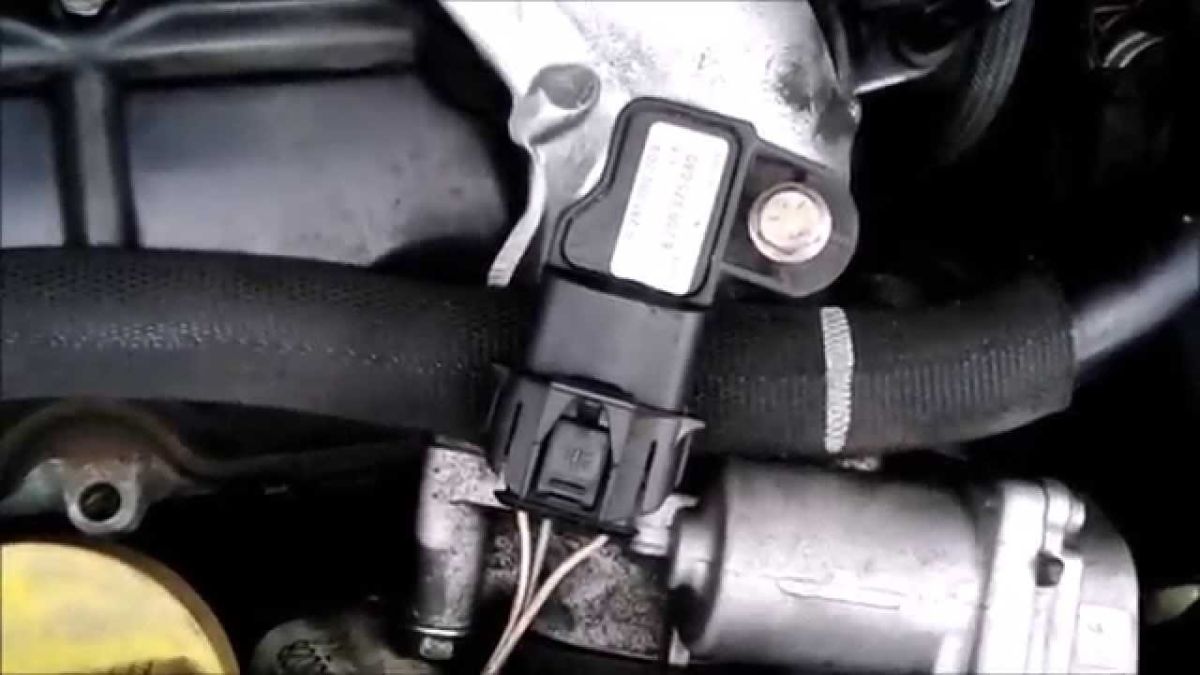
What Is a Turbo Boost Pressure Sensor? Symptoms and Causes of Failure
The Turbo Boost Pressure Sensor, also called a Turbocharger Boost Pressure Sensor or, on many vehicles, a MAP (Manifold Absolute Pressure) Sensor, is an electronic sensor that measures the pressure of the air being supplied to the engine by the turbocharger.
The sensor sends pressure information to the ECU/ECM, which uses it to determine how much boost the engine is actually receiving and whether that pressure matches the requested operating conditions.
On turbocharged engines, this information is particularly important because the ECU needs to know whether the turbocharger is producing the expected amount of boost. The ECU can then adjust systems such as fuel injection, ignition, boost control and, depending on the engine, EGR or variable geometry turbocharger control. (Toyota Türkiye Blog)
A fault in the boost pressure sensor does not necessarily mean that the turbocharger itself is defective. A damaged sensor, contaminated sensing element, wiring problem, boost leak or turbocharger control problem can all result in similar symptoms.
How Does a Turbo Boost Pressure Sensor Work?
The sensor converts air pressure into an electrical signal.
Depending on the vehicle, the sensor may measure absolute pressure rather than simply "boost pressure." This distinction is important because absolute pressure includes atmospheric pressure.
The ECU receives the sensor signal and compares it with the pressure it expects under the current operating conditions.
For example, during light engine load, boost pressure may be relatively low. When the driver accelerates heavily, the turbocharger begins supplying more compressed air and the pressure in the intake system increases.
The ECU continuously monitors these changes.
If the pressure reported by the sensor does not correspond to the expected pressure for engine speed, throttle/load and turbocharger operation, a diagnostic fault may be stored.
Some turbocharged engines use a MAP sensor as the boost-pressure measurement device, while others may use separate pressure sensors at different points in the intake or charge-air system. The terminology and sensor arrangement therefore vary between manufacturers. (Toyota Türkiye Blog)
Where Is the Turbo Boost Pressure Sensor Located?
The exact location depends on the engine design.
It is commonly installed:
-
On the intake manifold
-
In the charge-air pipe
-
After the intercooler
-
Near the throttle body
-
Directly in the intake system
-
In another location specified by the manufacturer
On some turbocharged engines, the sensor is positioned after the intercooler so that it can monitor the pressure of the compressed air entering the engine.
Some sensors also incorporate an Intake Air Temperature (IAT) sensor. In that case, one component measures both pressure and intake-air temperature.
Because manufacturers use different intake layouts, the exact location should always be confirmed using the vehicle's service information.
What Does the Turbo Pressure Sensor Do?
The sensor provides the ECU with information about actual intake pressure.
The ECU can use this information to:
-
Monitor turbocharger boost
-
Calculate engine load
-
Adjust fuel injection
-
Control ignition timing on gasoline engines
-
Control turbocharger actuators
-
Monitor wastegate or variable-geometry turbocharger operation
-
Control EGR strategies on some engines
-
Detect excessive boost
-
Detect insufficient boost
-
Protect the engine from abnormal boost conditions
The sensor therefore acts as the ECU's pressure feedback source.
The turbocharger produces the boost, but the sensor tells the ECU what pressure is actually present.
Turbo Boost Pressure Sensor vs. MAP Sensor
These terms can sometimes create confusion.
On many modern turbocharged engines, the MAP sensor is effectively the boost-pressure sensor because it measures the absolute pressure in the intake manifold or charge-air system.
However, some engines use multiple pressure sensors.
One sensor may measure pressure before or after the turbocharger, while another measures pressure closer to the intake manifold.
Therefore, it is not always correct to assume that every vehicle has a separate component officially called a "Turbo Boost Pressure Sensor."
The safest approach is to identify the sensor by its location, part number and manufacturer documentation.
Symptoms of a Bad Turbo Boost Pressure Sensor
A defective or inaccurate boost pressure sensor can cause several noticeable driving problems.
Loss of Engine Power
One of the most common symptoms is a noticeable reduction in engine performance.
The ECU depends on pressure information to determine how much air is entering the engine. If the sensor provides incorrect information, the ECU may limit engine output as a protective measure.
The vehicle may feel unusually weak, particularly during acceleration or when climbing a hill.
Poor Acceleration
Turbocharged engines normally develop significantly more torque as boost pressure builds.
If the ECU receives an implausible boost signal, acceleration can become slow or inconsistent.
The driver may feel that the turbocharger is not producing its normal power.
Turbocharger Appears Not to Work
A faulty sensor can make it appear as though the turbocharger has failed.
However, the turbocharger may actually be mechanically healthy.
If the ECU cannot trust the pressure signal, it may reduce or disable boost control to protect the engine.
This is one reason why a boost-pressure sensor should be tested before replacing an expensive turbocharger.
Limp Mode
The ECU may place the engine into a reduced-power or limp-home mode when it detects an implausible boost condition.
The purpose is to prevent excessive boost, incorrect fueling or other potentially damaging operating conditions.
In some cases, restarting the vehicle may temporarily restore normal performance until the fault is detected again.
Check Engine Light
A boost-pressure sensor or its circuit can trigger the Check Engine Light.
Possible diagnostic trouble codes include codes in the P0235–P0239 range, although the exact code depends on the vehicle and the particular fault.
For example, P0236 generally relates to boost sensor circuit range/performance, while P0237 and P0238 concern low and high circuit conditions respectively. The exact diagnostic strategy remains manufacturer-dependent. (iCarsoft)
Poor Fuel Economy
An incorrect pressure signal can cause the ECU to calculate engine load incorrectly.
This can affect fueling and other control strategies, potentially resulting in increased fuel consumption.
However, poor fuel economy alone does not prove that the boost sensor is defective. Fuel pressure, injectors, MAF readings, oxygen sensors, boost leaks and many other problems can produce similar symptoms.
Rough or Unstable Engine Operation
Depending on the engine strategy, an inaccurate pressure signal can contribute to:
-
Rough idle
-
Hesitation
-
Surging
-
Unstable acceleration
-
Delayed throttle response
-
Misfiring or poor combustion
These symptoms are not exclusive to the boost sensor and should be investigated together with other diagnostic information.
Common Causes of Turbo Boost Pressure Sensor Failure
A boost pressure sensor can fail for several different reasons. The sensor itself is only one possibility.
Sensor Contamination
Turbocharged engines can expose the intake system to oil vapor, EGR deposits, soot and other contaminants.
Over time, contamination can accumulate around the sensor's pressure port or sensing element.
If the pressure passage becomes restricted, the sensor may respond incorrectly or more slowly than expected.
This is particularly relevant on engines with significant EGR or crankcase ventilation deposits.
Oil Contamination
A small amount of oil vapor in the intake system can be normal on many engines.
However, excessive oil contamination can occur because of problems involving the crankcase ventilation system, turbocharger or other components.
If the sensor becomes heavily contaminated, its pressure reading may become inaccurate.
Damaged Wiring
The sensor depends on its electrical connection to the ECU.
Wiring can be damaged by:
-
Engine vibration
-
Excessive heat
-
Chafing
-
Oil contamination
-
Previous repairs
-
Incorrect routing
-
Rodent damage
An electrical problem can therefore produce symptoms that look like a defective sensor.
Corroded or Loose Connector
A poor connection at the sensor can cause intermittent or incorrect pressure readings.
Water intrusion, corrosion, bent terminals or loose pins should be checked carefully.
An intermittent connector problem can be particularly difficult to diagnose because the sensor may appear to work normally during a basic inspection.
Short Circuit or Open Circuit
The sensor circuit normally includes a power/reference supply, ground and signal circuit, although the exact configuration varies.
A short to ground, short to voltage, open circuit or high resistance can cause an abnormal sensor signal.
For example, a circuit-high diagnostic code generally describes an electrical signal that is higher than the expected range. It does not automatically mean that the turbocharger is producing excessive boost.
Likewise, a circuit-low code does not automatically mean that the turbocharger is producing insufficient boost.
The electrical circuit must be tested before condemning the turbocharger.
Boost Leak
A cracked intercooler hose, loose clamp, damaged charge pipe or leaking intercooler can cause the actual boost pressure to differ from what the ECU expects.
This can trigger a boost-related fault even when the pressure sensor itself is perfectly healthy.
Common leak locations include:
-
Turbocharger outlet connections
-
Intercooler hoses
-
Intercooler end tanks
-
Charge pipes
-
Throttle-body connections
-
Intake manifold connections
A boost leak should therefore be considered whenever the measured pressure is lower than expected.
Turbocharger Control Problem
The turbocharger itself may be unable to produce the requested pressure.
Possible causes include:
-
Wastegate problems
-
Variable geometry mechanism problems
-
Turbocharger actuator faults
-
Boost control solenoid problems
-
Vacuum supply problems
-
Exhaust restrictions
-
Mechanical turbocharger damage
In such cases, replacing the pressure sensor will not solve the underlying problem.
How Is a Turbo Boost Pressure Sensor Diagnosed?
The best diagnosis starts with a complete scan rather than immediately replacing the sensor.
First, all stored DTCs should be checked along with the freeze-frame information.
The technician should then examine the boost-pressure value using live data.
One useful check is to compare the sensor reading with atmospheric pressure when the engine is off and the intake system has equalized with ambient pressure. The exact expected value depends on altitude and atmospheric conditions.
The sensor should then be monitored while the engine is running and under load.
The technician can compare:
Requested boost pressure
with
Actual measured boost pressure
If the ECU requests increased boost but the measured pressure does not rise appropriately, further testing is required.
The problem could be:
-
Sensor
-
Wiring
-
Boost leak
-
Wastegate
-
VGT mechanism
-
Turbo actuator
-
Boost control valve
-
Exhaust restriction
-
Turbocharger
-
Another engine-management problem
Do Not Replace the Turbocharger Based on a Boost Sensor Code
This is particularly important because turbocharger replacement can be expensive.
A code such as P0236 Turbocharger Boost Sensor A Circuit Range/Performance does not automatically mean that the turbocharger has failed.
The ECU is reporting that the sensor signal is outside the expected relationship or operating range.
The actual cause could be the sensor, wiring, connector, intake system, boost leak or turbocharger control system. (Duci Motors)
The same principle applies in the opposite direction. A boost leak can cause insufficient measured boost even though the sensor is working perfectly.
Can a Dirty Boost Sensor Be Cleaned?
Sometimes contamination can be removed, but caution is necessary.
Not every pressure sensor is designed to be cleaned using aggressive solvents.
The sensing element is delicate, and forcing tools into the pressure opening can damage it.
If cleaning is permitted by the manufacturer, the recommended cleaning method should be followed. Otherwise, replacing a contaminated or damaged sensor may be the safer solution.
It is also important to determine why the sensor became contaminated.
If excessive oil or deposits are entering the intake system, cleaning the sensor without addressing the underlying problem may only provide a temporary solution.
Is It Safe to Drive With a Faulty Turbo Pressure Sensor?
It depends on the fault.
If the vehicle has entered limp mode and has significantly reduced power, it should not be treated as a problem that can simply be ignored.
A faulty sensor can result in incorrect boost control, and in some circumstances an inaccurate pressure signal can contribute to improper engine operation.
If there is severe power loss, abnormal turbocharger noise, heavy smoke, excessive boost, engine knocking, overheating or other serious symptoms, continued driving should be avoided until the vehicle is diagnosed.
Turbo Pressure Sensor Failure vs. Turbocharger Failure
These two problems can produce very similar symptoms.
A faulty sensor may cause:
-
Low power
-
Poor acceleration
-
Check Engine Light
-
Limp mode
-
Incorrect boost readings
A mechanically defective turbocharger can produce many of the same symptoms.
This is why the pressure signal should be compared with the actual behavior of the turbocharging system.
A proper diagnosis should determine whether the sensor is reporting the wrong pressure or whether the engine is genuinely producing the wrong pressure.
That distinction can prevent an unnecessary turbocharger replacement.
Final Thoughts
The Turbo Boost Pressure Sensor is an important part of modern turbocharged engine management. It gives the ECU information about the pressure in the intake or charge-air system, allowing the control unit to monitor and regulate turbocharger operation.
When the sensor fails, the symptoms can range from a Check Engine Light and poor acceleration to limp mode and significant power loss.
However, a boost-pressure fault does not automatically mean that the sensor itself is defective. Wiring problems, contaminated sensing ports, electrical faults, boost leaks, turbocharger actuators, wastegates, variable-geometry mechanisms and the turbocharger itself can all produce similar symptoms.
The most reliable approach is therefore to compare requested boost with actual boost, inspect the sensor and wiring, check the intake and intercooler system for leaks, and then evaluate the turbocharger control system before replacing expensive components. (PicoScope Automotive)