TR
TR EN
EN

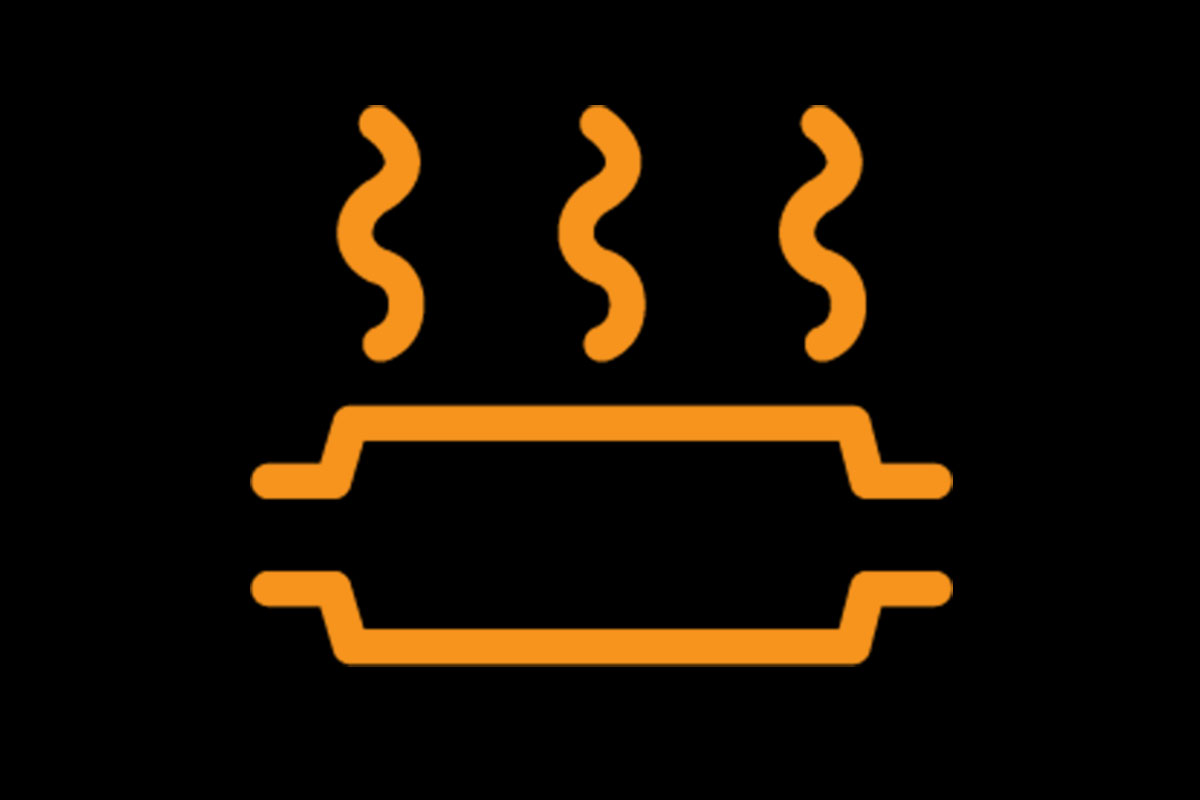
Why Does the Catalytic Converter Warning Light Come On?
The catalytic converter warning light can come on when the vehicle detects a problem with the exhaust emission system or determines that the catalytic converter is not operating efficiently enough.
The catalytic converter is an important component of the exhaust system. Its job is to convert harmful exhaust gases into less harmful compounds before they leave the vehicle.
The engine control unit (ECU) continuously monitors engine operation and emissions-related data from oxygen sensors and other sensors to determine whether the emission system is operating correctly.
However, there is an important distinction:
A catalytic converter warning does not automatically mean that the catalytic converter itself is defective.
Problems with the ignition system, fuel mixture, oxygen sensors, exhaust leaks, fuel injectors, or engine combustion can also cause a catalytic-converter-related fault.
What Is a Catalytic Converter?
A catalytic converter is an emissions-control component installed in the exhaust system.
Inside the converter is a honeycomb-like substrate coated with catalytic materials. Depending on the design, these materials can include precious metals that promote chemical reactions in the exhaust gases.
On gasoline engines, the catalytic converter primarily helps reduce:
-
Carbon monoxide (CO)
-
Unburned hydrocarbons (HC)
-
Nitrogen oxides (NOx)
For the catalytic converter to work effectively, the engine must also operate within the appropriate air-fuel mixture range.
A catalytic converter cannot compensate indefinitely for an engine that is running incorrectly.
How Does the Catalytic Converter Warning System Work?
Modern vehicles generally do not monitor the catalytic converter with a single dedicated sensor.
On many gasoline engines, oxygen sensors are positioned before and after the catalytic converter.
The upstream oxygen sensor monitors the exhaust gases entering the catalytic converter.
The downstream oxygen sensor monitors the exhaust gases leaving it.
When the catalytic converter is functioning properly, the signals from these sensors should show different characteristics.
The engine control unit can compare these signals and estimate whether the catalytic converter is storing oxygen and processing exhaust gases effectively.
If the expected difference between the upstream and downstream sensor signals is not present, the ECU may determine that catalytic converter efficiency has fallen below the expected level.
What Is the Most Common Cause of a Catalytic Converter Warning?
One of the most common causes is reduced catalytic converter efficiency.
Catalytic converters can deteriorate over time.
High temperatures, contamination, prolonged misfires, excessive fuel, oil consumption, and other engine problems can damage the catalyst material.
A vehicle may then store a diagnostic trouble code indicating that the catalyst efficiency is below the expected threshold.
One commonly known example is:
P0420 – Catalyst System Efficiency Below Threshold (Bank 1)
However, seeing P0420 does not automatically mean that the catalytic converter must be replaced.
The code indicates that the system has detected insufficient catalyst efficiency. The reason for that condition still needs to be determined.
Can a Faulty Oxygen Sensor Cause a Catalytic Converter Warning?
Yes.
Oxygen sensors play an important role in monitoring the operation of the emission system.
If an oxygen sensor provides inaccurate or delayed information, the ECU may incorrectly determine that the catalytic converter is not functioning properly.
Possible oxygen sensor problems include:
-
Sensor failure
-
Slow sensor response
-
Damaged sensor wiring
-
Corroded connectors
-
Poor electrical connections
-
Exhaust contamination
-
Exhaust leaks affecting sensor readings
For this reason, oxygen sensor data should be checked before replacing an expensive catalytic converter.
Can an Engine Misfire Damage the Catalytic Converter?
Yes. A prolonged or severe engine misfire can cause serious catalytic converter damage.
If combustion does not occur correctly inside a cylinder, unburned fuel can enter the exhaust system.
The catalytic converter normally operates at very high temperatures. When excessive unburned fuel reaches it, additional combustion can occur inside the converter.
This can cause the catalytic converter to overheat.
Extreme temperatures can melt or damage the internal catalyst material.
This creates an important relationship between engine misfires and catalytic converter failure.
Sometimes the catalytic converter fails first.
In other cases, an ignition or fuel-system problem causes repeated misfires and eventually damages the catalytic converter.
Can Spark Plugs and Ignition Coils Cause the Warning Light?
Yes.
On gasoline engines, problems with components such as:
-
Spark plugs
-
Ignition coils
-
Spark plug wires
-
Fuel injectors
can cause engine misfires.
A misfiring engine can send unburned fuel into the exhaust system, potentially overheating the catalytic converter.
Therefore, when a catalytic converter-related fault is detected, the ignition system should also be inspected.
Replacing the catalytic converter without fixing an underlying misfire can result in the replacement converter failing again.
Can the Fuel Mixture Affect the Catalytic Converter?
Yes.
The catalytic converter depends on the engine operating within the appropriate air-fuel range.
A mixture that is excessively rich or excessively lean can affect emissions and catalytic converter operation.
A rich mixture means that the engine is receiving more fuel than required for the operating conditions.
This can increase the amount of unburned fuel entering the exhaust.
A lean mixture means that there is too much air relative to the amount of fuel.
Both conditions can interfere with normal combustion and emissions control.
Possible causes include:
-
MAF sensor problems
-
MAP sensor problems
-
Oxygen sensor faults
-
Incorrect fuel pressure
-
Faulty fuel injectors
-
Fuel pressure regulator problems
-
Vacuum leaks
-
Intake leaks
-
EVAP system problems
-
Engine coolant temperature sensor faults
Therefore, the fuel mixture should be checked before condemning the catalytic converter.
Can an Exhaust Leak Cause a Catalytic Converter Warning?
Yes.
An exhaust leak located upstream of an oxygen sensor can significantly affect sensor readings.
If outside air enters the exhaust system through a leak, the oxygen sensor may detect more oxygen than would normally be present.
The ECU can interpret this information incorrectly and may set an emissions-related fault code.
For this reason, exhaust leaks should be checked before replacing the catalytic converter.
Particular attention should be paid to leaks near:
-
Exhaust manifolds
-
Manifold gaskets
-
Exhaust pipes
-
Oxygen sensor mounting points
-
Catalytic converter connections
Can a Clogged Catalytic Converter Cause a Warning Light?
Yes, although the warning may not always specifically identify a blockage.
A catalytic converter can become restricted if its internal honeycomb structure melts, collapses, breaks apart, or becomes severely contaminated.
This increases exhaust backpressure.
As exhaust gases struggle to leave the engine, engine performance can deteriorate.
Possible symptoms include:
-
Severe loss of power
-
Poor acceleration
-
Weak high-RPM performance
-
Slow throttle response
-
Difficulty starting
-
Increased fuel consumption
-
Rough idle
-
Excessive exhaust temperature
-
Engine stalling
A vehicle with a restricted catalytic converter may sometimes drive reasonably well at low engine speeds but lose significant power at higher RPM.
Exhaust backpressure testing can help determine whether the exhaust system is restricted.
What Happens When the Internal Catalytic Converter Breaks Apart?
The internal substrate can crack, melt, or break into pieces due to excessive heat, physical impact, or thermal shock.
When this happens, the driver may hear a rattling or metallic noise from underneath the vehicle.
In some cases, loose pieces inside the converter can move when the exhaust system is disturbed.
However, a rattling noise alone is not sufficient to confirm a catalytic converter failure.
A physical inspection and appropriate diagnostic testing should be performed.
If the broken material moves into the exhaust passage, it can also contribute to exhaust restriction.
Why Does a Catalytic Converter Fail?
Catalytic converters often fail because of another underlying engine or exhaust problem rather than simply failing without a cause.
Common causes include:
-
Long-term engine misfires
-
Excessively rich fuel mixture
-
Incorrect ignition timing
-
Faulty ignition components
-
Fuel injector problems
-
Engine oil entering the combustion chamber
-
Coolant entering the combustion chamber
-
Excessive exhaust temperatures
-
Physical impact
-
Thermal shock
-
Long-term engine operation with incorrect combustion
-
Contamination
Oil or coolant entering the exhaust can contaminate the catalyst and reduce its ability to perform chemical reactions effectively.
This is why the underlying cause should always be identified before installing a replacement catalytic converter.
What Are the Symptoms of a Bad Catalytic Converter?
A catalytic converter problem can produce several different symptoms.
Common signs include:
-
Check engine light
-
Catalytic converter-related fault codes
-
Reduced engine performance
-
Poor acceleration
-
Loss of power at high RPM
-
Increased fuel consumption
-
Unusual exhaust odor
-
Rattling from the exhaust system
-
Rough idle
-
Difficult starting
-
Excessive exhaust temperature
-
Failed emissions testing
However, none of these symptoms alone proves that the catalytic converter is defective.
Several other engine and exhaust problems can produce similar symptoms.
Can a Bad Catalytic Converter Increase Fuel Consumption?
It can, particularly if the catalytic converter is restricted.
When exhaust flow is restricted, the engine has difficulty expelling exhaust gases.
The resulting increase in exhaust backpressure can reduce engine efficiency and performance.
The driver may then use more throttle to achieve the same acceleration, which can increase fuel consumption.
However, increased fuel consumption has many possible causes.
A fuel consumption problem should therefore not automatically be blamed on the catalytic converter.
Can a Catalytic Converter Problem Reduce Engine Performance?
It depends on the type of failure.
A catalytic converter that has simply lost some of its emissions efficiency may not cause any noticeable performance loss.
A severely restricted converter is different.
If exhaust gases cannot escape efficiently, engine performance can deteriorate significantly.
The problem may be especially noticeable at higher engine speeds because the engine needs to move a greater volume of exhaust gas.
A vehicle that feels relatively normal at low RPM but becomes extremely weak at high RPM may have an exhaust restriction, although other causes are also possible.
What Should You Do When the Catalytic Converter Warning Light Comes On?
The first step is to read the diagnostic trouble codes.
An OBD diagnostic scanner can provide important information about the system.
If a code such as P0420 is stored, the following areas should be considered:
-
Catalytic converter
-
Upstream oxygen sensor
-
Downstream oxygen sensor
-
Ignition system
-
Fuel system
-
Air-fuel mixture
-
Exhaust system
-
Exhaust leaks
-
Engine operating temperature
-
Engine misfires
Live data can also be extremely useful.
The behavior of the upstream and downstream oxygen sensors can be compared to determine whether the catalytic converter is actually functioning as expected.
How Is a Catalytic Converter Tested?
Several diagnostic methods can be used.
OBD live data
The oxygen sensor signals can be monitored while the engine is operating under different conditions.
Exhaust backpressure testing
This can help determine whether the catalytic converter or another exhaust component is restricting gas flow.
Temperature testing
The temperature at the inlet and outlet of the catalytic converter can be measured under appropriate operating conditions.
Exhaust leak inspection
Leaks, especially those located before an oxygen sensor, should be identified and repaired.
Physical inspection
The converter housing, mounting points, connections, and possible internal rattling should be inspected.
No single test should automatically determine that the catalytic converter needs replacement.
The available evidence should be evaluated together.
Can a Catalytic Converter Be Cleaned?
Various cleaning products and chemical treatments are marketed for catalytic converter problems.
However, cleaning is not a universal solution.
If the internal catalyst has melted, cracked, collapsed, or physically broken apart, cleaning cannot restore the damaged material.
Likewise, if the converter is contaminated because the engine is burning oil or coolant, cleaning the converter without repairing the engine problem is unlikely to provide a permanent solution.
Cleaning should therefore only be considered when the actual condition of the catalytic converter and the cause of the problem support it.
Does a Catalytic Converter Always Need to Be Replaced?
No.
A catalytic converter should not automatically be replaced whenever a catalytic-converter-related fault code appears.
For example, a P0420 fault could potentially be related to:
-
A degraded catalytic converter
-
A faulty oxygen sensor
-
An exhaust leak
-
Incorrect air-fuel mixture
-
Engine misfires
-
Fuel system problems
If the catalytic converter is functioning correctly and an oxygen sensor is defective, replacing the sensor may resolve the problem.
On the other hand, if the oxygen sensors and engine operating conditions are normal but catalyst efficiency has genuinely deteriorated, replacement may be necessary.
Is the Catalytic Converter Warning Light the Same as the Check Engine Light?
Many vehicles do not have a separate dedicated catalytic converter warning lamp.
Instead, catalytic converter and emissions-related problems are commonly displayed through the Check Engine Light, also known as the Malfunction Indicator Lamp (MIL).
The familiar yellow engine-shaped warning light can therefore represent many different problems.
A Check Engine Light by itself does not prove that the catalytic converter is defective.
The stored diagnostic codes and operating data must be evaluated.
What Does a Flashing Check Engine Light Mean?
A flashing Check Engine Light requires particular attention.
On many vehicles, a flashing Check Engine Light can indicate a severe engine misfire.
A serious misfire can send large quantities of unburned fuel into the catalytic converter and cause it to overheat.
If the light is flashing and the engine is also:
-
Misfiring
-
Shaking
-
Losing power
-
Running very roughly
continuing to drive aggressively can cause additional damage.
The vehicle should be diagnosed as soon as possible.
Can You Drive With a Catalytic Converter Warning Light On?
It depends on the underlying problem.
If the vehicle is running normally and the fault is limited to an emissions-efficiency issue, it may still be possible to drive for a limited period.
However, the problem should not simply be ignored.
Driving should be treated much more seriously if there is:
-
Severe loss of power
-
A flashing Check Engine Light
-
Continuous engine misfire
-
Excessive exhaust temperature
-
Strong abnormal exhaust odor
-
Evidence of exhaust restriction
-
Severe engine running problems
A prolonged misfire can damage the catalytic converter very quickly.
Why Should You Fix the Underlying Problem Before Replacing the Catalytic Converter?
The catalytic converter is often the final component affected by an engine or fuel-system problem.
For example, a faulty ignition coil may cause repeated misfires.
Those misfires can send unburned fuel into the exhaust.
The excessive heat can then damage the catalytic converter.
If the mechanic simply replaces the catalytic converter without replacing the faulty ignition coil, the new converter may suffer the same damage.
The same principle applies to:
-
Faulty injectors
-
Rich fuel mixture
-
Oil consumption
-
Coolant consumption
-
Oxygen sensor problems
-
Exhaust leaks
-
Incorrect fuel pressure
Finding the root cause is therefore essential.
Conclusion
The catalytic converter warning light indicates that the vehicle's emissions system needs to be inspected, but it does not automatically mean that the catalytic converter itself needs to be replaced.
A degraded catalytic converter is certainly one possible cause, but oxygen sensors, ignition problems, fuel mixture problems, fuel injectors, exhaust leaks, engine misfires, and exhaust restrictions can produce similar symptoms and fault codes.
When a code such as P0420 is stored, the correct approach is to examine the oxygen sensor data, engine operation, fuel mixture, ignition system, and exhaust system before condemning the catalytic converter.
The most important diagnostic principle is simple:
Do not replace the catalytic converter just because the fault code mentions catalyst efficiency. Find out why the system is reporting low efficiency first.
This approach helps prevent unnecessary parts replacement and, more importantly, prevents a new catalytic converter from being damaged by an unresolved engine or fuel-system problem.