TR
TR EN
EN

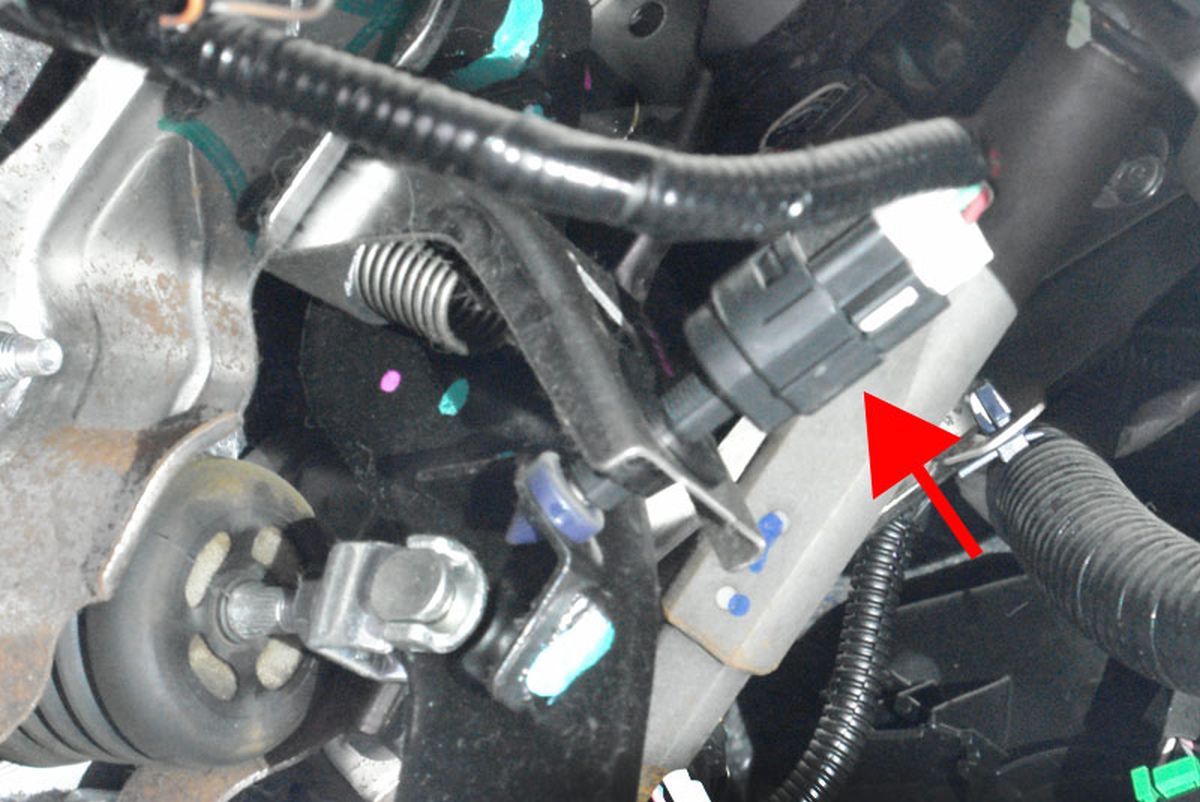
What Is a Brake Light Switch? What Are the Symptoms of Brake Light Switch Failure?
The brake light switch, commonly called the brake pedal switch, is a small but extremely important component installed near the brake pedal.
Its primary job is to detect when the driver presses the brake pedal and send an electrical signal to the vehicle's electronic systems. This signal is used not only to turn on the brake lights, but also to inform various control modules that the brake pedal has been applied.
In modern vehicles, the brake light switch can therefore affect much more than the rear brake lights.
A faulty brake light switch may cause brake lights to remain on, fail to illuminate, cruise control to stop working, transmission shift problems, starting problems on some automatic vehicles, ABS/ESP warnings, or various communication and plausibility faults.
Because the switch is relatively inexpensive and mechanically simple, it is sometimes overlooked when diagnosing electronic problems.
How Does the Brake Light Switch Work?
The brake light switch is normally mounted on or near the brake pedal bracket.
When the brake pedal is released, the switch remains in its normal position.
When the driver presses the brake pedal, the switch changes state and sends an electrical signal to the vehicle.
Depending on the vehicle design, the switch may contain one or more internal circuits.
Some systems use separate signals for different functions, such as:
-
Brake light control
-
ECU brake-pedal input
-
Cruise control cancellation
-
Transmission control
-
ABS/ESP systems
-
Start authorization
-
Hill-start or brake-related functions
-
Stop/start system logic
Modern vehicles may use either a conventional electrical switch or a more sophisticated multi-circuit brake pedal sensor.
Therefore, the exact operation depends on the vehicle's electrical architecture.
Why Is the Brake Light Switch Important?
The most obvious function of the brake switch is controlling the brake lights.
When the driver presses the brake pedal, the switch allows the brake lights to illuminate so that following drivers know the vehicle is slowing down.
But the vehicle's electronic control units may also use the same brake-pedal signal.
For example, the engine control system may need to know whether the accelerator and brake pedals are being pressed at the same time.
The cruise-control system needs the brake signal so that it can immediately disengage when the driver applies the brakes.
An automatic transmission may also use brake-pedal information for functions such as shift interlock.
This means a small switch can influence several systems simultaneously.
Symptoms of a Bad Brake Light Switch
A defective brake light switch can produce different symptoms depending on which internal circuit has failed.
Common symptoms include:
-
Brake lights do not work
-
Brake lights remain on
-
Brake lights operate intermittently
-
Cruise control stops working
-
Cruise control cannot be activated
-
Gear selector cannot be moved from Park on some vehicles
-
Engine starting problems on some vehicles
-
ABS or ESP warning lights
-
Traction-control warnings
-
Stop/start system becomes unavailable
-
Transmission-related symptoms
-
Brake-pedal signal appears incorrectly in live data
-
Diagnostic trouble codes related to the brake switch
Not every vehicle will experience all of these symptoms.
Brake Lights Stay On
One of the most recognizable symptoms is brake lights that remain illuminated even when the brake pedal is released.
This can happen when the brake light switch becomes stuck or its adjustment is incorrect.
Possible causes include:
-
Failed switch
-
Incorrect switch adjustment
-
Damaged pedal stop
-
Incorrect switch installation
-
Wiring short circuit
-
Mechanical damage around the pedal
This problem should not be ignored.
Brake lights that remain on can confuse following drivers and may also discharge the vehicle's battery if the car is parked for an extended period.
Brake Lights Do Not Turn On
The opposite problem is also possible.
If the brake pedal is pressed but the brake lights do not illuminate, the brake light switch may be defective.
However, other causes must also be considered:
-
Blown fuse
-
Damaged bulb
-
Failed LED lamp assembly
-
Broken wiring
-
Corroded connector
-
Poor ground
-
Body control module problem
If all brake lights stop working simultaneously, the switch, fuse, power supply, and control system should be investigated.
Brake Lights Work Intermittently
An intermittent brake light problem can be particularly difficult to diagnose.
The lights may work normally in the morning but fail later.
They may also flicker when the pedal is pressed lightly or work only when the pedal is pushed harder.
This can be caused by:
-
Worn switch contacts
-
Incorrect switch adjustment
-
Loose connector
-
Damaged wiring
-
Internal switch failure
-
Mechanical play in the brake pedal
Intermittent problems should not be dismissed simply because the brake lights happen to work during a quick inspection.
Cruise Control Stops Working
A brake light switch can directly affect cruise control operation.
The cruise-control system must know when the driver applies the brake so that it can immediately disengage.
If the brake switch signal is incorrect, the ECU may interpret the situation as a brake application even when the pedal is not being pressed.
As a result, cruise control may:
-
Refuse to activate
-
Cancel immediately
-
Stop working intermittently
-
Become unavailable after starting the vehicle
This is one reason a cruise-control problem should not automatically be blamed on the cruise-control system itself.
Cruise Control Cancels Without Pressing the Brake
If cruise control activates normally but suddenly disengages without the driver touching the brake pedal, the brake switch signal is worth checking.
The ECU may be receiving an incorrect brake-applied signal.
However, the cruise-control system can also be affected by:
-
Clutch switch on manual transmissions
-
ABS wheel-speed signals
-
Steering controls
-
Engine or transmission faults
-
Vehicle-speed problems
-
Communication faults
Therefore, the brake switch is one possible cause rather than an automatic diagnosis.
Automatic Transmission May Be Affected
Many automatic vehicles use a brake-pedal signal as part of the shift-control logic.
For example, the brake pedal may need to be recognized before the transmission selector can be moved from Park.
If the vehicle does not detect the brake pedal correctly, the shift interlock may remain engaged.
The driver may experience a situation where:
The brake pedal is physically pressed, but the vehicle does not recognize the brake signal.
This can make the problem appear to be a transmission fault even though the actual cause is an electrical input.
Other causes, such as a shift-interlock solenoid, fuse, wiring, or control-module problem, can produce similar symptoms.
Can a Bad Brake Switch Prevent the Car From Starting?
On some vehicles, yes.
Certain vehicles require a brake-pedal signal before allowing the engine to start, particularly vehicles equipped with push-button starting and automatic transmissions.
If the brake switch fails to provide the expected signal, the vehicle may behave as though the brake pedal is not being pressed.
Possible symptoms include:
-
Start button does not respond as expected
-
"Press brake pedal" message remains on the dashboard
-
Engine does not crank
-
Starting authorization is not provided
This is design-dependent, so it should not be considered universal.
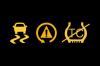
ABS and ESP Warning Lights
The brake switch can also provide information used by ABS and electronic stability-control systems.
If the brake-pedal signal is implausible or inconsistent, the ABS/ESP system may store a diagnostic trouble code.
Possible warnings include:
-
ABS warning
-
ESP/ESC warning
-
Traction-control warning
-
Brake-system warning
However, these warnings can have many other causes.
A wheel-speed sensor, steering-angle sensor, brake-pressure sensor, wiring problem, or ABS module fault can produce similar warnings.
Stop/Start System May Stop Working
Vehicles equipped with automatic stop/start systems monitor brake-pedal status as part of their operating logic.
If the brake signal is missing or implausible, the system may disable itself.
The driver may see a message indicating that the stop/start system is unavailable.
This does not necessarily mean the stop/start system itself has failed.
The battery, battery-management system, engine temperature, climate-control demand, and many other conditions can also disable stop/start operation.
Engine and Transmission Control Systems Use Brake Information
Modern vehicles frequently share brake-pedal information across multiple control modules.
The engine ECU may use the signal for torque-management strategies.
The transmission controller may use it for shift decisions or torque-converter-related functions.
The ABS/ESP system may use it for braking and stability calculations.
The body control system may use it for lighting logic.
Because of this networked architecture, one defective brake switch can sometimes produce several seemingly unrelated symptoms.
Brake Switch Fault Codes
A diagnostic scanner may detect a brake switch or brake pedal signal problem.
The exact code depends on the manufacturer and vehicle.
Possible descriptions include:
-
Brake Switch A Circuit
-
Brake Switch B Circuit
-
Brake Pedal Position Signal
-
Brake Pedal Switch Implausible Signal
-
Brake Switch Correlation
-
Brake Signal Incorrect
-
Brake Switch Circuit Malfunction
Some vehicles use two separate brake switch signals and compare them.
If one signal indicates "brake released" while another indicates "brake applied," the ECU can recognize an implausible condition and store a fault.
Why Do Some Vehicles Have Two Brake Switch Circuits?
Modern vehicles may use multiple brake-pedal signals for safety and plausibility monitoring.
For example, one circuit may control the brake lights while another provides a signal to the engine or transmission control system.
The ECU can compare these signals.
If they do not change state as expected, the system can identify a fault.
This design provides additional diagnostic capability and helps prevent a single electrical failure from going unnoticed.
Brake Switch Adjustment Is Important
The brake light switch is not simply a component that can always be installed in any position.
Many switches are designed to be correctly adjusted relative to the brake pedal.
If the switch is installed too far away, the system may not recognize the pedal movement correctly.
If it is installed too far in, the brake lights may remain on.
An incorrect adjustment can therefore create symptoms that look like a defective switch.
When replacing the switch, the correct installation and adjustment procedure should be followed.
Brake Pedal Stopper Problems
Some vehicles use a small rubber or plastic stopper on the brake pedal mechanism.
The switch relies on the pedal returning to a specific position.
If the stopper breaks, falls out, or deteriorates, the brake switch may remain in the wrong position.
This can cause the brake lights to stay on.
In such cases, replacing the switch alone may not solve the problem.
The pedal assembly and switch contact point should also be inspected.
Wiring and Connector Problems
A brake switch can be perfectly functional while the circuit around it is defective.
Possible electrical problems include:
-
Broken wire
-
Loose connector
-
Corroded terminals
-
Poor contact
-
Short circuit
-
Open circuit
-
Damaged harness
The wiring near the brake pedal should receive particular attention because it can be exposed to movement, moisture, and accidental damage.
How to Test a Brake Light Switch
A basic diagnosis can begin with a visual inspection.
Check whether the brake lights respond correctly when the pedal is pressed and released.
Then inspect the switch and connector around the brake pedal.
A multimeter can be used to test the switch contacts where appropriate.
Depending on the switch design, the electrical state should change when the brake pedal moves.
On electronically monitored vehicles, a diagnostic scanner can be even more useful.
Live data may show something similar to:
-
Brake pedal released
-
Brake pedal applied
If the physical pedal is released but the scan tool shows "brake applied," the switch, wiring, adjustment, or control logic requires further investigation.
Why Live Data Is Useful
A diagnostic scan can sometimes identify a brake switch problem without immediately replacing the component.
For example, if the brake lights operate correctly but the ECU continues to report that the brake pedal is applied, there may be a problem with a separate signal circuit.
This is especially important on vehicles with multiple brake switch circuits.
A technician can compare:
Physical pedal position → switch signal → ECU live data → brake light operation
This provides a much more reliable diagnosis than simply replacing parts.
Can a Bad Brake Switch Drain the Battery?
Yes.
If a faulty switch causes the brake lights to remain illuminated after the vehicle is parked, the lights can continue drawing power.
Over several hours or overnight, this can discharge the battery.
If the driver repeatedly finds a dead battery and the brake lights are found to be illuminated while the vehicle is parked, the brake switch and pedal mechanism should be inspected.
However, other lighting or body-control problems can also cause battery drain.
Brake Switch vs Brake Pressure Sensor
These components should not be confused.
The brake light switch generally detects brake-pedal movement or position.
A brake pressure sensor measures hydraulic pressure in the braking system.
They perform different functions.
A brake pressure sensor problem may affect ABS, stability control, or braking-system calculations, while a brake light switch primarily provides a pedal-status signal.
Some modern vehicles use more advanced brake-pedal sensing systems, so the exact architecture varies.
Brake Switch vs Brake Pedal Position Sensor
The terminology can also vary between manufacturers.
Some vehicles use a conventional switch.
Others use multiple switches or sensors capable of determining pedal position more precisely.
Therefore, when diagnosing a fault, it is important to identify the exact component used by that particular vehicle rather than assuming every car has the same type of brake switch.
Can a Brake Switch Cause Transmission Problems?
It can cause certain transmission-related symptoms on some vehicles.
For example, if the transmission control system does not recognize the brake pedal correctly, the shift interlock may not release.
The brake signal can also be used by the transmission controller for specific control strategies.
However, a brake switch should not be blamed for genuine transmission slipping, gear-ratio errors, internal clutch failure, or hydraulic pressure problems without supporting evidence.
How to Replace a Brake Light Switch
The replacement procedure varies by vehicle.
Generally, the switch is located near the upper part of the brake pedal.
A typical procedure involves:
-
Switching the vehicle off
-
Locating the brake switch
-
Disconnecting its electrical connector
-
Removing the old switch
-
Installing the correct replacement
-
Correctly adjusting or positioning the switch
-
Reconnecting the electrical connector
-
Testing brake-light operation
-
Checking relevant electronic functions
Some switches are self-adjusting, while others require a specific adjustment procedure.
The manufacturer's procedure should be followed.
What Happens If You Keep Driving With a Bad Brake Switch?
Driving with a faulty brake switch can create a safety problem if the brake lights do not operate correctly.
Following drivers may not receive a clear warning that the vehicle is slowing down.
Other vehicle functions may also be affected.
For example, you could lose cruise control or experience an unexpected electronic warning.
If the brake lights remain on, the battery can also become discharged while the vehicle is parked.
For these reasons, a confirmed brake switch fault should be repaired rather than ignored.
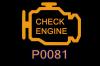
Can a Brake Switch Cause a Check Engine Light?
It can on some vehicles.
If the engine ECU monitors the brake-pedal signal and detects an implausible or inconsistent condition, it may store a diagnostic trouble code and illuminate the check-engine light.
This is more likely on vehicles where the brake signal is integrated into engine torque-management or other ECU strategies.
However, a check-engine light should always be diagnosed using the stored fault codes rather than assuming that the brake switch is responsible.
How to Diagnose a Brake Switch Fault Correctly
A reliable diagnostic process should start with the simplest checks.
First, inspect the brake lights.
Then check whether the brake pedal returns completely to its normal position.
Inspect the switch mounting and pedal stopper.
Next, inspect the connector and wiring.
If the vehicle has a diagnostic scanner, check the brake-pedal status in live data.
If there are fault codes, diagnose them according to the manufacturer's specifications.
If necessary, test the switch electrically with a multimeter.
Only after confirming that the switch itself is defective should it be replaced.
Final Thoughts
The brake light switch is a small component, but its importance in a modern vehicle is much greater than its size suggests.
Its primary responsibility is to detect brake-pedal application and control or communicate the brake signal. Depending on the vehicle, this information can also be used by the cruise-control system, engine ECU, transmission controller, ABS/ESP system, body control module, stop/start system, and starting authorization system.
A faulty brake switch can cause symptoms such as:
-
Brake lights staying on
-
Brake lights failing to illuminate
-
Intermittent brake-light operation
-
Cruise control failure
-
Starting problems on some vehicles
-
Shift interlock problems
-
ABS/ESP warnings
-
Stop/start system deactivation
-
Battery drain
-
Brake switch-related diagnostic trouble codes
However, these symptoms do not automatically prove that the brake switch itself has failed.
Fuses, bulbs or LED assemblies, wiring, connectors, pedal adjustment, pedal stoppers, control modules, and other sensors must also be considered during diagnosis.
Because the brake lights are a critical safety system, any confirmed problem should be repaired as soon as possible. A relatively inexpensive brake switch can affect several important vehicle functions, making correct diagnosis especially important in modern electronically controlled vehicles.