TR
TR EN
EN

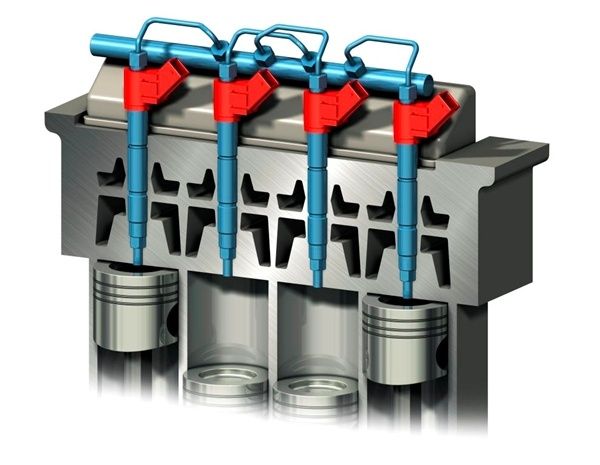
What Are Full Group, Semi-Sequential, and Fully Sequential Fuel Injection?
In gasoline engines, fuel injectors can be controlled in different ways depending on the engine management system. One important difference is when and how the injectors are activated.
In multi-point fuel injection systems, injector control is commonly described as Full Group, Semi-Sequential, or Fully Sequential.
The main difference between these systems is whether all injectors operate together, operate in groups, or are controlled individually according to each cylinder's engine cycle.
What Is Full Group Injection?
Full Group injection, also known as Full Group or Batch Injection, is a system in which all fuel injectors are activated at the same time.
For example, in a four-cylinder engine, all four injectors may receive their triggering signal simultaneously.
The ECU does not individually synchronize each injector with the intake stroke of its cylinder. Instead, the injectors operate as one group.
The basic strategy can be represented as:
Injector 1 + Injector 2 + Injector 3 + Injector 4 → inject at the same time
When fuel is injected, some of it may remain in the intake port until the corresponding intake valve opens.
This means the injector timing is not individually synchronized with each cylinder's intake event.
How Does Full Group Injection Work?
The ECU determines the required fuel quantity based on information such as engine speed, load, throttle position, airflow or manifold pressure, and other available parameters.
The injectors are then activated together for a calculated period.
Because all injectors operate simultaneously, the control strategy is relatively simple compared with fully sequential injection.
One advantage of this approach is that the ECU does not need to independently synchronize every injector with the exact intake phase of each cylinder.
Advantages of Full Group Injection
The main advantage of Full Group injection is its simplicity.
It can offer:
-
Simpler ECU control
-
Less complex injector synchronization
-
Relatively simple electronic architecture
-
Lower system complexity
-
Good suitability for older electronic fuel-injection systems
This type of control was particularly useful during the earlier development of electronic fuel injection.
Disadvantages of Full Group Injection
Because all injectors operate at the same time, fuel cannot always be injected at the optimum point of each individual cylinder's cycle.
Depending on the engine design, this can result in:
-
Fuel remaining in the intake port
-
Less precise fuel timing
-
Less efficient fuel preparation under some conditions
-
Greater variation in fuel distribution
-
More limited emissions optimization
These limitations became more important as manufacturers demanded better fuel economy, lower emissions, and more precise engine control.
What Is Semi-Sequential Injection?
Semi-Sequential injection is an intermediate strategy between Full Group and Fully Sequential injection.
Instead of operating all injectors simultaneously, the ECU divides them into groups.
For example, in a four-cylinder engine, the system may operate:
Injector 1 + Injector 4 → together
Injector 2 + Injector 3 → together
The exact grouping depends on the engine and ECU strategy.
This allows the system to control fuel timing more precisely than a Full Group system without requiring every injector to operate completely independently.
How Does Semi-Sequential Injection Work?
The ECU activates different injector groups at different points in the engine cycle.
For example, one pair of injectors may operate during one part of the crankshaft rotation, while another pair operates at another point.
This gives the ECU more control over fuel delivery compared with Full Group injection.
However, because two or more injectors can still operate together, the system is not fully synchronized with the individual intake event of every cylinder.
One injector in a group may therefore inject fuel at a point that is not exactly the optimum intake timing for its cylinder.
Advantages of Semi-Sequential Injection
Semi-Sequential injection provides a compromise between system simplicity and fuel-control precision.
Its advantages can include:
-
Better injector timing than Full Group injection
-
Improved fuel distribution
-
Better emissions control
-
Potentially improved fuel economy
-
Less complex control than Fully Sequential injection
For certain engine designs, this approach provides a practical balance between cost, electronic complexity, and engine performance.
What Is Fully Sequential Injection?
Fully Sequential injection, commonly called Sequential Fuel Injection, controls each injector individually according to the operating cycle of its specific cylinder.
For example, in a four-cylinder engine, the ECU can control each injector separately according to the position and operating phase of that cylinder.
A simplified representation might look like:
Injector 1 → Injector 3 → Injector 4 → Injector 2
However, it is important to understand that injector operation is not simply a copy of the engine's firing order.
The ECU uses crankshaft and, where available, camshaft position information to determine the operating phase of each cylinder and then controls the appropriate injector accordingly.
How Does Fully Sequential Injection Work?
Fully sequential injection requires the ECU to know not only the engine's rotational position but also the phase of the four-stroke engine cycle.
A crankshaft position sensor provides information about engine speed and crankshaft position.
A camshaft position sensor can provide additional information that allows the ECU to determine which stroke each cylinder is currently completing.
This is important because a four-stroke engine completes one full operating cycle over two crankshaft revolutions.
With sufficient synchronization information, the ECU can determine when each cylinder is approaching its intake event and control its injector accordingly.
Advantages of Fully Sequential Injection
The biggest advantage of Fully Sequential injection is individual fuel control for each cylinder.
Depending on the engine design and calibration, this can provide:
-
More precise fuel delivery
-
Better fuel economy
-
Lower emissions
-
Improved cold-start behavior
-
More stable engine operation
-
Better throttle response
-
Better control of cylinder-to-cylinder fuel distribution
This level of control became increasingly important as emission regulations became stricter and engine management systems became more sophisticated.
The Importance of the Crankshaft and Camshaft Sensors
The crankshaft and camshaft position sensors are particularly important for sequential fuel injection.
The crankshaft rotates twice during one complete four-stroke engine cycle.
The ECU needs to know not only where the crankshaft is located but also which phase of the engine cycle the cylinders are in.
The camshaft position sensor provides the additional phase information needed for this purpose.
Using these signals, the ECU can determine whether a cylinder is in its:
-
Intake stroke
-
Compression stroke
-
Power stroke
-
Exhaust stroke
This allows the injector to be controlled according to the individual cylinder's operating cycle.
Injector Timing Is Not the Same as Ignition Timing
A common misunderstanding is to assume that injector sequencing and ignition sequencing are exactly the same thing.
They are not.
The firing order describes the order in which the cylinders produce their combustion events.
The injection sequence describes how and when the fuel injectors are activated.
The ECU may use the firing order as part of its overall strategy, but injector timing is determined by the engine's operating conditions, crankshaft position, camshaft position, fuel requirements, and calibration.
For example, if an engine has a firing order of 1-3-4-2, that does not necessarily mean the injectors simply inject in that exact sequence at identical points in the cycle.
Does a Fully Sequential System Always Inject Immediately Before the Intake Valve Opens?
Not necessarily.
Fully Sequential means that the injectors can be controlled individually and synchronized with the engine cycle. It does not mean that fuel must always be injected immediately before the intake valve opens.
The ECU's actual injection timing depends on the engine design and calibration.
Fuel may be injected while the intake valve is closed so that the fuel can mix with the incoming air and prepare for the next intake event.
Other strategies can place injection closer to the intake event.
Cold starting, emissions control, engine load, engine speed, and other operating conditions can also cause the ECU to change the injection timing.
Full Group vs. Semi-Sequential vs. Fully Sequential
The basic difference can be summarized simply:
Full Group:
All injectors operate together.
Semi-Sequential:
Injectors operate in two or more groups.
Fully Sequential:
Each injector is controlled individually according to its cylinder's operating cycle.
In terms of injector control precision, the general progression is:
Full Group → Semi-Sequential → Fully Sequential
However, this does not mean that every engine follows exactly the same strategy. Manufacturers can use different ECU architectures and injection strategies depending on the engine design.
Why Did Injection Systems Evolve Toward Sequential Control?
As electronic engine management became more advanced, manufacturers needed more precise control over fuel delivery.
Early electronic injection systems could use Full Group or grouped injection because the electronic hardware and control strategies were simpler.
As ECU technology improved, manufacturers could use crankshaft and camshaft position information to control injectors more precisely.
The benefits were not limited to fuel economy.
More accurate fuel timing also helped with:
-
Emissions reduction
-
Catalytic converter performance
-
Cold starting
-
Idle stability
-
Throttle response
-
Cylinder-to-cylinder fuel control
This was especially important as emission regulations became increasingly strict.
What Happens When an Injector or Control Circuit Fails?
The injection strategy also affects how an electrical fault may influence engine operation.
In a Fully Sequential system, a problem with one injector, its wiring, connector, or ECU driver may affect only one cylinder.
Possible symptoms include:
-
Engine misfire
-
Rough idle
-
Reduced power
-
Increased fuel consumption
-
Check engine light
-
Cylinder-specific misfire codes
-
Rich or lean conditions
In a Full Group system, a fault in a common control circuit can potentially affect multiple injectors at the same time.
For this reason, injector diagnosis should not focus only on the injector itself.
The following should also be checked:
-
Injector power supply
-
Ground
-
ECU trigger signal
-
Wiring harness
-
Connectors
-
ECU injector driver
-
Fuel pressure
-
Injector resistance where applicable
-
Injector flow and spray pattern
Can Full Group or Semi-Sequential Injection Still Work Well?
Yes.
A Full Group or Semi-Sequential system should not automatically be considered a poor or outdated design simply because it is less sophisticated than Fully Sequential injection.
These systems were developed according to the electronic technology, engine design, emissions requirements, and cost considerations of their time.
A properly calibrated Full Group or Semi-Sequential system can provide reliable engine operation.
The difference is mainly in the level of control available to the ECU.
Which System Is Better?
From the perspective of fuel-injection control, Fully Sequential injection is generally the more advanced strategy because each injector can be controlled individually according to the engine cycle.
However, the actual performance of an engine depends on much more than injector sequencing.
Factors such as:
-
Injector size
-
Fuel pressure
-
ECU calibration
-
Airflow measurement
-
Ignition timing
-
Intake design
-
Combustion chamber design
-
Compression ratio
-
Valve timing
-
Oxygen sensor feedback
-
Engine condition
also have a major effect on the final result.
Therefore, a well-calibrated Semi-Sequential system can perform better in practice than a poorly calibrated Fully Sequential system.
Where Do These Systems Fit in Modern Engines?
Port-injected gasoline engines can use Full Group, Semi-Sequential, or Fully Sequential strategies depending on their generation and engine management system.
Modern engines generally use more advanced control strategies, with Fully Sequential injection being common in many multi-point injection applications.
Direct-injection gasoline engines can go even further. Their ECU may control not only which injector operates, but also when and how many times fuel is injected during a single engine cycle.
Multiple injection events can be used under certain operating conditions for purposes such as combustion control, emissions management, noise reduction, or performance optimization.
This means modern fuel injection is much more sophisticated than simply opening each injector once in a fixed sequence.
Why Understanding Injector Sequencing Matters
Understanding the difference between Full Group, Semi-Sequential, and Fully Sequential injection is useful when diagnosing fuel-system problems.
A technician can determine whether a fault is likely to affect one injector, a group of injectors, or the entire injection system by understanding how the ECU controls them.
The fundamental distinction is straightforward:
Full Group: all injectors work together.
Semi-Sequential: injectors work in groups.
Fully Sequential: each injector is individually controlled according to the operating cycle of its cylinder.
This development reflects the broader evolution of gasoline fuel injection—from relatively simple group control toward increasingly precise electronic management of fuel quantity and injection timing.