TR
TR EN
EN

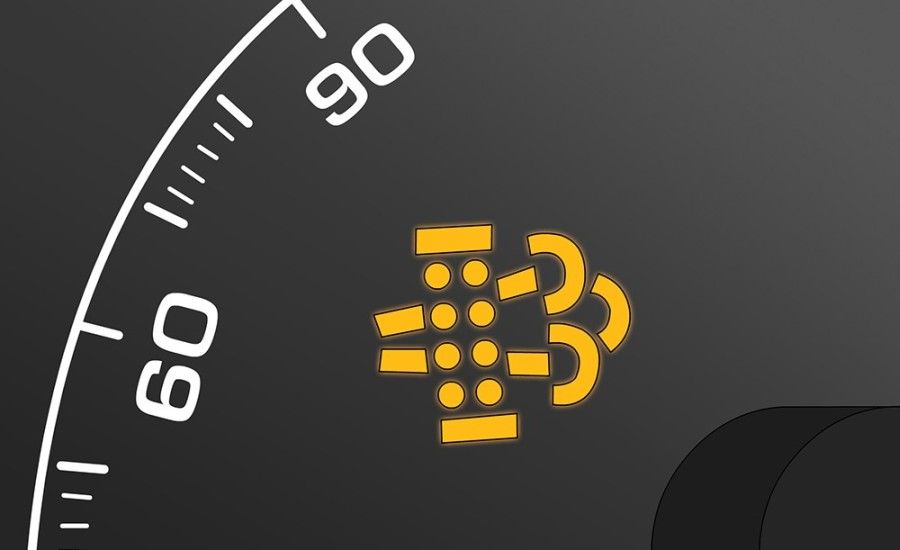
What Is a DPF? Why Does the DPF Light Come On and How Is It Turned Off?
A Diesel Particulate Filter (DPF) is an emissions-control component used in modern diesel vehicles to reduce the amount of soot and particulate matter released through the exhaust.
The DPF traps soot produced during diesel combustion and periodically burns this accumulated soot at a high temperature. This cleaning process is called regeneration.
When the regeneration process works normally, the driver may not notice anything. However, if the vehicle is mainly used for short trips, low-speed city driving, or frequent stop-and-go traffic, the DPF may not reach the temperature required to clean itself properly.
As soot accumulation increases, the DPF warning light may illuminate.
What Does the DPF Actually Do?
Diesel engines naturally produce particulate matter during combustion. Modern emissions regulations require these particles to be removed before the exhaust gases leave the vehicle.
The DPF is installed in the exhaust system and acts like a filter.
Its basic job is:
Engine → Exhaust gases → DPF → Filter traps soot → Cleaner exhaust gases
The filter cannot simply collect soot forever. It must periodically remove the accumulated material through regeneration.
What Is DPF Regeneration?
DPF regeneration is the process of raising the temperature of the filter sufficiently to burn accumulated soot.
There are several types of regeneration.
Passive regeneration
This can occur naturally when exhaust temperatures become high enough during sustained driving. It is more likely during highway or higher-load driving.
Active regeneration
The engine management system deliberately increases exhaust temperature when the DPF needs cleaning. Depending on the vehicle, this may involve changes to fuel injection, engine operation, exhaust temperature management, or other strategies.
Forced or service regeneration
If normal regeneration is no longer possible because soot loading is too high or another fault is present, a diagnostic tool may be required to initiate a regeneration under controlled conditions.
A forced regeneration should not be treated as a universal solution. The vehicle must first be checked to determine why normal regeneration failed.
Why Does the DPF Warning Light Come On?
The DPF light usually indicates that the vehicle has detected excessive soot accumulation or that regeneration has not been completed successfully.
Common causes include:
-
Frequent short-distance driving
-
Constant low-speed city driving
-
Repeatedly interrupting regeneration
-
Long periods of idling
-
A malfunctioning EGR system
-
Faulty temperature sensors
-
Differential pressure sensor problems
-
Turbocharger or boost problems
-
Injector problems
-
Excessive oil consumption
-
Incorrect engine oil
-
Exhaust leaks
-
Other engine-management faults
The warning light therefore does not automatically mean that the DPF itself is defective.
Short Trips Are One of the Biggest Problems
Modern diesel engines generally do not perform at their best when used exclusively for very short journeys.
For example, if a vehicle is driven only a few kilometers at a time, the engine and exhaust system may not remain hot enough for long enough to complete regeneration.
The result can be a cycle like this:
Short trips → Low exhaust temperature → Regeneration incomplete → Soot accumulation → DPF warning
Repeatedly driving this way can eventually lead to a heavily loaded filter.
How Do You Turn Off the DPF Light?
If the DPF light has appeared but the vehicle has not entered a serious fault condition, the vehicle may be able to complete a normal regeneration during appropriate driving conditions.
The exact procedure varies by manufacturer, engine, transmission, and vehicle model, so the owner's manual should always take priority.
In general, a vehicle may need a period of continuous driving at a suitable speed and engine load so that the exhaust system can reach the required temperature.
It is usually better to drive continuously rather than repeatedly stopping and restarting the engine.
The goal is not simply to drive at a certain speed. The important factor is reaching and maintaining the operating conditions required by that particular vehicle's regeneration strategy.
Can Driving on the Highway Turn Off the DPF Light?
Sometimes, yes.
If the DPF is moderately loaded and there are no underlying faults, sustained driving can provide the conditions needed for regeneration.
A typical situation might involve:
-
A fully warmed-up engine
-
Continuous driving
-
Moderate engine load
-
Appropriate engine speed
-
Avoiding unnecessary stops
-
Following the manufacturer's regeneration instructions
However, simply driving on the highway does not guarantee that the light will turn off.
If the DPF is heavily loaded, the ECU may prevent regeneration to protect the filter. A fault elsewhere in the engine or emissions system can also prevent regeneration.
Should You Drive at High RPM to Clean the DPF?
Not necessarily.
A common misconception is that the engine must be driven at extremely high RPM to clean the DPF.
In reality, the regeneration strategy is controlled by the engine management system, and the required conditions vary between vehicles.
Driving aggressively at very high RPM is not a substitute for proper regeneration.
What matters is achieving the temperature and operating conditions specified for the vehicle, not simply increasing engine speed as much as possible.
Can You Turn Off the DPF Light Without Repairing Anything?
You can sometimes clear the warning code with a diagnostic scanner, but that does not solve the underlying problem.
If the DPF remains heavily loaded, the warning will likely return.
More importantly, clearing a diagnostic trouble code without determining why it appeared can allow the underlying problem to continue.
For example, if a faulty exhaust temperature sensor prevents regeneration, repeatedly clearing the DPF warning will not repair the sensor.
What Happens If the DPF Becomes Too Full?
As soot accumulation increases, exhaust back pressure can rise.
The engine may then experience:
-
Reduced performance
-
Poor acceleration
-
Increased fuel consumption
-
Higher exhaust temperatures
-
Limp mode
-
Difficulty completing regeneration
-
Increased engine oil dilution
-
Turbocharger-related stress in some circumstances
Eventually, the vehicle may prevent normal regeneration and require professional diagnosis.
A severely overloaded DPF should not simply be forced into regeneration without checking the system first.
DPF Soot and DPF Ash Are Not the Same
This distinction is important.
Soot can normally be burned during regeneration.
Ash cannot simply be burned away through normal regeneration.
Over time, ash from engine oil additives and other sources accumulates inside the DPF. As the vehicle's mileage increases, the filter can gradually lose its effective capacity even if regeneration is functioning correctly.
This is one reason why a high-mileage DPF may eventually require professional cleaning or replacement.
Why Does the DPF Light Come Back After Regeneration?
If the warning returns shortly after a regeneration, there may be an underlying problem.
Possible causes include:
-
The DPF is physically restricted
-
The differential pressure sensor is inaccurate
-
Exhaust temperature sensors are faulty
-
EGR operation is incorrect
-
Injectors are producing excessive soot
-
The engine is not reaching the correct operating temperature
-
The thermostat is faulty
-
There is an exhaust leak
-
The turbocharger system is not operating correctly
-
The DPF contains excessive ash
-
Another emissions-related fault is preventing proper regeneration
In this situation, replacing the DPF immediately may not be the correct solution.
The cause of excessive soot accumulation should be identified first.
What Is the DPF Differential Pressure Sensor?
Many DPF-equipped vehicles use a differential pressure sensor to monitor pressure before and after the filter.
The ECU uses this information to estimate how heavily the DPF is loaded.
If the sensor, its hoses, or its wiring has a problem, the ECU may receive incorrect information about DPF restriction.
A blocked or cracked pressure hose can therefore create symptoms that look like a DPF problem even when the filter itself is not the original cause.
Does Engine Oil Affect the DPF?
Yes.
The correct engine oil specification is particularly important on modern diesel engines equipped with DPF systems.
Many DPF-equipped vehicles require low-SAPS or other manufacturer-approved oils designed to reduce ash-forming deposits.
Using an unsuitable oil over a long period can contribute to ash accumulation and shorten the effective service life of the DPF.
The correct oil should always be selected according to the vehicle manufacturer's specification rather than viscosity alone.
Can a Faulty EGR Cause DPF Problems?
Yes.
The EGR system and DPF are closely related to diesel emissions management.
If the EGR system is malfunctioning, combustion conditions can change and soot production may increase. This can cause the DPF to load more quickly.
Therefore, if a vehicle repeatedly reports DPF-related problems, the EGR system should also be considered during diagnosis.
Can a Faulty Injector Cause DPF Loading?
Yes.
A fuel injector that is leaking, incorrectly atomizing fuel, or delivering an incorrect quantity can increase soot production.
This can cause the DPF to fill more quickly than expected.
In such a case, cleaning or replacing the DPF without repairing the injector problem may only provide a temporary solution.
Can You Clean a DPF Instead of Replacing It?
Sometimes.
The correct approach depends on what is inside the filter and how severely it is restricted.
If the filter contains excessive soot but is physically intact, regeneration may be sufficient.
If significant ash accumulation or physical blockage is present, professional DPF cleaning may be possible.
If the filter is cracked, melted, physically damaged, or otherwise beyond effective recovery, replacement may be necessary.
The decision should be based on measured restriction, soot/ash loading, diagnostic data, and the condition of the filter.
Is It Safe to Keep Driving With the DPF Light On?
It depends on the warning level and the vehicle's behavior.
A simple DPF warning may indicate that regeneration should be allowed to take place.
However, if the vehicle also shows:
-
Severe loss of power
-
Limp mode
-
Multiple warning lights
-
Excessive smoke
-
High engine temperature
-
Abnormal engine operation
continuing to drive may make the situation worse.
If the warning becomes severe or the vehicle enters a protection mode, professional diagnosis should be performed rather than repeatedly attempting regeneration.
DPF Problems Are Not Always DPF Problems
One of the most important points in DPF diagnosis is that the filter itself is not always the root cause.
A DPF can become overloaded because the engine is producing too much soot, because regeneration is being prevented, or because the sensors are reporting incorrect information.
For this reason, a proper diagnosis may include checking:
-
DPF differential pressure
-
Exhaust temperature sensors
-
Soot load estimation
-
Ash load estimation
-
EGR operation
-
Injector performance
-
Turbocharger operation
-
Engine coolant temperature
-
Exhaust leaks
-
Stored diagnostic trouble codes
-
Regeneration history
Replacing an expensive DPF without checking these systems can result in the same problem returning.
How Can You Reduce DPF Problems?
The best way to protect a DPF is to use the vehicle in a way that allows its emissions system to operate as designed.
Avoid making every journey a very short trip when possible. Give the vehicle opportunities to reach normal operating temperature and, when the manufacturer recommends it, allow an interrupted regeneration to complete.
Regular maintenance is also important.
Use the correct engine oil, maintain the EGR and injection systems, repair warning lights promptly, and do not ignore repeated DPF warnings.
A DPF is designed to regenerate itself under the right conditions. When regeneration repeatedly fails, the most useful question is not simply "How do I turn the light off?" but "Why is the vehicle unable to complete regeneration?" Finding that answer is what prevents the warning from returning.