TR
TR EN
EN

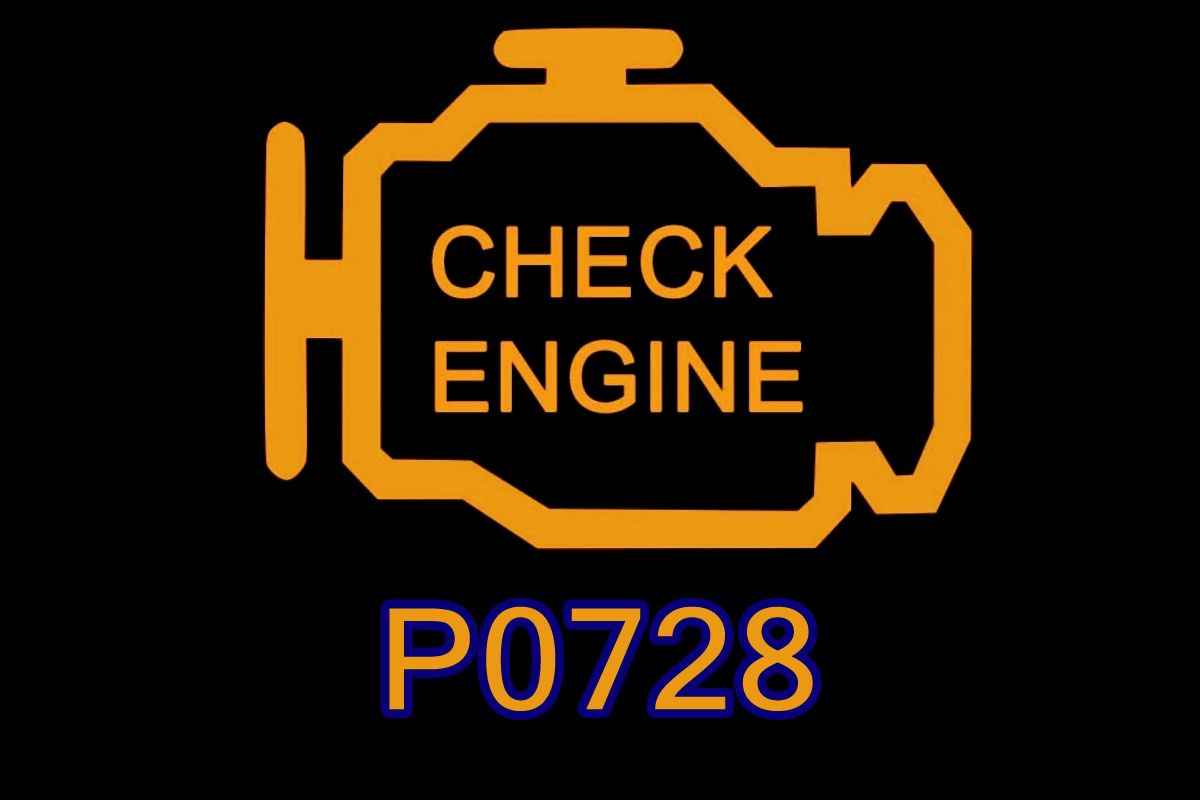
P0728 Engine Speed Input Circuit Intermittent
The P0728 – Engine Speed Input Circuit Intermittent diagnostic trouble code (DTC) indicates that the transmission control module (TCM) has detected an intermittent, erratic, or unreliable engine-speed signal.
The engine-speed signal is important because the TCM uses it to determine how fast the engine is turning and to coordinate transmission operation. If this signal repeatedly disappears, becomes unstable, or does not correspond with other engine-speed information, the TCM can store P0728.
Unlike a simple circuit-low or circuit-high code, “intermittent” is the key word in P0728. The signal may be perfectly normal most of the time and fail only under certain conditions, such as vibration, heat, acceleration, or a particular engine speed.
What Does P0728 Mean?
In simple terms:
The TCM is receiving an engine-speed signal, but the signal is intermittently being lost or becoming unreliable.
The general process is:
Engine speed is generated → Signal is transmitted through the engine/ECU network or circuit → TCM receives engine-speed information → Signal becomes intermittent or implausible → TCM stores P0728
The exact source of the engine-speed information varies by vehicle.
Some vehicles provide engine-speed information to the TCM directly, while others transmit it electronically from the engine control module (ECM/PCM) through the vehicle communication network.
Why Does the Transmission Need Engine Speed?
The TCM needs accurate engine-speed information to control transmission operation.
It can use engine RPM information for:
-
Gear shifting
-
Shift timing
-
Torque converter clutch operation
-
Clutch control
-
Gear-ratio calculations
-
Slip monitoring
-
Transmission protection
If the engine-speed signal becomes unreliable, the TCM may have difficulty determining the correct moment to change gears.
This can result in abnormal transmission behavior even though the transmission's mechanical components are not necessarily damaged.
Symptoms of P0728
The symptoms can vary significantly depending on the vehicle.
Possible symptoms include:
Harsh shifting
Gear changes may become harder than normal.
Delayed shifting
The transmission may hesitate before changing gears.
Erratic shifting
The transmission may shift unpredictably.
Incorrect shift timing
The transmission may change gears too early or too late.
Transmission stuck in one gear
The TCM may use a protective strategy if engine-speed information becomes unreliable.
Limp mode
Transmission operation may be restricted.
Torque converter problems
Torque converter clutch operation may be affected.
Engine RPM gauge fluctuation
The tachometer may jump or drop unexpectedly if the underlying engine-speed signal itself is unstable.
Engine stalling
If the engine-speed information comes from a crankshaft-position signal that is also failing, engine operation can be affected.
No-start condition
In some vehicles, a severe engine-speed signal problem can prevent the engine from starting.
Check Engine Light
The malfunction indicator lamp may illuminate.
What Causes P0728?
P0728 can have several causes.
Faulty crankshaft position sensor
The crankshaft position sensor is a common source of engine-speed information.
If its signal becomes intermittent, the TCM may receive unreliable RPM information.
Faulty camshaft position sensor
Depending on the vehicle, camshaft information may be used together with crankshaft information to determine engine speed and position.
Damaged sensor wiring
A broken, chafed, or internally damaged wire can cause an intermittent signal.
Loose or corroded connector
Poor terminal contact can interrupt the signal.
Sensor contamination
Metal debris or other contamination can interfere with some sensor types.
Incorrect sensor air gap
On applicable systems, an incorrect gap between the sensor and trigger wheel can produce an unstable signal.
Damaged reluctor/tone wheel
A damaged or incorrectly positioned trigger wheel can create irregular sensor pulses.
ECM/PCM communication problem
If engine-speed information is transmitted from the ECM/PCM to the TCM electronically, a communication problem can cause P0728.
CAN communication fault
A problem in the vehicle communication network can intermittently interrupt engine-speed information.
Power or ground problem
Poor power supply or ground connections can cause modules or sensors to operate intermittently.
ECM/PCM or TCM problem
A control-module fault is possible, although it should generally be considered after wiring, power, communication, and sensor-related causes have been checked.
Can a Crankshaft Position Sensor Cause P0728?
Yes.
The crankshaft position sensor (CKP) is one of the most important components to check.
The sensor monitors crankshaft rotation and provides timing information used by the engine control system.
If the signal becomes intermittent, the engine controller may temporarily lose accurate information about engine speed.
Depending on the vehicle's architecture, this can eventually result in P0728 being detected by the TCM.
Possible symptoms include:
-
Intermittent stalling
-
Difficult starting
-
Tachometer fluctuation
-
Engine hesitation
-
Transmission shifting problems
-
P0728 returning intermittently
A crankshaft sensor can sometimes fail primarily when hot, making the problem difficult to reproduce during a cold workshop inspection.
Can a Camshaft Sensor Cause P0728?
Possibly.
The exact relationship between camshaft position information and P0728 depends on the vehicle's control strategy.
A faulty camshaft position sensor can cause synchronization problems and may generate additional engine-related DTCs.
If P0728 appears together with camshaft or crankshaft sensor codes, those codes should be diagnosed together.
Can Wiring Cause P0728?
Yes, and intermittent wiring problems are particularly important for this code.
A wire may have continuity when the vehicle is stationary but lose contact when the engine vibrates or the harness moves.
Inspect for:
-
Broken wires
-
Chafed insulation
-
Loose terminals
-
Corrosion
-
Water intrusion
-
Poor connector locking
-
Damaged grounds
-
Harness contact with hot components
A wiring problem can be especially difficult to find because the vehicle may operate normally for long periods.
Can a Bad Ground Cause P0728?
Yes.
A poor engine, transmission, ECM, or TCM ground can cause unstable sensor signals or communication problems.
Check relevant:
-
Engine grounds
-
Transmission grounds
-
ECM/PCM grounds
-
TCM grounds
-
Battery negative connections
-
Ground straps
A voltage-drop test under operating conditions is generally more useful than simply checking resistance with the ignition off.
Can a Weak Battery Cause P0728?
Potentially.
A weak battery or unstable charging system can cause control modules to experience abnormal voltage conditions.
This can lead to communication or signal problems.
The battery and charging system should therefore be checked, particularly if P0728 appeared together with several unrelated communication or voltage-related DTCs.
Can the CAN Bus Cause P0728?
Yes.
On many modern vehicles, the TCM may not receive a dedicated RPM wire directly from an engine sensor.
Instead, the ECM/PCM can transmit engine-speed information over the vehicle's communication network, such as CAN.
If that communication is intermittently interrupted, the TCM may lose the engine-speed information it needs.
Possible causes include:
-
CAN-H wiring problems
-
CAN-L wiring problems
-
Loose connectors
-
Corroded terminals
-
Module power or ground problems
-
Network termination problems
-
A malfunctioning control module
If multiple communication-related DTCs are stored, the communication network should be investigated.
Does P0728 Mean the Transmission Is Bad?
No.
This is an important distinction.
P0728 concerns the engine-speed input signal, not necessarily a mechanical transmission failure.
A transmission may be mechanically healthy while the TCM is receiving an unreliable engine-speed signal.
Possible causes include:
Sensor → Wiring → Connector → Power/ground → ECM/PCM communication → CAN network → TCM
Therefore, replacing the transmission based solely on P0728 would be inappropriate.
How Is P0728 Diagnosed?
Because P0728 is intermittent, diagnosis should focus on reproducing the signal interruption.
1. Scan all DTCs
Look for additional codes involving:
-
Crankshaft position
-
Camshaft position
-
Engine RPM
-
Transmission input speed
-
CAN communication
-
ECM/PCM communication
-
TCM communication
-
Battery voltage
Additional codes can be extremely useful.
2. Check freeze-frame data
Determine the conditions under which the code was stored.
Pay attention to:
-
Engine RPM
-
Vehicle speed
-
Engine temperature
-
Transmission temperature
-
Throttle position
-
Gear
-
Battery voltage
3. Compare engine RPM signals
Use a suitable scan tool to compare the RPM reported by the engine controller and the RPM received by the transmission controller.
If the engine controller shows a stable RPM while the TCM sees the signal disappearing, the problem may be in communication between the modules.
4. Inspect the crankshaft and camshaft sensor circuits
Check sensors, connectors, wiring, and mounting.
5. Perform a wiggle test
Carefully inspect the wiring while monitoring the signal.
Movement or vibration may reproduce an intermittent open circuit.
6. Check power and grounds
Verify stable voltage and good grounds for the relevant modules and sensors.
7. Check communication
If the vehicle uses CAN communication for engine-speed information, inspect the network for intermittent faults.
8. Use an oscilloscope when necessary
An oscilloscope can reveal signal dropouts that may not be visible with a basic multimeter.
9. Reproduce the fault under the original conditions
If P0728 appears only when hot, under acceleration, or at a certain RPM, testing should attempt to reproduce those conditions.
Why Is an Oscilloscope Useful for P0728?
An intermittent signal may disappear for only a fraction of a second.
A multimeter may show a normal reading when the fault is not occurring.
An oscilloscope can show the actual sensor waveform and reveal:
-
Missing pulses
-
Irregular pulses
-
Signal dropouts
-
Electrical noise
-
Distorted waveforms
This can be especially useful when diagnosing a crankshaft-position sensor or its wiring.
What If P0728 Appears Only When the Engine Is Hot?
This is an important clue.
Some sensors develop internal electrical faults as their temperature increases.
The vehicle may:
Start normally when cold → Reach operating temperature → Engine-speed signal becomes unstable → TCM loses reliable RPM information → P0728 appears
Possible causes include:
-
Failing crankshaft sensor
-
Sensor wiring affected by heat
-
Connector expansion
-
Poor electrical connection
-
Module overheating
Testing the vehicle at operating temperature may therefore be necessary.
What If P0728 Appears During Acceleration?
Vibration and engine movement can expose wiring or connector problems.
During acceleration, the engine can move slightly on its mounts. A damaged harness may then be pulled or shifted enough to interrupt the signal.
Possible causes include:
-
Harness damage
-
Loose connector
-
Poor terminal tension
-
Engine ground problem
-
Sensor vibration sensitivity
This is why an intermittent fault that occurs only under acceleration should not immediately be blamed on the transmission itself.
What If P0728 Appears With Transmission Ratio Codes?
This combination can be important.
If P0728 appears together with codes such as:
-
P0729 – Gear 6 Incorrect Ratio
-
P0730 – Incorrect Gear Ratio
-
P0731 – Gear 1 Incorrect Ratio
-
P0732 – Gear 2 Incorrect Ratio
-
P0733 – Gear 3 Incorrect Ratio
-
P0734 – Gear 4 Incorrect Ratio
the engine-speed signal should be investigated before assuming multiple mechanical transmission failures.
An unreliable RPM signal can interfere with the TCM's ability to calculate transmission ratios correctly.
Can P0728 Cause Incorrect Gear-Ratio Codes?
Yes, potentially.
This is an important diagnostic consideration.
The TCM uses engine-speed and transmission-speed information to evaluate transmission operation.
If engine-speed information becomes unreliable, the TCM may incorrectly conclude that the transmission is operating at an abnormal ratio.
Therefore, when P0728 appears together with ratio codes, it is important to determine whether the engine-speed signal problem is causing secondary transmission codes.
Can P0728 Cause Limp Mode?
Yes.
If the TCM cannot reliably determine engine speed, it may activate a protective strategy.
Depending on the vehicle, this can result in:
-
Limited gear selection
-
Fixed-gear operation
-
Harsh shifting
-
Disabled torque converter clutch operation
-
Reduced transmission performance
The exact response depends on the vehicle's control strategy.
Can You Drive With P0728?
It depends on the symptoms.
If P0728 appears intermittently but the vehicle continues to operate normally, driving directly to a repair facility may be possible.
However, caution is appropriate if there is:
-
Engine stalling
-
Difficult starting
-
Sudden loss of power
-
Severe shifting
-
Limp mode
-
Tachometer dropping unexpectedly
-
Multiple communication faults
If the engine can stall unexpectedly in traffic, continued driving may be unsafe.
Is P0728 a Serious Problem?
It can be.
The code may be caused by a relatively simple wiring or sensor problem.
However, an intermittent engine-speed signal can affect both engine operation and transmission control.
The problem becomes more urgent if it causes:
-
Stalling
-
No-start conditions
-
Severe transmission shifting
-
Limp mode
-
Multiple ratio codes
-
Loss of engine-speed information
How Is P0728 Repaired?
The repair depends on the confirmed cause.
Possible repairs include:
-
Repairing damaged wiring
-
Repairing connector terminals
-
Cleaning or securing electrical connections
-
Repairing engine or transmission grounds
-
Replacing a faulty crankshaft position sensor
-
Replacing a faulty camshaft position sensor when applicable
-
Repairing CAN communication wiring
-
Correcting module power-supply problems
-
Repairing or replacing a control module when properly diagnosed
The sensor or module should not be replaced simply because P0728 is present.
Does P0728 Require a Transmission Repair?
Not necessarily.
Because P0728 concerns an intermittent engine-speed input, the first diagnostic focus should generally be on the engine-speed signal and its communication path.
A transmission rebuild would be inappropriate unless separate testing demonstrates an actual mechanical transmission problem.
This is particularly important when P0728 appears together with gear-ratio codes. The ratio codes may be secondary to unreliable speed information.
Common Diagnostic Mistakes
Replacing the transmission immediately
P0728 does not prove mechanical transmission damage.
Replacing the crankshaft sensor without testing
The sensor is a possible cause, but wiring and communication faults can produce similar symptoms.
Ignoring additional DTCs
Other crankshaft, camshaft, CAN, or communication codes can provide the key diagnostic clue.
Testing only when the engine is cold
Intermittent faults often become worse with heat.
Using only a multimeter
A brief signal dropout may not be captured during a simple static test.
Ignoring engine grounds
A poor ground can cause intermittent electronic problems that appear unrelated.
Clearing the code and waiting
If the problem is intermittent, simply clearing P0728 without finding the cause may allow the fault to return unexpectedly.
How Do You Clear P0728?
The underlying problem should be repaired before clearing the code.
After the repair, use a suitable diagnostic scanner to clear P0728.
The vehicle should then be road-tested under the conditions that originally caused the fault.
After the test drive, scan the vehicle again to confirm that the code has not returned.
A suitable sequence is:
Diagnose → Repair → Clear DTC → Road test → Rescan
Final Thoughts on P0728
P0728 – Engine Speed Input Circuit Intermittent indicates that the TCM is intermittently losing or receiving an unreliable engine-speed signal.
The most important word in this code is “intermittent.” The system may work normally for minutes, hours, or even days before the signal suddenly becomes unstable.
Possible causes include a crankshaft position sensor, camshaft position sensor, damaged wiring, loose connectors, poor grounds, ECM/PCM communication problems, CAN network faults, or control-module problems.
P0728 is particularly important when it appears alongside transmission ratio or shifting codes. An unreliable engine-speed signal can interfere with the TCM's ability to calculate gear ratios and control shifts correctly.
A practical diagnostic path is:
Scan all DTCs → Check freeze-frame data → Compare engine RPM signals → Inspect crankshaft/camshaft sensor circuits → Check wiring and connectors → Verify power and grounds → Check CAN communication → Monitor the signal under fault conditions → Repair the confirmed cause → Road test and rescan.
If P0728 is accompanied by engine stalling, no-start conditions, sudden RPM loss, severe shifting, or limp mode, the fault should be addressed promptly rather than continuing to drive and waiting for it to become permanent.