TR
TR EN
EN

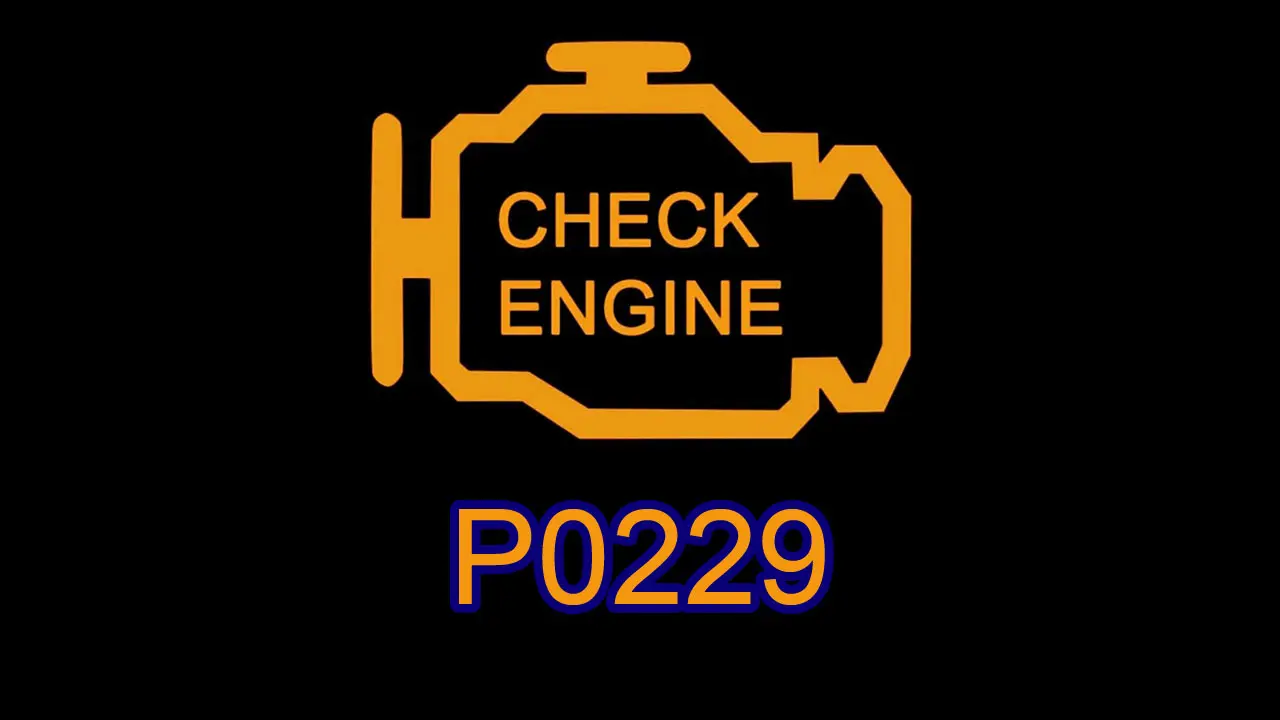
P0229 Throttle/Pedal Position Sensor/Switch "C" Circuit Intermittent
P0229 is an OBD-II diagnostic trouble code that indicates an intermittent signal problem in the “C” circuit associated with the throttle position sensor or accelerator pedal position sensor.
The word “intermittent” is the key to understanding this code.
The control module is not necessarily seeing a permanently low or permanently high signal. Instead, the electrical signal from the monitored sensor circuit is dropping out, becoming unstable, or changing in a way that does not match what the ECU expects.
This can make P0229 considerably harder to diagnose than a straightforward high- or low-input fault.
The engine may operate perfectly normally most of the time and then suddenly hesitate, lose throttle response, enter reduced-power mode, or trigger the Check Engine Light.
What Is the “C” Circuit?
Modern throttle systems commonly use multiple position signals rather than relying on a single sensor.
Depending on the vehicle, these signals may come from:
-
An accelerator pedal position sensor
-
An electronic throttle body
-
Multiple throttle position sensors
-
Dual-track pedal sensors
-
A combined throttle/pedal position assembly
The letters A, B, and C are manufacturer-defined.
Therefore, “C” does not universally mean a particular physical sensor or a specific wire color.
On one vehicle, Circuit C may be associated with a particular pedal-position signal. On another, the designation can be implemented differently.
The vehicle's wiring diagram and service information should be used to identify exactly which sensor and circuit the ECM is monitoring.
Why Are Multiple Position Signals Used?
Electronic throttle control is designed with redundancy because the accelerator pedal and throttle are safety-critical systems.
In a traditional cable-operated throttle, pressing the accelerator physically opens the throttle plate.
In a modern electronic throttle system, the driver's pedal movement is converted into an electrical signal.
A simplified process looks like this:
Accelerator pedal → position sensors → ECM → throttle actuator → throttle position sensors
The ECM continuously compares the different position signals.
If one signal suddenly disappears or becomes inconsistent, the ECU can recognize that something is wrong even if the engine itself is still running.
This is where an intermittent P0229 becomes important.
What Does “Intermittent” Actually Mean?
“Intermittent” does not simply mean that the Check Engine Light turns on and off.
It means the monitored electrical circuit has behaved abnormally at certain moments rather than continuously.
For example, the signal might be correct at:
-
Idle
-
Light acceleration
-
Constant-speed driving
but briefly fail when:
-
The accelerator pedal is moved
-
The vehicle hits a bump
-
The wiring vibrates
-
The connector moves
-
The pedal reaches a particular position
-
The throttle operates through a certain range
-
Engine or cabin temperature changes
The ECU may detect only a fraction-of-a-second interruption, but that can be enough to store P0229.
Common Causes of P0229
The cause can be surprisingly simple.
Loose or damaged connector
A connector that is not properly locked can allow a terminal to move slightly.
The circuit may work normally until vibration or pedal movement causes the electrical contact to deteriorate.
Damaged wiring
A wire can be internally damaged while its insulation looks completely normal.
Repeated movement, rubbing, heat, or previous repairs can cause individual strands to break.
The circuit may then open intermittently.
Poor terminal contact
A connector terminal can lose its proper tension.
Instead of making a reliable electrical connection, it may intermittently lose contact.
Corrosion or moisture
Water or corrosion inside the connector can increase resistance or cause unstable signals.
This is particularly important when the sensor or pedal assembly is located in an area exposed to moisture.
Faulty throttle position sensor
If the throttle position sensor has an internal worn or damaged track, its output may suddenly drop out at particular throttle positions.
A sensor can therefore appear normal during a quick inspection but fail when its signal is monitored continuously.
Faulty accelerator pedal position sensor
Many accelerator pedals contain multiple internal position sensors.
If one track develops an intermittent fault, the ECU can detect disagreement between the signals.
Depending on the vehicle's diagnostic strategy, this may result in a P0229 or another pedal/throttle-related code.
Throttle body problem
On electronically controlled throttles, the throttle-position sensing elements are often integrated into the throttle body.
An intermittent internal sensor fault can therefore make the throttle body a possible cause.
However, the code alone does not prove that the throttle body needs replacement.
Reference voltage problem
Many position sensors depend on a regulated reference voltage.
If that supply becomes unstable, multiple sensor circuits can be affected.
This is particularly important when several sensor-related codes appear at the same time.
Sensor ground problem
A poor sensor ground can make the output signal unstable.
The sensor itself may be perfectly healthy but unable to produce a reliable signal because its electrical reference is compromised.
ECM fault
An ECM problem is possible, but it should normally be investigated after the sensor, wiring, connectors, power supply, reference voltage, and grounds have been checked.
Symptoms Can Come and Go
P0229 is an excellent example of why intermittent electrical faults can be frustrating.
A driver might report:
“The car is completely normal most of the time, but sometimes the accelerator stops responding.”
Possible symptoms include:
-
Check Engine Light
-
Intermittent loss of throttle response
-
Hesitation during acceleration
-
Sudden reduction in engine power
-
Poor acceleration
-
Engine entering limp mode
-
Unstable engine response
-
Throttle response that suddenly becomes very weak
-
Engine RPM limitation
-
Difficulty maintaining acceleration
-
In some cases, stalling
The vehicle may return to normal after switching the ignition off and restarting.
That does not necessarily mean the problem has disappeared.
The ECU may simply have reset its temporary operating strategy after the ignition cycle.
Why Can a Small Electrical Interruption Cause Major Power Loss?
The accelerator pedal is not just an ordinary sensor.
The ECM uses its signal to determine how much torque the driver is requesting.
If the ECU suddenly loses confidence in that signal, it cannot safely assume what the driver wants.
The safest response may be to restrict throttle operation.
This can produce a situation where:
-
The engine starts normally
-
Idle is normal
-
The vehicle drives normally
-
The driver presses the accelerator
-
The signal briefly becomes invalid
-
The ECU detects the inconsistency
-
Throttle response is restricted
The driver may experience this as a sudden loss of power even though the engine itself is mechanically healthy.
P0229 Is Not the Same as P0227 or P0228
These codes are related but describe different electrical behaviors.
P0227 – Throttle/Pedal Position Sensor/Switch “C” Circuit Low Input
The ECU detects a signal from Circuit C that is lower than expected.
P0228 – Throttle/Pedal Position Sensor/Switch “C” Circuit High Input
The ECU detects a signal higher than expected.
P0229 – Throttle/Pedal Position Sensor/Switch “C” Circuit Intermittent
The signal behaves abnormally intermittently rather than remaining consistently outside the expected range.
This distinction matters during diagnosis.
A P0227 may point toward a persistent low-signal condition, while P0229 can require finding a fault that occurs only under specific movement, vibration, temperature, or operating conditions.
How to Diagnose an Intermittent P0229
The most effective diagnosis is usually based on watching the sensor signals while reproducing the fault.
Start with the stored codes
Scan the ECM and record all related DTCs.
If there are additional throttle, pedal, reference-voltage, sensor-ground, or communication codes, they may be more important than P0229 itself.
A group of sensor codes appearing together can indicate a shared electrical problem rather than several failed sensors.
Study the freeze-frame data
If available, determine when the ECU recorded the fault.
Look at:
-
Engine RPM
-
Vehicle speed
-
Throttle position
-
Accelerator pedal position
-
Engine load
-
Coolant temperature
-
Battery voltage
If the code consistently appears at a particular pedal position or engine condition, that information can be extremely useful.
Inspect the Pedal and Throttle Connectors
Look closely at the connectors associated with the relevant sensor.
Check for:
-
Loose terminals
-
Corrosion
-
Water intrusion
-
Damaged locking mechanisms
-
Bent pins
-
Poor terminal tension
-
Broken wires near the connector
The first few centimeters of wiring next to a connector deserve particular attention because repeated movement can damage the conductors internally.
Perform a Wiggle Test
This can be very effective for intermittent faults.
While monitoring the relevant sensor signal with a scan tool or appropriate electrical equipment, carefully manipulate the harness and connectors according to safe workshop procedures.
If the signal suddenly jumps, disappears, or becomes implausible when the harness moves, the wiring or connector becomes a strong suspect.
The same principle applies to the pedal assembly.
A fault that appears when the pedal is physically moved may indicate a problem inside the sensor assembly or its wiring.
Watch the Live Data
Live data can be more informative than simply clearing the code.
Monitor the relevant pedal and throttle position parameters while slowly moving the accelerator through its complete range.
The signals should behave smoothly and consistently according to the manufacturer's expected relationship.
A faulty sensor may show:
-
Sudden jumps
-
Dropouts
-
Flat spots
-
Unexpected reversals
-
Implausible disagreement between redundant signals
An intermittent failure may last only a moment, so recording or graphing the signal can be particularly useful.
Check Reference Voltage, Ground and Signal
If the vehicle uses a conventional multi-wire position sensor, the technician may need to verify:
-
Sensor reference supply
-
Sensor ground
-
Signal circuit
-
Wiring continuity
-
Terminal integrity
However, the exact circuit design varies.
Do not apply a generic voltage or resistance value to every vehicle.
Use the manufacturer's wiring diagram and specifications for the particular engine and throttle system.
Don't Forget Shared Circuits
An intermittent reference or ground problem can affect more than one sensor.
For example, if several unrelated sensors begin producing electrical faults at the same time, the common power, reference, ground, or wiring network should be investigated.
This can prevent unnecessary replacement of multiple components.
Could the Accelerator Pedal Cause P0229?
Yes.
If Circuit C belongs to one of the accelerator pedal's position signals on the particular vehicle, an intermittent fault inside the pedal assembly can produce P0229.
The pedal may contain multiple sensor tracks that provide redundant information to the ECM.
One track can intermittently fail while the others continue operating.
The vehicle may then detect a disagreement and restrict throttle operation.
But again, the exact assignment of Circuit C must be confirmed for that vehicle.
Could the Throttle Body Cause P0229?
It can also be a possibility.
Electronic throttle bodies commonly contain position sensors that tell the ECM where the throttle plate actually is.
If the relevant Circuit C signal is generated by the throttle body, an internal sensor or connector problem can cause P0229.
However, the technician should establish whether the fault originates from:
Pedal signal → wiring → ECM
or
ECM → throttle control → throttle position feedback
before replacing the throttle body.
What About a Dirty Throttle Body?
A dirty throttle body can cause poor throttle behavior, but dirt alone does not automatically explain an intermittent electrical circuit code.
Carbon buildup can affect throttle movement and cause mechanical problems.
It does not, by itself, prove that the electrical position signal has an intermittent fault.
If the code specifically identifies an intermittent sensor circuit, the electrical signal should be tested rather than assuming that cleaning the throttle body will solve it.
Repairing P0229
The repair depends on where the intermittent fault is found.
Possible repairs include:
-
Repairing damaged wiring
-
Replacing a damaged connector
-
Correcting terminal tension
-
Repairing sensor ground
-
Restoring reference voltage
-
Replacing the accelerator pedal assembly
-
Replacing the throttle body
-
Repairing an associated control circuit
-
Repairing an ECM-related fault
If the problem is caused by a wire that opens when the harness moves, replacing the sensor will accomplish nothing.
Likewise, if the sensor itself has an internal intermittent dropout, repairing the wiring will not solve the problem.
Is P0229 Safe to Drive With?
It is not a code that should be ignored.
An intermittent throttle or pedal position signal can cause the ECU to suddenly reduce engine power.
The problem may occur during acceleration or while merging into traffic, which can create a safety concern.
If the vehicle has severe throttle loss, enters limp mode repeatedly, stalls, or becomes unpredictable during acceleration, it should be diagnosed as soon as possible rather than used normally.
The Real Diagnostic Question
P0229 is less about finding a single “bad part” and more about discovering where the signal becomes unreliable.
The most useful diagnostic path is:
Identify Circuit C → determine whether it belongs to the pedal or throttle system → monitor live data → inspect connector → inspect wiring → check reference and ground → reproduce the intermittent fault → compare redundant signals → test the sensor/assembly → investigate the ECM only if the rest of the circuit passes.
Because the fault is intermittent, reproducing the exact conditions under which it occurs can be more valuable than simply measuring the sensor once in the workshop.
Ultimately, P0229 means the ECM has detected an intermittent electrical problem in the Throttle/Pedal Position Sensor/Switch “C” circuit. The code does not by itself identify whether the accelerator pedal, throttle body, wiring, connector, reference supply, ground, or ECM is responsible. The key is to capture the moment when the signal becomes unreliable and trace that interruption back through the circuit.