TR
TR EN
EN

What Is a Steering Column? What Are the Symptoms of Failure?
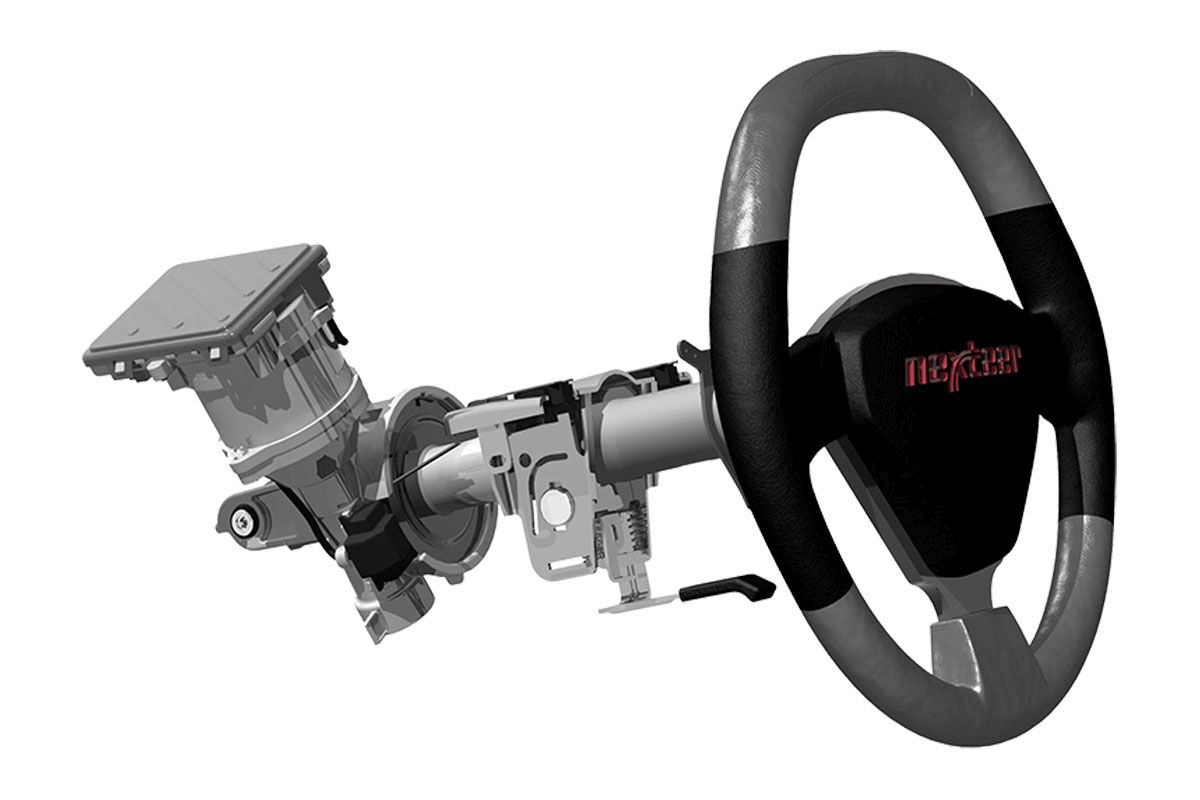
The steering column is one of the most important components connecting the steering wheel to the vehicle’s steering mechanism. It transfers the driver’s steering input to the steering rack, steering gearbox, or another steering mechanism, allowing the front wheels to change direction.
In older vehicles, the steering column is primarily a mechanical assembly. In modern vehicles, however, it can also be associated with several electronic and safety-related components, including the steering angle sensor, steering column control module, electronic steering lock, ignition system, and electric power steering components.
Because of this, a steering column fault does not always appear as simple steering-wheel looseness or a mechanical noise. Depending on the vehicle, the problem may also cause warning lights, steering assistance problems, communication faults, or even a no-start condition.
What Does the Steering Column Do?
The primary purpose of the steering column is to transfer the rotational movement of the steering wheel to the steering mechanism.
The basic steering path is:
Steering wheel → steering column → intermediate shaft/joints → steering rack or gearbox → tie rods → wheels
When the driver turns the steering wheel, the steering column and intermediate shaft transfer this movement toward the steering rack or gearbox.
The steering column also has an important safety function. Many modern steering columns are designed to collapse or deform in a controlled manner during a serious frontal collision, helping reduce the amount of force transmitted to the driver.
Depending on the vehicle, the steering column may also contain or connect to:
-
Steering angle sensor
-
Steering column control module
-
Electronic steering lock
-
Ignition switch or electronic ignition system
-
Steering wheel controls
-
Turn signal controls
-
Wiper controls
-
Cruise control controls
-
Paddle shifters
-
Clock spring
-
Airbag-related wiring
For this reason, the term "steering column failure" can refer to different types of problems depending on the vehicle.
What Are the Symptoms of a Faulty Steering Column?
The symptoms depend on whether the problem is mechanical, electrical, or electronic.
Common symptoms include:
-
Excessive steering wheel play
-
Steering wheel movement without immediate wheel response
-
Knocking or clicking sounds while turning
-
Creaking or rubbing noises
-
A clunking sensation through the steering wheel
-
Steering that feels notchy or restricted
-
Steering becoming unusually stiff at certain points
-
Abnormal steering wheel vibration
-
Irregular steering feel when turning left or right
-
Steering angle sensor faults
-
Electric power steering warnings
-
Electronic steering lock problems
-
Steering-related warning messages
-
Communication faults involving the steering column module
-
Failure of controls mounted around the steering column
-
ABS/ESC or steering-related diagnostic trouble codes
These symptoms do not automatically mean that the steering column itself has failed. The steering rack, intermediate shaft, universal joints, tie rods, suspension components, electric power steering system, or steering angle sensor can produce very similar symptoms.
Clicking or Knocking From the Steering Column
One of the most noticeable symptoms is a clicking, knocking, or clunking noise when the steering wheel is turned.
The noise may be particularly noticeable when the vehicle is stationary and the steering wheel is moved from side to side.
Possible causes include:
-
Wear in the steering column joints
-
Play in the intermediate shaft
-
Worn steering column bearings
-
Loose steering column mounting points
-
Wear in the steering rack
-
Worn tie rods or ball joints
-
Suspension component wear
A noise that seems to come from the steering wheel area does not necessarily originate inside the steering column. The sound can travel through the steering shaft and body structure, making accurate localization important.
Excessive Steering Wheel Play
A small amount of steering movement should produce a corresponding response from the steering mechanism.
If the steering wheel can be moved noticeably without the wheels responding, the steering system should be inspected.
Possible causes include:
-
Steering column wear
-
Intermediate shaft play
-
Worn universal joints
-
Loose steering connections
-
Steering rack play
-
Worn tie rods
-
Loose mounting points
Excessive steering play is a safety concern and should not be ignored.
Rubbing or Creaking While Turning
A worn steering column bearing or damaged component around the column can cause rubbing, squeaking, or creaking noises when the steering wheel is rotated.
However, several other components can produce similar noises, including:
-
Steering wheel trim
-
Steering column covers
-
Clock spring
-
Steering column bearings
-
Steering rack
-
Suspension top mounts
-
Steering shaft components
If the noise occurs consistently in both directions, the source should be carefully identified before replacing any component.
Steering Becomes Stiff or Notchy
A mechanical steering column problem can sometimes make steering movement feel restricted or uneven.
For example, the steering wheel may feel normal through part of its travel but become unusually stiff or notchy at a particular point.
However, steering stiffness can have many causes.
Depending on the vehicle, possible causes include:
-
Electric power steering motor
-
Electric power steering control unit
-
Low battery voltage
-
Alternator charging problems
-
Steering angle sensor
-
Steering torque sensor
-
Steering rack
-
Power steering pump
-
Low hydraulic fluid
-
Restricted hydraulic system
-
Mechanical binding in the steering system
On vehicles with electric power steering, low system voltage can sometimes cause the steering assistance system to reduce or shut down assistance.
Steering Wheel Vibration
A damaged steering shaft, worn joint, or loose steering column connection can transmit vibration into the steering wheel.
However, steering wheel vibration is much more commonly associated with other problems, such as:
-
Wheel imbalance
-
Bent wheel
-
Tire deformation
-
Front suspension wear
-
Steering linkage problems
-
Brake disc problems
-
Wheel bearing wear
-
Steering rack problems
-
Alignment issues
For example, vibration that appears mainly at higher road speeds should not automatically be blamed on the steering column.
Steering Angle Sensor Problems
Some vehicles have the steering angle sensor mounted within the steering wheel/steering column assembly.
The sensor informs the vehicle's control modules about the steering wheel position.
This information can be used by systems such as:
-
ABS
-
ESC/ESP
-
Electric power steering
-
Lane-keeping systems
-
Driver assistance systems
A problem with the sensor, its wiring, or its calibration can result in:
-
ABS warning light
-
ESC/ESP warning light
-
Steering system warning
-
Steering angle sensor fault codes
-
Incorrect steering center position
-
Driver assistance systems becoming unavailable
A steering angle sensor fault does not necessarily mean that the mechanical steering column is damaged.
Electronic Steering Lock Failure
Some modern vehicles use an electronic steering lock.
The system locks the steering column when the vehicle is parked and releases the lock when the vehicle is authorized to start.
A faulty electronic steering lock can cause:
-
Steering lock not releasing
-
Vehicle failing to start
-
Steering lock warning messages
-
No response after pressing the start button
-
Immobilizer-related warnings
-
Steering remaining locked
The underlying problem may be the steering lock actuator, control electronics, wiring, communication network, or low vehicle voltage rather than the mechanical steering column itself.
Steering Column Control Module Failure
Many modern vehicles have a control module associated with the steering column.
Depending on the vehicle, this module may process signals from various steering-column controls.
A fault may affect:
-
Turn signals
-
Headlight controls
-
Windshield wipers
-
Cruise control
-
Steering wheel buttons
-
Steering angle information
-
Other body-control functions
CAN Bus communication problems can produce similar symptoms. Therefore, replacing the steering column module without checking the power supply, grounds, wiring, connectors, and network communication can result in unnecessary repairs.
Common Causes of Steering Column Failure
Steering column problems can develop for many reasons.
Common causes include:
-
Long-term mechanical wear
-
Worn universal joints
-
Bearing wear
-
Loose mounting points
-
Intermediate shaft wear
-
Corrosion
-
Water or moisture intrusion
-
Physical impact
-
Incorrect previous repairs
-
Damaged electrical connectors
-
Corroded terminals
-
Broken wiring
-
Low system voltage
-
Electronic module failure
-
Steering angle sensor failure
-
Electronic steering lock failure
After a collision, the steering column should be inspected carefully because damage may not always be immediately obvious.
How Is a Steering Column Fault Diagnosed?
Diagnosis should begin by determining whether the problem is mechanical or electronic.
For mechanical complaints, technicians should inspect:
-
Steering wheel mounting
-
Steering column mounting points
-
Intermediate shaft
-
Universal joints
-
Steering rack
-
Tie rods
-
Ball joints
-
Suspension components
-
Steering column bearings
For electronically controlled systems, a diagnostic scan can be extremely useful.
Depending on the vehicle, technicians may need to check:
-
Steering angle data
-
Steering torque data
-
Electric power steering system
-
Steering column control module
-
Electronic steering lock
-
ABS/ESC system
-
CAN Bus communication
-
Battery and charging voltage
Diagnostic trouble codes should be interpreted together with live data and physical inspection.
A steering angle sensor fault code, for example, does not automatically prove that the sensor needs to be replaced. The problem could also be caused by incorrect calibration, low voltage, damaged wiring, poor grounding, connector problems, or communication faults.
Steering Angle Sensor Calibration May Be Required
Some vehicles require steering angle sensor calibration after certain steering or suspension repairs.
Calibration may be required after:
-
Steering wheel removal
-
Steering column repair
-
Steering angle sensor replacement
-
Front suspension repairs
-
Wheel alignment
-
ABS/ESC repairs
-
Steering system component replacement
The exact procedure depends on the vehicle manufacturer.
Installing a new sensor without performing the required calibration may leave warning lights active or cause incorrect steering-angle information.
Steering Column and Steering Rack Are Not the Same
These two components are often confused.
The steering column transfers steering wheel movement toward the steering mechanism.
The steering rack or steering gearbox converts that input into movement that turns the wheels.
Therefore, steering wheel play, knocking, or unusual steering feel can originate from either component.
A proper inspection is required to determine which part is actually responsible.
Steering Column and Electric Power Steering Are Not the Same
On vehicles with electric power steering, the electric motor, torque sensor, and control electronics may be located around the steering column.
Some vehicles use a column-mounted electric power steering system.
In this type of design, heavy steering or an electric steering warning does not necessarily mean that the mechanical steering column has failed.
Possible causes include:
-
Electric motor failure
-
Torque sensor failure
-
Steering ECU failure
-
Low battery voltage
-
Alternator problems
-
Wiring faults
-
Grounding problems
-
Communication faults
This distinction is important because replacing the complete steering column can be unnecessarily expensive if the actual problem is electrical.
Can a Steering Column Be Repaired?
Whether a steering column can be repaired depends on the type of failure and the vehicle design.
A worn universal joint, bearing, or replaceable mechanical component may be repairable or replaceable separately.
However, if the main column structure, safety mechanism, or integrated electronics are damaged, the manufacturer may require replacement of the complete assembly.
Electronic components such as:
-
Steering angle sensors
-
Steering lock assemblies
-
Steering column control modules
-
Electric steering components
may also require programming, coding, calibration, or immobilizer synchronization after replacement.
For this reason, installing a used steering column is not always a simple plug-and-play repair.
Will a Steering Column Fault Show Up on an OBD Scanner?
Not every steering column problem will generate a diagnostic trouble code.
Mechanical problems such as:
-
Worn bearings
-
Mechanical play
-
Worn universal joints
-
Loose mounting bolts
may not produce any OBD fault code.
Electronic problems involving the steering angle sensor, steering lock, steering column module, or electric steering system are much more likely to generate diagnostic codes.
The correct diagnostic approach is to use the code as a starting point and then check:
Diagnostic code → relevant system → wiring and power supply → live data → mechanical inspection
A fault code should not automatically be treated as proof that the named component needs to be replaced.
Is It Safe to Drive With a Faulty Steering Column?
It depends on the type and severity of the fault.
A minor noise with completely normal steering may allow the vehicle to be driven carefully to a repair facility, but the cause should still be investigated.
The vehicle should not be driven if you experience:
-
Significant steering wheel play
-
Steering that binds or sticks
-
Sudden steering stiffness
-
Loss of steering assistance
-
Steering movement becoming restricted
-
Serious knocking from the steering system
-
Steering wheel movement without normal wheel response
-
Electronic steering lock failure
-
Visible steering component damage
-
Suspected steering column damage after a collision
Any problem that affects the driver's ability to control the vehicle should be treated as a serious safety issue.
How Can Steering Column Problems Be Prevented?
There is no universal mileage interval at which every steering column must be replaced.
Regular inspection is generally more important than replacing it according to a fixed schedule.
It is good practice to:
-
Investigate new steering noises promptly.
-
Check for excessive steering play.
-
Inspect steering components during suspension service.
-
Keep the battery and charging system in good condition.
-
Address electrical connection problems early.
-
Follow the manufacturer's procedure when removing the steering wheel or airbag.
-
Check the steering column after a collision.
-
Perform required steering angle calibration after relevant repairs.
Final Thoughts
The steering column is a critical connection between the steering wheel and the vehicle's steering mechanism. Mechanical wear can cause play, knocking, vibration, or unusual steering feel, while modern electronically equipped steering columns can also experience sensor, module, steering lock, communication, and power supply problems.
The most important symptoms to take seriously are excessive steering play, steering that binds, sudden stiffness, loss of steering assistance, or any condition that affects the driver's ability to control the vehicle.
A correct diagnosis should not focus on the steering column alone. The steering wheel, steering column, intermediate shaft, universal joints, steering rack, tie rods, suspension components, electrical system, sensors, and relevant control modules should be evaluated together before replacing expensive parts.