TR
TR EN
EN

What Is a Torsion Bar? What Are the Symptoms of Torsion Bar Failure?
A torsion bar is a type of suspension component that uses the twisting resistance of a steel bar to help support the vehicle and control suspension movement.
Unlike a coil spring, which compresses and expands, a torsion bar primarily works by twisting along its length.
Torsion bars have been used on many cars, pickup trucks, SUVs, and other vehicles. They are particularly common in suspension designs where the manufacturer wants a compact and durable springing system with adjustable ride height.
When the wheel moves upward or downward, the suspension rotates part of the torsion bar. The bar twists and produces a resistance force. This resistance acts like a spring and helps control the movement of the suspension.
A torsion bar is therefore both simple and highly stressed. Although the bar itself can last for many years, corrosion, excessive loads, fatigue, incorrect adjustment, or damage to related suspension components can eventually create problems.
How Does a Torsion Bar Work?
The operating principle is based on torsional resistance.
Imagine a long steel bar fixed securely at one end. If the other end is rotated, the bar twists. The steel attempts to return to its original position.
A vehicle's torsion-bar suspension uses this principle.
The basic process is:
-
The wheel encounters a bump.
-
The suspension arm moves upward.
-
The suspension movement rotates the torsion bar.
-
The torsion bar twists.
-
The twisted bar produces resistance.
-
The suspension is pushed back toward its original position.
-
The vehicle remains supported and suspension movement is controlled.
The amount of resistance depends on factors such as the torsion bar's material, diameter, effective length, and design.
Where Is the Torsion Bar Located?
The exact location depends on the suspension design.
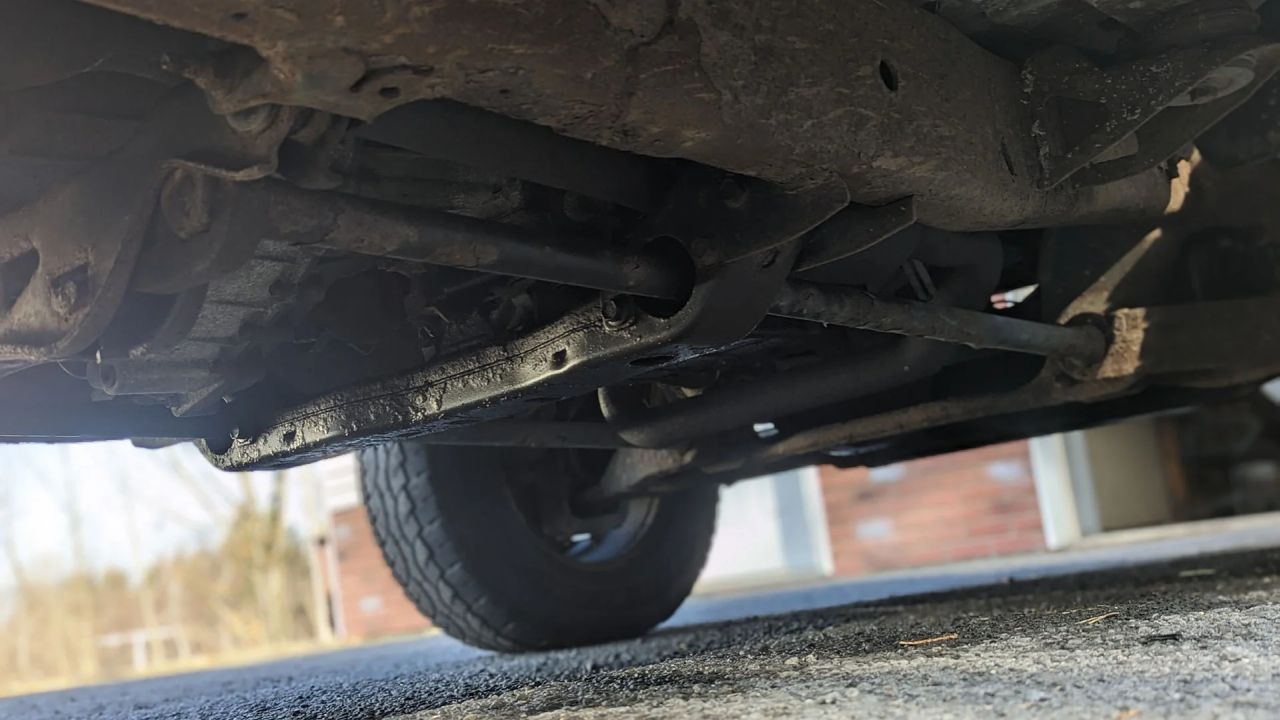
In a typical torsion-bar suspension, the bar is installed longitudinally or transversely within the vehicle's chassis structure and connected to a suspension arm.
One end is anchored to the vehicle body or frame, while the other end is connected to a suspension component.
The bar may therefore be hidden underneath the vehicle and can be difficult to identify without looking at the specific suspension design.
This is one reason why terminology can sometimes cause confusion.
Not every suspension component called a "torsion bar" is arranged in exactly the same way.
What Is the Purpose of a Torsion Bar?
The main purpose of a torsion bar is to provide springing for the suspension.
It helps:
-
Support the vehicle's weight
-
Control wheel movement
-
Maintain ride height
-
Absorb suspension movement
-
Improve vehicle stability
-
Keep the tires in contact with the road
-
Control body movement
The torsion bar works together with other suspension components rather than operating alone.
Shock absorbers, control arms, bushings, ball joints, anti-roll bars, and other components all contribute to overall suspension behavior.
Torsion Bar vs. Coil Spring
A torsion bar performs the same basic springing function as a coil spring, but the way it stores energy is different.
A coil spring stores energy by compressing or extending.
A torsion bar stores energy by twisting.
Both systems support vehicle weight and help control suspension movement.
Torsion-bar systems can also offer an important advantage: ride height can often be adjusted by changing the position or preload of the torsion bar.
However, the exact adjustment method depends on the vehicle.
Torsion Bar vs. Stabilizer Bar
These two components are sometimes confused because both are steel bars associated with suspension movement.
They have different primary functions.
A torsion bar is a springing component that supports vehicle weight and contributes directly to suspension spring rate.
A stabilizer bar, also called an anti-roll bar or sway bar, primarily reduces body roll during cornering by transferring suspension forces between the left and right sides of the vehicle.
A stabilizer bar is therefore not simply another name for a torsion bar.
What Are the Symptoms of a Bad Torsion Bar?
A damaged or incorrectly adjusted torsion bar can produce several noticeable symptoms.
Common signs include:
-
Uneven ride height
-
Vehicle sitting too low on one side
-
Vehicle sitting too high on one side
-
Sagging suspension
-
Harsh or abnormal ride quality
-
Excessive suspension movement
-
Suspension noises
-
Clunking sounds
-
Poor handling
-
Increased body movement
-
Reduced suspension travel
-
Unusual tire wear
-
Steering instability
-
Suspension knocking over bumps
-
Visible torsion bar damage
-
Corrosion or cracks
However, many of these symptoms can also be caused by other suspension components.
For example, a clunking noise does not automatically mean the torsion bar itself is defective.
Uneven Ride Height
One of the most noticeable symptoms is an abnormal ride height.
If one side of the vehicle sits significantly lower than the other, the torsion-bar system may require inspection.
Possible causes include:
-
Torsion bar adjustment problem
-
Damaged torsion bar
-
Torsion bar fatigue
-
Broken mounting component
-
Damaged suspension arm
-
Worn bushings
-
Uneven vehicle loading
-
Other suspension problems
Ride height should be measured properly rather than judged only by looking at the vehicle.
The manufacturer's specified measuring points and ride-height specifications should be used whenever possible.
Can a Torsion Bar Become Weak?
Yes.
Torsion bars are designed to withstand repeated twisting throughout the life of the vehicle, but like other spring materials, they can experience fatigue over time.
Continuous heavy loads, severe impacts, excessive off-road use, corrosion, and repeated high-stress operation can accelerate fatigue.
A fatigued torsion bar may contribute to changes in ride height or suspension behavior.
However, a vehicle sitting lower than normal does not automatically prove that the torsion bar has lost its spring rate.
Other suspension components must be inspected as well.
Torsion Bar Cracking or Breaking
A severely damaged torsion bar can crack or break.
This is more likely to become a serious problem because the torsion bar is a structural spring component.
Potential causes include:
-
Severe corrosion
-
Metal fatigue
-
Excessive loading
-
Severe impact
-
Manufacturing defect
-
Previous damage
-
Improper modification
-
Incorrect installation
A broken torsion bar can cause a significant change in ride height and suspension behavior.
The vehicle should not be driven normally until the cause has been diagnosed and the suspension has been repaired.
Rust and Corrosion on a Torsion Bar
Corrosion is particularly important because torsion bars are repeatedly subjected to high mechanical stress.
Surface corrosion may not necessarily mean immediate failure.
However, deep corrosion, pitting, or corrosion at highly stressed areas can reduce the effective strength of the component.
A torsion bar with serious corrosion should be professionally inspected.
Simply cleaning severe corrosion and applying paint does not restore metal that has already been lost.
Clunking Noise From the Suspension
A torsion-bar suspension can produce noises when components become worn or damaged.
However, a clunking sound does not necessarily mean the torsion bar itself has failed.
Other possible causes include:
-
Worn control-arm bushings
-
Ball joint wear
-
Stabilizer-bar links
-
Stabilizer-bar bushings
-
Shock absorber mounts
-
Suspension arm problems
-
Loose mounting hardware
-
Damaged torsion-bar mounting points
The location and conditions under which the noise occurs are important diagnostic clues.
Vehicle Pulls to One Side
A vehicle that pulls to one side can have many possible causes.
Suspension-related possibilities include:
-
Incorrect ride height
-
Uneven torsion-bar adjustment
-
Damaged suspension components
-
Wheel alignment problems
-
Uneven tire pressure
-
Tire defects
-
Worn bushings
If torsion-bar adjustment has recently been changed, wheel alignment should also be checked.
Changing ride height can alter suspension geometry and therefore affect alignment.
Uneven Tire Wear
A torsion-bar problem can contribute indirectly to abnormal tire wear if it changes suspension geometry or ride height.
However, tire wear should not automatically be blamed on the torsion bar.
Common causes of uneven tire wear include:
-
Incorrect wheel alignment
-
Incorrect tire pressure
-
Worn suspension components
-
Bent suspension components
-
Worn wheel bearings
-
Steering-system problems
A complete inspection is necessary to determine the actual cause.
Torsion Bar Adjustment
One of the notable characteristics of some torsion-bar suspension systems is adjustable ride height.
The torsion bar can be installed with a particular amount of preload.
Changing the adjustment can alter the static ride height.
This can be useful when restoring the factory ride height or, on some vehicles, when setting up the suspension for a particular application.
However, excessive adjustment can create problems.
Raising the vehicle too much can:
-
Reduce available suspension travel
-
Increase suspension angles
-
Affect ride quality
-
Increase component stress
-
Change wheel alignment
-
Accelerate wear
Torsion-bar adjustment should therefore be performed according to the vehicle manufacturer's specifications or a properly engineered suspension setup.
Can a Torsion Bar Be Adjusted to Fix a Sagging Vehicle?
Sometimes, but adjustment should not be used to hide a damaged component.
If the vehicle has gradually developed an abnormal ride height, the suspension should first be inspected.
If the torsion bar is healthy and the manufacturer provides a ride-height adjustment procedure, adjustment may restore the correct height.
If the bar is fatigued, cracked, or damaged, simply increasing preload is not an appropriate repair.
What Happens if a Torsion Bar Is Adjusted Too Much?
Excessive torsion-bar adjustment can create several problems.
The vehicle may become unnecessarily high, while suspension travel becomes limited.
This can make the vehicle feel harsh and can cause the suspension to reach its bump stops more frequently.
It can also alter suspension geometry.
Depending on the design, excessive adjustment may affect:
-
Camber
-
Caster
-
Toe
-
Control-arm angles
-
CV joint angles
-
Ball-joint operating angles
-
Shock absorber travel
After a significant ride-height change, alignment and suspension geometry should therefore be checked.
How Is a Torsion Bar Diagnosed?
Diagnosis should begin with a visual and physical inspection.
A technician may check:
-
Ride height
-
Left-to-right height difference
-
Torsion bar condition
-
Mounting points
-
Suspension arms
-
Bushings
-
Ball joints
-
Shock absorbers
-
Stabilizer components
-
Wheel alignment
-
Tire condition
The torsion bar should be inspected for cracks, severe corrosion, deformation, and signs of contact or impact damage.
If ride height is the primary symptom, measurements should be compared with the manufacturer's specifications.
How Can You Tell if the Torsion Bar Is Broken?
A broken torsion bar may produce a dramatic change in ride height.
The affected corner of the vehicle can sit substantially lower than normal.
There may also be unusual suspension movement or metal-to-metal contact.
However, a sudden low ride height can also result from a broken suspension arm, spring, mounting component, or other failure.
Therefore, the vehicle should be inspected rather than assuming that the torsion bar is the failed component.
Can a Torsion Bar Be Repaired?
A torsion bar is generally not repaired by welding, heating, bending, or similar methods.
Because the component functions as a high-stress spring, modifying the steel can change its mechanical properties and compromise its strength.
If the torsion bar is cracked, broken, severely corroded, or otherwise structurally damaged, replacement with the correct component is normally the appropriate solution.
The correct part should match the vehicle and suspension configuration.
Can You Drive With a Damaged Torsion Bar?
This depends on the severity of the problem.
A minor ride-height issue may allow the vehicle to be moved carefully to a repair facility, but a visibly damaged or broken torsion bar should be treated as a serious suspension problem.
Driving with a damaged suspension springing component can affect:
-
Vehicle stability
-
Steering behavior
-
Tire contact
-
Suspension travel
-
Braking behavior
-
Wheel alignment
-
Other suspension components
If the vehicle suddenly drops on one side or produces severe suspension noises, it is safer to stop driving and have the vehicle inspected.
Torsion Bar Maintenance
Torsion bars generally do not require routine replacement at a fixed mileage interval.
Their service life depends on vehicle design, load, road conditions, corrosion, and usage.
Good suspension maintenance includes:
-
Inspecting the torsion bar during suspension service
-
Checking for serious corrosion
-
Inspecting mounting points
-
Checking ride height
-
Inspecting suspension bushings
-
Checking ball joints
-
Checking shock absorbers
-
Maintaining correct tire pressure
-
Checking wheel alignment when necessary
-
Avoiding excessive vehicle loads
Vehicles used heavily off-road or for towing may require more frequent suspension inspections.
Can a Torsion Bar Affect Wheel Alignment?
Yes.
Changes in ride height can alter suspension geometry.
On vehicles with adjustable torsion bars, raising or lowering the suspension can change alignment angles.
If the torsion bar has been adjusted significantly, the vehicle should be checked on an alignment machine.
This is particularly important when the vehicle shows:
-
Steering wheel off-center
-
Uneven tire wear
-
Vehicle pulling
-
Poor straight-line stability
Are Torsion Bars Used on Modern Vehicles?
Yes, although their use varies significantly by vehicle type.
Many modern passenger cars use coil springs or other suspension technologies.
Torsion bars remain common in certain trucks, SUVs, off-road vehicles, and specific suspension designs where their packaging, durability, load-carrying characteristics, or adjustability provide advantages.
The exact suspension design depends on the vehicle platform.
Final Thoughts
A torsion bar is a suspension spring that stores energy by twisting rather than compressing like a conventional coil spring.
Its job is to support the vehicle, maintain appropriate ride height, and provide spring resistance as the suspension moves.
The most common symptoms associated with torsion-bar problems include uneven ride height, sagging, suspension noises, poor handling, abnormal suspension movement, and visible corrosion or damage.
However, these symptoms can also be caused by control arms, bushings, ball joints, shock absorbers, stabilizer components, wheel alignment, or other suspension parts.
One of the biggest advantages of a torsion-bar suspension is that ride height can often be adjusted. But adjustment must be performed carefully because excessive preload can reduce suspension travel and change suspension geometry.
If a torsion bar is cracked, broken, severely corroded, or structurally damaged, attempting to weld or reshape it is not an appropriate repair. Replacement with the correct specification component is generally the safer solution.
Because the torsion bar is a critical suspension spring component, any major change in ride height, severe suspension noise, visible damage, or sudden suspension failure should be investigated before the vehicle is returned to normal driving.