TR
TR EN
EN

Does Disconnecting the Battery Reset the Crankshaft Position Sensor?
Disconnecting the battery is one of the first things many vehicle owners try when an engine develops a warning light, starting problem, rough running, or an electronic fault.
This often leads to an important question:
Does disconnecting the battery reset the crankshaft position sensor?
The short answer is no.
Disconnecting the battery does not physically reset, repair, recalibrate, or erase a fault from the crankshaft position sensor itself.
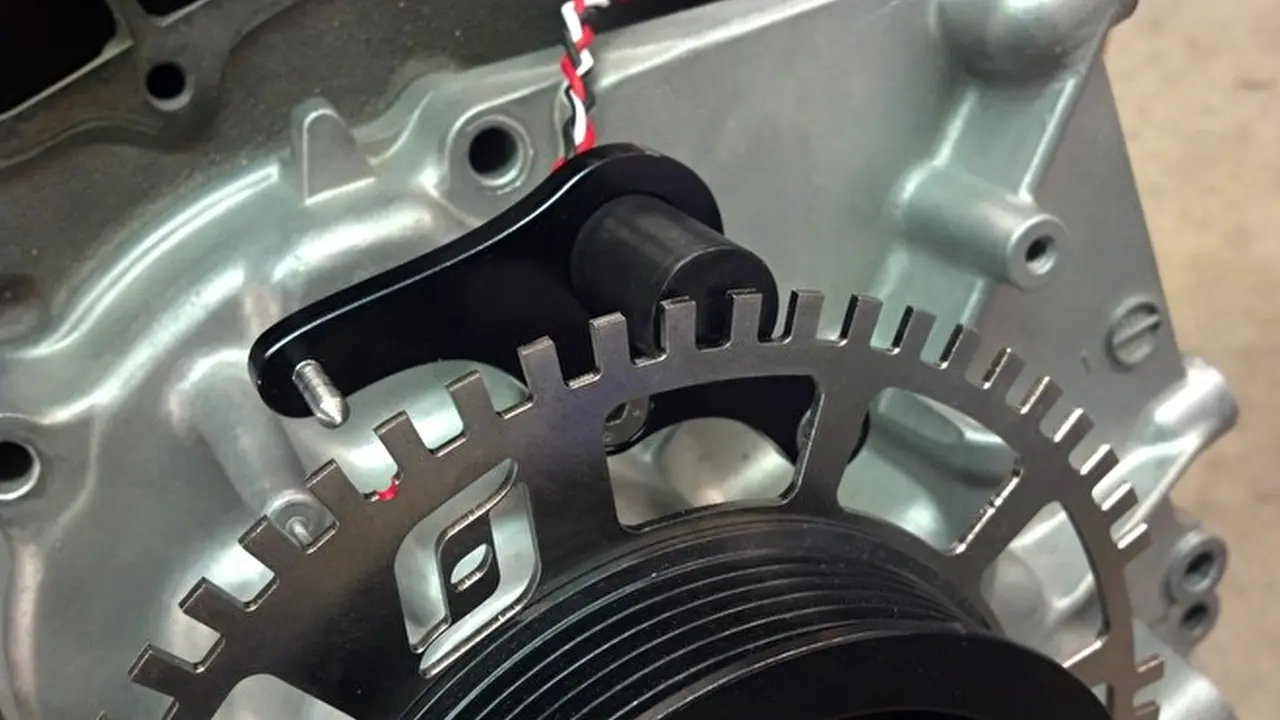
The crankshaft position sensor is a physical component that detects the position and rotational speed of the crankshaft. It sends this information to the engine control unit (ECU), which uses the signal to control critical engine functions.
However, disconnecting the battery can affect certain stored ECU information, learned values, and diagnostic trouble codes depending on the vehicle's design.
This is where the confusion usually begins.
What Is the Crankshaft Position Sensor?
The crankshaft position sensor, commonly called the CKP sensor, is one of the engine's most important position sensors.
It monitors crankshaft rotation and provides the ECU with information about:
-
Crankshaft position
-
Engine speed
-
Crankshaft rotational movement
-
Position of the pistons relative to the engine cycle
The ECU uses this information to determine when critical engine events should occur.
On gasoline engines, the crankshaft position signal is essential for ignition and fuel injection timing.
On diesel engines, it is also critical for controlling fuel injection and synchronizing engine operation.
If the ECU cannot obtain a valid crankshaft position signal, the engine may not start or may stop running.
Does the Battery Power the Crankshaft Sensor?
The sensor itself requires the vehicle's electrical system to operate, depending on its design.
There are several common types of crankshaft position sensors, including magnetic or variable-reluctance sensors and Hall-effect sensors.
Some sensors generate their own signal through electromagnetic induction, while others require a power supply from the ECU.
Regardless of the sensor type, disconnecting the battery simply removes electrical power from the vehicle.
It does not physically change the sensor.
If the sensor is damaged, contaminated, internally open, shorted, or producing an incorrect signal, reconnecting the battery will not repair it.
What Does Disconnecting the Battery Actually Do?
When the battery is disconnected, the vehicle's electrical system loses its normal power supply.
Depending on the vehicle, this can cause certain temporary or learned information to be lost.
Possible effects include:
-
Clearing some adaptive values
-
Resetting certain learned parameters
-
Clearing some diagnostic trouble codes on certain vehicles
-
Resetting clock and radio settings
-
Requiring some systems to relearn their operating characteristics
-
Resetting certain ECU memories
However, modern vehicles can store information in different types of memory, and not all information disappears when the battery is disconnected.
Therefore, it is incorrect to assume that disconnecting the battery completely resets every ECU setting.
Does Disconnecting the Battery Clear a Crankshaft Sensor Fault Code?
It depends on the vehicle and the type of fault.
Some diagnostic trouble codes may disappear after battery power is removed.
However, clearing a fault code does not repair the underlying problem.
If the crankshaft position sensor or its circuit is genuinely faulty, the ECU may detect the problem again when the engine is started or during subsequent driving.
The warning light may return.
This is an important distinction:
Clearing a code is not the same as fixing the fault.
A temporary disappearance of a warning light after disconnecting the battery does not prove that the crankshaft sensor is healthy.
Can Battery Disconnection Reset Crankshaft Sensor Learning?
This is more complicated.
Some engine management systems perform specific learning procedures related to crankshaft position and rotational variation.
These may be referred to as:
-
Crankshaft position relearn
-
Crankshaft variation relearn
-
CKP relearn
-
Crankshaft position variation learning
-
Misfire monitoring learning
The exact procedure varies significantly between manufacturers and engine control systems.
On some vehicles, certain learned values may be affected by battery disconnection.
On others, the relevant information may remain stored.
Most importantly, if the ECU requires a dedicated crankshaft position relearn procedure, simply disconnecting the battery should not be considered an equivalent procedure.
A diagnostic scan tool may be required.
What Is a Crankshaft Position Relearn?
A crankshaft position relearn allows the ECU to learn characteristics associated with crankshaft position and rotational variation.
Manufacturing tolerances and normal mechanical variations mean that the ECU may need to account for small differences in crankshaft and related components.
The ECU can use the learned information to improve engine control and, on some systems, misfire detection.
A relearn procedure may involve operating the engine under specific conditions while the scan tool commands or monitors the process.
The exact procedure depends on the manufacturer.
There is therefore no universal "press the accelerator three times and disconnect the battery" method that applies to every vehicle.
Can a Battery Reset Fix a Crankshaft Sensor Problem?
In most cases, no.
If the CKP sensor has:
-
Internal electrical damage
-
A broken wire
-
A damaged connector
-
Corrosion
-
Incorrect sensor clearance
-
Physical damage
-
Signal interference
-
Excessive contamination
-
A damaged trigger wheel
-
A power or ground problem
disconnecting the battery will not correct the underlying cause.
The vehicle may temporarily behave differently because the ECU has lost some learned information, but that should not be confused with repairing the sensor.
What Happens If the Crankshaft Sensor Is Actually Faulty?
A faulty crankshaft position sensor can cause serious engine problems.
Possible symptoms include:
-
Engine cranks but does not start
-
Engine suddenly stalls
-
Intermittent starting problems
-
Long cranking before the engine starts
-
Rough engine operation
-
Misfires
-
Loss of engine power
-
Tachometer behaving abnormally
-
Check Engine Light
-
Engine stopping when hot
-
Engine restarting after cooling down
One particularly important symptom is an engine that starts normally when cold but refuses to restart after becoming hot.
Certain CKP sensors can develop temperature-related internal faults.
However, this symptom is not exclusive to crankshaft sensors.
Can a Bad Crankshaft Sensor Cause a No-Start Condition?
Yes.
The ECU needs a reliable crankshaft position signal to determine that the engine is rotating and to synchronize engine control.
If the ECU does not receive the expected signal, it may not activate fuel injection or ignition as required.
This can result in a crank-no-start condition.
When diagnosing a no-start problem, technicians can monitor engine RPM while cranking using a diagnostic scan tool.
If the scan tool shows no engine speed while the engine is clearly being cranked, a CKP signal problem may be suspected.
However, this does not automatically prove that the sensor itself has failed.
The wiring, connector, sensor power supply, ground, trigger wheel, ECU input circuit, and related components must also be considered.
Why Does Disconnecting the Battery Sometimes Seem to Fix the Problem?
This is one of the reasons the battery-reset myth is so common.
A vehicle may behave normally after the battery is disconnected and reconnected.
There are several possible explanations.
The original problem was temporary
An intermittent electrical or communication problem may not immediately return.
An adaptive value was reset
The ECU may have been operating using learned values that had become unsuitable for a particular condition.
Resetting those values can temporarily change engine behavior.
A control module was restarted
Removing power can effectively restart electronic modules.
This can sometimes clear a temporary software state.
The fault has not yet returned
A fault may require specific operating conditions before the ECU detects it again.
The fact that the vehicle works immediately after reconnecting the battery does not prove that the original problem has been repaired.
Can Disconnecting the Battery Reset Engine Adaptations?
Yes, depending on the vehicle.
Modern ECUs can learn and store various operating parameters.
These can include adaptations related to:
-
Fuel trims
-
Idle control
-
Throttle position
-
Automatic transmission behavior
-
Electronic throttle operation
-
Emissions control
-
Other engine management functions
The exact behavior varies by manufacturer and ECU.
After a battery disconnection, some vehicles may need time or specific driving conditions to relearn certain parameters.
This can temporarily change idle quality, throttle response, fuel consumption, or transmission behavior.
What Happens After Reconnecting the Battery?
A vehicle may not behave exactly as it did before the battery was disconnected.
Depending on the vehicle, you may notice:
-
Slightly different idle speed
-
Changed throttle response
-
Temporary fuel-trim changes
-
Transmission shift behavior changes
-
Clock or radio settings being lost
-
Warning lights appearing temporarily
-
Certain convenience functions requiring initialization
Some systems relearn automatically during normal driving.
Others may require a specific initialization procedure.
The manufacturer's service information should be followed where a relearn procedure is required.
Does Disconnecting the Battery Clear All OBD Codes?
Not necessarily.
Some diagnostic information can remain stored even after battery power is removed.
Modern vehicles can store different categories of diagnostic information in non-volatile memory.
A professional diagnostic scan tool is therefore the more reliable method for checking and clearing fault codes.
It can also show whether a fault is:
-
Current
-
Pending
-
Stored
-
Historical
-
Intermittent
This information can be extremely useful when diagnosing a crankshaft sensor problem.
Should You Disconnect the Battery to Clear a Check Engine Light?
It is generally better to diagnose the problem first.
Disconnecting the battery may make a warning light disappear temporarily on some vehicles, but it can also remove useful diagnostic information.
It may reset certain readiness monitors, adaptations, or learned values.
If the vehicle is going through an emissions inspection, resetting the ECU can also cause the emissions readiness monitors to become incomplete until the required drive cycles are completed again.
For these reasons, using a diagnostic scan tool to identify the cause is usually preferable to disconnecting the battery simply to turn off a warning light.
How Is a Crankshaft Position Sensor Properly Diagnosed?
A proper diagnosis starts with the symptoms and fault codes.
The technician may then inspect the sensor and its circuit.
Possible diagnostic steps include:
Scan for diagnostic trouble codes
Codes related to crankshaft position or engine synchronization can provide an important starting point.
Check live engine RPM
Engine RPM during cranking can provide valuable information about whether the ECU is receiving a crankshaft signal.
Inspect wiring and connectors
A damaged, loose, corroded, or oil-contaminated connector can create an intermittent CKP problem.
Check sensor power and ground
For sensors that require an external power supply, the correct voltage and ground must be verified.
Check the sensor signal
Depending on the sensor type, a multimeter or oscilloscope can be used to evaluate the signal.
An oscilloscope is particularly useful for identifying abnormal waveform patterns.
Inspect the trigger wheel
The crankshaft sensor reads a toothed wheel, reluctor, tone ring, or other target depending on the engine.
Damage, excessive movement, missing teeth where not designed, or incorrect positioning can affect the signal.
Check sensor installation
Incorrect sensor positioning or excessive air gap can cause signal problems.
What Is the Difference Between Resetting and Replacing a Crankshaft Sensor?
These terms are sometimes confused.
Resetting the ECU means changing or clearing certain electronic information stored by the engine control system.
Relearning the crankshaft position means allowing the ECU to learn specific engine characteristics through a prescribed procedure.
Replacing the crankshaft sensor means physically removing the defective component and installing a new one.
These are three completely different actions.
If the sensor is electrically or mechanically damaged, a reset or relearn cannot repair it.
Can a New Crankshaft Sensor Require a Relearn?
Sometimes.
Whether a crankshaft position relearn is required depends on the specific vehicle and engine control system.
Some vehicles may operate normally after sensor replacement without a special procedure.
Others may require a crankshaft variation or position relearn using a scan tool.
Following the manufacturer's procedure is important.
Failure to perform a required relearn can potentially result in continued fault codes, poor engine operation, or inaccurate misfire detection.
Does a Crankshaft Sensor Have a Memory That Needs to Be Erased?
No.
The crankshaft position sensor itself does not normally store a "memory" that needs to be erased by disconnecting the battery.
The sensor generates or transmits a signal based on crankshaft movement.
The ECU receives and processes that signal.
If there are learned crankshaft-related parameters, those are associated with the engine control system rather than being a memory inside the basic sensor itself.
This distinction is important when diagnosing sensor problems.
What If the Crankshaft Sensor Fault Disappears After a Battery Reset?
Do not immediately assume the sensor is fixed.
Instead, monitor the vehicle and diagnose the original problem.
If the fault returns, record the diagnostic trouble code and the conditions under which it occurs.
For example:
-
Cold start
-
Hot restart
-
High RPM
-
Low RPM
-
Heavy acceleration
-
Engine vibration
-
Wet conditions
-
After long driving
-
During braking or deceleration
These details can help identify an intermittent electrical or mechanical problem.
Can Battery Voltage Cause a Crankshaft Sensor Fault Code?
Yes, in some situations.
Low battery voltage during engine cranking can affect electronic systems and may contribute to unusual diagnostic behavior.
A weak battery, poor ground connection, corroded battery terminals, or charging-system problem can create multiple electronic symptoms.
However, a low-voltage condition should not automatically be interpreted as a failed crankshaft sensor.
Battery condition, starter operation, charging voltage, grounds, and the CKP circuit should be evaluated separately.
Final Thoughts
Disconnecting the battery does not reset the crankshaft position sensor itself.
The sensor is a physical component that detects crankshaft movement and sends a signal to the engine control unit. If it is damaged, worn, incorrectly positioned, contaminated, or affected by a wiring problem, removing battery power will not repair it.
Battery disconnection can, however, affect certain ECU memories, adaptations, learned values, or diagnostic information depending on the vehicle.
Some vehicles may also require a specific crankshaft position or variation relearn procedure after certain repairs or resets.
This is why it is important to distinguish between ECU reset, fault-code clearing, crankshaft relearn, and sensor replacement.
If you have a crankshaft sensor-related fault code or symptoms such as intermittent stalling, difficult starting, engine synchronization problems, or a crank-no-start condition, the correct approach is to diagnose the sensor signal and its entire circuit.
Disconnecting the battery may sometimes make a problem temporarily disappear, but that is not the same as fixing the problem.
A proper diagnosis should determine whether the actual cause is the crankshaft sensor, wiring, connector, trigger wheel, power supply, ground, ECU, or another engine-management issue.