TR
TR EN
EN

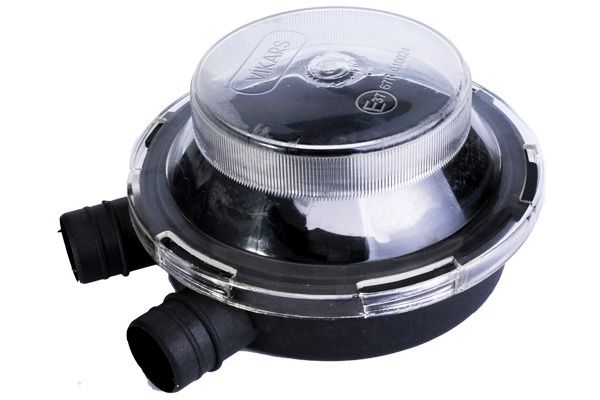
What Is an LPG Multivalve Protective Cover and What Is Its Purpose?
In LPG-powered vehicles, the multivalve is one of the most important components on the LPG tank. It controls several functions related to LPG filling, fuel delivery, and safety.
The multivalve protective cover is the housing installed over the multivalve assembly to protect the valves, connections, and related components from physical damage and external contamination.
It is especially important on vehicles equipped with toroidal (doughnut-shaped) LPG tanks, where the multivalve is usually located on the upper part of the tank, often beneath the trunk floor.
The cover may look like a simple plastic housing, but it can also form part of the ventilation and safety arrangement around the multivalve.
What Does the Multivalve Protective Cover Do?
The primary purpose of the cover is to protect the multivalve assembly.
Depending on the LPG system, the area around the multivalve can contain the filling connection, LPG outlet connection, electrical wiring, level sensor, safety devices, and other components.
The protective cover helps:
-
Protect the multivalve from physical impact
-
Prevent luggage from directly contacting the valves and connections
-
Reduce exposure to dirt and moisture
-
Protect electrical connections
-
Reduce the risk of accidental damage to LPG lines
-
Keep the multivalve assembly properly enclosed
-
Support the correct ventilation arrangement around the tank
For this reason, the cover should not simply be considered a cosmetic component.
Why Is the Multivalve Cover Important?
The multivalve is connected directly to the LPG tank and its associated fuel lines. Damage to the surrounding components can create safety problems.
For example, a heavy object placed in the trunk could hit an exposed connection if the protective cover is missing. A damaged cover can also leave wiring, hoses, and valve components unnecessarily exposed.
A properly installed cover helps protect these components during normal vehicle use.
Its importance becomes even greater when the LPG tank is installed inside the vehicle's trunk area, because the enclosure and ventilation system are designed to help prevent leaked LPG from accumulating inside the passenger compartment.
Is the Protective Cover a Gas Shut-Off Device?
No.
This distinction is important.
The multivalve itself contains valves and safety components that control LPG flow. The protective cover does not normally control the fuel supply and does not function as the primary LPG shut-off mechanism.
The cover is a protective housing.
Therefore, removing the cover does not automatically mean that LPG will leak. However, if the cover is part of a properly designed enclosure and ventilation system, leaving it missing or incorrectly installed can compromise the intended safety arrangement.
Multivalve Cover and Ventilation System
One of the most important aspects of the multivalve housing is ventilation.
In many LPG installations, the multivalve enclosure is designed with ventilation connections that help direct any leaked LPG toward the outside of the vehicle rather than allowing it to accumulate inside the trunk or passenger compartment.
This is important because LPG vapor is heavier than air and can collect in low areas if it cannot escape properly.
For that reason, the safety arrangement should be considered as a complete system:
Multivalve housing + seals + ventilation connections + ventilation hoses + correct installation
A cover by itself cannot provide the required protection if the ventilation system is damaged or disconnected.
What Happens If the Multivalve Cover Is Missing?
A missing cover does not necessarily cause an immediate mechanical problem with the LPG system.
However, leaving the multivalve exposed is not good practice.
Without the cover:
-
LPG connections may be exposed to impact.
-
Electrical connections may be more vulnerable.
-
Dirt and moisture can reach the components more easily.
-
Luggage can contact the multivalve or its connections.
-
The intended ventilation arrangement may no longer be complete.
-
A damaged or disconnected ventilation hose may go unnoticed.
If the cover has been removed during LPG system service, it should be correctly reinstalled afterward.
What If the Multivalve Cover Is Broken?
Not every type of damage has the same significance.
A small crack in an external plastic section is different from a broken housing that no longer seals or supports the ventilation system correctly.
The area should be inspected if:
-
The cover is badly cracked
-
The cover no longer fits correctly
-
The housing cannot be secured
-
A ventilation hose has become disconnected
-
A ventilation hose is crushed or damaged
-
A seal is damaged
-
LPG connections are exposed
-
The tank or multivalve has suffered an impact
-
An LPG smell is present around the tank
If LPG odor is detected, simply replacing the cover is not enough. The LPG system should be checked for leaks.
Is It Normal to Smell LPG Around the Multivalve Cover?
A persistent LPG smell should not be considered normal.
A brief smell during or immediately after refueling can sometimes occur, but a continuous or recurring LPG odor requires investigation.
Possible sources can include:
-
Multivalve connections
-
Filling line
-
LPG outlet line
-
Tank fittings
-
Ventilation connections
-
LPG hoses
-
Pressure or safety components
-
Other connections within the LPG system
A leak should be checked using appropriate diagnostic and leak-detection equipment by a qualified LPG technician.
Open flames or improvised methods should never be used to search for an LPG leak.
Does Every LPG Tank Use the Same Multivalve Cover?
No.
The design depends on the LPG tank, multivalve, installation method, and vehicle.
Toroidal LPG tanks and cylindrical tanks can have different multivalve arrangements. Different manufacturers can also use different housing designs and mounting methods.
Therefore, a cover that looks similar to the original one should not automatically be assumed to be compatible.
The replacement housing should be suitable for the specific tank and multivalve assembly.
What Should Be Checked When Replacing the Cover?
Replacing the cover should be more than simply installing a piece of plastic over the tank.
The technician should also check:
-
Multivalve connections
-
Electrical connectors
-
LPG filling line
-
LPG outlet line
-
Ventilation hoses
-
Seals
-
Housing mounting points
-
Tank condition
-
Condition of surrounding LPG components
The ventilation hoses should not be crushed, kinked, disconnected, or incorrectly routed after the cover is installed.
Can the Multivalve Cover Affect LPG Safety?
Yes, indirectly.
The cover itself is not normally the component that stops LPG flow, but the enclosure can be part of the overall safety design.
A properly installed multivalve housing helps protect the assembly and, where applicable, works together with the ventilation system to direct leaked gas away from the vehicle interior.
This is particularly important when the LPG tank is located inside the vehicle's luggage compartment.
Is the Multivalve Cover Important During Vehicle Inspection?
The importance of the cover depends on the vehicle, LPG installation, and applicable inspection requirements.
The more important issue is whether the LPG tank, multivalve, protective enclosure, ventilation system, hoses, connections, and safety components are correctly installed and in proper condition.
A missing, broken, or incorrectly installed enclosure should therefore be inspected before a vehicle inspection rather than being treated as a purely cosmetic issue.
Multivalve vs. Multivalve Protective Cover
These two components are often confused.
Multivalve:
The valve assembly mounted on the LPG tank. It is involved in LPG filling, fuel delivery, level indication, and various safety functions depending on the design.
Multivalve protective cover:
The housing installed around the multivalve to protect the assembly and, in applicable systems, form part of the ventilation and enclosure arrangement.
The cover does not replace the multivalve and does not perform the same function.
When Should the Multivalve Area Be Inspected?
The multivalve area should be checked whenever work has been performed around the LPG tank or trunk floor.
It is particularly worth inspecting after:
-
LPG system installation
-
Tank replacement
-
Multivalve replacement
-
LPG hose replacement
-
Trunk modifications
-
Repairs following a rear-end impact
-
Removal and reinstallation of the trunk floor
-
A damaged protective cover
-
A suspected LPG leak
Even if the vehicle is running normally, physical damage to the LPG tank or multivalve area should not be ignored.
The Most Important Point About the Multivalve Cover
The LPG multivalve protective cover may appear to be a simple component, but its role goes beyond appearance. It helps protect the multivalve and its connections from physical damage and, depending on the installation, can form part of the ventilation and enclosure system designed to improve LPG safety.
If the cover is missing or damaged, the correct approach is not simply to install another cover without checking the surrounding components. The multivalve, LPG connections, seals, ventilation hoses, and tank area should be inspected together.
In an LPG system, safety depends on the correct operation and installation of the entire system rather than on a single component.