TR
TR EN
EN

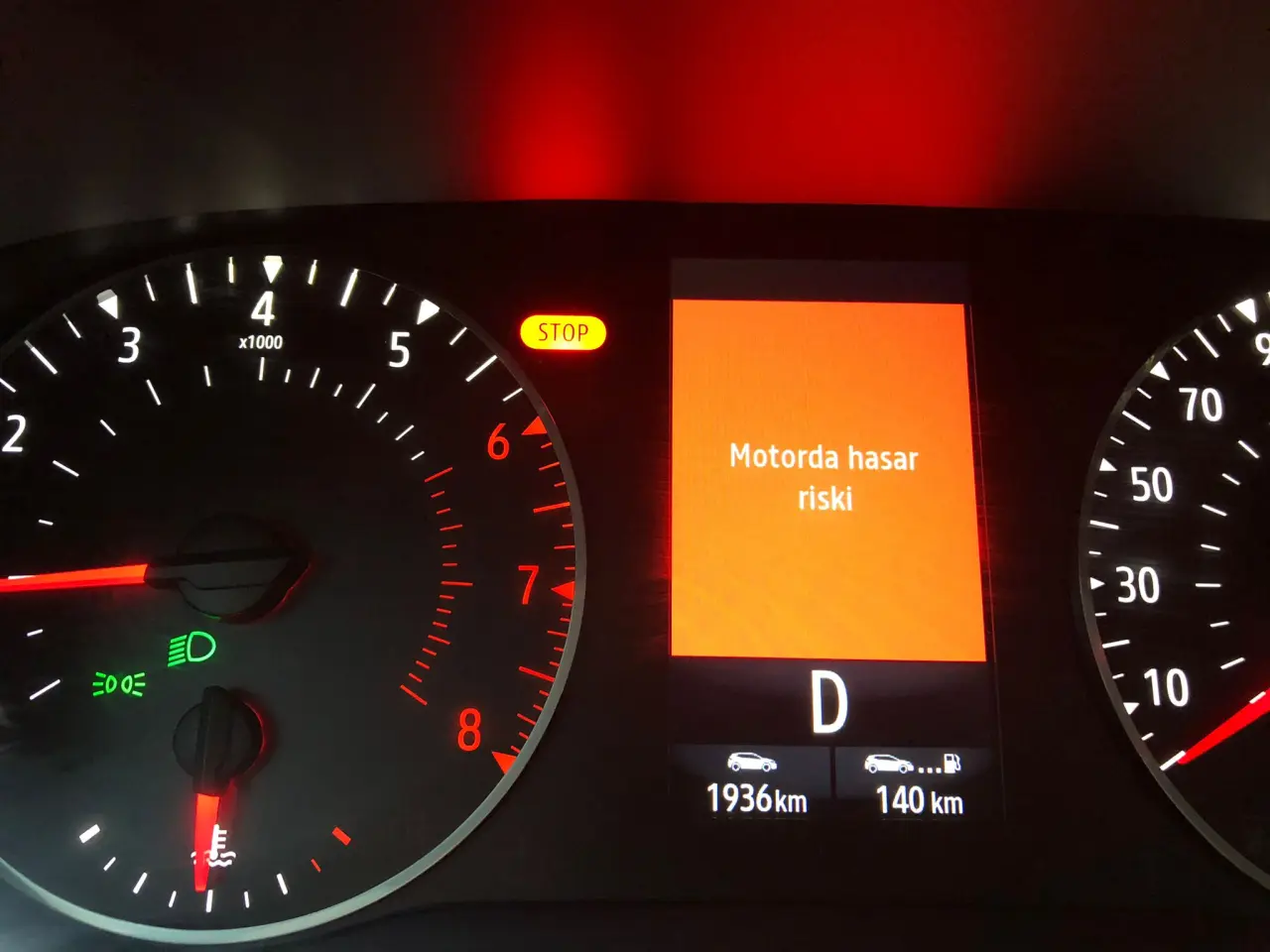
What Is the Engine Failure Risk Warning?
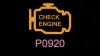
The “Engine Failure Risk” warning is a serious warning message that can appear on the instrument cluster of some modern vehicles.
Depending on the manufacturer, model, engine, and dashboard language, the message may appear as:
-
Engine Failure Risk
-
Risk of Engine Failure
-
Engine Failure Hazard
-
Check Injection
-
Check Engine
-
Engine Fault
-
Risk of Engine Damage
-
Engine Failure Risk Warning
The exact wording varies between manufacturers, but the basic purpose is similar: the vehicle's electronic control system has detected a condition that could potentially affect engine operation or cause damage if the vehicle continues to be driven.
Importantly, this warning does not always mean that the engine has already failed.
It means that the vehicle has detected a fault serious enough to require investigation.
The underlying problem can range from an ignition or fuel-system fault to low oil pressure, overheating, timing problems, turbocharger issues, or an electrical problem affecting engine management.
Is the Engine Failure Risk Warning Serious?
Yes.
An engine failure risk warning should not be treated in the same way as a minor maintenance reminder.
The seriousness depends on the fault that triggered the message.
For example, a control module may display a serious warning because it has detected:
-
Low engine oil pressure
-
Excessive engine temperature
-
Severe misfire
-
Fuel-pressure problems
-
Turbocharger control problems
-
Variable valve timing problems
-
Timing synchronization problems
-
Cooling-system problems
-
Electrical or charging-system faults
Some of these conditions can cause expensive mechanical damage if ignored.
However, the warning message itself does not identify the failed component. A proper diagnostic scan and additional testing are normally required to determine the actual cause.
Why Does the Engine Failure Risk Warning Appear?
There is no single cause.
Modern engines rely on numerous sensors, actuators, control modules, and mechanical systems. The engine control unit continuously compares sensor information with expected operating values.
If the measured values fall outside acceptable limits, the system may store diagnostic trouble codes and activate a warning.
Common causes include the following.
Low Engine Oil Pressure
Low oil pressure is one of the conditions that should be taken particularly seriously.
Engine oil creates a protective lubrication film between moving components and also supplies certain hydraulic systems.
If oil pressure becomes too low, components such as:
-
Crankshaft bearings
-
Camshafts
-
Turbocharger bearings
-
Variable valve timing components
-
Hydraulic lifters
may not receive adequate lubrication.
Possible causes of low oil pressure include:
-
Low oil level
-
Incorrect engine oil
-
Oil degradation
-
Clogged oil pickup
-
Blocked oil passages
-
Worn engine bearings
-
Faulty oil pump
-
Faulty oil-pressure sensor
-
Oil leakage
If an engine oil-pressure warning appears together with an engine failure risk message, the engine should generally be stopped as soon as it is safe to do so.
Continuing to run an engine with genuinely low oil pressure can cause severe damage within a short period.
Low Engine Oil Level
A low oil level can also contribute to engine warnings.
If the oil level becomes too low, the oil pump may have difficulty maintaining stable oil pressure, particularly during:
-
Hard acceleration
-
Cornering
-
Braking
-
High engine RPM
-
Steep inclines
The correct oil level should be checked according to the manufacturer's procedure, normally with the vehicle on level ground and under the specified engine-temperature conditions.
Do not assume that adding oil will always solve the problem. If the level is repeatedly falling, the source of the oil loss must be investigated.
Engine Overheating
Excessive engine temperature is another major reason an engine may enter a protective operating strategy.
Possible causes include:
-
Low coolant level
-
Coolant leakage
-
Faulty thermostat
-
Cooling fan failure
-
Water pump failure
-
Blocked radiator
-
Air trapped in the cooling system
-
Damaged coolant hose
-
Head-gasket failure
-
Faulty temperature sensor
An overheating engine can suffer serious damage, including cylinder-head distortion, head-gasket failure, cracked components, or severe internal damage.
If the temperature gauge is in the danger zone or a red overheating warning appears, continuing to drive can be dangerous for the engine.
Never remove a pressurized coolant cap while the engine is hot.
Severe Engine Misfire
A severe misfire can cause an engine failure risk warning on some vehicles.
A misfire occurs when combustion in one or more cylinders does not occur correctly.
Possible causes include:
-
Worn spark plugs
-
Failed ignition coils
-
Damaged ignition wiring
-
Faulty fuel injectors
-
Low fuel pressure
-
Incorrect air-fuel mixture
-
Vacuum leaks
-
Compression problems
-
Valve problems
-
Camshaft timing problems
A severe misfire is particularly important because unburned fuel can enter the exhaust system and overheat the catalytic converter.
If the Check Engine Light is flashing and the engine is shaking or misfiring heavily, continued driving should generally be avoided.
Fuel Pressure Problems
Modern gasoline and diesel engines depend on carefully controlled fuel pressure.
A fuel-pressure problem may occur because of:
-
Weak fuel pump
-
Restricted fuel filter
-
Faulty fuel-pressure regulator
-
Fuel-pressure sensor problem
-
High-pressure fuel pump failure
-
Injector problems
-
Wiring or connector faults
-
Fuel contamination
Diesel engines can be particularly sensitive to high-pressure fuel-system faults.
A fuel-pressure problem can result in difficult starting, hesitation, loss of power, stalling, or an engine that enters reduced-power mode.
Timing Belt or Timing Chain Problems
Engine timing is critical.
The crankshaft and camshaft must remain synchronized so that the valves open and close at the correct time relative to piston movement.
Problems with the timing system can include:
-
Worn timing belt
-
Timing belt tooth damage
-
Timing belt tensioner failure
-
Timing chain stretch
-
Broken chain guide
-
Failed timing-chain tensioner
-
Incorrect camshaft timing
-
Variable valve timing problems
If the timing belt jumps or the timing chain moves significantly out of position, the engine may run poorly or fail to start.
On interference engines, a serious timing failure can allow the pistons and valves to collide, potentially causing extensive internal damage.
Turbocharger Problems
Turbocharged engines use additional systems to control boost pressure and airflow.
An engine failure risk warning may appear if the control system detects abnormal turbocharger operation.
Possible causes include:
-
Boost pressure too high
-
Boost pressure too low
-
Wastegate problems
-
Variable-geometry turbocharger problems
-
Boost-control solenoid failure
-
Vacuum or actuator problems
-
Charge-air leaks
-
Damaged turbocharger
-
Faulty pressure sensor
A turbocharger problem does not automatically mean that the turbocharger itself has failed.
A leaking hose, faulty actuator, sensor, wiring issue, or control solenoid can create similar symptoms.
Sensor or Electrical Problems
Modern engine management systems depend on many sensors.
Examples include:
-
Crankshaft position sensor
-
Camshaft position sensor
-
Engine coolant temperature sensor
-
Mass airflow sensor
-
Manifold absolute pressure sensor
-
Throttle-position sensor
-
Oxygen sensor
-
Fuel-pressure sensor
-
Oil-pressure sensor
-
Boost-pressure sensor
A faulty sensor can provide incorrect information to the engine control module.
In some cases, the vehicle may respond by reducing engine power or displaying a serious warning.
However, a sensor-related diagnostic code does not automatically prove that the sensor itself is defective.
The wiring, connector, power supply, ground, mechanical system, or another component can cause the sensor to report an abnormal value.
Battery and Alternator Problems
Electrical voltage is extremely important in modern vehicles.
A weak battery, failing alternator, poor ground connection, or charging-system problem can cause multiple electronic systems to behave abnormally.
Possible symptoms include:
-
Multiple warning lights
-
Difficult starting
-
Intermittent electrical faults
-
Engine management warnings
-
Communication errors
-
Reduced engine performance
-
Start-stop system failure
Low voltage can sometimes create a large number of diagnostic trouble codes that appear unrelated.
Therefore, battery voltage and charging-system performance should be checked before replacing multiple electronic components.
Throttle Control Problems
Modern engines commonly use electronic throttle control instead of a traditional mechanical throttle cable.
The system can include:
-
Accelerator pedal sensors
-
Electronic throttle body
-
Throttle-position sensors
-
Motor control circuitry
-
Engine control module
-
Wiring and connectors
A fault in the electronic throttle system can cause:
-
Poor throttle response
-
Limited engine power
-
High or unstable idle
-
Engine warning messages
-
Reduced-power mode
-
Difficulty accelerating
A throttle-related warning should be diagnosed through both fault codes and live data rather than by automatically replacing the throttle body.
Diesel Particulate Filter and Emissions Problems
Diesel vehicles have additional emissions-control systems that can affect engine operation.
Depending on the vehicle, these may include:
-
Diesel particulate filter
-
Exhaust gas recirculation system
-
Selective catalytic reduction system
-
AdBlue/DEF system
-
NOx sensors
-
Differential-pressure sensors
A severely blocked DPF, failed sensor, or emissions-system malfunction can cause reduced engine performance and warning messages.
In some vehicles, continued operation with a severe emissions fault can eventually result in significant power reduction.
EGR System Problems
The exhaust gas recirculation system controls a portion of exhaust gas returning to the intake.
An EGR valve can become contaminated with carbon deposits and may stick open or closed.
Possible symptoms include:
-
Rough idle
-
Hesitation
-
Reduced power
-
Excessive smoke
-
Increased fuel consumption
-
Engine warning light
-
Poor acceleration
An EGR fault may trigger an engine warning, but the EGR valve itself is not always the problem.
Carbon buildup, wiring, position sensors, vacuum systems, or control components can also be involved.
Could a Bad Spark Plug Cause an Engine Failure Risk Warning?
Yes, under certain circumstances.
A worn or damaged spark plug can cause a misfire, particularly under high engine load.
The engine control module can detect the abnormal combustion and may activate a warning.
Other ignition-related causes include:
-
Ignition coil failure
-
Incorrect spark-plug gap
-
Damaged ignition wiring
-
Moisture around the ignition system
-
Incorrect spark plugs
-
Poor electrical connections
If the vehicle is running normally at low load but develops a severe misfire during acceleration, the ignition system should be carefully investigated.
Why Does the Warning Appear and Then Disappear?
Some faults are intermittent.
An intermittent engine failure risk warning can be caused by:
-
Loose electrical connections
-
Damaged wiring
-
Sensor intermittency
-
Low battery voltage
-
Temperature-dependent component failure
-
Intermittent fuel-pressure problems
-
Mechanical components beginning to fail
-
Communication problems between control modules
The fact that the warning disappears after restarting the vehicle does not necessarily mean that the problem has been repaired.
The control module may simply have returned the engine to normal operation after the abnormal condition disappeared.
Diagnostic trouble codes and freeze-frame data may still remain stored.
Can You Drive With an Engine Failure Risk Warning?
There is no universal answer because the warning can be triggered by many different faults.
Driving may be unsafe or mechanically damaging if the vehicle has:
-
Low oil pressure
-
Severe overheating
-
Heavy misfire
-
Major loss of engine power
-
Abnormal mechanical noise
-
Serious coolant loss
-
Serious oil loss
-
Flashing Check Engine Light
-
Sudden loss of engine performance
-
Red engine warning indicators
In these situations, stopping the vehicle and obtaining professional assistance is generally safer than continuing to drive.
If the vehicle is running normally and the warning is associated with a less severe fault, the manufacturer may allow limited driving to a repair facility.
The owner's manual should be consulted because warning strategies differ between vehicles.
What Should You Do When the Warning Appears?
The first step is to pay attention to what the vehicle is doing at the moment the warning appears.
Check for:
-
Engine temperature
-
Oil-pressure warning
-
Coolant warning
-
Loss of power
-
Misfire
-
Unusual engine noise
-
Smoke
-
Oil leakage
-
Coolant leakage
-
Difficulty starting
If the engine is overheating, oil pressure is low, or severe mechanical symptoms are present, stop the engine when it is safe to do so.
Do not repeatedly restart an engine that may have a lubrication or overheating problem.
How Is an Engine Failure Risk Warning Diagnosed?
A proper diagnosis should begin with a complete scan of the relevant control modules.
A diagnostic scan may reveal:
-
Stored fault codes
-
Pending codes
-
Manufacturer-specific codes
-
Freeze-frame data
-
Sensor values
-
Engine operating conditions when the fault occurred
The technician may then check live data and perform physical tests.
Depending on the fault, diagnosis may include:
-
Oil-level inspection
-
Actual oil-pressure measurement
-
Cooling-system pressure testing
-
Coolant inspection
-
Battery and alternator testing
-
Fuel-pressure testing
-
Ignition-system testing
-
Compression testing
-
Leak-down testing
-
Camshaft/crankshaft synchronization checks
-
Intake and boost-leak testing
-
Sensor signal testing
-
Wiring and connector inspection
The most important principle is to diagnose the underlying fault rather than simply clearing the warning.
Why Should You Not Just Clear the Fault Codes?
Clearing the diagnostic trouble codes may turn off the warning temporarily, but it does not repair the problem.
If the underlying condition remains, the warning will usually return.
More importantly, clearing codes without recording them can remove valuable diagnostic information.
Before clearing codes, it is often useful to record:
-
Fault codes
-
Freeze-frame data
-
Mileage
-
Engine temperature
-
RPM
-
Vehicle speed
-
Load
-
Battery voltage
This information can help determine under what conditions the fault occurred.
Does an Engine Failure Risk Warning Always Mean the Engine Is Damaged?
No.
This is an important distinction.
The warning means that the vehicle has detected a potentially serious engine-related condition. It does not necessarily mean that the engine has already suffered internal damage.
For example, a faulty sensor, electrical connection, or control solenoid can sometimes trigger a serious warning even though the mechanical engine is still healthy.
On the other hand, a genuine low-oil-pressure, overheating, or timing problem can cause serious mechanical damage if ignored.
Therefore, the warning should be taken seriously without automatically assuming that the engine needs to be replaced.
Final Thoughts
The Engine Failure Risk warning is a general warning that can indicate a potentially serious problem with the engine or its supporting systems.
Possible causes include:
-
Low oil level or oil pressure
-
Engine overheating
-
Severe misfire
-
Fuel-pressure problems
-
Timing belt or timing chain problems
-
Turbocharger faults
-
Throttle-control problems
-
Sensor or wiring faults
-
Battery or charging-system problems
-
EGR or emissions-system faults
-
Cooling-system problems
The most important thing to remember is that the warning message alone cannot identify the failed component.
A diagnostic trouble code is a starting point, not a final diagnosis.
If the warning appears together with overheating, low oil pressure, severe misfire, unusual mechanical noise, smoke, major fluid loss, or sudden loss of power, continuing to drive can turn a repairable fault into major engine damage.
The safest approach is to determine why the warning appeared, inspect the relevant systems, read the stored diagnostic codes, and verify the suspected fault before replacing parts.