TR
TR EN
EN

Why Does a Car Window Get Stuck? Causes, Symptoms, and Solutions
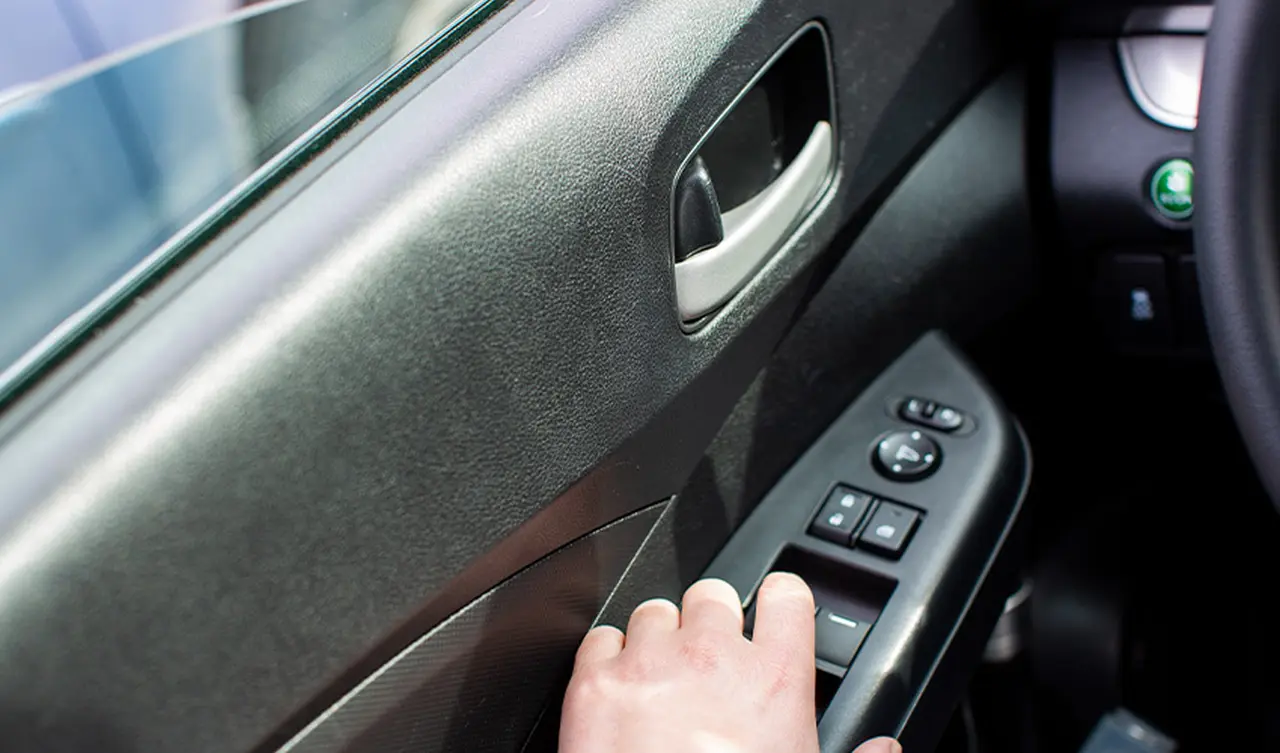
Power windows have become a standard feature on modern cars, making it easy to open and close the windows with the press of a button. Although the system appears simple from the driver's perspective, several electrical and mechanical components work together to move the glass.
When one of these components fails, the window may become slow, get stuck, move unevenly, stop halfway, or refuse to move at all.
A window that will not open is not always caused by a faulty window motor. The problem can also come from a blown fuse, damaged wiring, a defective switch, a faulty window regulator, a jammed mechanism, frozen glass, or excessive friction in the window channels.
Understanding the symptoms can help identify the actual cause before expensive parts are replaced unnecessarily.
How Does a Power Window System Work?
A typical electric window system consists of several components working together.
Depending on the vehicle, the system may include:
-
Window switch
-
Window motor
-
Window regulator
-
Window glass
-
Window guides and channels
-
Fuses
-
Relays
-
Wiring and connectors
-
Body control module
-
Door control module
-
Anti-pinch system
-
Window position sensors
When you press the window switch, an electrical signal is sent to the window motor either directly or through a control module.
The motor rotates in one direction to lower the glass and in the opposite direction to raise it.
The regulator converts the motor's rotational movement into the vertical movement required to move the window glass.
Different vehicles use different regulator designs. Some use a cable-operated mechanism, while others use a scissor-type regulator or another mechanical arrangement.
Because of these differences, the exact diagnosis procedure depends on the vehicle.
The Window Does Not Move at All
One of the most common complaints is that the window simply does nothing when the switch is pressed.
If there is no motor sound, no movement, and no response, several possibilities should be considered.
Possible causes include:
-
Blown fuse
-
Faulty window switch
-
Failed window motor
-
Broken wiring
-
Loose connector
-
Faulty door control module
-
Power supply problem
-
Ground connection problem
-
Electrical communication problem
-
Window lock switch being activated
The first step should be determining whether the problem affects only one window or multiple windows.
If every power window stops working at the same time, a common electrical supply, fuse, relay, control module, or power-management problem becomes more likely.
If only one window is affected, the problem is more likely to be local to that door.
Why Does the Window Motor Make a Noise but the Glass Does Not Move?
If you can hear the motor running but the glass does not move, the problem is often mechanical rather than electrical.
Possible causes include:
-
Broken window regulator cable
-
Damaged regulator
-
Detached glass from the regulator
-
Broken regulator mounting point
-
Stripped regulator mechanism
-
Motor gear damage
-
Glass coming out of its guide
-
Frozen glass
-
A severely jammed window mechanism
A motor that spins without moving the glass can indicate that the motor is receiving power but the mechanical connection between the motor and window has failed.
In this situation, replacing the motor without inspecting the regulator may not solve the problem.
The Window Moves Slowly
A power window that gradually becomes slower may be showing early signs of mechanical resistance.
Possible causes include:
-
Dirty window channels
-
Dry or damaged window guides
-
Increased friction
-
Worn regulator
-
Weak window motor
-
Damaged cable
-
Glass misalignment
-
Low electrical voltage
-
Excessive resistance caused by ice or contamination
If the window has become progressively slower over several weeks or months, mechanical wear is more likely than a sudden electrical failure.
A window motor can also become weak as its internal brushes, bearings, commutator, or other components wear.
However, excessive mechanical resistance can also overload a healthy motor and make it appear weak.
The Window Moves Up or Down Unevenly
A window that tilts, moves at an angle, or rises unevenly should not be ignored.
The glass should normally remain properly aligned with its guides as it moves.
Uneven movement can be caused by:
-
Bent window regulator
-
Damaged regulator cable
-
Loose glass mounting
-
Worn window guide
-
Foreign material inside the channel
-
Misaligned glass
-
Damaged door components
Continuing to operate a severely misaligned window can place additional stress on the motor and regulator.
In some cases, the glass may become completely stuck or fall inside the door.
The Window Gets Stuck Halfway
A window that stops at a particular point can have several different causes.
If it always stops at approximately the same position, inspect the mechanical system carefully.
Possible causes include:
-
Obstruction in the window channel
-
Damaged regulator
-
Bent guide
-
Glass misalignment
-
Excessive friction
-
Faulty anti-pinch detection
-
Motor overload
-
Control-module programming issue
If the motor stops and reverses direction when the window is being closed, the vehicle may be detecting excessive resistance through the anti-pinch system.
What Is the Anti-Pinch System?
Many modern vehicles have an anti-pinch function designed to reduce the risk of injury when the window is closing.
The system monitors the window's movement and motor load. If it detects an unexpected increase in resistance, it may stop the window and move it back down.
This is particularly important when something becomes trapped between the glass and the window frame.
However, a malfunctioning or poorly calibrated system can sometimes interpret mechanical resistance as an obstruction.
For example, excessive friction in the window channel may cause the anti-pinch system to activate even though nothing is trapped in the window.
This can result in a window that closes partially and then automatically reopens.
Why Does the Window Go Up and Then Come Back Down?
This is a common symptom on vehicles equipped with anti-pinch protection.
If the window rises and then suddenly moves back down, possible causes include:
-
Excessive resistance
-
Dirty or damaged window channels
-
Misaligned glass
-
Weak window regulator
-
Faulty motor
-
Incorrect window calibration
-
Anti-pinch system malfunction
-
Electrical or control-module problem
Some vehicles require window initialization after the battery has been disconnected or after certain repairs.
The exact reset procedure varies by manufacturer, so the procedure in the vehicle's owner's manual or service documentation should be followed.
Why Does a Car Window Stop Working After the Battery Is Disconnected?
Modern vehicles often use electronic control modules for power windows.
After battery disconnection, the control module may lose stored window position information.
Depending on the vehicle, the window may then:
-
Stop working in automatic mode
-
Lose one-touch operation
-
Trigger the anti-pinch function incorrectly
-
Require initialization
-
Operate only manually
This does not necessarily mean that the window motor has failed.
Some vehicles allow the window to be reinitialized using a specific switch sequence, but the procedure differs between manufacturers and models.
A Faulty Window Switch Can Prevent the Window From Moving
The window switch is the component that provides the driver's input to the electrical system.
Over time, the contacts inside the switch can wear or become contaminated.
A defective switch may cause:
-
No response
-
Intermittent operation
-
Operation in only one direction
-
Operation when the switch is pressed unusually hard
-
Random operation
-
Failure of one specific window
If a window works from one switch but not another, the switch or associated wiring becomes an important diagnostic suspect.
For example, if the passenger window operates from the passenger-door switch but not from the driver's master switch, the master switch, wiring, or control system may be responsible.
Could a Blown Fuse Cause a Window to Stop Working?
Yes.
The power window system is protected by one or more fuses.
A blown fuse can interrupt electrical power to the window system.
However, replacing the fuse should not be considered the complete repair if it blows again.
A repeatedly blown fuse can indicate:
-
Short circuit
-
Damaged wiring
-
Motor drawing excessive current
-
Mechanical obstruction
-
Failed control component
Installing a fuse with a higher rating than specified is dangerous and should never be used as a workaround.
The replacement fuse must have the correct specification for the vehicle.
Damaged Door Wiring Can Cause Window Problems
The wiring between the vehicle body and the door flexes every time the door is opened and closed.
Over many years, wires inside the rubber wiring boot can become fatigued and break internally.
This can cause:
-
Intermittent window operation
-
Central locking problems
-
Mirror problems
-
Speaker failure
-
Door-light problems
-
Multiple electrical faults in the same door
If several electrical functions in the same door stop working intermittently, the wiring harness between the door and body should be inspected.
A broken wire may not be obvious from the outside because the insulation can remain intact even when the conductor inside has fractured.
Window Regulator Failure
The window regulator is responsible for physically moving the glass.
It is one of the most common mechanical causes of power window problems.
Depending on its design, the regulator can suffer from:
-
Broken cables
-
Frayed cables
-
Bent arms
-
Worn gears
-
Broken plastic components
-
Damaged mounting points
-
Corrosion
-
Loss of lubrication
A failing regulator may produce clicking, popping, grinding, or snapping sounds before the window stops working completely.
If the glass suddenly falls into the door after a loud mechanical noise, a regulator failure is highly likely.
Window Motor Failure
The electric motor can eventually wear out.
A failing motor may produce:
-
Slow window operation
-
Intermittent operation
-
Clicking or unusual electrical noise
-
Complete loss of movement
-
Operation only when the door is moved or struck
-
Overheating
However, a weak motor should not be diagnosed solely from slow window movement.
If the regulator or window guides are binding, even a good motor may operate slowly and draw excessive current.
The mechanical system should therefore be inspected before condemning the motor.
Dirt and Debris Can Cause the Window to Stick
Window channels can collect:
-
Dust
-
Dirt
-
Leaves
-
Sand
-
Road debris
-
Old lubricant
-
Other contaminants
This contamination can increase friction between the glass and its guides.
Over time, the additional resistance can make the window progressively slower.
Cleaning the appropriate window channels may help, but care should be taken when applying lubricant because not every lubricant is suitable for every window seal or guide material.
Using an inappropriate petroleum-based product can damage certain rubber components.
Frozen Car Windows
Cold weather can create a completely different type of window problem.
If water freezes between the glass and its seals, the window may become stuck.
Attempting to force the window open can overload or damage:
-
Window motor
-
Regulator
-
Cable
-
Window guides
-
Seals
Never repeatedly press the window switch while the glass is frozen in place.
Allow the ice to melt naturally or use an appropriate method for safely removing the ice.
Why Does the Window Work Sometimes but Not Always?
Intermittent operation is particularly useful diagnostically because it often points toward an electrical connection, switch, wiring, motor, or control problem.
Possible causes include:
-
Loose connector
-
Broken wiring
-
Worn switch contacts
-
Motor brush wear
-
Thermal protection activating
-
Control-module fault
-
Poor ground connection
-
Mechanical binding
If the window stops working and then operates again after several minutes, the motor may be overheating or experiencing excessive mechanical resistance.
If it works when the door is moved, wiring or connector problems become more suspicious.
Why Does the Window Work From One Door but Not Another?
Many vehicles have multiple switches controlling the same window.
If the window works from the passenger door but not the driver's master switch, the window motor and regulator may still be functioning correctly.
The problem could instead involve:
-
Driver's master switch
-
Door wiring
-
Connector
-
Control module
-
Communication circuit
This type of comparison can help narrow the diagnosis without immediately replacing the motor.
Can a Bad Window Motor Drain the Battery?
A window motor normally consumes electrical power only while it is being operated.
A motor that is mechanically jammed may draw excessive current while the switch is held.
However, a continuously draining battery is not normally explained simply by a window motor that does not move.
A battery drain may instead involve:
-
A control module remaining awake
-
A stuck switch
-
Electrical short
-
Door-module problem
-
Wiring fault
-
Another unrelated electrical component
If a vehicle has both a window problem and a battery-drain problem, both symptoms should be diagnosed rather than assuming they have the same cause.
How Is a Stuck Car Window Diagnosed?
A proper diagnosis should start with the simplest checks.
First determine:
-
Does the problem affect one window or several?
-
Is there any motor noise?
-
Does the window move in either direction?
-
Does it move slowly?
-
Does it stop at a specific position?
-
Does it reverse while closing?
-
Does it work from another switch?
-
Did the problem begin after battery replacement?
-
Was the door recently repaired?
-
Did the window freeze?
-
Was there an impact or mechanical noise?
The fuse and power supply can then be checked.
If electrical power reaches the motor but the motor does not operate, the motor or mechanical assembly may be faulty.
If the motor operates but the glass does not move correctly, the regulator and glass mounting should be inspected.
A multimeter can be useful for checking voltage and electrical continuity, while a scan tool may be necessary on vehicles where the power-window system is controlled by a body or door module.
Should You Replace the Window Motor or the Regulator?
This depends on the actual failure.
If the motor has failed but the regulator is in good condition, replacing the motor may be sufficient on vehicles where the motor is separately serviceable.
If the regulator mechanism is damaged, replacing only the motor will not solve the problem.
Some vehicles use a motor and regulator assembly that is sold as one unit. In that case, replacing the complete assembly may be the appropriate repair.
The correct approach is to identify the failed component before purchasing parts.
What Should You Do If the Window Is Stuck Open?
A window stuck in the open position can become a practical and safety problem.
Rain, snow, dust, and moisture can enter the interior and potentially damage electrical components.
If immediate repair is not possible, the opening can be temporarily protected with a suitable waterproof covering, but the cover should not interfere with visibility or safe vehicle operation.
Do not leave sensitive electrical components exposed to water.
The underlying fault should be repaired as soon as reasonably possible.
What Should You Do If the Window Is Stuck Closed?
A window stuck closed is generally less vulnerable to weather, but it can still create problems.
If the window is required for ventilation, toll-road access, parking facilities, or other normal vehicle functions, the fault can become inconvenient quickly.
Avoid repeatedly operating the switch if the motor is making abnormal noises or the glass is visibly binding.
Repeated attempts can overheat the motor or further damage the regulator.
Can You Manually Close a Power Window?
In some vehicles, the glass can be moved manually after removing the interior door trim and releasing the regulator.
However, this is not a universal procedure.
The glass can be heavy, fragile, and difficult to support correctly. Incorrect handling can result in broken glass, damaged regulator components, or personal injury.
If the glass has fallen inside the door or is severely misaligned, professional repair is usually safer.
Preventing Power Window Problems
Power window systems require relatively little routine maintenance, but a few habits can help reduce problems.
Keep the window channels reasonably clean and avoid forcing the glass when it is frozen.
If the window becomes noticeably slower than the others, investigate the problem instead of waiting until the motor or regulator fails completely.
Also pay attention to new clicking, grinding, popping, or cable-related noises.
Early diagnosis can sometimes prevent a minor guide or lubrication problem from developing into a complete regulator failure.
Final Thoughts
A car window that will not open can be caused by a surprisingly large number of electrical and mechanical problems.
The most common possibilities include:
-
Faulty window motor
-
Damaged window regulator
-
Defective window switch
-
Blown fuse
-
Broken door wiring
-
Loose electrical connection
-
Dirty or damaged window guides
-
Frozen window
-
Glass misalignment
-
Anti-pinch system activation
-
Control-module or calibration problems
The most important diagnostic clue is how the window behaves.
A completely silent window points more toward an electrical or control problem, while a motor that runs without moving the glass points more toward the regulator or mechanical connection.
A slow or uneven window often suggests excessive friction, misalignment, regulator wear, or a weakening motor.
Because modern power windows can be controlled by electronic modules and anti-pinch systems, replacing parts without proper diagnosis can easily lead to unnecessary expense.
If a window begins making unusual noises, becomes noticeably slower, moves unevenly, or repeatedly gets stuck, it is better to investigate the problem early rather than waiting for the regulator or motor to fail completely.