TR
TR EN
EN

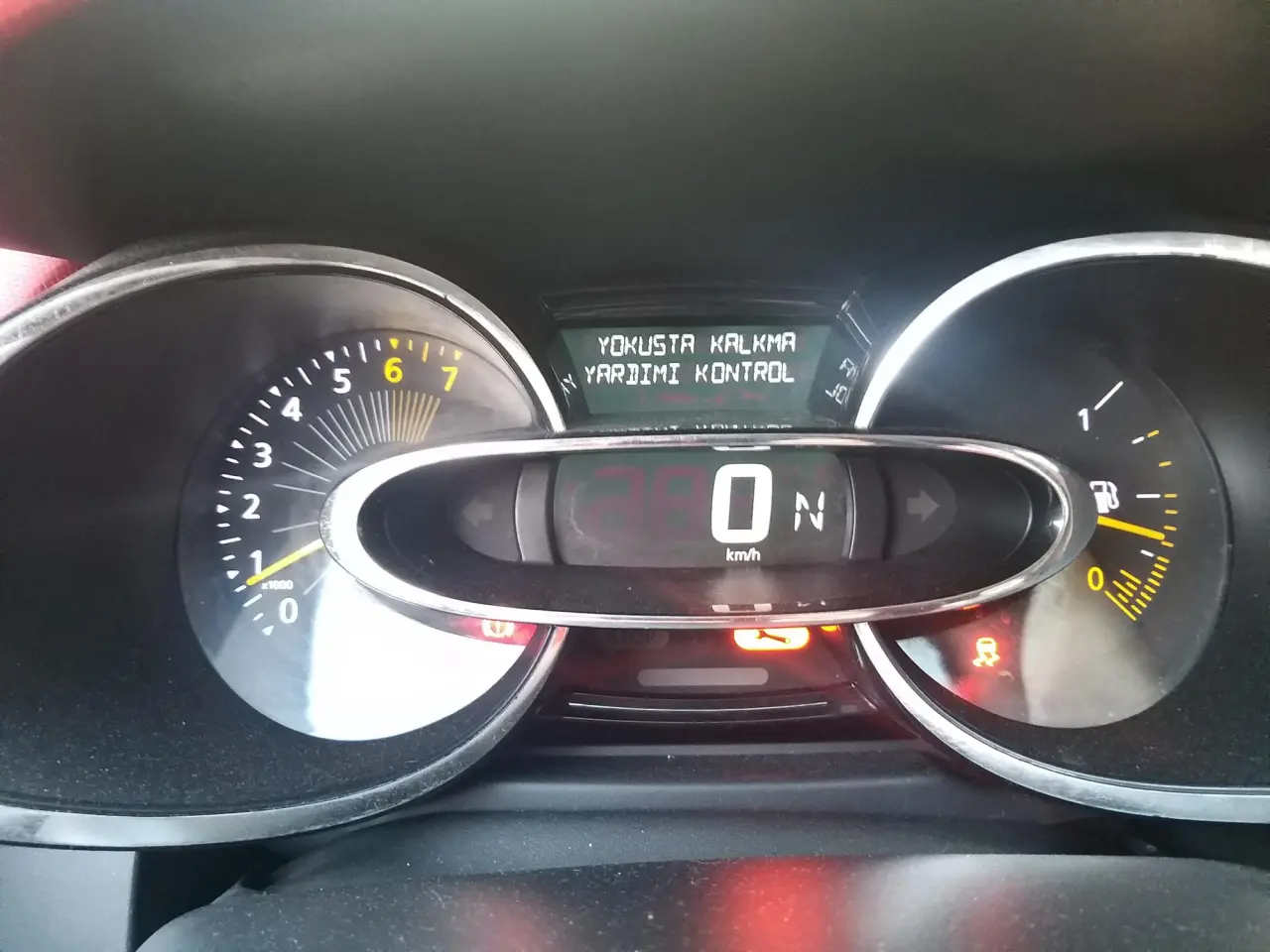
Why Does Hill Start Assist (Hill Holder) Not Work?
Hill Start Assist, commonly called Hill Holder, Hill Hold Control, or Hill Start Assist, is a driver-assistance function designed to make starting on an incline easier.
When the vehicle is stopped on a slope, the system can temporarily maintain brake pressure after the driver releases the brake pedal. This gives the driver enough time to move from the brake pedal to the accelerator without the vehicle rolling backward.
When the system works correctly, it usually operates almost unnoticed.
However, if Hill Start Assist suddenly stops working, the vehicle may begin rolling backward as soon as the brake pedal is released.
A Hill Holder problem does not necessarily mean that the brake system itself has failed. The function usually depends on information from several electronic control systems, including the ABS/ESP system, brake pedal input, wheel-speed sensors, clutch or accelerator position, transmission status, and sometimes the vehicle's incline or longitudinal acceleration information.
For this reason, diagnosing a Hill Holder problem requires more than simply checking the brake pads or brake fluid.
How Does Hill Start Assist Work?
Hill Start Assist uses the vehicle's electronic braking and stability-control systems to determine whether the vehicle is stopped on an incline.
When the system detects the appropriate conditions, it can temporarily hold hydraulic brake pressure after the driver releases the brake pedal.
The driver then has time to accelerate or engage the clutch without the vehicle immediately rolling backward.
Depending on the vehicle manufacturer, Hill Holder may operate slightly differently.
Some systems hold the brakes for a short period.
Others calculate the required holding pressure based on the slope and vehicle conditions.
Vehicles with manual transmissions may also use information from the clutch pedal and engine torque.
Automatic-transmission vehicles may use transmission position and torque information instead.
The exact operating strategy therefore varies from one vehicle to another.
Why Does Hill Holder Stop Working?
There are several possible reasons why Hill Start Assist may not operate.
Common causes include:
-
ABS or ESP system faults
-
Faulty wheel-speed sensor
-
Brake pedal switch problem
-
Steering angle sensor problem
-
Yaw rate or acceleration sensor problem
-
Low battery voltage
-
Weak or recently disconnected battery
-
Clutch pedal sensor problem
-
Brake pressure sensor problem
-
ABS hydraulic unit problem
-
Electronic parking brake fault
-
Transmission-related fault
-
Engine management fault
-
Incorrect sensor calibration
-
Communication problem between control modules
-
Hill Holder being disabled in the vehicle settings
-
Operating conditions not being satisfied
Because Hill Start Assist is usually integrated into other vehicle systems, an unrelated fault can sometimes disable the function.
ABS Fault Can Disable Hill Holder
One of the most important points is the relationship between Hill Start Assist and the ABS/ESP system.
Many Hill Holder systems rely on the ABS hydraulic unit to create and maintain brake pressure.
If the ABS or electronic stability-control system detects a significant fault, Hill Start Assist may be disabled automatically.
The vehicle may still have conventional braking capability, depending on the nature of the fault, but electronic assistance functions may be unavailable.
An ABS warning light, ESP warning light, or other dashboard warning can therefore be an important clue.
If Hill Holder stops working at the same time as an ABS or ESP warning appears, the ABS/ESP system should be diagnosed before replacing Hill Holder-related components.
Faulty Wheel Speed Sensor
Wheel-speed sensors are critical to ABS, traction control, stability control, and many Hill Start Assist systems.
The control module continuously monitors wheel speed to determine how the vehicle is moving.
If one wheel-speed sensor produces an incorrect signal, becomes intermittent, or stops communicating, the ABS/ESP system may disable certain functions.
Possible causes include:
-
Damaged wheel-speed sensor
-
Broken sensor wiring
-
Corroded connector
-
Incorrect sensor installation
-
Damaged tone ring or reluctor
-
Excessive wheel bearing play
-
Dirt or metallic contamination
-
Intermittent electrical connection
A faulty wheel-speed sensor does not always produce an obvious symptom during normal braking.
The vehicle may appear to drive normally while Hill Holder, traction control, or ABS functions are disabled.
Brake Pedal Switch Problem
The brake pedal switch tells the vehicle's electronic systems when the driver is pressing the brake pedal.
If the switch is faulty or incorrectly adjusted, the control module may receive incorrect brake pedal information.
This can interfere with Hill Start Assist operation.
A brake pedal switch problem may also cause other symptoms, such as:
-
Brake lights not working correctly
-
Brake lights remaining on
-
Cruise control malfunction
-
Start-stop system problems
-
Transmission shift interlock problems
-
ABS/ESP-related warnings
Therefore, if Hill Holder and several other functions begin malfunctioning at the same time, the brake pedal switch and its wiring should be inspected.
Clutch Pedal Sensor on Manual Transmission Vehicles
Manual-transmission vehicles may use a clutch pedal position sensor or switch as part of the Hill Start Assist strategy.
The system needs to understand what the driver is doing with the clutch before deciding when to release brake pressure.
If the clutch position signal is incorrect, the system may not operate as expected.
A faulty clutch switch can also affect:
-
Engine starting
-
Cruise control
-
Engine idle strategy
-
Hill Start Assist
-
Engine torque management
If Hill Holder works intermittently or stopped working after clutch-related repairs, the clutch pedal sensor and its adjustment deserve particular attention.
Steering Angle Sensor Problems
The steering angle sensor measures the position of the steering wheel.
Although it may not appear directly related to Hill Holder, modern stability-control systems use steering angle information together with wheel speeds, yaw rate, and acceleration data.
If the steering angle sensor has an incorrect calibration or loses its learned position, the ABS/ESP system may detect a fault.
As a result, Hill Start Assist and other electronic driving functions can be disabled.
A steering angle sensor may require calibration after certain repairs, alignment procedures, steering-component replacement, battery events, or ABS/ESP work.
Yaw Rate and Acceleration Sensor Problems
Modern ESP systems use sensors to determine how the vehicle is moving.
Depending on the vehicle, this may include:
-
Yaw rate sensor
-
Longitudinal acceleration sensor
-
Lateral acceleration sensor
-
Combined inertial measurement unit
Hill Start Assist may use some of this information to determine whether the vehicle is actually on an incline and how it is positioned.
If one of these sensors reports implausible data, the system may disable Hill Holder.
A sensor does not necessarily have to be completely dead to cause a problem.
Incorrect calibration or implausible readings can also trigger electronic system faults.
Low Battery Voltage Can Affect Hill Holder
A weak battery is an often-overlooked cause of electronic system problems.
Modern vehicles contain multiple control modules that communicate continuously.
During engine starting, battery voltage can temporarily drop significantly.
If the battery is weak, some modules may record undervoltage faults.
Hill Holder may stop working even though there is no mechanical problem with the braking system.
This is particularly worth checking when the problem appears after:
-
A weak battery
-
Jump-starting
-
Battery replacement
-
Long periods without driving
-
Cold weather
-
Alternator problems
Battery voltage and charging-system performance should be checked before replacing expensive electronic components.
Battery Replacement Can Cause Calibration Issues
Some vehicles may require certain systems to relearn or recalibrate after the battery has been disconnected or replaced.
This does not mean every vehicle requires a special procedure.
However, if Hill Holder stopped working immediately after battery replacement or electrical work, stored faults and required calibrations should be checked.
Steering angle and other sensor-related systems can be particularly sensitive to calibration requirements.
Brake Pressure Sensor Fault
Hill Start Assist needs to know whether sufficient braking pressure is available.
Depending on the vehicle design, brake pressure information may be monitored electronically through a pressure sensor integrated into the ABS hydraulic unit or another component.
If the pressure signal is implausible, the control module may prevent Hill Holder from operating.
A brake pressure sensor fault can also affect ABS and ESP operation.
This is another reason why scanning the ABS/ESP module is important.
ABS Hydraulic Unit Problems
The ABS hydraulic unit is one of the key components in many electronic brake-control systems.
It contains valves and hydraulic circuits that allow the control module to regulate individual wheel braking.
Since Hill Holder may need to temporarily maintain brake pressure, a fault in the hydraulic unit can prevent the system from functioning.
Possible problems include:
-
Internal hydraulic leakage
-
Solenoid valve malfunction
-
Pump motor fault
-
Electrical failure
-
Pressure sensor problem
-
Internal control-module fault
An ABS hydraulic unit should not be replaced solely because Hill Holder does not work.
Proper diagnostic testing is necessary because sensor, wiring, power-supply, and communication problems can create similar symptoms.
Electronic Parking Brake Problems
Vehicles equipped with an electronic parking brake may integrate its operation with other brake-control functions.
If the electronic parking brake system has a fault, some vehicles may disable related driver-assistance features.
This does not necessarily mean the electronic parking brake itself is responsible for the Hill Holder failure.
The vehicle's control strategy determines how the systems interact.
If Hill Holder and the electronic parking brake warning appear together, both systems should be scanned for stored diagnostic trouble codes.
Transmission Problems Can Affect Hill Holder
Hill Start Assist may also depend on transmission information.
Automatic transmissions can provide information such as:
-
Gear position
-
Selected driving range
-
Torque request
-
Clutch status
-
Transmission operating state
If the transmission control module reports an important fault, Hill Holder may be disabled as a protective strategy.
Manual transmissions can also have related inputs through the clutch position sensor.
Therefore, a transmission fault does not always cause a traditional shifting problem.
In some vehicles, an electronic transmission fault can indirectly disable Hill Start Assist.
Engine Torque Problems Can Disable Hill Holder
Hill Start Assist is designed to help the vehicle transition from braking to acceleration.
The system may therefore communicate with the engine control module to determine engine torque or driver acceleration demand.
If the engine control system has a serious fault, certain assistance functions may be disabled.
For example, a throttle-control problem, accelerator pedal signal problem, or significant engine management fault can cause the vehicle to enter a reduced-power strategy.
In such circumstances, Hill Holder may be unavailable even though the braking hardware itself is functioning correctly.
Hill Holder May Not Activate Because Conditions Are Not Met
Sometimes Hill Start Assist is not broken at all.
The system may simply decide that its operating conditions have not been satisfied.
Depending on the vehicle, Hill Holder may require:
-
The vehicle to be stopped
-
A sufficient incline
-
The brake pedal to be pressed firmly
-
A valid wheel-speed signal
-
The engine to be running
-
The transmission to be in an appropriate gear
-
The clutch to be in a suitable position
-
The driver's door to be closed
-
The seat belt to be fastened in some vehicle designs
-
No relevant ABS/ESP fault
-
Sufficient system voltage
The exact conditions vary considerably between manufacturers and models.
Therefore, Hill Holder not activating on a very mild slope does not necessarily mean that the system is defective.
Why Does Hill Holder Work Sometimes and Not Other Times?
Intermittent Hill Holder operation can be particularly useful for diagnosis.
If the system works normally on some occasions but not others, an intermittent electrical or sensor problem should be considered.
Possible causes include:
-
Intermittent wheel-speed sensor signal
-
Loose connector
-
Damaged wiring
-
Battery voltage fluctuation
-
Brake switch intermittency
-
Clutch sensor intermittency
-
Sensor calibration problem
-
Communication fault
-
Temperature-sensitive electronic component
A diagnostic scan may reveal a stored or pending fault even when the warning light is currently off.
This is why the vehicle should ideally be scanned soon after the problem occurs.
Can a Faulty ABS Sensor Cause Hill Holder Failure Without ABS Problems?
Yes.
A wheel-speed sensor can sometimes produce an intermittent or marginal signal.
The vehicle may not immediately show obvious ABS braking problems during normal driving.
However, the control module may detect that the signal is unreliable and disable electronic assistance functions.
Depending on the severity and frequency of the fault, warning lights may appear only occasionally.
Live data from the wheel-speed sensors can be very useful in such cases.
During a diagnostic road test, the technician can compare wheel-speed signals to determine whether one sensor behaves differently from the others.
Can Wheel Alignment Affect Hill Holder?
Incorrect wheel alignment does not normally cause a direct Hill Holder failure.
However, some alignment-related repairs can require steering angle sensor calibration.
If the steering wheel position is changed significantly or steering components are replaced, the steering angle sensor may need to be recalibrated.
If the ABS/ESP system sees an implausible steering angle, it may disable related functions.
Therefore, if Hill Holder stopped working after wheel alignment or steering repairs, sensor calibration and ABS/ESP fault memory should be checked.
Can Brake Fluid Level Affect Hill Holder?
A very low brake fluid level can trigger brake-system warnings and may affect the operation of electronic brake-control systems.
The exact behavior depends on the vehicle.
If the brake fluid warning is illuminated, the cause should be investigated immediately.
Do not simply add fluid without determining why the level is low.
Brake fluid can fall because of normal pad wear to some extent, but a significant or sudden decrease can indicate a leak or another brake-system problem.
Does Hill Holder Failure Mean the Brakes Are Bad?
Not necessarily.
This distinction is important.
Hill Start Assist is an electronic assistance function.
A failure of Hill Holder does not automatically mean that the basic hydraulic braking system has failed.
However, if Hill Holder is unavailable because the ABS/ESP system has detected a serious brake-control fault, the vehicle should not be treated as completely normal.
If the brake pedal feels different, the vehicle pulls during braking, braking performance is reduced, warning lights appear, or brake fluid is leaking, the entire brake system should be inspected.
How Is a Hill Holder Problem Diagnosed?
The most effective diagnosis begins with a complete scan of the vehicle's control modules.
Scanning only the engine ECU may not be enough.
The diagnostic system should ideally communicate with modules such as:
-
ABS/ESP
-
Engine control module
-
Transmission control module
-
Body control module
-
Electronic parking brake module
-
Other relevant chassis-control modules
The technician should look for current, stored, and intermittent diagnostic trouble codes.
Live data can then be used to evaluate sensor signals.
Important data may include:
-
Individual wheel speeds
-
Brake pedal status
-
Brake pressure
-
Clutch position
-
Steering angle
-
Yaw rate
-
Longitudinal acceleration
-
Lateral acceleration
-
Battery voltage
-
Gear position
-
Vehicle speed
The exact parameters depend on the vehicle.
Why Reading Only the Engine ECU Is Not Enough
Hill Start Assist is generally not controlled exclusively by the engine ECU.
In many vehicles, the ABS/ESP module plays a central role.
If the diagnostic tool reads only engine-related fault codes, it may report no faults even though the ABS module has stored a problem.
This can lead to unnecessary parts replacement.
A complete diagnostic scan is therefore much more useful than a simple generic OBD scan.
Can an OBD Scanner Diagnose Hill Holder?
A basic OBD scanner may not be sufficient.
Generic OBD functions are primarily designed around emissions-related diagnostics.
Hill Holder and ABS/ESP systems often require manufacturer-specific or advanced chassis diagnostics.
A professional diagnostic scanner capable of communicating with the ABS/ESP module is much more appropriate.
The goal is not simply to find a fault code.
The technician must understand what the code means, determine whether it is current or historical, and verify the related sensor, wiring, and system operation.
What Should Be Checked First?
A logical diagnostic sequence can save time and money.
Start with the dashboard.
Check whether ABS, ESP, brake, transmission, or other warning lights are illuminated.
Then inspect the brake fluid level and obvious brake-system conditions.
After that, scan the ABS/ESP module and other relevant control units.
If a wheel-speed sensor code is present, inspect the sensor, wiring, connector, tone ring, and wheel bearing condition.
If a steering angle code is present, verify calibration and sensor operation.
If there is an undervoltage code, test the battery and charging system.
If the vehicle has a manual transmission, inspect the clutch position sensor.
If the vehicle has an automatic transmission, check transmission-related faults.
The exact order should be adapted to the fault codes and vehicle design.
Should You Replace the Hill Holder?
In many vehicles, there is no separate "Hill Holder" component that can simply be replaced.
Hill Start Assist is often a software-controlled function integrated into the ABS/ESP system.
The actual components involved may include:
-
ABS hydraulic unit
-
Wheel-speed sensors
-
Brake switches
-
Pressure sensors
-
Steering angle sensor
-
Acceleration sensors
-
Clutch sensor
-
Control modules
-
Wiring
-
Communication networks
Therefore, replacing a part labeled as a Hill Holder component without diagnosis is generally not the correct approach.
The failed input or system must be identified first.
Why Does Hill Holder Stop Working After Brake Repairs?
If Hill Holder stopped working immediately after brake work, the repair should be considered part of the diagnostic history.
Possible causes include:
-
Wheel-speed sensor wiring disturbed
-
Sensor connector left loose
-
ABS-related wiring damaged
-
Brake fluid level problem
-
Air or hydraulic issue
-
Steering angle calibration lost
-
Battery disconnected
-
Diagnostic fault stored during the repair
Not every post-repair Hill Holder problem is caused by the repaired brake component itself.
Sometimes a sensor or connector was disturbed during the repair.
Why Does Hill Holder Stop Working After Changing a Wheel Bearing?
Wheel bearings can be related to wheel-speed sensor operation.
Depending on the design, the wheel bearing may contain an integrated magnetic encoder or tone ring used by the ABS sensor.
If the incorrect bearing is installed, installed in the wrong orientation, damaged during installation, or has an incompatible magnetic encoder, the wheel-speed signal may become incorrect.
The result can be ABS/ESP warnings and loss of Hill Start Assist.
If Hill Holder stopped working immediately after a wheel bearing replacement, the wheel-speed signal should be checked carefully.
Can a Dead Battery Disable Hill Holder?
A completely discharged battery can cause many electronic systems to lose their learned settings or record undervoltage faults.
Once the battery is recharged or replaced, some systems may return to normal automatically.
Others may require fault-code clearing or sensor recalibration.
If Hill Holder remains disabled after a battery problem, the vehicle should be scanned for stored faults rather than assuming that the Hill Holder itself has failed.
Is It Safe to Drive Without Hill Holder?
If Hill Holder is the only function that has stopped working and the normal braking system operates correctly, the vehicle may still be capable of normal braking.
However, the driver must understand that the vehicle may roll backward when starting on an incline.
More importantly, Hill Holder failure may be a symptom of an ABS/ESP or brake-control fault.
Therefore, any warning light associated with the brake, ABS, or stability-control system should be investigated.
Until the problem is diagnosed, drivers should use the conventional parking-brake or clutch-and-accelerator technique appropriate for their vehicle.
What If Hill Holder and ESP Stop Working Together?
If Hill Holder and ESP stop working at the same time, this is an important diagnostic clue.
Because both systems can depend on the ABS/ESP control unit and its sensors, a common sensor, power supply, communication, or control-module fault may be responsible.
Wheel-speed sensors, steering angle sensors, yaw/acceleration sensors, battery voltage, wiring, and the ABS/ESP module should be checked.
Replacing the Hill Holder-related hardware alone is unlikely to solve the problem if the underlying issue is in the stability-control system.
Final Thoughts
Hill Start Assist is a convenient electronic safety and driver-assistance feature, but it depends on several other vehicle systems.
When Hill Holder stops working, the cause may be a wheel-speed sensor, brake switch, clutch sensor, steering angle sensor, acceleration sensor, low battery voltage, ABS/ESP fault, transmission problem, wiring issue, calibration problem, or simply operating conditions that have not been satisfied.
The most important diagnostic step is to determine whether the system is genuinely faulty or has been intentionally disabled because another control system has detected a problem.
A complete scan of the ABS/ESP system is usually much more informative than checking only the engine ECU.
If Hill Holder stops working together with ABS, ESP, brake, or transmission warning lights, the vehicle should be diagnosed as soon as possible.
Do not replace the ABS hydraulic unit, sensors, or other expensive components simply because Hill Start Assist is not functioning.
First identify the stored fault codes, verify the sensor signals and electrical connections, check the relevant calibrations, and then repair the actual source of the problem.
A properly functioning Hill Holder is useful, but it should never be considered a substitute for correct driving technique or a properly maintained braking system.