TR
TR EN
EN

What Is a Power Steering Pressure Sensor? What Are the Symptoms of Failure?
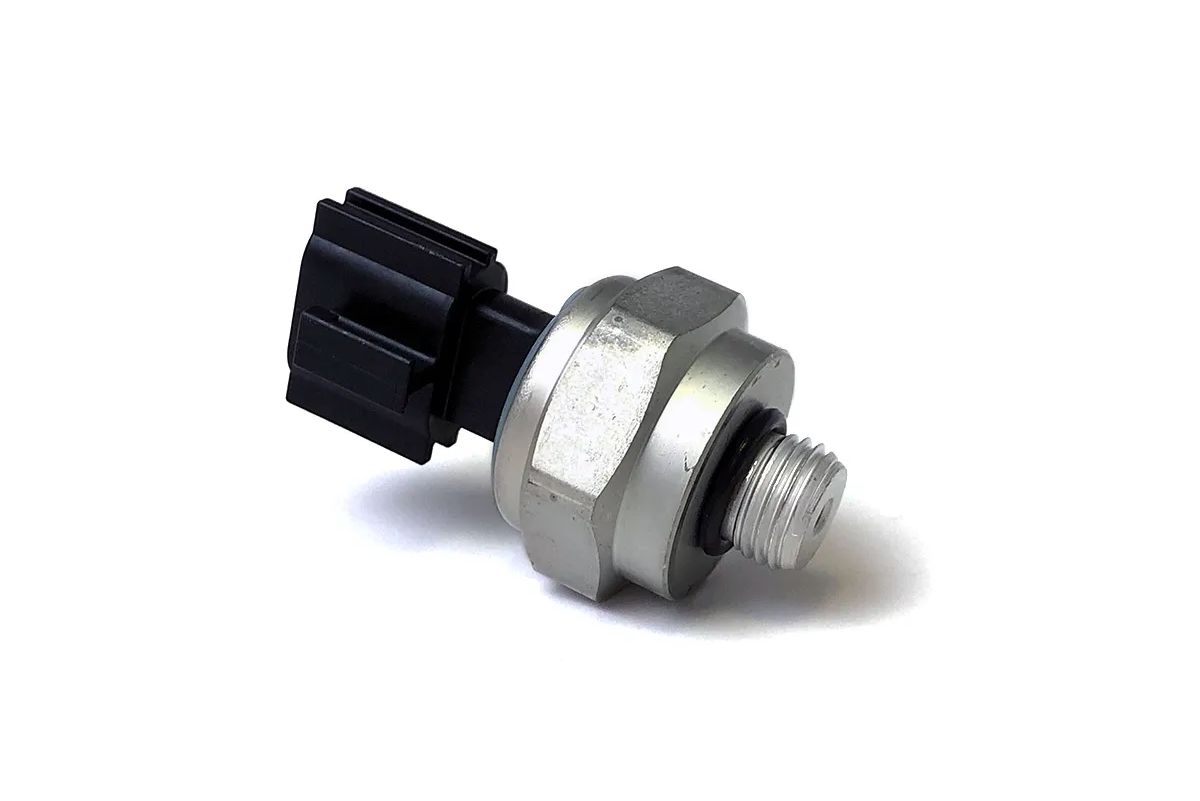
The power steering pressure sensor is a component that monitors hydraulic pressure within a hydraulic power steering system and sends information about that pressure to the vehicle’s electronic control system.
It is commonly found in electronically monitored hydraulic or electro-hydraulic steering systems. Depending on the vehicle, the sensor signal may be sent to the engine control module (ECM/PCM), body control module, or another electronic control unit.
When the steering wheel is turned, especially at low speeds or during parking, the load on the hydraulic power steering system changes. The pressure sensor helps the vehicle’s control system recognize these pressure changes.
If the sensor sends incorrect information, the control unit may misunderstand the hydraulic load and apply the wrong control strategy.
What Does a Power Steering Pressure Sensor Do?
The primary function of the sensor is to provide electronic feedback about hydraulic pressure in the power steering system.
Depending on the vehicle, this information can be used to:
-
Monitor hydraulic steering pressure
-
Detect changes in steering load
-
Adjust engine idle speed
-
Prevent the engine from stalling when steering load increases
-
Monitor the operation of the hydraulic steering system
-
Detect abnormal pressure conditions
-
Assist engine load management
The exact function depends on the vehicle's design.
Some systems use the pressure signal mainly for engine idle compensation, while others use it as part of a more advanced steering control strategy.
How Does a Power Steering Pressure Sensor Work?
The design of the sensor varies between manufacturers and vehicle models.
Many electronic pressure sensors use three electrical connections:
-
Reference voltage
-
Ground
-
Signal
However, this is not universal. The number of wires and the electrical characteristics can vary.
The sensor detects changes in hydraulic pressure and converts them into an electrical signal.
As steering load changes, hydraulic pressure changes. The sensor reports these changes to the relevant control module, which then evaluates the signal.
Why Is Power Steering Pressure Important?
A hydraulic power steering system needs adequate hydraulic pressure to provide steering assistance.
When the steering wheel is centered, the hydraulic load is different from when the steering wheel is being turned.
The load can increase significantly during low-speed maneuvering and especially when the steering wheel approaches full lock.
The pressure sensor allows the electronic control system to recognize these changes and respond appropriately.
What Are the Symptoms of a Bad Power Steering Pressure Sensor?
A faulty pressure sensor can cause a variety of electrical and drivability symptoms.
Common symptoms include:
-
Check Engine Light
-
Power steering-related fault codes
-
Engine idle fluctuation
-
Excessive drop in engine RPM when turning the steering wheel
-
Engine nearly stalling during steering maneuvers
-
Irregular steering assistance
-
Heavy steering in some situations
-
Implausible pressure readings
-
Incorrect steering load information
-
Electronic warnings related to the steering system
The symptoms depend heavily on how the sensor is integrated into the vehicle's control system.
Why Does Engine RPM Drop When Turning the Steering Wheel?
A hydraulic power steering pump is driven by the engine in many conventional systems.
When the steering wheel is turned, the hydraulic pump can place an additional load on the engine.
At idle speed, this additional load can be noticeable.
A properly functioning engine management system can compensate for this load and prevent excessive RPM drop.
If the power steering pressure sensor provides incorrect information, the control module may not correctly recognize the additional steering load.
This can result in:
-
Excessive RPM drop
-
Rough idle
-
Engine vibration
-
Engine nearly stalling
-
RPM fluctuation while steering
However, these symptoms are not exclusive to the pressure sensor.
Idle control problems, vacuum leaks, low hydraulic pressure, a failing power steering pump, or other engine management faults can produce similar symptoms.
Why Can the Engine Stall When the Steering Is at Full Lock?
Turning the steering wheel all the way to one side can significantly increase hydraulic pressure and pump load.
The engine management system is normally designed to compensate for this additional load.
If the pressure sensor provides incorrect information, the control module may fail to compensate correctly.
However, an engine that stalls when the steering reaches full lock does not automatically mean that the pressure sensor is faulty.
Other possible causes include:
-
Low power steering fluid
-
Power steering pump problems
-
A mechanically overloaded pump
-
Restricted hydraulic flow
-
Idle control problems
-
Engine management faults
-
Drive belt problems
The hydraulic and engine systems should therefore be inspected together.
Can a Power Steering Pressure Sensor Cause Heavy Steering?
In some vehicles, a sensor failure can affect the electronic control strategy of the steering system.
However, in a conventional hydraulic power steering system, a faulty pressure sensor is not usually the primary cause of heavy steering.
The following should normally be checked first:
-
Power steering fluid level
-
Power steering pump
-
Drive belt
-
Hydraulic hoses
-
Steering rack
-
Steering gearbox
-
Hydraulic system pressure
If the sensor problem exists alongside a genuine hydraulic pressure problem, steering assistance can become significantly reduced.
What Is the Difference Between a Power Steering Pressure Sensor and a Power Steering Hose?
These components perform completely different functions.
The power steering hose transports hydraulic fluid through the system.
The power steering pressure sensor measures hydraulic pressure and provides an electrical signal to the control system.
A damaged hose can cause fluid leakage and loss of hydraulic pressure.
A faulty pressure sensor can provide incorrect information even when the hydraulic system itself is physically intact.
Is a Power Steering Pressure Sensor the Same as a Power Steering Pressure Switch?
Not necessarily.
Some older or simpler systems use a power steering pressure switch rather than a variable pressure sensor.
A pressure switch generally operates like an electrical on/off device. When hydraulic pressure reaches a certain threshold, the switch changes its electrical state.
A pressure sensor can provide a variable electrical signal corresponding to hydraulic pressure.
Because manufacturers use different designs, the terminology can vary between vehicles.
When replacing the component, the correct part number and manufacturer service information should be used.
Where Is the Power Steering Pressure Sensor Located?
The sensor is commonly installed in the hydraulic pressure circuit.
Depending on the vehicle, it may be located:
-
Near the power steering pump
-
On the high-pressure hose
-
At the pump outlet
-
On a dedicated hydraulic connection
-
Near another high-pressure steering component
The exact location varies considerably between vehicle designs.
A wiring diagram or vehicle-specific service information should be used to identify the correct component.
Why Does a Power Steering Pressure Sensor Fail?
Several factors can cause pressure sensor failure.
Internal sensor failure
The electronic pressure-sensing element or internal circuitry can deteriorate over time.
Wiring damage
Heat, vibration, movement, and mechanical stress can damage the wiring.
Connector problems
Corrosion, moisture, loose terminals, or damaged connector pins can interfere with the sensor signal.
Reference voltage problems
If the sensor does not receive the correct reference voltage, its output may be incorrect.
Poor ground
A poor ground connection can cause an unstable or inaccurate sensor signal.
Fluid leakage
A hydraulic leak around the sensor or its connection can contaminate the electrical connector and surrounding components.
Excessive heat
High temperatures in the engine compartment can accelerate electronic component deterioration.
Will a Bad Power Steering Pressure Sensor Trigger an OBD-II Code?
Modern vehicles can monitor the electrical signal from the power steering pressure sensor.
If the signal is outside the expected range, the vehicle may store a diagnostic trouble code.
Depending on the system, faults may relate to:
-
Signal voltage too high
-
Signal voltage too low
-
Signal out of range
-
Intermittent signal
-
Open circuit
-
Short circuit
-
Implausible pressure information
However, an OBD-II code does not automatically prove that the sensor itself has failed.
A wiring problem, poor ground, connector issue, reference voltage fault, or genuine hydraulic pressure problem can also cause a related diagnostic code.
How Do You Diagnose a Power Steering Pressure Sensor?
A proper diagnosis should begin by reading the stored diagnostic trouble codes.
The electrical system and hydraulic system should then be evaluated according to the vehicle manufacturer's specifications.
Important checks include:
-
Sensor connector
-
Wiring harness
-
Reference voltage
-
Ground
-
Signal voltage
-
Power steering fluid level
-
Hydraulic leaks
-
Power steering pump
-
Hydraulic system pressure
-
Live sensor data
If live data is available, the sensor value can be monitored with the steering wheel centered and while steering is turned.
The sensor reading should respond in a way that is consistent with actual hydraulic pressure changes.
Can You Test a Power Steering Pressure Sensor With a Multimeter?
Yes, but a multimeter alone cannot always determine whether the sensor is accurately measuring hydraulic pressure.
Depending on the manufacturer's test procedure, a multimeter can be used to check:
-
Reference voltage
-
Ground
-
Signal voltage
-
Wiring continuity
-
Open circuits
-
Short circuits
However, an electrical signal does not necessarily mean that the sensor is measuring pressure correctly.
For this reason, electrical testing should be combined with hydraulic pressure testing and scan-tool data whenever appropriate.
How Is Actual Power Steering Pressure Checked?
The sensor's reported pressure and the system's actual hydraulic pressure are two different things.
A suitable hydraulic pressure gauge and test equipment can be used to measure actual system pressure.
The measured pressure can then be compared with the manufacturer's specifications.
Depending on the service procedure, technicians may check pressure:
-
At idle
-
With the steering centered
-
While turning the steering wheel
-
At a specified engine speed
-
Near full steering lock
The exact test procedure and pressure specifications are vehicle-specific.
Why Should Sensor Data Be Compared With Actual Pressure?
Consider two different situations.
Situation 1:
The actual hydraulic pressure is normal, but the sensor reports an abnormally low value.
In this case, the sensor or its electrical circuit becomes a stronger suspect.
Situation 2:
The sensor reports low pressure and the actual hydraulic pressure is also low.
In this case, replacing the sensor may not solve the problem.
The technician should investigate:
-
Power steering pump condition
-
Hydraulic leaks
-
Restricted fluid flow
-
Drive system problems
-
Steering rack or gearbox problems
This comparison is extremely useful because it prevents unnecessary parts replacement.
Can a Power Steering Pressure Sensor Be Fixed by Cleaning It?
Cleaning normally cannot repair an internally failed pressure sensor.
However, if the problem is caused by:
-
Corrosion
-
Moisture
-
Dirt
-
Poor connector contact
repairing or cleaning the electrical connection may solve the problem.
The sensor itself and its connector should therefore be treated as separate diagnostic points.
If the internal sensing element or electronic circuit has failed, external cleaning will not normally restore its operation.
What Should Be Checked Before Replacing the Sensor?
Before replacing the pressure sensor, the following should be checked:
-
Diagnostic trouble codes
-
Sensor connector
-
Wiring harness
-
Reference voltage
-
Ground
-
Sensor signal
-
Power steering fluid level
-
Fluid condition
-
Hydraulic leaks
-
Power steering pump
-
Actual hydraulic pressure
-
Live sensor data
If fluid is leaking around the sensor, the source of the leak should be identified before installing a new sensor.
Can You Drive With a Bad Power Steering Pressure Sensor?
It depends on the nature of the fault.
If the vehicle still provides normal steering assistance and the problem is limited to an electrical sensor fault, the vehicle may remain drivable.
However, the problem should not be ignored.
The vehicle should be inspected promptly if:
-
Steering becomes noticeably heavier
-
Power steering fluid is rapidly disappearing
-
The power steering pump becomes very noisy
-
Steering assistance suddenly disappears
-
There is a significant hydraulic leak
-
Steering control becomes difficult
-
The engine repeatedly stalls during steering maneuvers
A sensor fault and a genuine hydraulic steering fault can sometimes produce similar symptoms, so delaying diagnosis can be risky.
How Do You Distinguish a Pressure Sensor Fault From a Power Steering Pump Fault?
The two problems can produce similar symptoms, but the diagnostic approach is different.
With a failing power steering pump, actual hydraulic pressure may be below specification.
With a pressure sensor problem, the hydraulic system may be functioning correctly while the electronic control system receives incorrect pressure information.
The most reliable approach is therefore to evaluate:
Sensor signal + electrical circuit + actual hydraulic pressure
together.
Replacing the sensor based solely on a fault code is not a reliable diagnostic method.
Does Every Vehicle Have a Power Steering Pressure Sensor?
No.
Not every hydraulic power steering system has a separate pressure sensor.
Some vehicles use a relatively simple mechanical hydraulic system.
Others use a pressure switch.
More advanced systems may use an electronic pressure sensor together with multiple control modules and other sensors.
Many modern vehicles also use fully electric power steering rather than a hydraulic system. These vehicles do not normally have a conventional hydraulic power steering pressure sensor.
Conclusion
The power steering pressure sensor is an important component in electronically monitored hydraulic steering systems. It measures hydraulic pressure and sends information to the vehicle's electronic control system.
Depending on the vehicle, this information can be used for steering load monitoring, engine idle compensation, engine load management, and detection of abnormal hydraulic conditions.
Common symptoms of a pressure sensor problem can include Check Engine Light, diagnostic trouble codes, engine RPM dropping while steering, unstable idle, engine nearly stalling, incorrect sensor readings, and irregular steering assistance.
However, these symptoms do not automatically mean that the pressure sensor itself has failed. Wiring problems, connector corrosion, poor ground, incorrect reference voltage, low power steering fluid, hydraulic leaks, a failing power steering pump, restricted fluid flow, and steering rack problems can produce similar symptoms.
For an accurate diagnosis, the sensor's electrical signal should be evaluated together with live diagnostic data and, when necessary, actual hydraulic system pressure.
Replacing the sensor simply because an OBD-II code points toward it can result in unnecessary parts replacement. A proper diagnosis should establish whether the problem is actually inside the sensor, in its electrical circuit, or somewhere else in the hydraulic power steering system.