TR
TR EN
EN

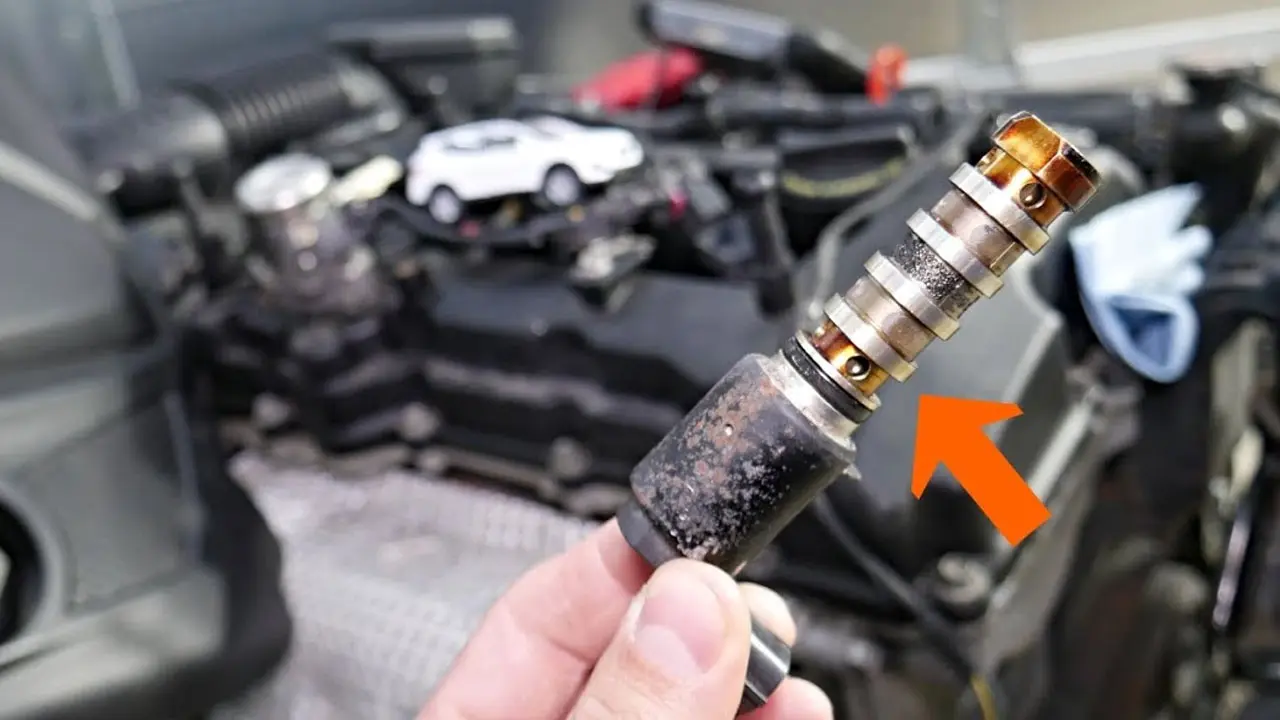
What Is an Exhaust Valve Control Solenoid? Symptoms, Causes and Solutions
The Exhaust Valve Control Solenoid is an electronically controlled component used in certain engine and exhaust systems to control the operation of an exhaust valve.
Depending on the vehicle and engine design, the solenoid can control an exhaust backpressure valve, exhaust brake, exhaust gas flow control valve, turbocharger-related exhaust valve, or another exhaust-system actuator.
Its main purpose is to control exhaust gas flow or exhaust pressure according to engine operating conditions.
A malfunctioning exhaust valve control solenoid can cause reduced engine performance, poor acceleration, abnormal exhaust pressure, increased emissions, warning lights and diagnostic trouble codes.
The exact function of the solenoid varies significantly between vehicle manufacturers, so the name Exhaust Valve Control Solenoid does not always refer to exactly the same component.
What Is an Exhaust Valve Control Solenoid?
An exhaust valve control solenoid is an electrically operated valve or actuator-control component.
The engine control module (ECM/PCM) sends an electrical command to the solenoid.
The solenoid then controls another mechanism that changes the position of an exhaust valve.
Depending on the system, the solenoid may:
-
Apply or release vacuum
-
Control pneumatic pressure
-
Operate an actuator
-
Regulate exhaust pressure
-
Control an exhaust flap
-
Control an exhaust brake
-
Manage exhaust gas flow
The purpose is to make the exhaust system respond to changing engine conditions.
What Is an Exhaust Valve?
An exhaust valve or exhaust flap is a mechanical component that changes the path or restriction of exhaust gases.
It may be used for several different purposes depending on the engine.
For example, an exhaust valve can help:
-
Control exhaust backpressure
-
Improve emissions control
-
Assist engine braking
-
Control exhaust gas temperature
-
Support turbocharger operation
-
Improve exhaust gas recirculation strategies
-
Control exhaust flow during certain operating conditions
The valve itself and the solenoid that controls it are separate components.
How Does the Exhaust Valve Control Solenoid Work?
The operating principle depends on the system.
In a vacuum-operated system, the process may work as follows:
1. The ECM determines that exhaust valve control is required.
The control module evaluates engine speed, load, temperature and other operating parameters.
2. The ECM activates the solenoid.
An electrical signal is sent to the solenoid.
3. The solenoid controls vacuum or pressure.
The solenoid directs vacuum or pneumatic pressure toward the actuator.
4. The actuator moves the exhaust valve.
The actuator changes the position of the exhaust valve.
5. Exhaust flow changes.
The altered valve position changes exhaust pressure or flow.
Some modern systems use an electrically driven exhaust valve instead of a vacuum actuator, so the exact operating process can be different.
Why Is Exhaust Valve Control Important?
Exhaust flow and pressure have a major influence on engine operation.
The engine control system may need to control exhaust flow to achieve specific operating conditions.
Depending on the application, exhaust valve control can help with:
-
Emission reduction
-
Exhaust temperature management
-
Engine braking
-
Turbocharger control
-
EGR operation
-
Exhaust aftertreatment
-
Cold-start strategies
-
Noise reduction
A malfunction can therefore affect more than just the exhaust system.
Where Is the Exhaust Valve Control Solenoid Located?
The location depends on the vehicle.
The solenoid may be installed:
-
Near the engine
-
Near the turbocharger
-
On or near the exhaust system
-
Near a vacuum-control system
-
Near the exhaust valve actuator
-
In the engine compartment
If the system uses vacuum hoses, the solenoid may be mounted away from the actual exhaust valve.
The best way to identify its location is to use the vehicle's specific service documentation.
Symptoms of a Faulty Exhaust Valve Control Solenoid
A defective solenoid can produce different symptoms depending on the role of the exhaust valve.
Common symptoms include:
-
Check Engine Light
-
Reduced engine power
-
Poor acceleration
-
Slow throttle response
-
Increased exhaust backpressure
-
Poor engine braking
-
Turbocharger performance problems
-
Increased fuel consumption
-
Increased emissions
-
Rough engine operation in some applications
-
Abnormal exhaust noise
-
Limp mode
-
Diagnostic trouble codes
Some vehicles may show no obvious drivability symptoms and only store a fault code.
Check Engine Light
A solenoid fault can cause the ECM to illuminate the Check Engine Light.
The control module may monitor:
-
Solenoid electrical current
-
Voltage
-
Valve position
-
Actuator response
-
Exhaust pressure
-
Commanded versus actual valve operation
If the expected response does not occur, a diagnostic trouble code may be stored.
Reduced Engine Power
If an exhaust valve remains partially or fully closed when it should be open, exhaust backpressure can increase.
Excessive backpressure can make it more difficult for the engine to expel exhaust gases.
The driver may notice:
-
Weak acceleration
-
Reduced power
-
Poor high-RPM performance
-
Slow throttle response
-
Difficulty climbing hills
However, reduced power can have many causes, including turbocharger, fuel, EGR, DPF and air-intake problems.
Increased Exhaust Backpressure
A stuck or incorrectly controlled exhaust valve can restrict exhaust flow.
Excessive backpressure can affect engine performance and, in some systems, turbocharger operation.
Possible signs include:
-
Reduced power
-
Poor acceleration
-
Higher exhaust temperatures
-
Abnormal engine response
-
Increased fuel consumption
If backpressure is suspected, it should be measured or evaluated using the appropriate diagnostic procedure rather than assuming that the solenoid is defective.
Poor Engine Braking
On some diesel vehicles, an exhaust valve can be used as part of an exhaust braking system.
If the valve does not close when commanded, the engine brake may provide less braking effect than expected.
The driver may notice that the vehicle does not slow down as effectively when the accelerator is released or the exhaust brake is activated.
This symptom is especially relevant to certain commercial vehicles and diesel applications.
Turbocharger-Related Problems
Some exhaust valve systems interact with turbocharger operation.
If the valve is stuck or incorrectly controlled, exhaust pressure may not behave as expected.
Depending on the engine, this can contribute to:
-
Slow turbo response
-
Reduced boost
-
Excessive boost
-
Poor acceleration
-
Limp mode
-
Turbocharger-related fault codes
However, a turbocharger performance problem does not automatically indicate an exhaust valve solenoid failure.
Increased Fuel Consumption
Incorrect exhaust flow can affect engine efficiency.
If the exhaust valve is not operating as intended, the engine control system may not achieve its target operating conditions.
In some cases this can contribute to increased fuel consumption.
However, many other factors can cause poor fuel economy, including:
-
Dirty air filter
-
Injector problems
-
EGR faults
-
DPF restriction
-
Low tire pressure
-
Turbocharger problems
-
Faulty sensors
-
Driving conditions
Increased Exhaust Emissions
An exhaust valve can be part of the engine's emission-management strategy.
If the valve does not operate correctly, the engine may not achieve the intended exhaust gas conditions.
This can affect the performance of other emission-control components.
Possible consequences include:
-
Increased NOx emissions
-
Increased particulate emissions
-
Poor EGR operation
-
DPF regeneration problems
-
SCR-related problems in some systems
The exact effect depends on the vehicle's emission-control architecture.
Common Causes of Exhaust Valve Control Solenoid Failure
Several problems can cause the solenoid to malfunction.
Electrical failure
The internal solenoid coil may become open-circuit or short-circuit.
Damaged wiring
Heat, vibration and contact with surrounding components can damage the wiring.
Connector corrosion
Moisture or contamination can cause poor electrical contact.
Vacuum leak
In vacuum-operated systems, a damaged hose can prevent the actuator from moving correctly.
Blocked vacuum line
A restriction can prevent proper vacuum delivery.
Faulty vacuum source
A weak vacuum pump or another vacuum-system problem can affect operation.
Sticking exhaust valve
Carbon deposits or corrosion can cause the mechanical valve to stick.
Faulty actuator
The actuator may fail even when the solenoid itself is working correctly.
Excessive heat
The solenoid and wiring can be exposed to high temperatures near the exhaust system.
Vacuum Hose Problems
Many exhaust valve systems use vacuum control.
In these systems, the vacuum hose is just as important as the solenoid.
A cracked, disconnected or melted hose can prevent the actuator from operating.
Possible symptoms include:
-
Exhaust valve fault
-
Reduced engine performance
-
Poor engine braking
-
Turbocharger-related problems
-
Diagnostic trouble codes
A vacuum leak should therefore be checked before replacing the solenoid.
Carbon Deposits and a Sticking Exhaust Valve
Exhaust gases contain soot and other combustion by-products.
Over time, deposits can accumulate around mechanical exhaust valves.
The valve may become difficult to move or remain partially open or closed.
This can create symptoms that appear to be caused by the control solenoid.
The mechanical valve should therefore be inspected if the solenoid operates correctly but the valve does not move as expected.
Electrical Circuit Problems
An exhaust valve control solenoid requires a correct electrical circuit.
Possible electrical problems include:
-
Open circuit
-
Short circuit to ground
-
Short circuit to voltage
-
High resistance
-
Low resistance
-
Damaged wiring
-
Poor ground
-
Blown fuse
-
Corroded connector
-
Loose terminal
A diagnostic code indicating a solenoid circuit fault should be followed by electrical testing.
How Is an Exhaust Valve Control Solenoid Diagnosed?
A proper diagnosis normally begins with a scan tool.
The technician should check:
-
Stored diagnostic trouble codes
-
Freeze-frame data
-
Solenoid command
-
Solenoid electrical current
-
Valve position, if available
-
Exhaust pressure
-
Vacuum pressure, where applicable
-
Actuator movement
-
Wiring condition
The system should then be tested under the manufacturer's specified conditions.
Testing the Solenoid Electrically
A technician may check the solenoid's electrical circuit using appropriate diagnostic equipment.
Possible checks include:
-
Supply voltage
-
Ground
-
Control signal
-
Coil resistance
-
Wiring continuity
-
Connector condition
The resistance value must be compared with the manufacturer's specification.
A universal resistance value should not be applied to every exhaust valve control solenoid.
Testing a Vacuum-Controlled Solenoid
If the system uses vacuum, the technician may use a vacuum gauge or suitable hand vacuum pump.
The test can determine whether:
-
The vacuum source is sufficient
-
The solenoid opens and closes correctly
-
Vacuum reaches the actuator
-
The actuator holds vacuum
-
The exhaust valve moves correctly
If the solenoid produces the correct vacuum but the actuator does not move, the actuator or mechanical valve may be the problem.
Testing the Exhaust Valve Mechanically
The exhaust valve should be inspected for free movement where the manufacturer's procedure allows manual inspection.
The technician may look for:
-
Carbon deposits
-
Corrosion
-
Mechanical binding
-
Damaged linkage
-
Broken actuator components
-
Excessive play
A solenoid that operates electrically cannot compensate for a mechanically seized valve.
Can an Exhaust Valve Control Solenoid Be Cleaned?
Cleaning may be possible in certain situations, but it depends on the cause of the problem.
If the solenoid itself has an internal electrical failure, cleaning will not repair it.
If the mechanical exhaust valve is contaminated with carbon, cleaning the valve or related mechanism may restore movement if permitted by the manufacturer's service procedure.
The solenoid, actuator and valve should therefore be diagnosed separately.
Should the Solenoid Be Replaced Immediately?
No.
A fault code involving the exhaust valve control solenoid does not automatically prove that the solenoid itself has failed.
Before replacing it, the technician should check:
-
Electrical supply
-
Ground
-
Wiring
-
Connector
-
Vacuum hoses
-
Vacuum source
-
Actuator
-
Mechanical valve movement
-
Exhaust pressure
-
Related sensors
This prevents unnecessary parts replacement.
Can You Drive With a Faulty Exhaust Valve Control Solenoid?
It depends on the vehicle and the severity of the problem.
If the solenoid controls an exhaust brake or emissions-related valve, the vehicle may continue operating but with reduced functionality.
However, if the valve becomes stuck closed and creates excessive exhaust backpressure, continued driving may cause additional engine or turbocharger-related problems.
A vehicle showing severe power loss, high exhaust temperature, abnormal turbocharger behaviour or limp mode should be inspected promptly.
Can a Faulty Exhaust Valve Solenoid Cause Limp Mode?
Yes, depending on the vehicle.
If the ECM detects that the exhaust valve cannot reach the commanded position or that exhaust pressure is outside the expected range, it may activate a reduced-power strategy.
This can be especially relevant when the valve is part of a turbocharger, emissions or engine-protection system.
The exact response is manufacturer-specific.
Exhaust Valve Solenoid vs EGR Valve
The exhaust valve control solenoid and the EGR valve are not the same component.
The EGR valve controls the recirculation of exhaust gases back into the engine's intake system.
An exhaust valve controls exhaust flow or pressure within the exhaust system.
Some engines use both systems, and they can influence each other's operation.
A fault in one system can sometimes create symptoms in the other, which is why proper diagnosis is important.
Exhaust Valve Solenoid vs Exhaust Pressure Sensor
These components also perform different functions.
The exhaust valve control solenoid controls an actuator or valve.
The exhaust pressure sensor measures pressure.
The ECM may use pressure-sensor information to determine whether the exhaust valve is operating correctly.
A pressure-related fault does not automatically mean that the solenoid is defective.
How to Prevent Exhaust Valve Control Problems
Several maintenance practices can help reduce problems.
-
Inspect vacuum hoses regularly where applicable.
-
Repair damaged wiring promptly.
-
Keep electrical connectors clean and secure.
-
Address exhaust leaks.
-
Do not ignore Check Engine Light warnings.
-
Maintain the engine according to the manufacturer's schedule.
-
Address excessive soot or carbon buildup.
-
Diagnose DPF, EGR and turbocharger problems promptly.
-
Use the correct diagnostic procedure before replacing the solenoid.
Preventing excessive carbon buildup and maintaining the engine's emission-control system can help reduce mechanical exhaust valve problems.
Frequently Asked Questions
What does an exhaust valve control solenoid do?
It controls an exhaust valve or its actuator by responding to an electrical command from the engine control system.
Can a faulty exhaust valve solenoid cause loss of power?
Yes. If the valve becomes incorrectly positioned and restricts exhaust flow, engine performance can be affected.
Can a vacuum leak cause an exhaust valve fault?
Yes. On vacuum-controlled systems, a damaged hose or weak vacuum supply can prevent the valve from reaching the required position.
Can carbon buildup cause an exhaust valve to stick?
Yes. Soot and deposits can interfere with mechanical movement in some exhaust valve systems.
Can the solenoid cause a Check Engine Light?
Yes. The ECM can detect electrical faults or incorrect actuator response and store a diagnostic trouble code.
Can a faulty exhaust valve solenoid affect the turbocharger?
On systems where the exhaust valve influences turbocharger or exhaust pressure control, yes. However, a turbocharger fault can also produce similar symptoms.
Does every exhaust valve solenoid operate using vacuum?
No. Some systems use vacuum or pneumatic control, while others use electrically driven actuators.
Can the solenoid be repaired?
If the problem is wiring, a connector or another external issue, the affected part may be repairable. An internally failed solenoid is generally replaced.
Final Thoughts
The Exhaust Valve Control Solenoid is an important control component in certain engine and exhaust systems. It allows the vehicle's electronic control system to regulate an exhaust valve according to engine operating conditions.
Depending on the application, the system can be used for exhaust backpressure control, engine braking, emissions management, exhaust temperature control, turbocharger operation or exhaust flow management.
A faulty solenoid can cause Check Engine Light warnings, reduced power, poor acceleration, increased exhaust backpressure, poor engine braking, turbocharger-related symptoms, increased emissions and limp mode.
However, a diagnostic trouble code does not automatically mean that the solenoid itself has failed.
The wiring, connectors, vacuum system, actuator, mechanical exhaust valve and related pressure sensors should also be checked.
The most reliable diagnosis combines fault-code analysis, electrical testing, vacuum testing where applicable, actuator testing and mechanical inspection.
Correctly identifying the failed component can prevent unnecessary replacement of the solenoid and help protect the engine, turbocharger and exhaust aftertreatment system from further problems.