TR
TR EN
EN

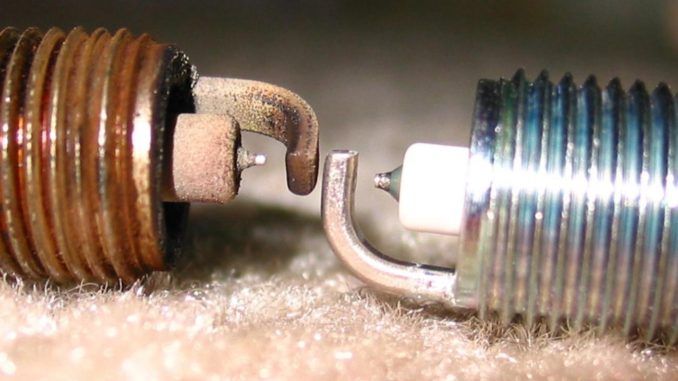
What Are the Symptoms of a Bad Spark Plug? How Is a Spark Plug Replaced?
Spark plugs are small but essential components of a gasoline engine's ignition system. They produce the electrical spark needed to ignite the compressed air-fuel mixture inside the combustion chamber.
When a spark plug becomes worn, fouled, damaged, or incorrectly specified, the engine may develop misfires, rough idle, hesitation, poor acceleration, increased fuel consumption, and starting problems.
Spark plug problems should not be ignored, especially when they cause persistent misfires. A continuous misfire can allow unburned fuel to enter the exhaust system and potentially damage the catalytic converter.
What Does a Spark Plug Do?
A spark plug receives high voltage from the ignition coil and creates a spark across the gap between its electrodes.
This spark ignites the compressed air-fuel mixture inside the cylinder at the correct point in the combustion cycle.
For proper operation, a spark plug must have the correct:
-
Heat range
-
Thread size and reach
-
Electrode design
-
Electrode gap
-
Insulator design
-
Manufacturer specification
A spark plug that physically fits the engine is not necessarily the correct spark plug for it.
What Are the Symptoms of a Bad Spark Plug?
Spark plug failure can affect engine performance in several ways. However, many of these symptoms can also be caused by ignition coils, fuel injectors, fuel pressure problems, air leaks, sensors, or engine mechanical problems.
1. Engine misfire
One of the most common symptoms is engine misfire.
The engine may feel as though it is briefly losing power, particularly during acceleration, climbing, or heavy engine load.
The vehicle may shake, hesitate, or jerk when one or more cylinders fail to ignite the mixture properly.
2. Rough idle
A worn or fouled spark plug can cause unstable combustion at idle.
You may notice:
-
Engine vibration
-
Uneven idle speed
-
Shaking through the steering wheel or body
-
Irregular engine sound
If the problem becomes worse when the engine is under load, the ignition system should be inspected.
3. Hard starting or delayed starting
A weak or inconsistent spark can make starting more difficult.
This can be particularly noticeable during cold starts, although the exact symptoms depend on the engine, fuel system, ignition system, and environmental conditions.
A hard-starting engine should not automatically be blamed on spark plugs. Battery condition, starter speed, fuel pressure, injectors, sensors, and other ignition components can also be responsible.
4. Hesitation during acceleration
A spark plug may work reasonably well at light load but fail when the engine requires a stronger ignition spark.
As a result, hesitation can become more noticeable during:
-
Rapid acceleration
-
High engine load
-
Uphill driving
-
High RPM
-
Heavy throttle application
This is one reason a spark plug problem can sometimes be difficult to reproduce during gentle driving.
5. Loss of engine power
If one or more cylinders are not producing normal combustion, engine output can decrease.
The vehicle may feel slower than usual, struggle on hills, or require more throttle to maintain the same speed.
Severe misfire can also cause the engine control system to reduce power as a protective measure.
6. Increased fuel consumption
A worn or fouled spark plug can reduce combustion efficiency.
If ignition becomes inconsistent, fuel may not be burned as effectively as it should be.
This can contribute to increased fuel consumption.
However, high fuel consumption can also result from problems with the fuel system, oxygen sensors, MAF/MAP sensors, thermostat, injectors, tire pressure, or other components.
7. Check Engine Light
A misfire caused by a spark plug can trigger the Check Engine Light.
Common misfire-related OBD-II codes include:
-
P0300 – Random or multiple cylinder misfire
-
P0301 – Cylinder 1 misfire
-
P0302 – Cylinder 2 misfire
-
P0303 – Cylinder 3 misfire
-
P0304 – Cylinder 4 misfire
The exact code depends on the engine and the problem detected.
A misfire code does not automatically mean that the spark plug is defective. The ignition coil, injector, compression, wiring, or other components may be responsible.
8. Unusual exhaust behavior or fuel smell
When combustion is incomplete, unburned fuel can enter the exhaust system.
This may result in an unusual exhaust smell or irregular exhaust pulses.
A strong fuel smell combined with severe misfire should be taken seriously because unburned fuel can overheat and damage the catalytic converter.
Why Do Spark Plugs Fail?
Spark plugs naturally wear as they operate under high temperature and pressure.
Common causes of spark plug problems include:
Electrode wear:
The electrodes gradually wear down as the spark repeatedly jumps across the gap.
Incorrect electrode gap:
The gap can change as the electrodes wear. An incorrect gap can affect ignition performance.
Carbon fouling:
Carbon deposits can form on the spark plug under certain operating or combustion conditions.
Oil contamination:
Oil entering the combustion chamber can foul the spark plug.
Overheating:
Excessive combustion temperature or an incorrect spark plug heat range can cause abnormal plug temperatures.
Incorrect spark plug:
Using a plug that does not match the engine's required specifications can cause ignition and durability problems.
Improper installation:
Incorrect tightening torque or damaged threads can create serious problems.
What Does the Spark Plug Condition Tell You?
A removed spark plug can provide useful information about the engine's combustion condition.
A normal-looking plug generally shows relatively even combustion deposits appropriate for the engine and operating conditions.
Different appearances can provide clues.
Black and sooty spark plug:
May be associated with rich operation, incomplete combustion, short-trip operation, or another engine problem.
Oil-fouled spark plug:
Can indicate that oil is entering the combustion chamber or that there is oil contamination around the plug.
Very white or unusually clean spark plug:
Can be associated with high combustion temperatures or mixture-related problems, depending on the engine.
Damaged or melted electrode:
May indicate excessive temperature, incorrect plug selection, or a more serious combustion problem.
Spark plug appearance should be interpreted together with diagnostic data and the engine's operating condition rather than being used as a definitive diagnosis by itself.
When Should Spark Plugs Be Replaced?
Spark plug replacement intervals vary significantly between engines and spark plug types.
Copper/nickel, platinum, and iridium spark plugs can have different service lives.
For this reason, there is no universal mileage interval that applies to every vehicle.
The manufacturer's maintenance schedule should be used as the primary reference.
Spark plugs may also need to be replaced earlier if the engine develops symptoms or if inspection shows excessive electrode wear, fouling, cracking, or other damage.
What Is Needed to Replace Spark Plugs?
The required tools depend on the engine design.
Typical equipment includes:
-
Correct spark plug socket
-
Ratchet
-
Extension
-
Torque wrench
-
Correct replacement spark plugs
-
Spark plug gap tool when applicable
-
Compressed air or suitable cleaning equipment
On some modern engines, access to the spark plugs may require removing an engine cover, ignition coils, air ducts, or other components.
Some engines have spark plugs located beneath the intake manifold, which can make the job considerably more involved.
How to Replace Spark Plugs
Spark plug replacement is relatively straightforward on some engines but requires care because the spark plug threads are often installed directly into the cylinder head.
1. Allow the engine to cool
Spark plugs should generally be replaced on a cool engine.
Working on a hot cylinder head can increase the risk of thread damage, particularly with aluminum cylinder heads.
2. Gain access to the spark plugs
Remove the components necessary to access the ignition coils or spark plug wires.
On coil-on-plug ignition systems, the ignition coils are usually positioned directly above the spark plugs.
3. Remove the ignition coils or spark plug wires
Disconnect the electrical connectors and carefully remove the ignition coils.
If the engine uses spark plug wires, remove them carefully from the plug connection.
Do not pull aggressively on the wire itself.
4. Clean around the spark plugs
Before removing a spark plug, clean the area around it.
Dust, sand, and debris can fall into the spark plug hole when the plug is removed if the area has not been cleaned properly.
5. Remove the old spark plug
Use the correct spark plug socket and carefully loosen the plug.
Do not force a plug that appears to be seized. Excessive force can damage the threads in the cylinder head.
6. Check the new spark plug
Before installation, make sure the replacement spark plug has the correct:
-
Part number
-
Thread dimensions
-
Reach
-
Heat range
-
Electrode design
-
Manufacturer specification
The electrode gap should also match the required specification.
Some modern iridium and platinum spark plugs have very fine electrodes and should not be adjusted aggressively. Follow the manufacturer's installation instructions rather than bending the electrode unnecessarily.
7. Install the new spark plug
Start the new spark plug by hand to make sure it enters the threads correctly.
It should turn smoothly without excessive resistance.
If the plug does not thread properly, do not force it.
Cross-threading a spark plug can damage the cylinder head and result in a much more expensive repair.
8. Tighten the spark plug to the correct torque
The spark plug should be tightened according to the manufacturer's specified torque.
Over-tightening can damage the spark plug or cylinder-head threads.
Under-tightening can affect sealing and heat transfer and may allow the plug to loosen.
A torque wrench is therefore highly recommended.
9. Reinstall the ignition coils or plug wires
Once the spark plugs are installed, reinstall the ignition coils or spark plug wires.
Make sure all electrical connectors are fully seated.
10. Start the engine and check its operation
Start the engine and allow it to idle.
Check for:
-
Rough running
-
Misfire
-
Abnormal engine noise
-
Warning lights
-
Poor throttle response
If necessary, scan the vehicle for diagnostic trouble codes after the replacement.
Should All Spark Plugs Be Replaced Together?
If all spark plugs have reached their normal service interval, replacing the complete set is generally the preferred approach.
The spark plugs in the same engine experience similar operating conditions and normally wear at a similar rate.
If only one spark plug is found to be damaged prematurely, however, the reason for the failure should also be investigated.
For example, if a new spark plug quickly becomes fouled in the same cylinder, simply replacing the plug again may not solve the underlying problem.
The ignition coil, injector, compression, valve condition, oil consumption, and wiring may need to be checked.
Common Mistakes When Replacing Spark Plugs
Spark plug replacement may look like a simple maintenance task, but incorrect installation can cause additional problems.
Common mistakes include:
-
Installing the wrong spark plug
-
Ignoring the manufacturer's specification
-
Cross-threading the plug
-
Over-tightening the plug
-
Leaving the plug too loose
-
Working on a hot engine
-
Failing to clean the plug area before removal
-
Incorrectly changing the electrode gap
-
Installing ignition coils incorrectly
-
Leaving an electrical connector partially disconnected
Using the correct spark plug is just as important as installing it correctly.
How Can You Tell a Bad Spark Plug From a Bad Ignition Coil?
Spark plug and ignition coil failures can produce very similar symptoms.
Both can cause:
-
Misfires
-
Rough idle
-
Loss of power
-
Hesitation
-
Poor acceleration
-
Check Engine Light
One useful diagnostic approach is to determine whether the misfire remains with the same cylinder.
For example, if a specific cylinder repeatedly reports a misfire, the ignition coil can sometimes be swapped with another cylinder as part of a proper diagnostic procedure.
If the misfire moves with the coil, the coil becomes a strong suspect.
The same general diagnostic principle can sometimes be applied to the spark plug.
This is more reliable than replacing several parts without confirming the cause.
Can a Bad Spark Plug Damage the Catalytic Converter?
Yes.
A severe or continuous misfire can allow unburned fuel to enter the exhaust system.
The fuel may then burn inside the catalytic converter, causing excessive temperatures.
Over time, this can damage the catalyst material and reduce the converter's ability to control emissions.
If the Check Engine Light is flashing and the engine is running very roughly, continued driving should generally be avoided until the misfire is diagnosed.
What If the Engine Still Misfires After Replacing the Spark Plugs?
If the engine continues to misfire after new spark plugs are installed, the spark plugs may not have been the actual cause.
The following components may need to be checked:
-
Ignition coils
-
Fuel injectors
-
Fuel pressure
-
MAF or MAP sensor
-
Intake air leaks
-
Throttle body
-
Crankshaft and camshaft position sensors
-
Engine compression
-
Valves
-
Wiring and connectors
-
ECU diagnostic data
If the same cylinder continues to misfire, further diagnosis is especially important.
For example, a compression test can help determine whether the problem is mechanical rather than ignition-related.
Can New Spark Plugs Improve Engine Performance?
Replacing worn or defective spark plugs can restore normal engine operation.
Depending on the condition of the old plugs, you may notice:
-
Smoother idle
-
Better throttle response
-
Easier starting
-
Reduced misfire
-
More consistent acceleration
-
Improved fuel economy
However, installing more expensive spark plugs in an otherwise healthy engine does not necessarily produce a noticeable increase in power.
The best spark plug is the one that matches the engine manufacturer's specification.
The Most Important Point About Spark Plug Replacement
Spark plugs may be small components, but they have a direct effect on combustion and engine performance.
A worn, fouled, damaged, or incorrectly specified spark plug can cause misfires, rough idle, difficult starting, hesitation, power loss, increased fuel consumption, and Check Engine Light warnings.
When replacing spark plugs, selecting the correct part is only half of the job. Proper installation is equally important. The correct spark plug specification, electrode gap, installation procedure, and tightening torque should all be followed.
If the engine continues to misfire after new spark plugs are installed, replacing the plugs again is unlikely to solve the problem. The ignition coils, fuel system, injectors, engine compression, wiring, and other possible causes should then be investigated.