TR
TR EN
EN

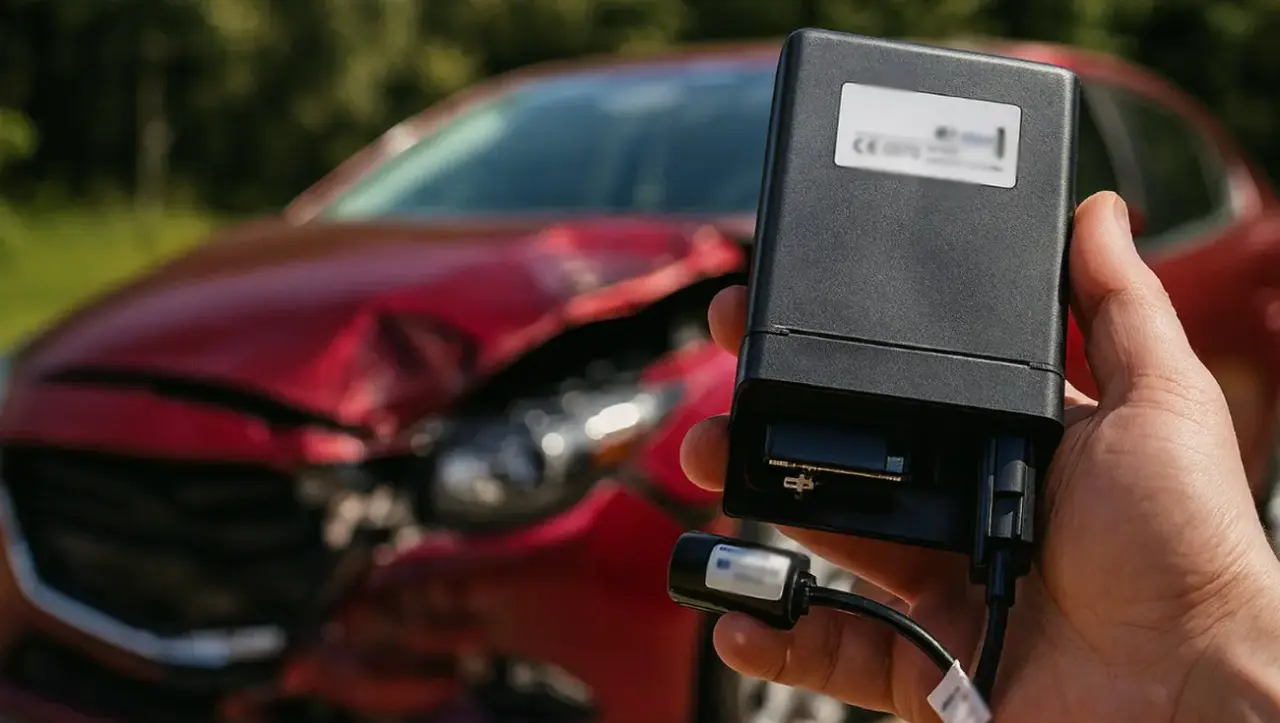
What Is a Vehicle Black Box (EDR)? Does It Record Everything During a Crash?
As vehicle technology continues to advance, safety systems are becoming increasingly sophisticated. One of the most important innovations is the Event Data Recorder (EDR), often referred to as a vehicle's "black box." Similar in concept to the flight recorders used in aircraft, an EDR captures key technical information before, during, and immediately after a collision.
Many drivers wonder whether this system records everything that happens inside the vehicle. The answer is no. While an EDR collects valuable crash-related data, it does not continuously monitor drivers or record conversations.
What Is an Event Data Recorder (EDR)?
An Event Data Recorder is an electronic system designed to record specific vehicle data when a significant event, such as a collision, occurs. In most vehicles, the EDR is integrated into the airbag control module and works together with various onboard sensors.
Its primary purposes are to:
-
Record vehicle behavior during a crash.
-
Help investigators determine the cause of an accident.
-
Evaluate the performance of safety systems such as airbags and seat belts.
-
Improve future vehicle safety through engineering analysis.
What Information Does an EDR Record?
Contrary to popular belief, an EDR does not store every detail of a trip. Instead, it records a limited set of technical information that can help reconstruct what happened during a collision.
Depending on the vehicle model, recorded data may include:
-
Vehicle speed
-
Engine speed (RPM)
-
Brake pedal application
-
Accelerator pedal position
-
Seat belt usage
-
Steering input (on some models)
-
Airbag deployment timing
-
Collision severity
-
Vehicle acceleration and deceleration
Typically, the system stores information from a few seconds before the impact through the crash itself and a short period afterward.
Does the Black Box Record Everything During a Crash?
No.
An EDR is not a continuous recording device.
It does not:
-
Continuously record vehicle activity
-
Capture audio or conversations
-
Record video footage
-
Monitor occupants inside the vehicle
Unlike a dashboard camera or security camera, an EDR only records technical vehicle data when a significant event triggers the system, such as a severe impact or airbag deployment.
How Does an EDR Work?
The EDR receives information from multiple vehicle sensors, including:
-
Acceleration sensors
-
Speed sensors
-
Brake system sensors
-
Airbag sensors
-
Engine control systems
When a collision reaches a predefined threshold, the system automatically saves:
-
Several seconds of data before the impact
-
Information recorded during the collision
-
A short period of data immediately afterward
The stored information can later be retrieved using specialized diagnostic equipment.
Who Can Access EDR Data?
EDR information is not publicly accessible.
Depending on local laws and regulations, access may be granted to:
-
The vehicle owner
-
Authorized repair facilities
-
Insurance companies
-
Law enforcement agencies with appropriate legal authority
-
Accident investigators
In many countries, access to EDR data is governed by privacy and data protection laws.
Is EDR Mandatory?
Many modern vehicles now include Event Data Recorders as standard equipment.
Within the European Union, regulations require many newly approved vehicle models to be equipped with EDR technology. As a result, the system is becoming increasingly common in new passenger vehicles sold in Europe and in markets that follow similar automotive standards.
Benefits and Privacy Concerns
The EDR offers several important advantages.
Benefits include:
-
More accurate accident investigations
-
Faster insurance claim assessments
-
Better understanding of crash dynamics
-
Continuous improvement of vehicle safety systems
At the same time, some drivers have raised concerns regarding:
-
Data privacy
-
Who can access recorded information
-
Misconceptions about continuous surveillance
However, an EDR is designed to record technical crash data, not to monitor drivers or track their daily activities.
Conclusion
An Event Data Recorder (EDR), often called a vehicle's black box, is an important safety technology used in many modern vehicles.
Although some people believe it records everything, the system actually stores only a limited amount of technical information surrounding a significant collision. It does not record audio, video, or private conversations, nor does it continuously track a driver's behavior.
By providing accurate crash data, EDR technology helps investigators understand accidents, assists manufacturers in improving vehicle safety, and contributes to the development of safer vehicles for everyone on the road.