TR
TR EN
EN

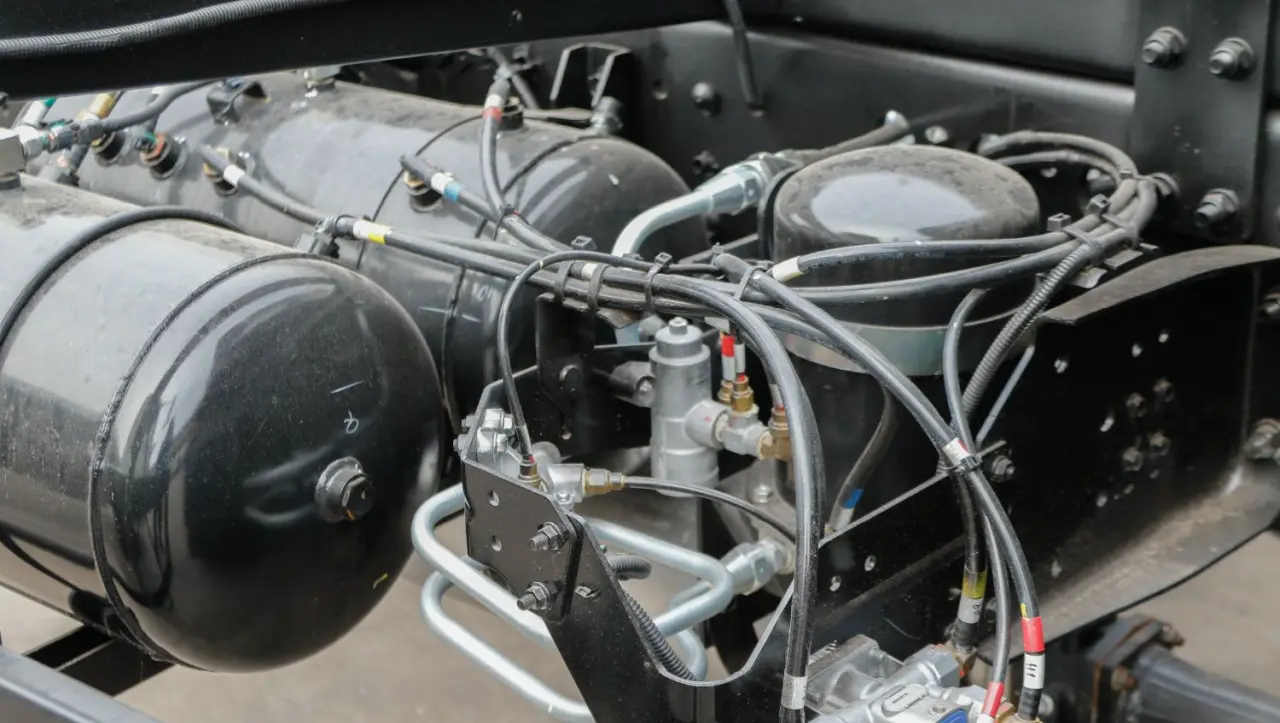
Air Brake System Failures: Causes and Solutions
The air brake system is one of the most important safety systems used in heavy commercial vehicles such as semi-trucks, trucks, tractor units, and buses. Unlike hydraulic braking systems, it uses compressed air to apply braking force. Because it provides reliable and powerful braking for heavy-duty vehicles, it is widely used throughout the commercial transport industry. However, any malfunction within the system can significantly affect both vehicle safety and operation.
So, what causes air brake system failures, and how can they be resolved?
How Does an Air Brake System Work?
An air brake system mainly consists of:
-
Air compressor
-
Air reservoirs (air tanks)
-
Valves
-
Brake chambers
-
Air lines (hoses)
When the engine is running:
-
The air compressor generates compressed air.
-
The air reservoirs are filled with pressurized air.
When the driver presses the brake pedal:
-
Compressed air is delivered to the brake chambers.
-
The braking mechanism is activated, slowing the vehicle.
Low Air Pressure Warning
One of the most common problems is:
-
Low air pressure.
When this occurs:
-
The air pressure warning light may illuminate.
-
An audible warning may also sound.
Common Causes
-
Air leaks
-
Air compressor failure
-
Cracked air hoses
-
Leaking valves
-
Air reservoir connection problems
Solutions
-
Perform an air leak test.
-
Inspect all hoses and fittings.
-
Check the compressor's air pressure output.
Air Leak Problems
Air leaks are among the most common issues affecting air brake systems.
Symptoms
-
Air pressure drops while the vehicle is parked.
-
The compressor cycles continuously.
-
Reduced braking performance.
Common Leak Locations
-
Air hoses
-
Fittings and connectors
-
Brake chambers
-
Valves
-
Air reservoirs
Solution
The leak location can usually be identified using:
-
A soap and water leak test.
Any damaged components should be replaced.
Air Compressor Failure
The air compressor supplies compressed air to the entire system.
If it fails:
-
Air pressure will not build properly.
-
The braking system may not function correctly.
Symptoms
-
Slow air pressure build-up
-
Constantly low air pressure
-
Unusual compressor noise
Solution
-
Service the air compressor.
-
Inspect the drive belt and piston assembly.
Brake Chamber Failure
Brake chambers convert compressed air into mechanical braking force.
If a brake chamber is ruptured or damaged:
-
Air leaks will occur.
-
Braking performance will decrease.
Symptoms
-
Weak braking
-
Air pressure loss
-
Uneven braking on one side
Solution
-
Replace the faulty brake chamber.
Valve Failures
An air brake system contains several types of valves, including:
-
Exhaust valve
-
Relay valve
-
Safety valve
These components can wear out or fail over time.
Symptoms
-
Delayed braking response
-
Failure to release air properly
-
Inconsistent air pressure
Solution
-
Clean or replace the faulty valve.
Water Accumulation in the Air Reservoir
Moisture contained in compressed air can accumulate inside the air reservoirs.
This may lead to:
-
Freezing during winter
-
Corrosion
-
Valve failures
Solution
-
Drain the air reservoirs regularly.
-
Inspect the air dryer system.
ABS and EBS Failures
Modern heavy commercial vehicles are commonly equipped with:
-
ABS (Anti-lock Braking System)
-
EBS (Electronic Braking System)
Sensor failures may cause:
-
Brake warning lights to illuminate.
Symptoms
-
ABS warning light
-
Uneven braking
-
Electronic fault codes
Solution
-
Inspect the sensors.
-
Perform an electronic diagnostic scan.
Hard or Soft Brake Pedal
Drivers may notice:
-
An excessively hard brake pedal
-
Delayed braking response
-
Excessive pedal travel
Possible Causes
-
Low air pressure
-
Valve malfunction
-
Air leaks
Parking Brake Problems
In air brake systems, the parking brake also operates using compressed air.
When a fault occurs:
-
The parking brake may fail to release.
-
The vehicle may not be able to move.
Common Causes
-
Brake chamber failure
-
Insufficient air pressure
-
Valve malfunction
Why Is Air Brake System Maintenance Important?
Neglecting maintenance can result in:
-
Longer stopping distances
-
Increased safety risks
-
Expensive repairs
For this reason, the following maintenance procedures should be performed regularly:
-
Drain the air reservoirs.
-
Check the system for air leaks.
-
Service the air compressor.
Conclusion
The air brake system is one of the most critical safety systems in heavy commercial vehicles. The most common issues include:
-
Air leaks
-
Air compressor failures
-
Brake chamber problems
-
Valve malfunctions
Even the smallest brake system problem should never be ignored. Brake failures in heavy-duty vehicles can lead to serious accidents. Regular maintenance and early repairs improve safety while helping prevent costly breakdowns and repairs.