TR
 EN


What Is a DPF Differential Pressure Sensor? What Are the Symptoms of Failure?
When the engine warning light comes on in a diesel vehicle, the engine loses power, or a diesel particulate filter (DPF) warning appears, it does not necessarily mean that the DPF is clogged. Sometimes, the problem lies with the differential pressure sensor that monitors the operating condition of the particulate filter.
So, what does a DPF differential pressure sensor do? How does it work? What symptoms appear when it fails, and how can you determine whether the sensor is actually faulty?
What Is a DPF Differential Pressure Sensor?
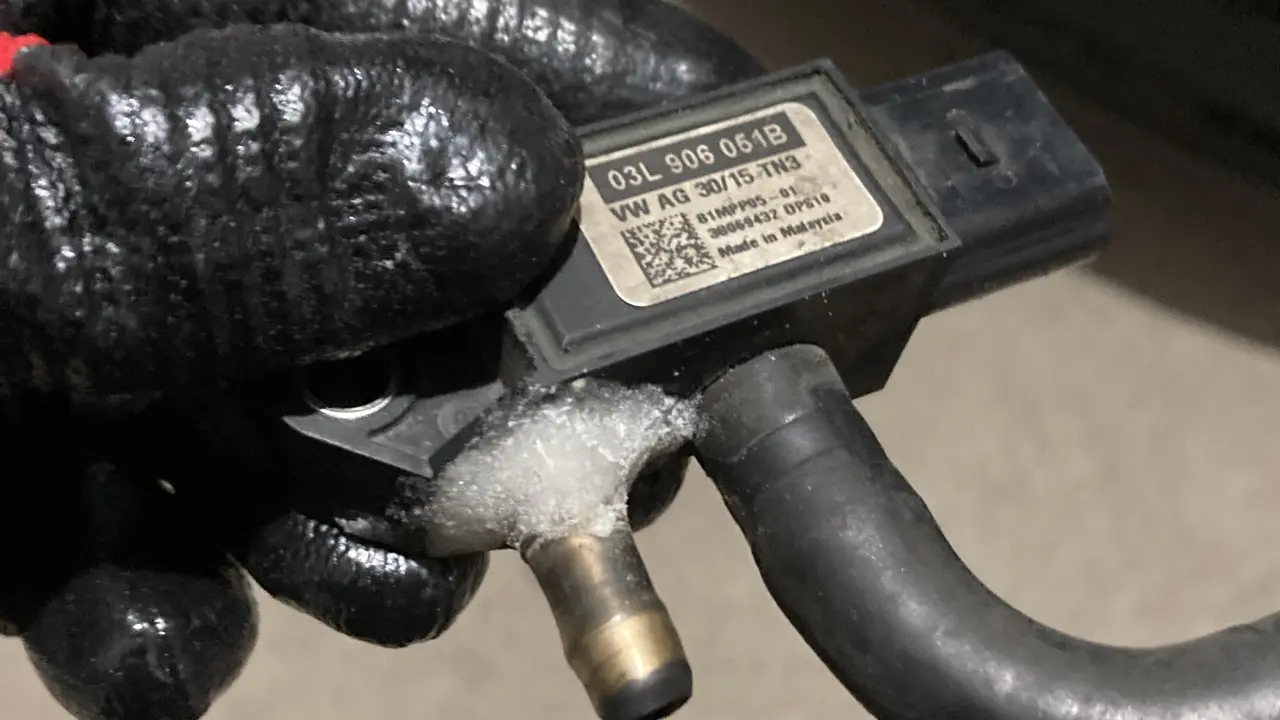
A DPF differential pressure sensor (Diesel Particulate Filter Differential Pressure Sensor) is an electronic sensor that measures exhaust gas pressure at the inlet and outlet of the diesel particulate filter and determines the difference between these two pressure readings.
In diesel engines, soot particles produced during combustion are trapped inside the DPF. As soot accumulates over time, exhaust gas flow through the filter becomes more restricted, and the pressure difference between the inlet and outlet increases.
The differential pressure sensor detects this change and sends information to the engine control unit (ECU). The ECU evaluates this data together with engine speed, load, and information from other sensors to estimate the soot accumulation level and initiate regeneration when necessary.
For this reason, the sensor plays an important role in ensuring that the DPF operates properly and exhaust emissions remain under control.
How Does a DPF Differential Pressure Sensor Work?
The operating principle of the sensor is based on measuring the pressure difference within the exhaust system.
The sensor typically has two pressure hoses connected to the DPF. One hose is connected to the inlet side of the filter, while the other is connected to the outlet side. The sensor compares the pressure readings from these two points and converts the difference into an electrical signal.
The ECU evaluates this signal.
As the amount of soot accumulated inside the DPF increases, the differential pressure generally rises. When the ECU detects that the pressure difference has increased under certain operating conditions, it may initiate the regeneration process. During regeneration, accumulated soot is burned off using high exhaust temperatures.
However, one important point should be kept in mind: High differential pressure does not always mean that the DPF is clogged. A faulty sensor, damaged or blocked pressure hoses, or another exhaust system problem can also cause incorrect pressure information to reach the ECU.
Where Is the DPF Differential Pressure Sensor Located?
The DPF differential pressure sensor is usually located in the engine compartment, near the particulate filter, or at a suitable point within the exhaust system.
Its exact location varies from vehicle to vehicle. In some models, it is mounted directly on or near the DPF, while in others, it may be positioned farther away.
The pressure hoses connected to the sensor measure exhaust pressure at different points in the system. Over time, these hoses may become clogged with soot, crack, melt, or develop loose connections.
Therefore, during diagnosis, it is important to inspect not only the sensor itself but also the pressure hoses and electrical wiring.
What Are the Symptoms of a DPF Differential Pressure Sensor Failure?
A faulty differential pressure sensor can cause several different symptoms. However, these symptoms may not appear in the same way on every vehicle.
Check Engine Light Illuminates
When the pressure values sent by the sensor fall outside the expected range, the check engine light may illuminate. Diagnostic trouble codes related to DPF pressure measurement may also be stored in the ECU.
DPF or Particulate Filter Warning Appears
Incorrect readings from the sensor can prevent the ECU from accurately determining the soot accumulation level inside the particulate filter. As a result, a DPF warning or a regeneration-related notification may appear.
Reduced Engine Performance
When the ECU detects a problem with the DPF system, it may limit engine power to protect the engine. The vehicle may struggle to accelerate, throttle response may become weaker, or the engine may enter limp mode.
Increased Fuel Consumption
When the sensor sends incorrect pressure information, the ECU may miscalculate the soot accumulation level inside the DPF. This can lead to unnecessary or frequent regeneration cycles, increasing fuel consumption.
Frequent Regeneration
Incorrect measurements from the DPF differential pressure sensor may cause the ECU to interpret the filter as being more heavily loaded than it actually is. As a result, regeneration may occur more frequently than necessary.
Regeneration Does Not Occur
If the sensor cannot transmit accurate pressure readings, the ECU may be unable to reliably determine the condition of the particulate filter. Consequently, regeneration may not start or may be interrupted before completion.
Abnormal Pressure Readings at Idle or During Driving
When a sensor is faulty, the differential pressure displayed by an OBD diagnostic tool may remain constant, show unrealistic values, or fail to respond as expected when engine speed changes.
Why Does a DPF Differential Pressure Sensor Fail?
Sensor failure is not always caused by an electronic problem. Mechanical issues, electrical faults, and problems within the exhaust system can also produce similar symptoms.
Electronic Sensor Failure
The pressure-sensing element inside the sensor may deteriorate over time. Heat, vibration, and prolonged use can affect its measurement accuracy.
Blocked Pressure Hoses
Soot from the DPF can accumulate inside the sensor's pressure hoses. Blocked hoses may prevent the sensor from detecting actual pressure changes.
Cracked or Leaking Pressure Hoses
Cracks, damaged hoses, or loose connections can alter the measured pressure. In such cases, the sensor may be functioning correctly while incorrect information is being transmitted to the ECU.
Electrical Wiring and Connector Problems
Corrosion, poor electrical contact, broken wires, or short circuits in the sensor connector and wiring harness can cause malfunctions. Problems with the reference voltage required by the sensor can also lead to incorrect readings.
Excessive Soot Accumulation in the DPF
A genuinely clogged particulate filter causes the differential pressure measured by the sensor to increase. In this situation, the sensor may not be faulty at all; it may simply be reporting the actual condition of the DPF.
How Is a DPF Differential Pressure Sensor Diagnosed?
When a sensor malfunction is suspected, it is important to evaluate the entire system rather than replacing the component immediately.
1. Read Diagnostic Trouble Codes Using an OBD Scanner
The first step is to retrieve the fault codes stored in the engine control unit. Some diagnostic trouble codes associated with the DPF differential pressure sensor include:
-
P2452 – DPF differential pressure sensor circuit intermittent or erratic
-
P2453 – DPF differential pressure sensor range or performance problem
-
P2454 – DPF differential pressure sensor circuit low
-
P2455 – DPF differential pressure sensor circuit high
-
P0470 – Exhaust pressure sensor circuit malfunction
-
P0471 – Exhaust pressure sensor range or performance problem
The exact descriptions and diagnostic procedures may vary depending on the vehicle manufacturer, model, and engine type.
2. Check Differential Pressure Using Live Data
The DPF differential pressure should be monitored through the live data section of the OBD diagnostic tool.
With the ignition on and the engine not running, the sensor reading should generally be close to zero. Once the engine is started and the engine speed increases, the differential pressure is expected to change according to operating conditions.
However, normal pressure values vary from vehicle to vehicle, so the manufacturer's technical specifications should always be used as a reference.
3. Inspect the Sensor Pressure Hoses
The pressure hoses connected to the sensor should be removed and inspected for blockages, cracks, soot accumulation, and leaks.
Ensuring that the hoses are clear is essential for the sensor to measure actual pressure values correctly.
4. Check the Electrical Connections
The sensor connector, wiring harness, ground connection, and reference voltage should be checked.
Many sensors operate using a 5-volt reference voltage. However, the correct electrical connections and measurement values should be verified according to the vehicle manufacturer's service documentation.
5. Evaluate the Sensor Using a Pressure Test
Using the appropriate equipment, controlled pressure can be applied to the sensor while its output signal is monitored.
If the sensor does not respond correctly to pressure changes and the electrical wiring is in good condition, the possibility of sensor failure becomes significantly higher.
How Is a DPF Differential Pressure Sensor Failure Fixed?
Once the source of the problem has been identified, the appropriate repair should be carried out.
-
If the sensor is faulty, it should be replaced with a suitable new sensor.
-
If the pressure hoses are blocked, they should be cleaned or replaced if damaged.
-
If the hoses are cracked or leaking, the connections should be repaired.
-
If there is a problem with the connector or wiring harness, the electrical fault should be repaired.
-
If the DPF is genuinely clogged, its soot accumulation level and regeneration requirements should be evaluated.
After replacing the sensor, some vehicles may require diagnostic trouble codes to be cleared, sensor adaptation to be performed, or DPF differential pressure values to be relearned.
What Happens If a DPF Differential Pressure Sensor Failure Is Ignored?
Continuing to drive with a faulty sensor can prevent the particulate filter from being monitored correctly.
If the sensor provides incorrect readings, the ECU may interpret the filter as being more or less clogged than it actually is. As a result, regeneration may occur unnecessarily frequently or may fail to take place when required.
Excessive soot accumulation inside the DPF can restrict exhaust gas flow. Increased exhaust backpressure may negatively affect engine performance and, in some vehicles, place additional stress on other components, including the turbocharger system.
For this reason, sensor-related problems should not be dismissed as minor electronic issues.
Is a DPF Differential Pressure Sensor Failure the Same as a Clogged DPF?
No. These are two different problems, although their symptoms can be similar.
When the DPF becomes clogged, the sensor reports an increased pressure difference between the filter inlet and outlet. When the sensor fails, however, the actual pressure values may not be transmitted accurately to the ECU.
In both situations, the check engine light may illuminate, engine power may decrease, and regeneration problems may occur.
Therefore, accurate diagnosis requires checking both the sensor and the operating condition of the particulate filter.
Conclusion
The DPF differential pressure sensor is an important component in diesel engines. It monitors the condition of the particulate filter and helps ensure that the regeneration process is properly managed.
When the sensor fails, symptoms such as the check engine light, reduced engine performance, increased fuel consumption, and regeneration problems may occur.
However, these symptoms do not automatically mean that the sensor needs to be replaced. The pressure hoses, electrical wiring, and the DPF itself must also be inspected.
Accurate diagnosis helps prevent unnecessary component replacement while protecting the particulate filter and engine from more serious problems.