TR
TR EN
EN

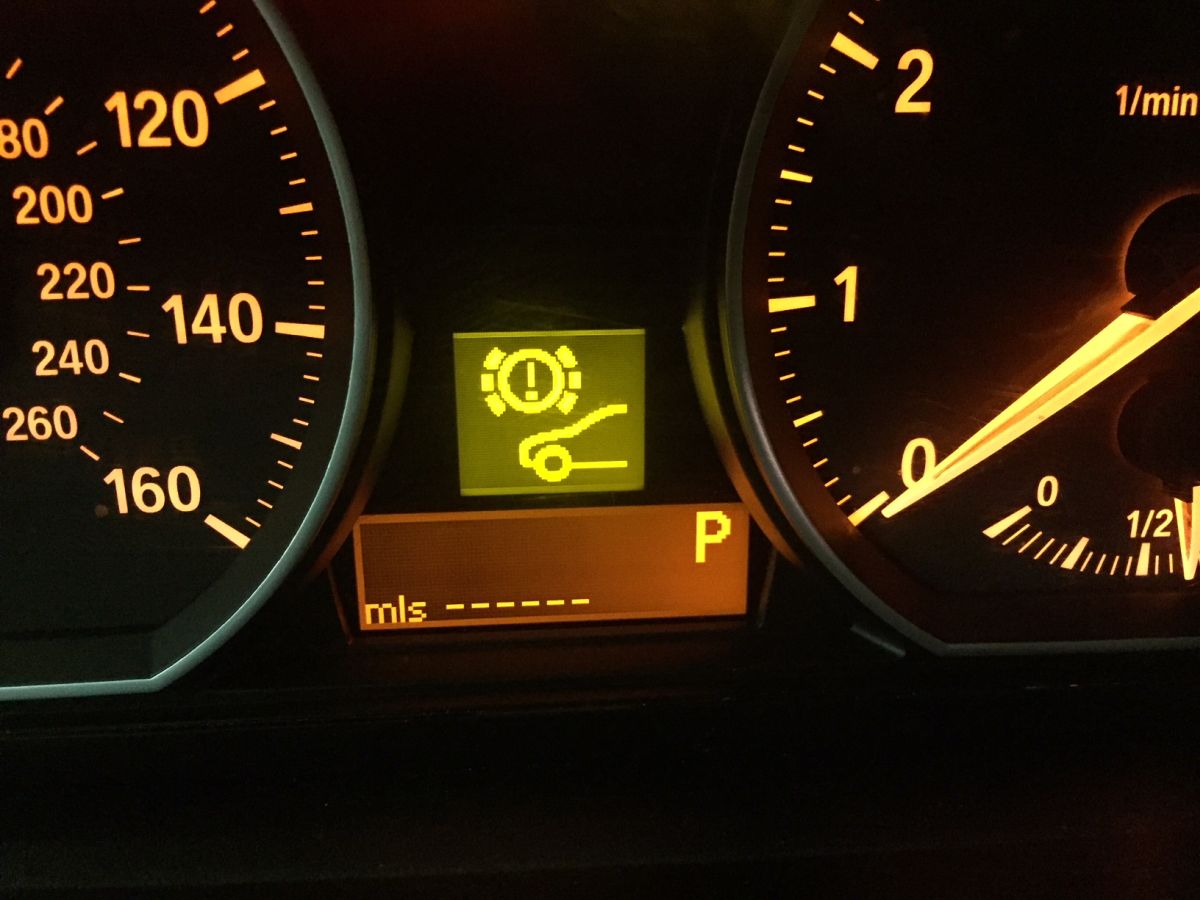
Why Does the Brake Pad Warning Light Come On?
The brake pad warning light is designed to alert the driver when the brake pads have reached a certain level of wear or when the vehicle detects a problem related to the braking system.
However, it is important to understand that a brake pad warning light does not always mean that the brake pads are completely worn out.
Some vehicles use dedicated brake pad wear sensors, while others use a general brake system warning light for several different conditions. Therefore, the exact meaning of the warning depends on the vehicle's make, model, and braking system.
What Does the Brake Pad Warning Light Mean?
In most cases, a brake pad warning indicates that the brake pads should be inspected because their friction material has become sufficiently thin.
As brake pads wear, the amount of friction material decreases. On vehicles equipped with electronic wear sensors, the sensor can trigger a warning once the remaining pad thickness reaches a predetermined level.
The brake pads may still have some usable material remaining when the warning appears. However, this does not mean the warning should be ignored.
The vehicle should be inspected to determine how much pad material remains and whether the brake discs and other components are also in good condition.
Why Does the Brake Pad Warning Light Come On When the Pads Wear?
Brake pads naturally wear because they repeatedly press against the brake discs during braking.
Certain driving conditions can accelerate this process, including:
-
Frequent stop-and-go driving
-
Heavy traffic
-
Aggressive braking
-
Mountainous roads
-
Frequent downhill driving
-
Carrying heavy loads
-
Towing
-
Repeated high-speed braking
When the brake pad reaches its wear limit, the wear sensor can activate the warning light.
This is why the warning light is often considered a maintenance warning rather than an indication of an immediate catastrophic brake failure.
How Does a Brake Pad Wear Sensor Work?
Different vehicle manufacturers use different types of brake pad wear detection systems.
Electrical wear sensors
A common system uses a small electrical sensor installed in or attached to the brake pad.
When the pad wears down to a certain point, the sensor contacts or breaks an electrical circuit. The vehicle's control system detects this change and activates the warning.
In many applications, the sensor is considered a replaceable or single-use component and should be replaced together with the brake pads.
Electronic wear monitoring
Some modern vehicles use more advanced electronic systems to estimate or monitor brake pad wear.
Depending on the vehicle, the system may use information from sensors, braking events, mileage, and other parameters.
Some vehicles may also require a brake service reset or electronic initialization after the brake pads are replaced.
Other Causes of a Brake Pad Warning Light
Worn brake pads are one of the most common causes, but they are not the only possibility.
The warning may also be caused by:
-
A damaged brake pad wear sensor
-
A broken sensor wire
-
Corrosion inside a sensor connector
-
Incorrectly installed sensor wiring
-
A damaged sensor during brake service
-
Incorrect brake pads
-
A loose sensor connector
-
Low brake fluid
-
A brake fluid leak
-
A sticking brake caliper
-
Excessively worn brake discs
-
An ABS or ESP-related problem
-
An electronic parking brake fault
-
A wiring problem
-
Low system voltage
-
A control module communication problem
This is why replacing the brake pads without performing an inspection can sometimes fail to solve the warning.
What Are the Symptoms of Worn Brake Pads?
A worn brake pad can produce several symptoms even before the warning light appears.
Common signs include:
-
Squealing while braking
-
Grinding or metallic noises
-
Longer stopping distances
-
Reduced braking performance
-
Brake pedal changes
-
Vibration while braking
-
The vehicle pulling to one side
-
Excessive brake dust
-
Visible damage to the brake disc
-
Uneven brake pad wear
-
A burning smell after heavy braking
However, these symptoms do not automatically prove that the brake pads are the problem.
For example, brake vibration can also be caused by brake disc problems, wheel issues, suspension wear, or other mechanical faults.
Is the Brake Pad Warning Light the Same as the Brake Warning Light?
Not necessarily.
Some vehicles have a dedicated brake pad wear warning symbol, while others use a general brake system warning light.
A general brake warning light may indicate conditions such as:
-
Low brake fluid
-
Parking brake activation
-
Hydraulic brake system problems
-
Brake system pressure problems
-
Electronic braking system faults
The color and shape of the warning symbol are also important.
A red brake warning light should generally be treated more seriously than a simple brake pad wear notification because it can indicate a broader braking system problem.
Can Low Brake Fluid Cause a Brake Pad Warning?
On some vehicles, yes.
As brake pads wear, the caliper pistons move farther outward to compensate for the reduced pad thickness. This can cause the brake fluid level in the reservoir to gradually decrease.
Therefore, brake pad wear and a lower brake fluid level can sometimes be related.
However, a significantly low brake fluid level should never automatically be blamed on worn brake pads.
A leak in the braking system can also cause the fluid level to fall.
For this reason, simply adding more brake fluid without finding the reason for the low level is not an appropriate repair.
Can You Drive With the Brake Pad Warning Light On?
It depends on what the warning actually represents and how the brakes are performing.
If the vehicle has a dedicated brake pad wear warning and braking performance remains completely normal, the vehicle may still be drivable for a limited period. However, the brake system should be inspected as soon as possible.
The situation is more serious if you notice:
-
Reduced braking performance
-
A very soft or abnormal brake pedal
-
Low brake fluid
-
Metallic grinding
-
A red brake warning light
-
Brake fluid leakage
-
Multiple brake or ABS warnings
-
Severe vibration during braking
In these circumstances, continuing to drive can be unsafe.
Because the braking system is directly related to vehicle safety, serious symptoms should not be ignored.
Why Does the Brake Pad Warning Light Stay On After Replacing the Pads?
Sometimes the brake pads are replaced but the warning light remains illuminated.
There are several possible explanations.
The vehicle may use a separate brake pad wear sensor that also needs to be replaced.
Other possibilities include:
-
The sensor was not replaced.
-
The sensor connector is not fully connected.
-
The sensor wire was damaged.
-
The sensor was installed incorrectly.
-
The vehicle still has a stored fault.
-
The brake monitoring system requires a reset.
-
The new brake pad type is not correctly recognized.
-
There is a problem elsewhere in the braking system.
Therefore, a warning that remains after brake pad replacement does not automatically mean that the new brake pads are defective.
How Should the Brake System Be Inspected?
The first step is to physically inspect the brake pads.
Checking only the outer pad is not always sufficient. The inner and outer pads can wear at different rates.
For example, a sticking caliper piston or seized guide pin can cause one brake pad to wear significantly faster than the other.
A proper inspection should include:
-
Front brake pads
-
Rear brake pads
-
Brake discs
-
Brake pad wear sensors
-
Sensor wiring
-
Sensor connectors
-
Brake fluid level
-
Brake calipers
-
Caliper guide pins
-
Brake hoses
-
Hydraulic lines
-
Possible fluid leaks
The condition of the brake disc is particularly important because installing new pads on severely damaged or excessively worn discs may not provide the expected braking performance.
Can a Brake Pad Warning Be Diagnosed With an OBD Scanner?
On some vehicles, yes.
Modern vehicles can integrate braking information with several electronic control systems, including:
-
ABS
-
ESP
-
Electronic parking brake
-
Body control modules
-
Brake control modules
A diagnostic scanner may reveal stored fault codes related to sensors, wiring, communication, or electronic brake systems.
However, not every brake pad warning generates a standard OBD-II engine fault code.
A vehicle may therefore have a genuine brake-related problem even when the engine ECU contains no fault codes.
On some vehicles, the ABS or another control module must be scanned separately.
How Do You Reset the Brake Pad Warning Light?
The warning should not simply be reset before determining why it appeared.
The correct procedure normally involves:
-
Inspecting the brake pads.
-
Checking the brake discs.
-
Inspecting the brake pad wear sensors.
-
Checking sensor wiring and connectors.
-
Checking the brake fluid level.
-
Inspecting the braking system for leaks.
-
Replacing worn components if necessary.
-
Performing a brake service reset if required.
-
Scanning the relevant control modules.
-
Clearing faults only after the underlying problem has been repaired.
-
Testing the braking system.
Simply clearing a fault code or switching off the warning light does not repair a mechanical brake problem.
When Should Brake Pads Be Replaced?
There is no universal mileage interval that applies to every vehicle.
Brake pad life depends on several factors, including:
-
Driving style
-
Vehicle weight
-
Traffic conditions
-
Road type
-
Amount of city driving
-
Mountain or downhill driving
-
Brake disc condition
-
Caliper condition
-
Brake pad material
-
Towing and heavy loads
-
Frequency of hard braking
A vehicle used mostly on motorways may have very different brake pad wear from an identical vehicle used in heavy city traffic.
For this reason, brake pad replacement should be based primarily on actual condition rather than mileage alone.
Brake Pad Warning Light vs ABS Warning Light
The brake pad warning light and ABS warning light do not normally indicate the same problem.
An ABS warning may be related to:
-
Wheel speed sensors
-
ABS wiring
-
ABS hydraulic components
-
ABS control module
-
Electrical faults
-
Communication problems
A brake pad warning is generally associated with pad wear or the brake pad wear monitoring system.
However, modern braking systems are highly interconnected. A fault in one electronic braking system can sometimes cause warnings in other systems.
For example, an ABS, ESP, or electronic parking brake fault may result in several warning lights appearing at the same time.
Can Worn Brake Pads Damage the Brake Discs?
Yes.
If brake pads are allowed to wear beyond their usable friction material, the metal backing plate can eventually come into contact with the brake disc.
This can produce a severe grinding noise and damage the disc surface.
A damaged brake disc may require replacement rather than simply fitting new brake pads.
This is one of the main reasons why a brake pad warning should not be ignored.
Replacing brake pads before the friction material is completely exhausted can prevent additional damage and reduce repair costs.
Why Do Brake Pads Wear Unevenly?
Brake pads do not always wear at the same rate.
If one pad is much thinner than the other, possible causes include:
-
A sticking caliper piston
-
Seized guide pins
-
Incorrect pad installation
-
Contaminated brake components
-
Brake hose problems
-
Uneven brake disc wear
-
Mechanical restrictions in the caliper
Uneven wear is important because simply replacing the pads without correcting the underlying mechanical problem can result in the new pads wearing unevenly again.
Is a Brake Pad Warning an Immediate Emergency?
Not every brake pad warning represents an immediate emergency.
A dedicated brake pad wear warning usually indicates that maintenance is required rather than that the brakes have suddenly failed.
However, the warning becomes much more serious when it is accompanied by abnormal braking behavior.
If the vehicle has reduced braking performance, a soft brake pedal, brake fluid leakage, severe grinding, or a red brake system warning, the vehicle should be inspected immediately.
Conclusion
The most common reason for a brake pad warning light is worn brake pads, but the warning does not automatically prove that the brake pads themselves are defective.
A damaged wear sensor, broken wiring, low brake fluid, a brake fluid leak, a sticking caliper, worn brake discs, or an electronic braking system fault can produce similar warnings.
For this reason, the correct approach is to inspect the entire braking system rather than replacing a component based solely on the warning light.
The most important point is that a brake pad warning light is a warning, not a complete diagnosis.
The actual cause should be confirmed through physical inspection and, when necessary, electronic diagnosis of the relevant brake control modules.