TR
TR EN
EN

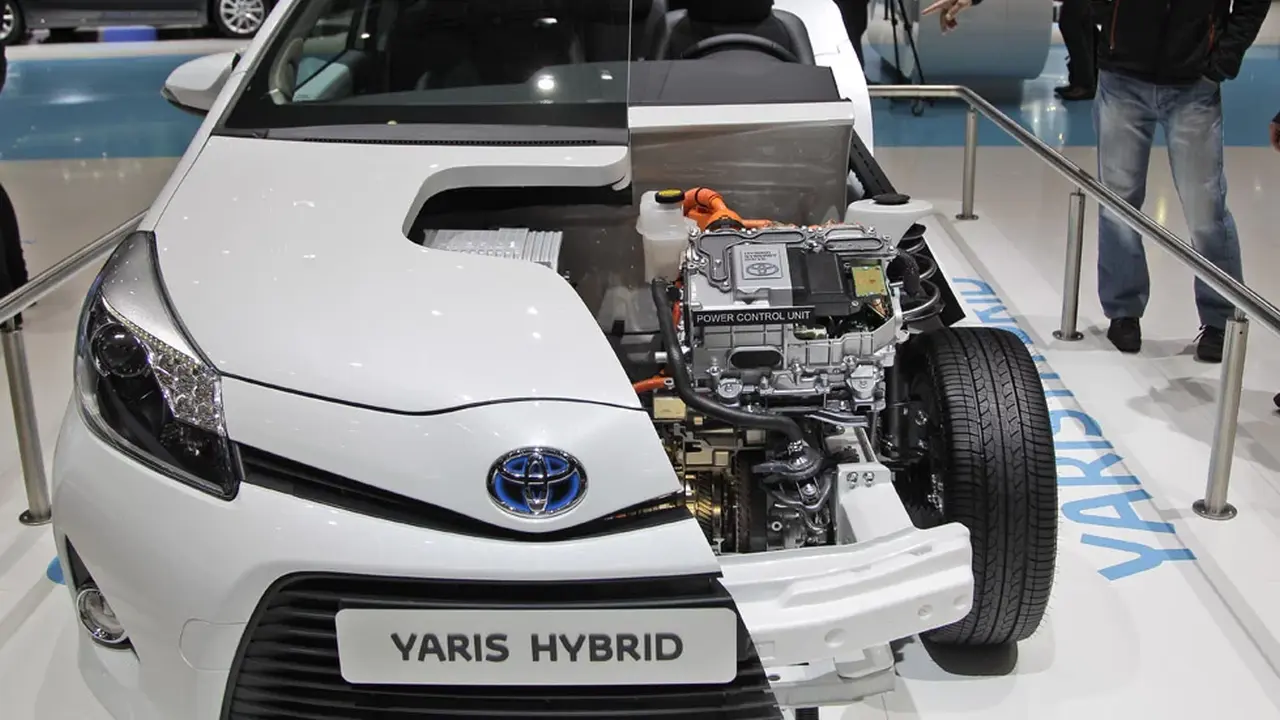
What Is a Hybrid Vehicle?
A hybrid vehicle combines an internal combustion engine with one or more electric motors to power the vehicle. The main purpose of hybrid technology is to improve energy efficiency, reduce fuel consumption, and lower emissions by allowing the vehicle to use the most efficient power source for different driving conditions.
Unlike a fully electric vehicle, a hybrid still has an internal combustion engine. Depending on the hybrid system, the vehicle may operate using the gasoline engine, the electric motor, or both at the same time.
One of the most important features of hybrid technology is that energy normally lost during braking can be recovered and stored in the battery through regenerative braking.
How Does a Hybrid Vehicle Work?
A hybrid vehicle continuously manages the relationship between its gasoline engine, electric motor, battery, and other components.
At low speeds or during light acceleration, the electric motor may be able to move the vehicle on its own. When more power is required, the gasoline engine starts and either takes over propulsion or works together with the electric motor.
During strong acceleration, both power sources can operate simultaneously. This allows the vehicle to produce more torque while reducing the amount of work required from the combustion engine.
When the driver releases the accelerator or applies the brakes, the electric motor can operate as a generator. Instead of allowing all of the vehicle's kinetic energy to be lost as heat through the brakes, part of that energy is converted into electricity and stored in the hybrid battery.
Main Components of a Hybrid System
Although hybrid systems differ between manufacturers and models, most contain several major components.
Internal combustion engine:
Most hybrid passenger cars use a gasoline engine. Depending on the hybrid design, the engine can directly drive the wheels, generate electricity, or do both.
Electric motor:
The electric motor provides propulsion or assists the combustion engine. In some hybrid vehicles, it can move the vehicle by itself under certain conditions.
Hybrid battery:
This battery stores electrical energy for the electric motor. It is different from the conventional 12-volt battery used for starting and powering low-voltage electrical equipment.
Inverter:
The inverter manages the electrical energy flowing between the battery and electric motor and converts electricity into the form required by the motor.
Regenerative braking system:
During deceleration, the electric motor can act as a generator and recover some of the vehicle's kinetic energy.
Hybrid control unit:
The control system determines when the gasoline engine and electric motor should operate and how much power each should provide.
When Does the Gasoline Engine Start?
The exact operating strategy depends on the vehicle, but the combustion engine may start when:
-
The vehicle needs more power.
-
The driver accelerates aggressively.
-
The vehicle is climbing a hill.
-
The hybrid battery charge level becomes low.
-
The vehicle reaches a speed where electric-only operation is no longer efficient.
-
The engine needs to reach or maintain its operating temperature.
-
Heating or other auxiliary functions require additional energy.
Therefore, a hybrid vehicle is not necessarily designed to operate electrically all the time. Its control system constantly changes the power source according to driving conditions.
Do Hybrid Vehicles Charge Themselves?
This depends on the type of hybrid.
A conventional Hybrid Electric Vehicle (HEV) normally does not need to be connected to an external charger. Its battery is charged mainly through regenerative braking and, when necessary, by the combustion engine.
This is why some manufacturers describe HEVs as "self-charging hybrids." However, this does not mean that the vehicle creates energy from nothing. The main energy source is still the fuel used by the combustion engine, while some otherwise wasted braking energy is recovered.
A Plug-in Hybrid Electric Vehicle (PHEV) is different. It has a larger battery that can be charged from an external power source, such as a home charger or public charging station.
What Is a Mild Hybrid (MHEV)?
A mild hybrid, or MHEV, uses a smaller electrical system to assist the combustion engine.
Unlike a full hybrid, the electric motor in many mild-hybrid systems cannot normally propel the vehicle by itself for extended periods. Instead, it provides assistance during situations such as:
-
Starting
-
Acceleration
-
Stop-and-go driving
-
Engine restart
-
Temporary load changes
The system can also recover energy during deceleration.
Mild hybrids are generally simpler than full hybrid systems, but their ability to provide electric-only propulsion is much more limited.
What Is a Full Hybrid (HEV)?
A full hybrid can use its electric motor to propel the vehicle independently under suitable conditions.
For example, at low speeds in urban traffic, the gasoline engine may remain switched off while the electric motor moves the vehicle. When more power is required, the gasoline engine starts automatically.
This makes full hybrids particularly effective in city driving, where frequent braking and acceleration provide many opportunities for energy recovery.
What Is a Plug-in Hybrid (PHEV)?
A plug-in hybrid has a significantly larger battery than a conventional hybrid and can be charged externally.
Because of its larger battery, a PHEV can usually travel considerably farther using electric power alone. For drivers who regularly charge the vehicle and have relatively predictable daily driving distances, a large portion of everyday driving may be completed without using the gasoline engine.
However, if the vehicle is rarely charged, much of the potential advantage of the larger battery is lost.
Why Do Hybrid Vehicles Consume Less Fuel?
One of the biggest advantages of hybrid technology is its ability to reduce the amount of time the combustion engine operates under inefficient conditions.
Consider city traffic. A conventional gasoline car repeatedly accelerates, brakes, idles, and accelerates again. A hybrid can use the electric motor during some of these low-speed situations and recover energy during braking.
The combustion engine can also be operated in a more efficient range more often because the electric motor can assist when additional power is needed.
Regenerative braking is another major factor. In a conventional vehicle, much of the kinetic energy produced during deceleration is converted into heat by the brake system. A hybrid can recover part of this energy and store it in the battery.
Advantages of Hybrid Vehicles
Hybrid vehicles can provide several advantages, especially in urban driving.
Key benefits include:
-
Lower fuel consumption in many city-driving conditions
-
Reduced fuel use during stop-and-go traffic
-
Regenerative braking and energy recovery
-
Lower tailpipe emissions under suitable operating conditions
-
Quiet and smooth low-speed operation
-
Strong low-speed electric torque
-
Reduced reliance on the combustion engine
-
Potentially lower brake wear because of regenerative braking
The fuel-saving advantage is generally most noticeable when the vehicle experiences frequent acceleration and deceleration.
Disadvantages of Hybrid Vehicles
Hybrid technology also has some disadvantages.
A hybrid powertrain is more complex than a conventional gasoline powertrain because it contains an internal combustion engine, electric motor, high-voltage battery, inverter, control electronics, and additional cooling and electrical systems.
The initial purchase price can also be higher than that of a comparable gasoline vehicle.
Another consideration is the hybrid battery. Modern batteries are designed for long-term use, but their capacity can gradually decrease with age and usage. If a major battery failure occurs outside the applicable warranty period, repair or replacement costs can be significant depending on the vehicle.
For this reason, a hybrid should not be judged solely by its fuel economy.
How Long Does a Hybrid Battery Last?
There is no single lifespan that applies to every hybrid battery.
Battery longevity depends on factors such as:
-
Battery chemistry
-
Vehicle design
-
Operating temperature
-
Battery cooling system
-
Charging and discharging cycles
-
Driving conditions
-
Battery management strategy
-
Vehicle age and mileage
Modern hybrid vehicles use sophisticated battery management systems to monitor temperature, voltage, and the condition of individual cells.
When buying a used hybrid, checking the overall health of the hybrid battery can therefore be just as important as checking the engine and transmission.
How Is a Hybrid Vehicle Maintained?
A hybrid still requires conventional vehicle maintenance.
If the vehicle has a gasoline engine, components such as engine oil, oil filters, air filters, spark plugs, coolant, and ignition components remain important.
At the same time, the hybrid system introduces additional components that may require inspection, including:
-
Hybrid battery
-
Battery cooling system
-
Inverter
-
High-voltage cables
-
Electric motor
-
Hybrid control system
-
Regenerative braking system
High-voltage components should be inspected or repaired by technicians who are properly trained and equipped to work on hybrid vehicles.
A hybrid powertrain should never be treated as an ordinary 12-volt electrical system.
Are Hybrid Brakes Different?
Yes. Hybrid vehicles can use a combination of regenerative and conventional friction braking.
When the driver presses the brake pedal, the electric motor can operate as a generator and slow the vehicle while recovering energy. If stronger braking is required, the conventional hydraulic brakes and brake pads provide additional stopping force.
Because regenerative braking handles part of the deceleration in many driving situations, some hybrid vehicles may experience slower brake-pad wear than conventional vehicles.
However, this depends on the vehicle's design and driving conditions.
Are Engine Oil and Spark Plugs Still Important?
Absolutely.
A hybrid vehicle may use its gasoline engine less frequently than a conventional gasoline car, but the engine still requires proper lubrication, cooling, ignition, and maintenance.
Spark plugs, ignition coils, engine oil, filters, and the cooling system remain important for reliable operation.
The fact that the engine sometimes switches off does not eliminate the need for regular maintenance.
Hybrid vs. Gasoline: Which Is Better?
The answer depends heavily on how the vehicle is used.
A driver who spends most of the time in urban traffic with frequent stops and starts can benefit significantly from a hybrid. The electric motor can handle part of the low-speed operation while regenerative braking recovers energy.
A driver who spends most of the time traveling long distances at steady highway speeds may see a smaller difference in fuel consumption.
The purchase price, annual mileage, fuel prices, maintenance costs, battery warranty, and expected ownership period should all be considered.
Hybrid vs. Diesel
Diesel engines can still be advantageous for drivers who regularly travel long distances and accumulate high annual mileage. They generally offer strong low-RPM torque and good highway fuel economy.
Hybrids, on the other hand, are particularly strong in urban environments.
Modern diesel vehicles can also have complex emissions systems such as DPF, EGR, SCR, and AdBlue systems. These systems require proper operating conditions and maintenance.
A hybrid may therefore be more attractive for frequent short urban trips, while a diesel can remain a strong choice for regular long-distance driving.
Is a Hybrid Vehicle the Same as an Electric Vehicle?
No.
A hybrid vehicle has both an internal combustion engine and an electric motor. A fully electric vehicle, or BEV, relies entirely on electric motors for propulsion and does not use an internal combustion engine.
This is an important distinction because hybrid vehicles still consume fuel and produce tailpipe emissions when their combustion engine is operating.
A hybrid should therefore be viewed as a technology that combines two propulsion systems rather than as a fully electric vehicle.
What Should You Check Before Buying a Used Hybrid?
When purchasing a used hybrid, fuel consumption should not be the only consideration.
The condition of the hybrid battery is particularly important. A proper inspection should also include the inverter, electric motor, cooling system, high-voltage components, regenerative braking system, and diagnostic system.
During a test drive, the transitions between electric operation and gasoline operation should generally feel smooth. The vehicle should also be checked under different conditions, including:
-
Low-speed driving
-
Acceleration
-
Hill climbing
-
Highway driving
-
Regenerative braking
-
Engine start and stop cycles
Diagnostic equipment can also be useful for checking stored fault codes and evaluating the hybrid system.
A hybrid vehicle is much more than a gasoline car with an additional electric motor. Its real advantage comes from intelligently combining the two power sources and recovering energy that would otherwise be wasted.
For drivers who spend a significant amount of time in urban traffic, this combination can provide excellent efficiency and smooth operation. For drivers who mostly travel long distances at steady speeds, the advantages may be less pronounced.
Ultimately, the best hybrid vehicle is not necessarily the one with the lowest advertised fuel consumption. It is the one whose hybrid system matches the driver's daily driving conditions, annual mileage, charging habits, maintenance expectations, and ownership costs.