TR
TR EN
EN

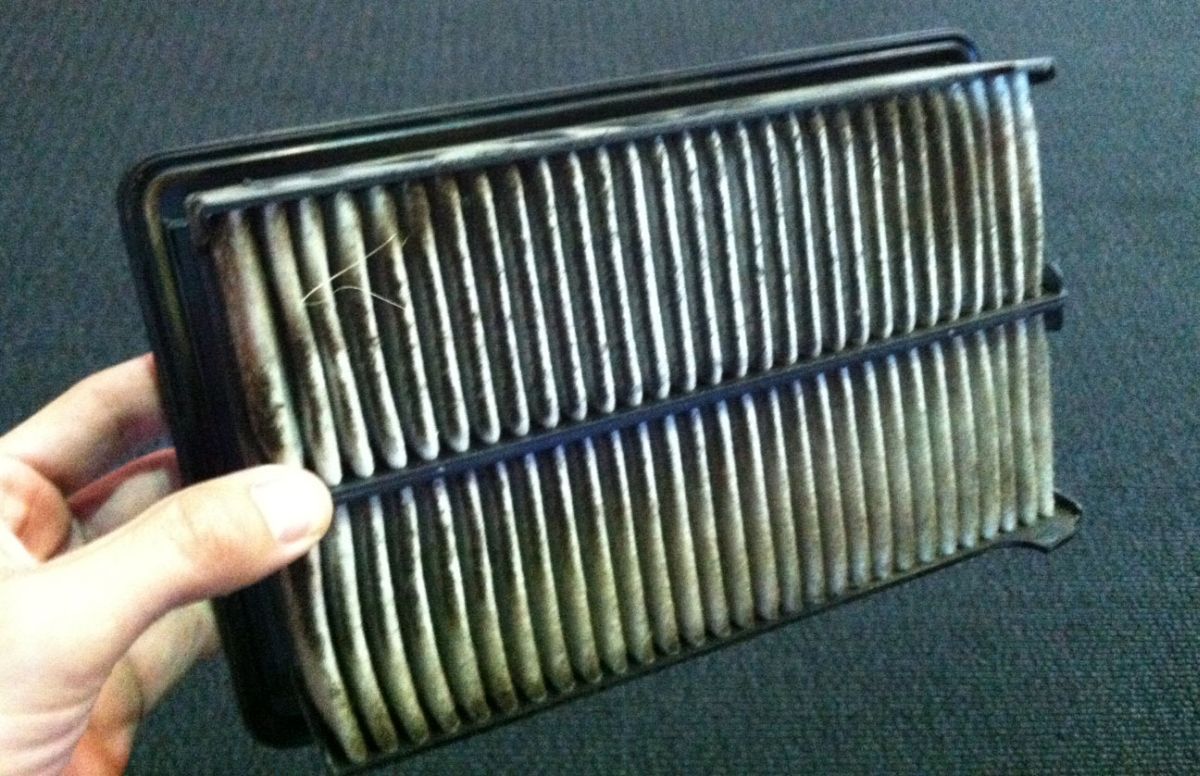
What Is an Air Filter? What Are the Symptoms of Air Filter Failure?
The air filter is one of the basic components of an internal combustion engine's air intake system. Its main purpose is to prevent dust, dirt, sand, insects, and other particles from entering the engine while allowing sufficient clean air to reach the intake system.
An engine needs a precise mixture of air and fuel to operate efficiently. If the air filter becomes heavily clogged, damaged, incorrectly installed, or contaminated, the amount and quality of air entering the engine can be affected.
Although an air filter is a relatively simple component, its condition can influence engine performance, fuel consumption, emissions, and in some cases the operation of sensors such as the MAF sensor.
How Does an Air Filter Work?
Outside air enters the vehicle through the air intake system and reaches the air filter housing.
The filter material traps unwanted particles while allowing air to pass through.
The filtered air then continues toward the throttle body and intake manifold, where it eventually reaches the engine cylinders.
Modern air filters are usually made from specially designed paper or synthetic filter material. Some performance applications use reusable cotton, foam, or other filter materials.
The filter must provide a balance between:
-
Adequate airflow
-
Effective particle filtration
-
Long service life
-
Consistent engine operation
A filter that allows too much contamination through can allow harmful particles into the engine, while a severely restricted filter can reduce airflow.

Symptoms of a Clogged Air Filter
A dirty air filter does not always produce an obvious warning light. In many cases, the first symptoms are changes in engine performance.
Common symptoms include:
-
Reduced engine power
-
Slower acceleration
-
Poor throttle response
-
Increased fuel consumption
-
Rough or inconsistent engine operation
-
Difficulty reaching high RPM
-
Reduced performance under heavy load
-
Increased exhaust emissions
-
Check Engine Light in some cases
The severity depends on how heavily the filter is restricted and how sensitive the engine's air-management system is.
Reduced Engine Power
A severely clogged filter can restrict the amount of air available to the engine.
During light driving, the difference may be difficult to notice. Under heavy acceleration, however, the engine may struggle to obtain the airflow it needs.
The driver may notice that:
-
Acceleration feels weaker.
-
The engine responds slowly to the accelerator.
-
The vehicle struggles more on hills.
-
High-speed acceleration becomes weaker.
-
The engine feels restricted at higher RPM.
A clogged air filter is only one possible cause of these symptoms. Turbocharger problems, fuel delivery problems, ignition faults, and throttle issues can produce similar results.
Increased Fuel Consumption
A heavily restricted air filter can affect the engine's air-fuel control.
Modern engines use sensors and ECU calculations to compensate for changing airflow conditions, so a dirty filter does not always cause a dramatic increase in fuel consumption.
However, if airflow becomes sufficiently restricted or the engine management system cannot compensate correctly, fuel economy may deteriorate.
If fuel consumption increases significantly, the air filter should be checked along with:
-
Spark plugs
-
Fuel injectors
-
Oxygen sensors
-
MAF sensor
-
MAP sensor
-
Thermostat
-
Tire pressure
-
Fuel pressure
Poor Acceleration and Throttle Response
A restricted air filter can become more noticeable when the throttle is opened significantly.
The engine needs considerably more air during acceleration than it does at idle.
If the filter is severely blocked, the engine may feel sluggish when the accelerator is pressed.
This can be especially noticeable during:
-
Hard acceleration
-
Overtaking
-
Hill climbing
-
High-speed driving
-
High engine RPM
Difficulty Reaching High RPM
A partially restricted air filter may have little effect during normal driving but become a significant restriction at high engine speeds.
If the engine feels normal at low RPM but loses power as RPM increases, the air intake system should be inspected.
However, this symptom can also be caused by fuel starvation, ignition problems, turbocharger faults, exhaust restrictions, or electronic throttle problems.
Rough Idle
An air filter itself is not normally the first component suspected when an engine develops a rough idle.
However, problems in the air intake system around the filter can contribute to poor engine operation.
For example:
-
Air filter incorrectly installed
-
Airbox not properly closed
-
Intake hose disconnected
-
Air leak after the MAF sensor
-
Damaged intake duct
-
Contaminated MAF sensor
can cause air-management problems.
Therefore, when replacing an air filter, the entire airbox and intake duct should be checked rather than simply installing the new filter.
Can a Bad Air Filter Cause the Check Engine Light?
A severely restricted or incorrectly installed air filter can contribute to an engine-management problem, but a dirty air filter alone does not automatically cause the Check Engine Light.
The warning light is more likely when there is an associated problem involving:
-
MAF sensor readings
-
MAP sensor readings
-
Air-fuel mixture
-
Intake air leaks
-
Throttle operation
-
Fuel-trim corrections
If the Check Engine Light is illuminated, diagnostic codes should be read before replacing parts.
Can a Dirty Air Filter Damage the Engine?
Yes, particularly if the filter is damaged, improperly installed, or missing.
The air filter protects the engine from abrasive particles.
If dirt enters the engine through the intake system, it can contribute to wear of components such as:
-
Cylinder walls
-
Piston rings
-
Intake valves
-
Turbocharger compressor components
A properly installed filter therefore has an important protective function even though it is inexpensive compared with the components it protects.
What Happens If the Air Filter Is Damaged?
A filter does not have to be clogged to cause a problem.
A torn, collapsed, incorrectly fitted, or poorly sealed filter can allow unfiltered air into the engine.
This is particularly dangerous in dusty environments.
The filter housing and sealing surfaces should therefore be inspected whenever the filter is replaced.
Air Filter and MAF Sensor Relationship
On vehicles equipped with a Mass Air Flow (MAF) sensor, the air filter is normally positioned upstream of the sensor.
If the filter housing is opened during maintenance, the MAF sensor and its surrounding intake duct should be handled carefully.
Incorrect installation can allow unmetered air into the intake system or create turbulence that affects sensor readings.
A contaminated MAF sensor can then produce symptoms that may initially be mistaken for an air-filter problem.
Can an Air Filter Be Cleaned Instead of Replaced?
For most standard disposable paper air filters, replacement is preferable to cleaning.
Blowing compressed air through a paper filter can damage the filter material or create microscopic openings that reduce its filtering effectiveness.
Reusable performance filters are different because they are designed to be cleaned and serviced according to the manufacturer's instructions.
The type of filter should therefore be identified before attempting to clean it.
When Should an Air Filter Be Replaced?
There is no single replacement interval that applies to every vehicle.
The correct interval depends on:
-
Vehicle manufacturer
-
Engine type
-
Driving conditions
-
Dust levels
-
Traffic conditions
-
Road environment
-
Filter design
Vehicles driven frequently on dusty roads may require more frequent inspection and replacement than vehicles driven mainly in clean urban environments.
Checking the filter during routine maintenance is often more useful than relying only on a fixed mileage interval.
How Can You Tell If the Air Filter Is Dirty?
The filter should be removed and inspected according to the manufacturer's procedure.
Signs of contamination may include:
-
Heavy dust accumulation
-
Dirt covering a large portion of the filter surface
-
Leaves or debris
-
Oil contamination
-
Damaged filter material
-
Deformation
-
Poor sealing around the edges
However, appearance alone is not always a perfect indicator of restriction. A filter can look dirty and still provide acceptable airflow, while certain types of contamination can cause significant restriction.
Does a Performance Air Filter Increase Engine Power?
Replacing a heavily clogged factory filter with a new one can restore lost performance.
However, replacing a healthy factory air filter with a high-flow aftermarket filter does not automatically produce a significant power increase.
The engine's entire intake system, ECU calibration, airflow requirements, and exhaust system determine how much airflow can actually be used.
A poorly designed intake system can even create problems with heat, airflow measurement, or filtration.
Air Filter vs Cabin Air Filter
The engine air filter and cabin air filter perform completely different jobs.
The engine air filter protects the engine and supplies clean intake air.
The cabin air filter cleans the air entering the passenger compartment.
A clogged cabin filter can reduce ventilation and air-conditioning airflow, but it does not directly filter the air entering the engine.
What Should Be Checked When Replacing an Air Filter?
Replacing the filter is a good opportunity to inspect the surrounding intake system.
Check:
-
Air filter housing
-
Filter sealing surface
-
Intake hose
-
Clamps
-
MAF sensor area
-
Airbox cover
-
Breather connections
-
Air ducts
-
Signs of rodent damage or debris
Everything should be correctly secured after installation.
An incorrectly closed airbox can allow unfiltered air into the engine.
Can You Drive With a Dirty Air Filter?
A moderately dirty filter usually does not create an immediate safety problem, and the vehicle may continue to operate normally.
However, a severely restricted or damaged filter should not be ignored.
Continued operation with a damaged filter can allow contaminants into the engine, while a severely restricted filter can reduce performance and fuel efficiency.
If the vehicle has severe power loss, misfires, stalling, or a Check Engine Light, the air filter should be considered as part of a broader diagnostic process rather than assuming it is the only cause.
The Importance of a Simple Component
The air filter is inexpensive compared with many engine components, but it performs two important jobs: protecting the engine from contamination and allowing sufficient airflow for proper combustion.
A dirty filter can contribute to reduced acceleration, poor throttle response, increased fuel consumption, and reduced high-RPM performance. A damaged or incorrectly installed filter can be even more serious because it may allow unfiltered air into the engine.
For this reason, the air filter should be inspected regularly and replaced according to the vehicle manufacturer's recommendations and the conditions in which the vehicle is driven.