TR
TR EN
EN

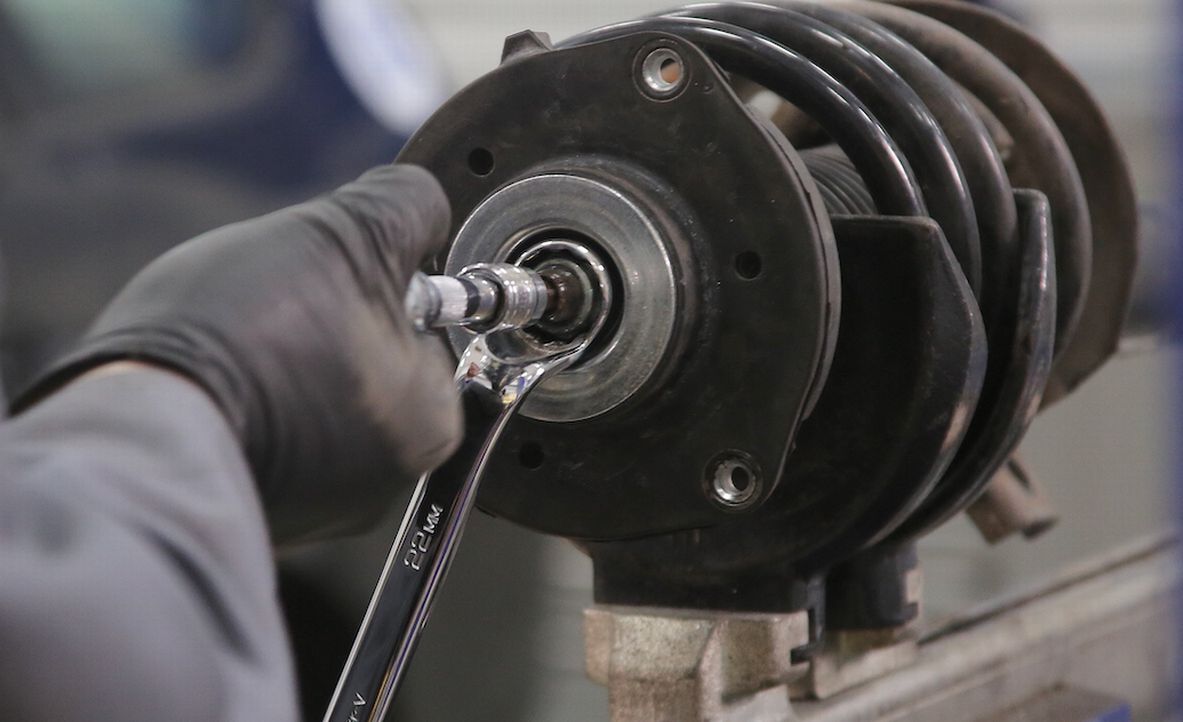
What Is a Strut Mount? How Can You Tell If It Is Faulty?
The strut mount is an important suspension component located at the upper connection point of a strut assembly. It connects the suspension strut to the vehicle body while helping isolate road shocks, vibrations, and suspension noise from the cabin.
On many vehicles, especially those equipped with MacPherson strut front suspension, the upper strut mount works together with a bearing that allows the strut to rotate when the steering wheel is turned.
Because it is located between the suspension and the vehicle body, a worn strut mount can cause knocking noises, steering problems, vibration, uneven tire wear, and changes in the way the vehicle responds to bumps and turns.
What Does a Strut Mount Do?
A strut mount has several important functions.
It:
-
Connects the top of the strut to the vehicle body
-
Supports part of the suspension load
-
Helps isolate road vibrations
-
Reduces suspension noise
-
Allows the strut to move with the suspension
-
Allows the strut to rotate during steering on applicable designs
-
Contributes to proper wheel alignment and suspension geometry
The mount usually contains a rubber or elastomer element. Depending on the suspension design, it may also contain an integrated bearing.
The rubber portion absorbs vibration, while the bearing allows rotational movement when required.
Where Is the Strut Mount Located?
On a typical MacPherson strut suspension, the strut mount is located at the top of the front suspension strut, where the strut attaches to the vehicle's body.
If the hood is opened, the upper strut mounting area can often be seen in the engine compartment.
The exact appearance varies considerably between vehicles.
The assembly may include:
-
Strut mount
-
Strut bearing
-
Upper spring seat
-
Rubber isolator
-
Mounting plate
-
Strut shaft nut
Not every vehicle uses exactly the same arrangement.
What Is a Strut Bearing?
The strut bearing is often integrated into the upper strut mount on vehicles with MacPherson suspension.
Its job is to allow the strut assembly to rotate smoothly as the steering is turned.
This is particularly important because the spring, strut and steering knuckle can rotate together during steering.
If the bearing becomes worn, dry, seized, or damaged, steering may become noisy or less smooth.
A faulty bearing can therefore produce symptoms that may initially appear to be caused by the steering system itself.
What Are the Symptoms of a Bad Strut Mount?

A worn or damaged strut mount can produce several symptoms.
Common signs include:
-
Knocking or clunking noises
-
Creaking when turning the steering wheel
-
Steering that feels rough or notchy
-
Increased vibration
-
Suspension noise over bumps
-
Steering that does not return smoothly
-
Uneven tire wear
-
Changes in steering feel
-
Excessive movement at the top of the strut
-
Reduced suspension comfort
The symptoms can vary depending on whether the rubber mount, bearing, or another part of the upper strut assembly has failed.
Knocking Noise Over Bumps
One of the most common symptoms is a knocking or clunking noise from the front suspension.
The noise may be especially noticeable when driving over:
-
Speed bumps
-
Potholes
-
Broken pavement
-
Expansion joints
-
Uneven roads
A worn rubber mount can allow more movement between the strut and the vehicle body.
When the suspension moves, the resulting play can produce a noticeable knock.
However, a similar noise can also come from a stabilizer link, control arm bushing, ball joint, tie rod, or other suspension component.
This is why the noise alone does not prove that the strut mount is defective.
Creaking or Popping While Steering
If the upper strut bearing is worn or binding, you may hear a creaking, popping, or rubbing noise when turning the steering wheel.
The symptom can sometimes be reproduced while the vehicle is stationary.
As the steering wheel is turned, the strut assembly rotates. If the bearing does not move smoothly, tension can build up in the spring and suspension assembly before suddenly releasing.
This can create a noticeable popping or spring-like sound.
Steering Feels Notchy
A damaged strut bearing can make the steering feel less smooth.
The steering wheel may not rotate continuously and smoothly but instead feel slightly resistant at certain points.
This can be particularly noticeable during slow-speed steering maneuvers or when parking.
A notchy steering sensation can also have other causes, including steering components, the steering rack, tie rods, ball joints, or power-steering problems.
Steering Does Not Return Smoothly
A properly functioning suspension and steering system helps the steering wheel return toward the center after a turn.
If the upper strut bearing is binding, the strut may not rotate as freely as it should.
This can affect the steering return behavior.
However, wheel alignment, tire characteristics, steering geometry, suspension damage, and other components can also influence steering return.
Increased Suspension Noise
A healthy strut mount helps isolate suspension movement from the vehicle body.
When the rubber portion deteriorates, more noise and vibration can be transferred into the cabin.
The vehicle may feel noticeably harsher over rough roads.
The driver may hear impacts that were previously absorbed by the suspension components.
Vibration From the Front Suspension
A worn strut mount can contribute to vibration, but vibration should not automatically be attributed to the mount.
Wheel imbalance, bent wheels, damaged tires, wheel bearings, worn suspension components, brake problems, and drivetrain issues are all possible causes.
If the vibration changes according to vehicle speed rather than suspension movement, the wheels and tires should be investigated as well.
Uneven Tire Wear
A severely damaged strut mount can potentially affect suspension geometry.
This can contribute to abnormal tire contact with the road and uneven tire wear.
Possible patterns include:
-
Excessive wear on one side of the tread
-
Uneven wear between the front tires
-
Irregular tread wear
-
Abnormal wear following suspension damage
However, incorrect wheel alignment is a much more common direct cause of uneven tire wear.
Therefore, alignment should be checked rather than assuming the strut mount is responsible.
What Causes a Strut Mount to Fail?
Strut mounts are exposed to significant loads throughout the life of the vehicle.
Common causes of failure include:
-
Normal aging
-
Rubber deterioration
-
High mileage
-
Repeated impacts
-
Poor road conditions
-
Water and moisture
-
Corrosion
-
Excessive suspension movement
-
Worn struts
-
Incorrect installation
-
Poor-quality replacement parts
The rubber component naturally becomes harder and less flexible over time.
Once the rubber loses its ability to absorb movement, noise and vibration can increase.
Can Bad Struts Damage the Strut Mount?
Yes, a worn strut can contribute to increased stress on other suspension components.
If the damper is no longer controlling suspension movement properly, the suspension may experience more uncontrolled movement.
This can increase the loads placed on the upper mount and other components.
For this reason, when replacing struts, the condition of the strut mounts and bearings should also be inspected.
How Can You Tell If a Strut Mount Is Bad?
Diagnosis should not be based on a single noise.
A technician can inspect the upper suspension assembly for:
-
Excessive movement
-
Damaged rubber
-
Cracks
-
Separation
-
Corrosion
-
Bearing problems
-
Abnormal strut movement
-
Unusual noises
The steering can also be turned slowly while observing the upper strut area.
On some vehicles, abnormal movement or noise can be detected during this test.
However, the exact diagnostic procedure depends on the suspension design.
Can You Check the Strut Mount While the Car Is Stationary?
Some problems can be reproduced while the vehicle is stationary.
For example, turning the steering wheel slowly from side to side may reveal:
-
Creaking
-
Popping
-
Binding
-
Abnormal spring movement
A technician may also place a hand near the upper strut mount while another person turns the steering wheel.
Unusual movement or vibration can sometimes be felt.
Care must be taken around moving suspension and steering components.
Does a Bad Strut Mount Affect Wheel Alignment?
It can, particularly if the mount has excessive movement or if the upper mounting position is part of the vehicle's alignment geometry.
Some vehicles use the upper strut mount as part of the adjustment or positioning of the strut assembly.
A damaged mount can therefore contribute to changes in:
-
Camber
-
Caster
-
Steering geometry
The exact effect depends on the suspension design.
If a strut mount has been replaced or significant suspension work has been performed, checking wheel alignment is often advisable.
Strut Mount vs Shock Absorber
The strut mount and shock absorber perform different jobs.
The shock absorber or damper controls suspension movement and helps prevent excessive bouncing.
The strut mount connects the upper part of the strut to the vehicle body and helps isolate vibration. On applicable front suspension systems, its bearing also allows the strut to rotate during steering.
A vehicle can therefore have a good shock absorber but a worn strut mount, or a good strut mount with a worn shock absorber.
Strut Mount vs Strut
A strut is a major structural suspension component in a MacPherson suspension system.
It can combine several functions, including damping and structural support.
The strut mount is the upper mounting component that connects the strut assembly to the body.
The two components work together but should not be considered the same part.
Can a Bad Strut Mount Be Dangerous?
A worn strut mount should not be ignored.
A small amount of rubber deterioration may initially cause only noise or reduced comfort.
However, significant deterioration or excessive movement can affect suspension behavior and steering.
The risk becomes greater if the mount has:
-
Severe play
-
Broken or separated rubber
-
Damaged mounting hardware
-
Significant corrosion
-
Abnormal strut movement
If steering behavior changes significantly or the suspension produces severe mechanical noises, the vehicle should be inspected promptly.
Should Strut Mounts Be Replaced in Pairs?
When one front strut mount fails, replacing both sides can sometimes be sensible, particularly if the vehicle has high mileage and both mounts are the same age.
However, replacing both is not automatically required in every case.
The condition of the opposite side should be inspected.
If one mount is clearly defective and the other is in good condition, replacing only the failed component may be appropriate.
When replacing struts, many technicians prefer replacing the mounts and bearings at the same time because the labor required to access them overlaps with the strut replacement.
Should the Strut Mount Be Replaced With the Shock Absorber?
It is often worth considering.
The strut assembly has to be removed to access the upper mount. Because of this, replacing an old mount while installing a new strut can avoid paying for the same labor twice.
A complete suspension service may therefore involve:
-
Strut or shock absorber
-
Strut mount
-
Strut bearing
-
Spring seat
-
Dust boot
-
Bump stop
Not every vehicle requires replacement of all these components. Each part should be inspected individually.
Can a Strut Mount Make the Car Pull to One Side?
A damaged strut mount can potentially influence suspension geometry, but pulling to one side has many possible causes.
These include:
-
Incorrect wheel alignment
-
Unequal tire pressure
-
Tire conicity
-
Uneven tire wear
-
Brake caliper problems
-
Suspension damage
-
Worn control-arm components
-
Steering problems
If the vehicle consistently pulls to one side, wheel alignment and tire condition should be checked before replacing the strut mount without evidence.
How Long Does a Strut Mount Last?
There is no universal replacement interval for strut mounts.
Their lifespan depends on:
-
Vehicle design
-
Mileage
-
Road quality
-
Driving conditions
-
Climate
-
Strut condition
-
Suspension loads
-
Replacement-part quality
A vehicle driven regularly on poor roads may wear its mounts much faster than a vehicle used mostly on smooth roads.
The condition of the mount is more important than a specific mileage figure.
What Happens If You Ignore a Bad Strut Mount?
A minor mount problem may initially present itself only as noise.
Over time, however, deterioration can become more severe.
Ignoring the problem may result in:
-
Increasing suspension noise
-
More vibration
-
Poor steering feel
-
Additional wear on suspension components
-
Abnormal tire wear
-
Increased stress on the strut assembly
The longer a suspension problem remains unresolved, the greater the possibility that other components will also be affected.
Final Thoughts
The strut mount is a relatively small component, but it plays an important role in both suspension operation and steering behavior. It connects the upper part of the strut assembly to the vehicle body while helping isolate vibration and, on many MacPherson front suspensions, allowing the strut to rotate during steering.
The most common signs of a faulty strut mount include knocking over bumps, creaking or popping while steering, steering that feels notchy, increased vibration, and abnormal movement around the upper strut mounting area.
However, these symptoms can overlap with problems involving stabilizer links, control-arm bushings, ball joints, tie rods, wheel bearings, struts, or steering components.
For this reason, a proper inspection is important before replacing parts. If the mount or bearing is confirmed to be worn, replacing it can restore proper suspension operation, reduce unwanted noise and improve steering smoothness.
When replacing struts on a high-mileage vehicle, inspecting the strut mounts and bearings at the same time is particularly worthwhile because these components are closely related and require overlapping labor to access.