TR
TR EN
EN

What Is a Compression Test and How Is It Done?
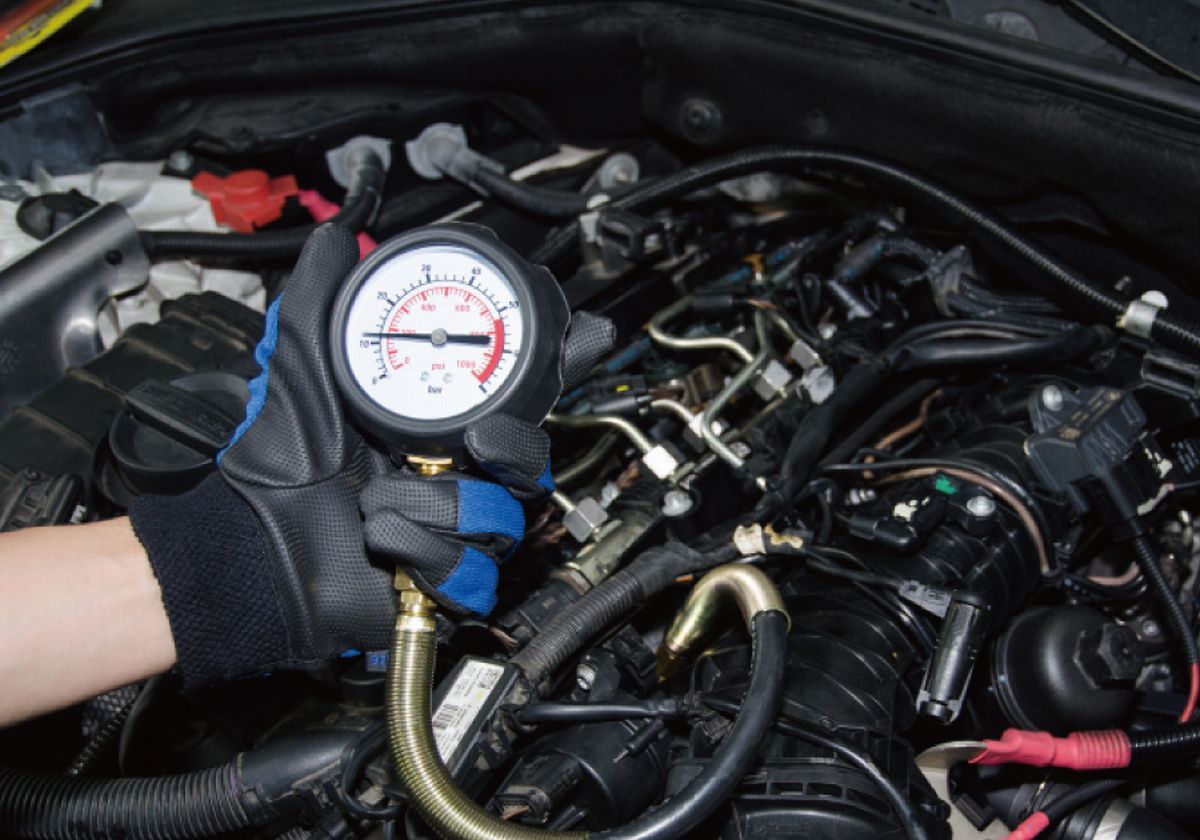
A compression test is one of the most useful diagnostic tests for determining the mechanical condition of an internal combustion engine. It measures the pressure that each cylinder can build when the engine is cranked by the starter motor.
The test can help identify problems involving piston rings, valves, the cylinder head, head gasket, and cylinder sealing. It is especially useful when an engine has symptoms such as difficult starting, low power, rough idle, misfires, excessive oil consumption, or uneven engine operation.
A compression test does not directly identify every possible engine fault, but it provides important information about the condition of the cylinders.
What Does Engine Compression Mean?
During the compression stroke, the piston moves upward while the intake and exhaust valves are closed. The air-fuel mixture, or air in a diesel engine, is compressed inside the cylinder.
For the engine to operate correctly, the cylinder must be able to retain most of this compressed gas.
If compression is too low, combustion efficiency can decrease significantly. Depending on the severity of the problem, the engine may experience:
-
Difficult starting
-
Rough idle
-
Misfires
-
Reduced engine power
-
Increased fuel consumption
-
Excessive oil consumption
-
Poor acceleration
-
Engine vibration
-
Check engine light activation
Compression is therefore an important indicator of the mechanical sealing condition of an engine.
What Does a Compression Test Measure?
A compression test measures the pressure produced inside each cylinder while the engine is being cranked.
The measurement is normally expressed in:
-
PSI
-
bar
-
kPa
The exact compression pressure considered normal depends on the engine design, compression ratio, operating condition, and manufacturer specifications.
For this reason, there is no single compression value that can be considered normal for every gasoline or diesel engine.
More important than a universal number is whether the measured values are within the manufacturer's specification and whether the cylinders are reasonably close to one another.
What Equipment Is Needed?
A basic compression test requires a compression gauge designed for the type of engine being tested.
Typical equipment includes:
-
Compression tester
-
Correct spark plug adapter for gasoline engines
-
Appropriate glow plug or injector adapter for some diesel engines
-
Spark plug socket
-
Ratchet and extensions
-
Battery charger if necessary
-
Manufacturer service information
A good-quality compression tester should have a check valve that retains the maximum pressure reached during cranking.
How Is a Compression Test Performed?
The exact procedure varies between engines, but the general process is similar.
1. Warm up the engine
If the manufacturer's procedure permits it, the engine should normally be brought to operating temperature before testing.
A warm engine can produce different results from a completely cold engine because the piston rings, cylinder walls, valves, and other components have different clearances when cold.
However, some manufacturers specify a cold-engine test. The manufacturer's procedure should always take priority.
2. Disable the fuel and ignition system
The engine must not start during the test.
The appropriate method depends on the vehicle. Fuel injection, ignition, or engine-management functions may need to be disabled.
On modern vehicles, simply removing a fuse without understanding the system can create additional diagnostic problems. The manufacturer's service procedure is preferable.
3. Remove the spark plugs
For a gasoline engine, all spark plugs are normally removed.
Removing all plugs allows the starter motor to crank the engine more consistently and prevents the remaining cylinders from affecting the test.
Before removing the plugs, it is a good idea to clean the area around them so dirt does not fall into the cylinders.

4. Install the compression gauge
The compression tester is screwed into the spark plug hole of the cylinder being tested.
The adapter must be installed securely, but it should not be overtightened.
5. Open the throttle as required
Many gasoline engines should be tested with the throttle fully open so that sufficient air can enter the engine during cranking.
If the throttle remains closed, the engine may not receive enough air and the compression readings can be artificially low.
However, modern electronic throttle systems can behave differently, so the manufacturer's test procedure should be followed.
6. Crank the engine
The starter motor is used to crank the engine for a specified number of compression strokes or until the gauge stops increasing.
The gauge records the maximum pressure reached.
The same cranking procedure should be used for every cylinder.
7. Record the reading
The pressure from each cylinder should be recorded before moving the compression tester to the next cylinder.
For example, the results might show:
-
Cylinder 1: 185 PSI
-
Cylinder 2: 182 PSI
-
Cylinder 3: 184 PSI
-
Cylinder 4: 120 PSI
In this example, cylinder 4 would require further investigation because its compression is significantly lower than the others.
Why Is the Difference Between Cylinders Important?
One of the most important parts of compression testing is comparing the cylinders with each other.
An engine can sometimes operate even when all cylinders do not produce exactly the same pressure. Small differences are generally less concerning than one cylinder being dramatically lower than the others.
For example, readings of:
-
180 PSI
-
177 PSI
-
182 PSI
-
179 PSI
show a relatively consistent engine.
On the other hand:
-
180 PSI
-
178 PSI
-
181 PSI
-
125 PSI
indicate a significant imbalance that deserves further diagnosis.
The allowable difference depends on the engine manufacturer. Some manufacturers specify a maximum percentage difference between cylinders rather than a single minimum pressure.
What Causes Low Compression?
Low compression can have several mechanical causes.
Worn piston rings
Piston rings seal the combustion gases between the piston and cylinder wall. When the rings are worn, damaged, stuck, or unable to seal properly, combustion pressure can escape into the crankcase.
This can result in:
-
Low compression
-
Oil consumption
-
Blue exhaust smoke
-
Increased crankcase pressure
-
Blow-by
Worn or damaged cylinder walls
Excessive cylinder wear can prevent the piston rings from maintaining a proper seal.
Severe cylinder wear can occur after high mileage, poor lubrication, overheating, or other mechanical problems.
Burned exhaust valve
A burned valve may not seal correctly when closed. Because combustion pressure escapes past the valve, the affected cylinder can show significantly reduced compression.
Bent or damaged valve
A valve that is bent, damaged, or unable to close completely can also cause compression loss.
This can occur after timing-chain or timing-belt problems, particularly when the engine is an interference design.
Incorrect valve clearance
On engines with adjustable valve clearance, excessive clearance or insufficient clearance can affect valve operation.
In some cases, insufficient clearance can prevent a valve from fully closing, resulting in compression loss.
Head gasket failure
A damaged head gasket can allow compression to escape between two cylinders, into the cooling system, or into an oil passage.
When the gasket fails between adjacent cylinders, two neighboring cylinders may show unusually low compression.
Cracked cylinder head or engine block
A crack in the cylinder head or block can also cause compression loss.
This is less common than ordinary valve or ring problems but can occur following severe overheating, freezing, detonation, or other mechanical damage.
What Does High Compression Mean?
Compression that is significantly higher than expected can also provide useful information.
Possible causes include:
-
Carbon deposits inside the combustion chamber
-
Incorrect measurement procedure
-
Incorrect gauge or adapter
-
Incorrect engine specifications
-
Certain valve-timing problems
Carbon deposits can reduce the effective combustion-chamber volume, which can increase the compression ratio locally.
However, a high reading should always be interpreted according to the specific engine.
What Is a Wet Compression Test?
A wet compression test is performed when a dry compression test produces a suspiciously low reading.
A small amount of engine oil is introduced into the affected cylinder through the spark plug hole. The compression test is then repeated.
The purpose is to temporarily improve the seal between the piston rings and cylinder wall.
If compression increases significantly after adding oil, worn or damaged piston rings or cylinder-wall problems become more likely.
If compression changes very little, the problem is more likely to involve:
-
Valves
-
Valve seats
-
Cylinder head
-
Head gasket
-
Other sealing problems
The wet test is therefore useful for distinguishing between different types of mechanical faults.
The amount of oil used should be controlled carefully. Adding excessive oil can produce misleading results.
Dry Compression Test vs. Wet Compression Test
A dry compression test measures the cylinder without adding oil.
A wet compression test repeats the measurement after adding a small amount of oil to the cylinder.
The dry test is normally performed first. The wet test is a follow-up diagnostic step when the results indicate a possible sealing problem.
The comparison between the two tests can provide more information than either measurement alone.
What Does a Compression Test Tell You About Piston Rings?
If one or more cylinders have low compression and the readings increase substantially during a wet test, piston-ring or cylinder-wall problems become more likely.
However, compression testing alone cannot prove that the piston rings are worn.
A proper diagnosis may require additional tests such as:
-
Leak-down testing
-
Crankcase pressure measurement
-
Oil-consumption analysis
-
Borescope inspection
-
Compression comparison between cylinders
This is important because replacing an engine or rebuilding the bottom end based only on one compression reading can lead to an unnecessary repair.
What Does a Compression Test Tell You About Valves?
A valve that cannot seal properly allows compressed gas to escape from the combustion chamber.
A significantly low compression reading that does not improve during a wet test can therefore point toward a valve-related problem.
Possible causes include:
-
Burned valve
-
Bent valve
-
Damaged valve seat
-
Valve-seat recession
-
Incorrect valve clearance
-
Valve timing problem
A leak-down test is particularly useful when a valve problem is suspected because it can help identify where the compressed air is escaping.
Can a Compression Test Detect a Bad Head Gasket?
It can provide evidence of a possible head-gasket problem, but it cannot always confirm one.
For example, if two adjacent cylinders have unusually low compression, a head-gasket failure between those cylinders becomes a possibility.
Other signs can include:
-
Coolant loss
-
Combustion gases in the cooling system
-
Overheating
-
White exhaust smoke
-
Cooling-system pressure abnormalities
-
Contaminated engine oil
A combustion-gas test, cooling-system pressure test, leak-down test, and inspection of the engine may be needed for confirmation.
What Is a Leak-Down Test?
A leak-down test is different from a compression test.
A compression test asks:
How much pressure can the cylinder produce while the engine is cranking?
A leak-down test asks:
How well does the cylinder retain compressed air when it is held at a specific position?
During a leak-down test, compressed air is introduced into the cylinder while the piston is positioned appropriately.
The technician listens for escaping air.
Air escaping from the:
-
Intake system can indicate an intake-valve sealing problem.
-
Exhaust system can indicate an exhaust-valve problem.
-
Crankcase can indicate piston-ring or cylinder-wall leakage.
-
Cooling system can indicate a head-gasket or cylinder-head/block problem.
For this reason, a leak-down test can often provide more specific information about the source of compression loss.
Compression Test on a Diesel Engine
Diesel engines require special consideration because their compression ratios are much higher than those of typical gasoline engines.
The testing equipment must be rated for the higher pressures.
Depending on the engine design, the compression tester may be connected through a glow plug hole or injector opening.
The exact procedure is manufacturer-specific because modern diesel engines can have complicated fuel systems and electronic controls.
Diesel compression problems can be related to:
-
Piston rings
-
Cylinder wear
-
Valves
-
Head gasket
-
Valve timing
-
Cylinder-head damage
Low compression in a diesel engine can cause particularly difficult starting because diesel combustion depends heavily on sufficient compression temperature.
What Happens If One Cylinder Has Low Compression?
The symptoms depend on how low the compression is and why it is low.
A slightly lower cylinder may produce relatively subtle symptoms.
A severely low cylinder can cause:
-
Rough idle
-
Strong engine vibration
-
Misfire
-
Poor acceleration
-
Reduced power
-
Difficult starting
-
Increased emissions
-
Check engine light
-
Increased fuel consumption
If compression is extremely low, the engine may not run correctly at all.
Can Low Compression Cause a Check Engine Light?
Yes.
Low compression can cause an engine misfire, and modern engine-control systems can detect misfire through crankshaft-speed variations and other inputs.
Diagnostic trouble codes such as cylinder-specific misfire codes may therefore appear.
However, a misfire code does not automatically mean that the engine has a compression problem.
Ignition coils, spark plugs, fuel injectors, vacuum leaks, fuel pressure, sensors, and wiring can also cause misfires.
A compression test helps determine whether the problem is mechanical.
Compression Test and Engine Starting Problems
A compression test can be particularly useful when an engine cranks normally but takes a long time to start.
If compression is too low, the engine may not generate sufficient combustion pressure and temperature to start reliably.
If all cylinders show healthy and consistent compression, the technician can concentrate more heavily on other possibilities such as:
-
Fuel delivery
-
Ignition
-
Engine timing
-
Crankshaft position signal
-
Camshaft position signal
-
Air supply
-
Engine-management problems
This can significantly narrow the diagnostic process.
What If All Cylinders Have Low Compression?
If every cylinder shows low compression, the problem may not necessarily be worn piston rings in every cylinder.
Possible causes include:
-
Incorrect test procedure
-
Throttle not sufficiently open where applicable
-
Weak battery
-
Slow starter motor
-
Incorrect gauge or adapter
-
Incorrect valve timing
-
Timing-belt or timing-chain problem
-
Engine-wide mechanical wear
-
Incorrect test temperature
A weak battery is particularly important because the starter must crank the engine at a sufficient and consistent speed.
If the engine turns too slowly during the test, compression readings can be lower than they should be.
Why Battery Condition Matters
The starter motor needs to rotate the engine at a reasonable speed during a compression test.
A weak battery can reduce cranking speed and produce artificially low readings.
Therefore, before diagnosing an engine based on compression numbers, the battery and starter system should be in good condition.
The same cranking conditions should also be maintained for every cylinder.
Can Compression Testing Damage the Engine?
When performed correctly with suitable equipment, a compression test is generally a safe diagnostic procedure.
However, incorrect procedures can create problems.
The technician should:
-
Use the correct adapter.
-
Avoid overtightening the tester.
-
Keep dirt away from the spark plug holes.
-
Follow the manufacturer's instructions.
-
Properly disable fuel and ignition.
-
Avoid unnecessary cranking.
-
Keep the battery adequately charged.
Special care is required on modern engines because electronic throttle systems, direct injection systems, ignition systems, and other components may require specific procedures.
How Often Should a Compression Test Be Done?
A compression test is not normally a routine maintenance procedure.
There is generally no need to perform one at every oil change or regular service.
It becomes useful when there is a symptom or diagnostic reason, such as:
-
Persistent misfire
-
Low engine power
-
Difficult starting
-
Excessive oil consumption
-
Unusual exhaust smoke
-
Suspected valve damage
-
Suspected head-gasket failure
-
Suspected piston-ring wear
-
Timing-system failure
-
Engine rebuild evaluation
-
Used-car engine inspection
A compression test can also be useful before purchasing a high-mileage or performance vehicle when the mechanical condition of the engine is uncertain.
Compression Testing When Buying a Used Car
A compression test can provide valuable information when evaluating a used vehicle, especially when there are signs of engine wear.
However, the test should not be considered a complete engine inspection.
A healthy evaluation may also include:
-
Engine oil inspection
-
Coolant inspection
-
Diagnostic scan
-
Cold-start observation
-
Exhaust-smoke inspection
-
Oil-pressure measurement
-
Cooling-system inspection
-
Leak-down test when necessary
-
Road test
An engine can have acceptable compression and still have other serious problems.
Compression Test Limitations
Compression testing is useful, but it has limitations.
A normal compression reading does not guarantee that:
-
The piston rings are perfect.
-
The valves are perfect.
-
The head gasket is perfect.
-
The engine has no oil-consumption problem.
-
The valve timing is perfect.
-
The engine has no intermittent mechanical problem.
Likewise, a low compression reading does not always identify the exact failed component.
For difficult cases, compression testing should be combined with other diagnostic methods.
What Is a Good Compression Test Result?
A good result is not simply a specific PSI number.
The correct interpretation depends on:
-
Engine manufacturer
-
Engine type
-
Compression ratio
-
Engine temperature
-
Cranking speed
-
Throttle position
-
Testing equipment
-
Manufacturer's specified limits
The most important points are that the readings should be within the manufacturer's specified range and reasonably consistent between cylinders.
Final Thoughts
A compression test is a fundamental engine diagnostic procedure that provides valuable information about cylinder sealing and mechanical condition.
Low compression can be caused by piston rings, cylinder wear, valves, valve seats, head-gasket problems, incorrect valve timing, or cylinder-head damage. A wet compression test can help distinguish ring-related problems from valve or head-related problems, while a leak-down test can provide even more specific information about where compression is escaping.
The most important mistake to avoid is interpreting one compression number in isolation. The results should be compared between cylinders and against the manufacturer's specifications, while battery condition, engine temperature, cranking speed, and testing procedure are also taken into account.
When performed correctly, a compression test can save considerable diagnostic time and help determine whether an engine problem is related to ignition and fuel systems or to the engine's internal mechanical condition.