TR
TR EN
EN

What Is Limp Mode? Why Does a Vehicle Go Into Limp Mode?
Limp mode is a protective operating strategy used by modern vehicles when the engine, transmission, or another important control system detects a fault that could potentially cause damage or create unsafe operating conditions.
When limp mode is activated, the vehicle deliberately limits its performance. The engine may refuse to rev beyond a certain RPM, throttle response may become very weak, the transmission may remain in a single gear, or turbocharger boost may be reduced.
The purpose is not to make the vehicle operate normally. The purpose is to allow the driver to reach a safe location or service facility while reducing the possibility of further damage.
Limp mode is also known by terms such as fail-safe mode, reduced power mode, or emergency running mode, depending on the manufacturer.
What Happens When Limp Mode Is Activated?
The exact behavior varies from one vehicle to another because manufacturers use different protection strategies.
Common symptoms include:
-
Severe loss of engine power
-
Limited throttle response
-
Engine RPM restricted to a specific range
-
Reduced turbocharger boost
-
Transmission stuck in one gear
-
Automatic transmission shifting becoming unavailable
-
Poor acceleration
-
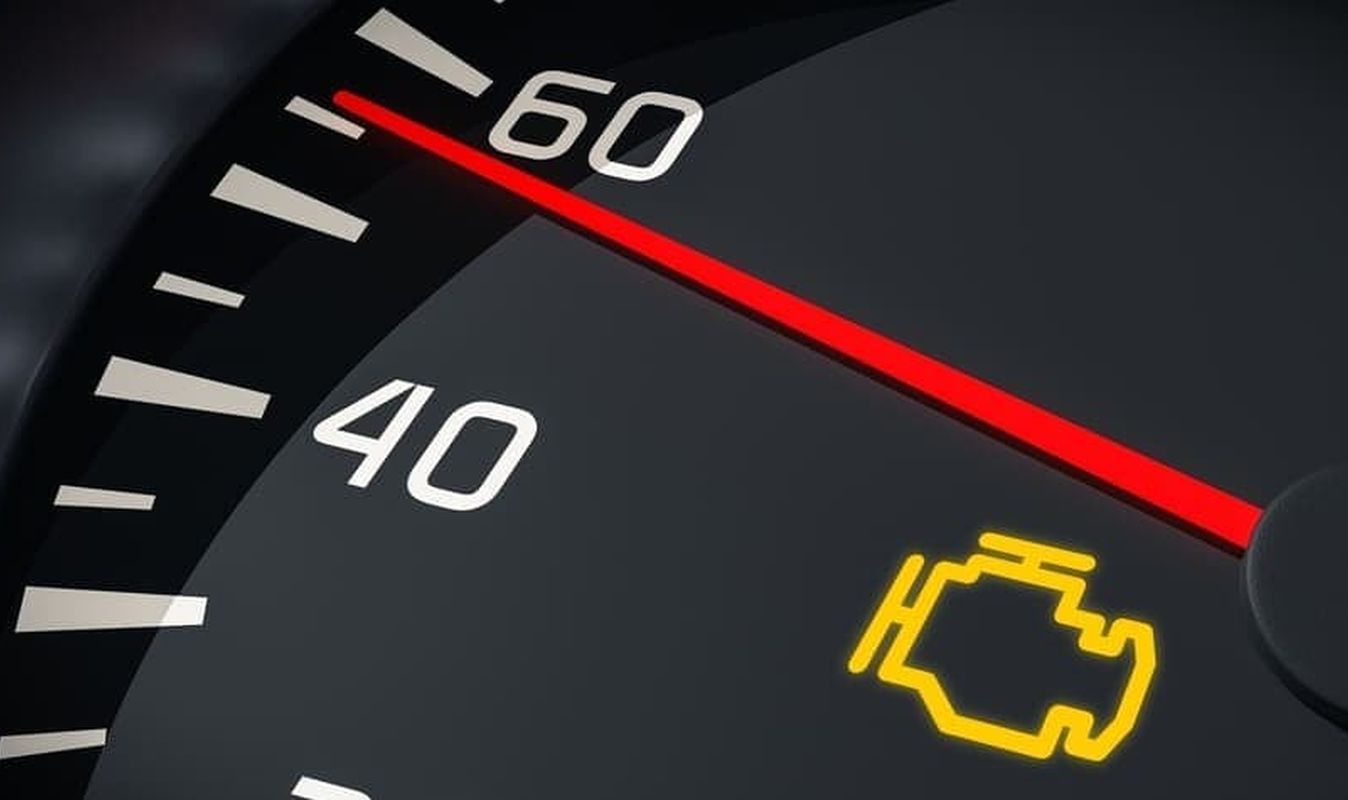
Check engine light
-
Transmission warning light
-
Electronic throttle warning
-
ABS, ESP, or other warning messages in some cases
-
Cruise control becoming unavailable
A vehicle may still move normally at low speeds but feel extremely weak when the driver tries to accelerate.
Why Does Limp Mode Happen?
Limp mode is not a specific fault. It is a response to another fault.
The vehicle's control module detects information that falls outside an expected operating range and decides that limiting performance is safer than continuing normal operation.
Depending on the vehicle, the cause can involve:
-
Engine management
-
Electronic throttle control
-
Turbocharger system
-
Fuel system
-
Transmission
-
Cooling system
-
Sensors
-
Electrical supply
-
Wiring
-
Communication between control modules
-
Emissions systems
This is why simply resetting the vehicle may make limp mode disappear temporarily without actually repairing the problem.
Electronic Throttle Problems
Electronic throttle control is one of the systems that can cause reduced-power or limp-mode operation.
Modern vehicles often use an accelerator pedal position sensor rather than a mechanical cable. The pedal sends an electrical signal to the engine control unit, which then commands the electronic throttle body.
If the ECU detects an inconsistency between the accelerator pedal signal and throttle position, it may restrict throttle operation.
Possible causes include:
-
Faulty throttle position sensor
-
Throttle body motor problem
-
Accelerator pedal position sensor problem
-
Damaged wiring
-
Loose or corroded connectors
-
Power supply problems
-
ECU-related faults
-
Throttle adaptation problems
A throttle-related limp mode does not automatically mean that the throttle body needs to be replaced.
Accelerator Pedal Sensor Problems
The accelerator pedal itself can also contribute to limp mode.
Many electronic accelerator pedals contain two separate position signals. The ECU compares these signals to make sure they correspond correctly.
If the two signals disagree beyond an allowed range, the ECU may interpret the condition as unsafe and reduce or disable throttle response.
This can produce symptoms such as:
-
Accelerator pedal not responding normally
-
Sudden loss of power
-
Limited RPM
-
Reduced throttle opening
-
Limp mode
-
Throttle-related diagnostic trouble codes
The pedal sensor, wiring, connector, reference voltage, and ECU input should be tested before replacing expensive components.
Turbocharger Problems Can Cause Limp Mode
Turbocharged engines are particularly sensitive to boost-control problems.
If the ECU detects that actual boost pressure is significantly different from the requested pressure, it may activate a protection strategy.
Possible causes include:
-
Boost leaks
-
Split intercooler hoses
-
Vacuum leaks
-
Faulty boost control solenoid
-
Wastegate problems
-
Variable geometry turbocharger problems
-
Turbocharger actuator faults
-
Faulty MAP sensor
-
Faulty boost pressure sensor
-
Carbon buildup in the turbo mechanism
-
Turbocharger mechanical damage
A vehicle may feel completely normal under light acceleration but suddenly lose power when boost pressure becomes high.
Fuel System Problems
Incorrect fuel pressure or fuel delivery can also cause reduced engine performance.
Depending on the engine, possible causes include:
-
Weak fuel pump
-
Clogged fuel filter
-
Fuel pressure regulator problems
-
Faulty fuel pressure sensor
-
Injector problems
-
High-pressure fuel pump problems
-
Wiring faults
-
Fuel supply restrictions
If the ECU detects that fuel pressure is not following the expected value, it may reduce engine power to protect the engine or prevent unstable combustion.
Transmission Problems and Limp Mode
Automatic transmissions frequently have their own fail-safe strategies.
When the transmission control system detects a serious fault, it may limit shifting.
A transmission in limp mode may:
-
Stay in one gear
-
Start in a higher gear
-
Refuse to shift normally
-
Produce harsh shifts
-
Delay engagement
-
Disable manual shift functions
-
Illuminate a transmission warning light
Possible causes include:
-
Low or incorrect transmission fluid
-
Overheated transmission fluid
-
Faulty shift solenoid
-
Pressure-control problem
-
Input or output speed sensor fault
-
Transmission temperature sensor problem
-
Valve body problem
-
TCM fault
-
Wiring or connector problems
-
Internal mechanical damage
A transmission that is stuck in one gear should not automatically be diagnosed as a failed transmission. Electronic and hydraulic causes need to be investigated first.
Engine Overheating Can Trigger Protection Mode
Excessive engine temperature is another reason a vehicle may reduce power.
If coolant temperature becomes dangerously high, the ECU may take protective action.
Possible causes include:
-
Low coolant
-
Coolant leak
-
Faulty thermostat
-
Cooling fan problem
-
Water pump problem
-
Radiator restriction
-
Coolant temperature sensor fault
Some vehicles can reduce engine power before severe overheating occurs.
If the temperature gauge is high or an overheating warning appears, continuing to drive can cause serious engine damage.
Sensor Failures Can Cause Limp Mode
Modern engines depend on many sensors to determine how the engine should operate.
A sensor that provides an implausible signal can cause the ECU to activate a protection strategy.
Common examples include:
-
Mass airflow sensor
-
MAP sensor
-
Throttle position sensor
-
Accelerator pedal position sensor
-
Crankshaft position sensor
-
Camshaft position sensor
-
Coolant temperature sensor
-
Fuel pressure sensor
-
Oxygen sensor
-
Exhaust pressure sensor
-
Turbocharger boost sensor
However, a sensor-related diagnostic code does not always mean the sensor itself has failed.
A damaged wire, poor connector, reference-voltage problem, ground fault, or another mechanical problem can cause the sensor to report an abnormal value.
Low Battery Voltage Can Cause Strange Limp-Mode Symptoms
Electrical supply problems are sometimes overlooked.
Modern vehicles contain numerous control modules that depend on stable voltage. A weak battery, failing alternator, poor ground connection, or loose battery terminal can create multiple seemingly unrelated fault codes.
Possible symptoms include:
-
Multiple warning lights
-
Intermittent limp mode
-
Transmission warnings
-
Throttle warnings
-
Communication faults
-
Difficulty starting
-
Faults that disappear after restarting
For this reason, battery and charging-system voltage should be checked when the fault pattern appears inconsistent.
Wiring Problems Can Be the Real Cause
Replacing a sensor or actuator without checking its wiring can result in unnecessary repairs.
Wiring can be damaged by:
-
Heat
-
Vibration
-
Water
-
Oil contamination
-
Corrosion
-
Rodent damage
-
Previous repair work
-
Chafing against engine components
-
Poor connector contact
A wire can also fail internally while appearing intact from the outside.
When a fault occurs only under certain conditions, such as high RPM, high engine temperature, heavy acceleration, or engine movement, wiring should receive particular attention.
Can Limp Mode Disappear After Restarting?
Yes.
Some vehicles temporarily return to normal operation after the ignition is switched off and the engine is restarted.
This happens because some protection strategies are temporary until the fault is detected again.
For example, the ECU may allow normal operation after a restart if the monitored value appears normal. If the same abnormal condition occurs again, limp mode may return.
A successful restart therefore does not prove that the problem has been fixed.
The diagnostic trouble codes and freeze-frame data may still contain important information about what happened.
Can Clearing the Fault Code Fix Limp Mode?
Clearing the diagnostic trouble code does not repair the underlying fault.
It may temporarily remove the warning and allow the vehicle to operate normally until the ECU detects the problem again.
Repeatedly clearing codes can also make diagnosis more difficult because valuable information may be erased.
A better approach is to record the stored and pending codes, freeze-frame information, and relevant live-data values before clearing anything.
How Is Limp Mode Diagnosed?
The most important part of diagnosing limp mode is identifying what caused the control module to activate the protection strategy.
A proper diagnosis generally includes:
1. Read all relevant fault codes
The engine ECU should be scanned, but depending on the symptoms, the transmission, ABS/ESP, and other control modules may also need to be checked.
2. Check freeze-frame data
Freeze-frame information can show the conditions under which the fault occurred, such as:
-
Engine RPM
-
Vehicle speed
-
Engine temperature
-
Throttle position
-
Fuel pressure
-
Boost pressure
-
Load
3. Examine live data
Live data can be particularly useful when the fault is intermittent.
The technician can compare requested and actual values, such as requested throttle position versus actual throttle position or requested boost versus actual boost.
4. Inspect wiring and connectors
Electrical testing should be performed when the fault involves a sensor or actuator.
5. Test the mechanical system
A sensor may report a perfectly accurate value even though the mechanical component it monitors has a problem.
For example, a boost-pressure sensor can correctly report low boost because the turbocharger system actually has a mechanical fault.
Why Should You Not Replace Parts Immediately?
Limp mode is a symptom of a protection strategy, not a diagnosis.
For example, a throttle-related fault may be caused by:
-
Throttle body
-
Accelerator pedal
-
Wiring
-
Connector
-
Power supply
-
Ground
-
ECU
-
Mechanical interference
Replacing the throttle body without testing these possibilities can result in an expensive but unsuccessful repair.
The same principle applies to turbochargers, transmission solenoids, sensors, and other components.
The diagnostic code should be treated as a starting point for testing rather than a direct instruction to replace a component.
Is It Safe to Drive in Limp Mode?
It depends on the cause and severity of the fault.
Some vehicles enter a mild reduced-power strategy that still allows the driver to reach a repair facility safely.
Other situations are much more serious.
Stop driving and seek assistance if you notice:
-
Severe engine overheating
-
Very low oil pressure
-
Major loss of braking performance
-
Severe transmission behavior
-
Heavy smoke
-
Strong fuel smell
-
Severe engine knocking
-
Flashing check engine light
-
The vehicle cannot maintain safe traffic speed
Even when the vehicle continues to drive, limp mode should not be considered normal operating behavior.
Limp Mode and Check Engine Light
Limp mode frequently occurs together with the check engine light, but not every vehicle behaves in exactly the same way.
The check engine light tells you that the engine or emissions control system has detected a fault. Limp mode is the vehicle's protective response to a fault that the control system considers significant enough to justify limiting operation.
Therefore, the presence of limp mode provides useful information, but the diagnostic codes are still required to identify the actual cause.
Does Limp Mode Mean the Engine or Transmission Is Finished?
No.
Limp mode does not automatically mean that the engine or transmission has suffered major mechanical damage.
A relatively simple problem such as a faulty sensor, damaged connector, boost leak, low voltage condition, or wiring fault can trigger a protection strategy.
On the other hand, limp mode can also be caused by serious mechanical failures.
The only reliable way to distinguish between these possibilities is proper diagnosis.
Final Thoughts
Limp mode is a protective strategy designed to limit vehicle performance when the control system detects a potentially serious fault.
The vehicle may restrict engine RPM, reduce throttle response, limit turbo boost, or prevent normal transmission shifting. The exact behavior depends on the manufacturer and the system involved.
The important point is that limp mode itself is not the fault. It is the consequence of another problem.
A diagnostic trouble code should therefore be used to identify the system that needs investigation, followed by live-data analysis, electrical testing, wiring inspection, and mechanical checks where necessary.
Simply clearing the code or replacing the component named in a fault code is not always the correct solution. Finding the condition that caused the vehicle to enter its protective mode is the key to a reliable repair.