TR
TR EN
EN

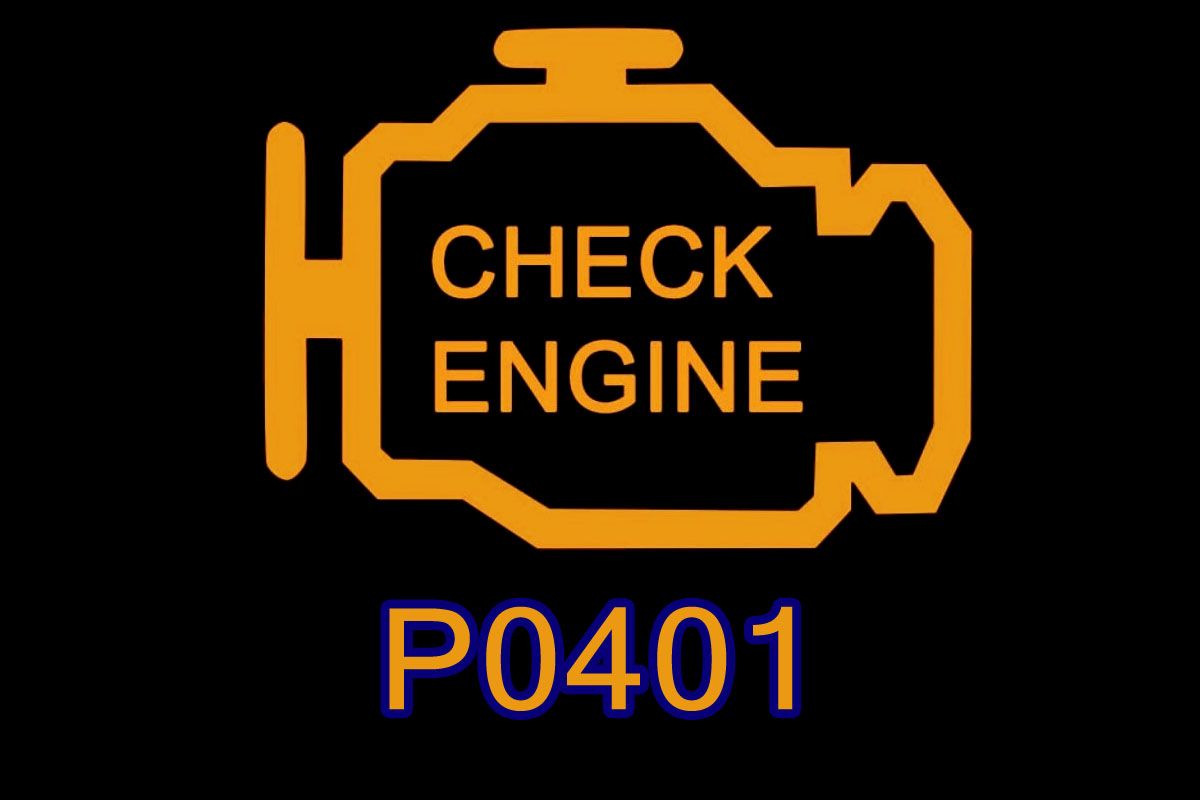
P0401 Exhaust Gas Recirculation (EGR) Flow Insufficient Detected
P0401 is an OBD-II fault code indicating that the engine control module (ECM/PCM) has determined that the EGR system is not delivering as much exhaust-gas recirculation as expected under the conditions in which the system was tested.
This is fundamentally a flow or system-performance code, rather than a direct electrical circuit code.
That distinction matters. P0401 does not automatically mean that the EGR valve itself is defective. The valve may be working correctly while the actual EGR flow is being restricted somewhere else in the system.
The ECM normally determines EGR flow indirectly by observing changes in engine parameters such as MAF, MAP, intake pressure, exhaust pressure, or other manufacturer-specific feedback. If the expected response does not occur, P0401 can be stored.
What the EGR System Is Supposed to Do
The Exhaust Gas Recirculation system routes a controlled quantity of exhaust gas back into the intake.
Because exhaust gas contains less oxygen than fresh air, introducing it into the combustion process reduces combustion temperature and helps reduce NOx emissions.
The amount of EGR required changes continuously according to engine conditions.
The ECM may command more or less EGR depending on:
-
Engine speed
-
Engine load
-
Coolant temperature
-
Throttle position
-
Intake airflow
-
Boost pressure
-
Exhaust conditions
-
Emissions strategy
The system therefore has to deliver a specific amount of exhaust gas at the appropriate time.
P0401 occurs when the ECM believes that the actual EGR effect is insufficient.
What Does “Insufficient Flow” Really Mean?
It does not necessarily mean that the ECM has directly measured the volume of exhaust flowing through the EGR valve.
On many vehicles, EGR flow is inferred.
For example, when the ECM opens the EGR valve, it expects to see a corresponding change in MAF, MAP, intake pressure, or another monitored parameter.
If the valve is commanded open but the expected engine response does not occur, the ECM can conclude that EGR flow is insufficient.
Therefore, P0401 can result from a problem before, at, or after the EGR valve, or even from an inaccurate sensor signal.
The EGR Valve May Be Working but Flow Can Still Be Insufficient
This is one of the most important diagnostic points with P0401.
Imagine an EGR valve that opens perfectly.
If the EGR passage between the exhaust side and intake has become heavily restricted with carbon, the valve can open but almost no exhaust gas reaches the intake.
The ECM sees insufficient EGR effect and sets P0401.
The same thing can happen with:
-
Blocked EGR passages
-
Restricted EGR cooler
-
Carbon buildup in the intake manifold
-
Blocked EGR pipe
-
Faulty EGR control solenoid
-
Vacuum supply problem
-
Incorrect EGR position
-
MAF sensor reading incorrectly
-
MAP sensor reading incorrectly
-
Exhaust pressure problem
So “EGR valve opens” does not automatically mean “EGR flow is sufficient.”
Common Causes of P0401
Carbon-restricted EGR passages
This is one of the most common causes, particularly on engines with significant EGR operation.
Carbon and soot can accumulate in:
-
EGR passages
-
EGR pipes
-
Intake manifold
-
EGR cooler
-
EGR valve openings
Eventually, the valve may open but the available passage may be too restricted to provide the required flow.
Sticking or partially opening EGR valve
An EGR valve can become contaminated and fail to reach the position commanded by the ECM.
It may not be completely stuck.
A valve that opens only partially can still cause insufficient flow.
EGR control solenoid or vacuum problem
On vacuum-operated systems, the EGR valve may depend on a vacuum-control solenoid.
Possible problems include:
-
Weak vacuum supply
-
Cracked vacuum hose
-
Blocked vacuum hose
-
Faulty control solenoid
-
Vacuum leak
-
Incorrect solenoid operation
The valve itself may be perfectly functional but never receive the vacuum required to open.
EGR cooler restriction
Some diesel engines use an EGR cooler between the exhaust and intake sides.
Carbon deposits can restrict the cooler or its passages.
In such a situation, replacing the EGR valve alone will not solve the underlying flow problem.
Restricted intake-side EGR passage
The passage where EGR gas enters the intake can become heavily contaminated.
This is particularly important because the EGR valve may appear to operate normally during an external inspection while the actual intake passage is nearly blocked.
MAF sensor problem
The ECM may use MAF information to determine whether EGR flow is occurring.
If the MAF sensor is contaminated or inaccurate, the ECM can calculate an incorrect EGR response.
This means a P0401 does not always originate from the EGR hardware itself.
MAP or intake-pressure sensor problem
Some systems use intake pressure changes to evaluate EGR operation.
An inaccurate MAP sensor can therefore produce an apparent EGR flow problem.
Exhaust pressure problem
EGR flow depends on the pressure difference between the exhaust and intake sides.
If that pressure relationship is abnormal, the system may not produce the expected EGR flow even though the valve is functioning.
Incorrect EGR valve or calibration
A previously installed incorrect component, modified software, or an improperly calibrated system can also cause EGR flow calculations to fail.
This is less common but important when a problem appears immediately after a repair.
Symptoms of P0401
Some vehicles can store P0401 with almost no noticeable drivability symptoms.
Possible symptoms include:
-
Check Engine light
-
Hesitation
-
Reduced acceleration
-
Rough running
-
Increased fuel consumption
-
Increased combustion temperature
-
Increased NOx emissions
-
Poor low-speed drivability
-
Limp mode on some vehicles
-
EGR-related warning messages
On diesel engines, additional symptoms can appear because EGR operation is closely integrated with turbocharging, intake-air management and emissions control.
Why a Vehicle Can Drive Normally With P0401
The EGR system is not required at every moment of engine operation.
At idle, heavy acceleration, cold start or certain high-load conditions, the ECM may command little or no EGR.
As a result, a vehicle can have an EGR flow problem while still feeling completely normal during ordinary driving.
The ECM may also compensate for the missing EGR flow until a specific diagnostic monitor runs.
This is why P0401 can sometimes appear without obvious drivability problems.
How to Diagnose P0401 Correctly
A proper diagnosis should determine where the expected EGR flow is being lost rather than automatically replacing the EGR valve.
1. Scan for all fault codes
Start with a complete scan of the vehicle.
Pay particular attention to codes involving:
-
EGR position
-
EGR control circuits
-
MAF
-
MAP
-
Intake pressure
-
Exhaust pressure
-
Boost pressure
-
Throttle position
-
Airflow
-
EGR temperature or differential pressure
If another sensor or circuit is already reporting an abnormal reading, it may be the actual reason the ECM believes EGR flow is insufficient.
2. Examine the freeze-frame data
Find out under what conditions P0401 was detected.
Look at:
-
Engine RPM
-
Engine load
-
Coolant temperature
-
MAF
-
MAP
-
EGR command
-
EGR position
-
Throttle position
-
Boost pressure
-
Vehicle speed
This can reveal whether the fault occurs during a particular operating condition.
3. Check the EGR commanded and actual position
If the vehicle provides EGR position data, compare:
Commanded position vs. actual position
If the ECM commands the valve to open and the actual position does not follow, investigate the actuator, wiring or mechanical valve.
If the actual position follows the command but P0401 remains, the problem may be downstream of the valve or related to the sensors used to calculate flow.
This is a very useful distinction.
4. Check MAF response during an EGR command
On systems that use MAF to evaluate EGR flow, opening the EGR valve should produce a predictable change in measured fresh-air flow.
If the EGR valve is commanded open but the MAF response is not what the ECM expects, investigate:
-
EGR passages
-
EGR valve
-
MAF sensor
-
Intake leaks
-
Air-control throttle
-
Other air-management components
The exact expected MAF response must come from manufacturer data rather than a universal numerical value.
5. Inspect the EGR passages
If the valve moves correctly, inspect the actual gas path.
Look for:
-
Carbon deposits
-
Soot accumulation
-
Restricted ports
-
Blocked EGR pipes
-
Restricted intake passages
-
EGR cooler contamination
A surprisingly common situation is an EGR valve that looks clean and functional while the passage behind it is severely restricted.
6. Test the vacuum system if applicable
Older and some modern engines use vacuum to operate EGR components.
Check:
-
Vacuum supply
-
Vacuum hoses
-
Control solenoid
-
Vacuum response
-
Valve movement
A vacuum-operated EGR valve cannot provide sufficient flow if the control system cannot generate or deliver the required vacuum.
7. Check MAF and MAP plausibility
Before condemning the EGR system, make sure the sensors used to evaluate airflow are believable.
A sensor may not have a dedicated fault code yet still be inaccurate enough to cause an EGR performance problem.
Compare live readings against:
-
Engine-off atmospheric pressure where appropriate
-
Engine load
-
RPM
-
Throttle position
-
Boost pressure
-
Manufacturer specifications
EGR Flow Is About Pressure Difference Too
For exhaust gas to move into the intake, there must be an appropriate pressure relationship between the exhaust and intake sides.
Simply opening an EGR valve does not guarantee substantial flow.
This is particularly important on turbocharged diesel engines.
The engine may use an intake throttle or exhaust-pressure control valve to create the pressure difference needed for EGR flow.
Therefore, if the EGR valve appears to operate correctly but P0401 continues to return, the diagnosis may need to include the entire air-management and exhaust-pressure system.
Can a Dirty EGR Valve Cause P0401?
Yes.
Carbon buildup can prevent the EGR valve from opening sufficiently or can restrict the gas passage around it.
However, “dirty EGR valve” should not automatically be treated as the diagnosis.
The contamination may actually be deeper inside:
-
EGR pipe
-
Intake manifold
-
EGR cooler
-
Intake EGR port
Cleaning only the visible part of the valve may temporarily improve the situation or may accomplish nothing if the real restriction is elsewhere.
Can a MAF Sensor Cause P0401?
Yes, depending on the vehicle's EGR monitoring strategy.
If the ECM uses MAF changes to determine EGR flow, an inaccurate MAF sensor can make normal EGR operation appear insufficient.
For example, if the EGR valve opens correctly but the MAF reading does not respond as expected because the MAF is inaccurate, the ECM may interpret the situation as an EGR flow problem.
This is why replacing the EGR valve without checking MAF data can lead to unnecessary repairs.
Can a MAP Sensor Cause P0401?
Yes, on systems that use intake pressure as part of the EGR-flow calculation.
A MAP sensor that reports an incorrect pressure can cause the ECM to miscalculate the effect of EGR operation.
Again, the sensor does not necessarily have to set its own dedicated fault code.
A sensor can produce a value that is electrically plausible but physically inaccurate.
P0401 vs P0402
These two codes represent opposite EGR-flow conditions.
P0401 – EGR Flow Insufficient Detected
The ECM determines that EGR flow is lower than expected.
P0402 – EGR Flow Excessive Detected
The ECM determines that more EGR flow is occurring than expected.
P0401 can occur because the EGR valve cannot open enough or because the passages are restricted.
P0402 can occur when the EGR valve is stuck open, leaking, or otherwise allowing more exhaust gas into the intake than commanded.
P0401 vs P0403
These codes concern different aspects of the EGR system.
P0401 is primarily a flow/performance problem.
The ECM believes insufficient EGR is reaching the engine.
P0403 is primarily a control-circuit electrical problem.
The ECM detects a malfunction in the electrical circuit used to control the EGR system.
A vehicle can potentially have one without the other.
P0401 vs P0404
P0401 indicates insufficient EGR flow.
P0404 indicates an EGR control-system range/performance problem.
P0404 can involve commanded vs actual valve position or another control-performance issue.
P0401 is more specifically concerned with the resulting EGR flow or its calculated effect.
P0401 vs P0405
P0405 indicates a low electrical signal from the designated EGR Sensor A circuit.
P0401 indicates insufficient EGR flow.
This is an important distinction.
P0405 is primarily an electrical sensor-circuit problem, while P0401 is primarily a system-flow problem.
A faulty EGR position sensor can contribute to an EGR-flow diagnosis, but the two codes do not mean the same thing.
Should You Clean the EGR System?
Cleaning can be an appropriate repair if inspection confirms significant carbon restriction.
However, the entire flow path should be considered.
Depending on the engine, that can include:
-
EGR valve
-
EGR pipe
-
Intake manifold
-
EGR cooler
-
EGR passages
-
Related throttle or air-control components
Cleaning the valve while leaving a heavily restricted intake passage untouched may not solve P0401.
Also, some EGR components contain sensitive electronic position sensors and actuators. Cleaning procedures should follow the manufacturer's recommendations to avoid damaging them.
Should the EGR Valve Be Replaced?
Not automatically.
If testing shows that:
-
The valve does not reach the commanded position
-
The actuator is defective
-
The position feedback is incorrect
-
The valve is mechanically damaged
then replacement may be justified.
But if the valve operates correctly and the passages are blocked, the appropriate repair is to restore the airflow path.
If MAF or MAP data is inaccurate, repairing the sensor problem may resolve P0401 without replacing any EGR component.
Can You Drive With P0401?
If the vehicle runs normally and only the Check Engine light is present, it is often possible to continue driving for a limited period.
However, the vehicle may have:
-
Increased emissions
-
Reduced fuel economy
-
Increased NOx emissions
-
Poor drivability
-
Reduced performance
-
Additional emissions-system problems
On some diesel vehicles, EGR operation is closely connected with the DPF and other emissions systems. A persistent EGR problem can therefore contribute to additional emissions-control issues.
If the vehicle has severe power loss, excessive smoke, rough running or enters limp mode, the problem should be diagnosed promptly.
Final Diagnostic Summary
P0401 means the ECM has detected insufficient EGR flow or insufficient evidence of the expected EGR effect.
It does not automatically mean:
-
The EGR valve is defective
-
The EGR valve is dirty
-
The EGR valve is stuck closed
-
The MAF sensor is bad
-
The MAP sensor is bad
-
The EGR passages are blocked
The most effective diagnosis is to first determine whether the EGR valve actually reaches its commanded position, then determine whether the physical EGR passages can deliver the required amount of exhaust gas.
After that, verify the sensors and pressure conditions used by the ECM to calculate EGR flow.
The key diagnostic question is:
Is EGR flow genuinely insufficient, or is the ECM receiving incorrect information that makes normal EGR operation appear insufficient?
That distinction is what separates a proper P0401 diagnosis from simply replacing the EGR valve and hoping the code disappears.