TR
TR EN
EN

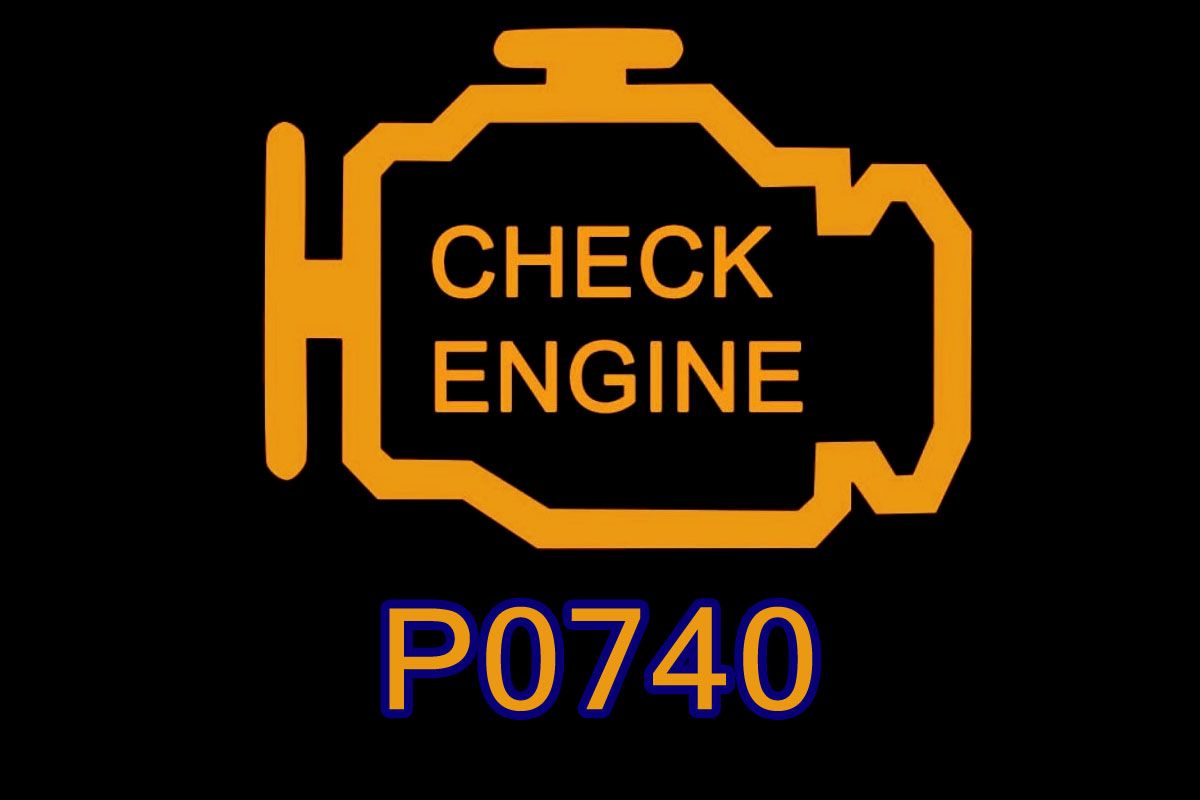
P0740 Torque Converter Clutch Circuit Malfunction
The P0740 trouble code is an OBD-II diagnostic trouble code related to the Torque Converter Clutch (TCC) system in an automatic transmission.
P0740 – Torque Converter Clutch Circuit Malfunction
This code means that the Transmission Control Module (TCM) or Powertrain Control Module (PCM) has detected a problem with the circuit or operation of the Torque Converter Clutch system.
The TCC is responsible for locking the torque converter under certain driving conditions. When it engages correctly, it reduces torque-converter slip and creates a more direct connection between the engine and transmission.
P0740 is a relatively broad TCC fault code. Depending on the vehicle, the underlying problem can be electrical, hydraulic or mechanical.
Possible causes include a faulty TCC solenoid, damaged wiring, poor connector contact, contaminated transmission fluid, a sticking valve body, incorrect hydraulic pressure, a worn torque converter clutch or a transmission control problem.
What Is the Torque Converter Clutch?
An automatic transmission normally uses a torque converter to transfer engine power to the transmission.
Because the torque converter transfers power hydraulically, some amount of slip is normal.
This is useful when:
-
Starting from a stop
-
Accelerating
-
Changing gears
-
Maneuvering at low speed
However, continuous slip at cruising speed reduces efficiency and generates heat.
To overcome this, modern automatic transmissions use a Torque Converter Clutch, commonly called the TCC.
When the TCC engages, it mechanically connects the engine and transmission more directly.
The basic system is:
TCM/PCM → TCC Solenoid → Hydraulic Pressure → Torque Converter Clutch → Lockup
When the control module detects that this system is not functioning as expected, it may store P0740.
What Does P0740 Mean?
P0740 is a general Torque Converter Clutch circuit malfunction code.
Unlike some related codes, it does not necessarily tell you exactly what has failed.
For example:
P0741 focuses on TCC performance or a TCC that appears stuck OFF.
P0742 focuses on a TCC that appears stuck ON.
P0743 focuses specifically on an electrical problem in the TCC solenoid circuit.
P0744 indicates an intermittent TCC circuit condition.
P0740 is broader and can require additional testing to determine whether the fault is electrical, hydraulic or mechanical.
Symptoms of P0740
Possible symptoms include:
-
Check Engine Light
-
Transmission warning light
-
Higher engine RPM at cruising speed
-
Poor fuel economy
-
RPM fluctuations
-
TCC failing to engage
-
TCC engaging incorrectly
-
Transmission overheating
-
Shudder or vibration
-
Harsh transmission operation
-
Reduced performance
-
Limp mode
-
Engine stalling in certain failure conditions
Some vehicles may continue driving almost normally despite storing P0740.
What Does P0740 Feel Like While Driving?
Higher RPM during cruising
If the TCC fails to lock, the torque converter can continue slipping.
The engine may therefore operate at higher RPM than normal at steady highway speeds.
RPM fluctuation
Engine speed may move up and down while the vehicle maintains approximately the same road speed.
TCC shudder
The vehicle may develop a vibration or rumbling sensation when the TCC attempts to engage.
Poor fuel economy
A continuously slipping torque converter wastes energy.
Transmission overheating
Converter slip generates heat, particularly during prolonged driving.
Harsh engagement
An incorrectly controlled TCC can engage too aggressively.
Engine stalling
In some failure conditions, the TCC may remain applied and cause the engine to stall when the vehicle comes to a stop.
Common Causes of P0740
Faulty TCC solenoid
The solenoid may not control hydraulic pressure correctly.
Sticking TCC solenoid
Contaminated fluid or internal wear can prevent normal solenoid movement.
Damaged wiring
Open circuits, shorts or high resistance can interfere with TCC control.
Corroded connector
Poor electrical contact can cause intermittent or unreliable solenoid operation.
Low transmission-fluid level
Insufficient fluid can interfere with hydraulic operation.
Contaminated transmission fluid
Debris can affect solenoid and valve-body operation.
Incorrect transmission fluid
The wrong fluid can affect hydraulic and clutch operation.
Sticking valve-body valve
A valve controlling TCC pressure can become stuck.
Worn valve body
Internal valve-body wear can cause hydraulic leakage.
Low hydraulic pressure
Insufficient pressure can prevent proper TCC engagement.
Damaged internal transmission harness
Internal wiring can fail due to heat, vibration and transmission-fluid exposure.
Worn torque converter clutch
The clutch lining inside the torque converter can wear and lose its ability to lock properly.
Torque converter internal leakage
Hydraulic leakage can prevent proper clutch application.
Transmission pump problem
Insufficient hydraulic pressure can affect TCC operation.
TCM or PCM problem
A control-module fault can interfere with TCC commands.
Is P0740 Serious?
P0740 should be taken seriously.
The seriousness depends on the actual cause.
A simple connector problem is relatively easy to repair.
A worn torque converter or internal hydraulic problem can be considerably more expensive.
If the TCC cannot operate properly, continuous converter slip may cause excessive heat and accelerate transmission wear.
Can You Drive With P0740?
A vehicle with P0740 may still be drivable, but extended driving is not recommended until the cause is identified.
A short trip to a repair facility may be reasonable if:
-
The transmission shifts normally
-
There is no severe slipping
-
There is no overheating
-
There is no severe shudder
-
The engine does not stall
Driving should be avoided if you experience:
-
Severe transmission slipping
-
Engine stalling
-
Strong shudder
-
Overheating
-
Burnt transmission-fluid odor
-
Loss of gears
-
Severe harsh shifting
P0740 vs. P0741
P0740 – Torque Converter Clutch Circuit Malfunction
A general TCC system malfunction.
P0741 – Torque Converter Clutch Performance or Stuck Off
The TCM detects that the TCC does not achieve the expected lockup performance or appears unable to engage.
P0741 therefore provides a more specific indication of poor TCC performance.
P0740 vs. P0742
P0740 – TCC Circuit Malfunction
General TCC malfunction.
P0742 – TCC Circuit Stuck On
The TCC appears to remain engaged when it should release.
P0742 is particularly important when the engine stalls or shudders during stops.
P0740 vs. P0743
P0740 – TCC Circuit Malfunction
General TCC fault.
P0743 – TCC Solenoid Circuit Electrical
A specific electrical fault involving the TCC solenoid circuit.
If P0743 is present, electrical diagnosis should be a major priority.
P0740 vs. P0744
P0740 – TCC Circuit Malfunction
General TCC circuit or system malfunction.
P0744 – TCC Circuit Intermittent
The TCC circuit or operation is failing intermittently.
Where Is the TCC Solenoid?
The location depends on the transmission.
It may be:
-
Inside the transmission
-
Installed in the valve body
-
Located beneath the transmission pan
-
Integrated into a solenoid pack
-
Part of a mechatronic assembly
Some transmissions allow individual TCC solenoid replacement, while others require replacement of a larger valve-body or solenoid assembly.
How to Diagnose P0740
Because P0740 is a broad code, diagnosis should not begin by replacing parts randomly.
The goal is to determine whether the problem is electrical, hydraulic or mechanical.
1. Scan all control modules
Use a professional diagnostic scanner to retrieve:
-
Current codes
-
Pending codes
-
History codes
-
Freeze-frame information
Check both the PCM and TCM where applicable.
Additional codes can provide important clues.
2. Check freeze-frame data
Record conditions present when P0740 was detected.
Look at:
-
Vehicle speed
-
Engine RPM
-
Transmission temperature
-
Engine load
-
Throttle position
-
Gear selection
-
TCC command
-
TCC slip speed
3. Monitor TCC operation
Use live data to determine:
-
Whether the TCM commands TCC ON
-
Whether the TCC responds
-
How much TCC slip is present
-
Whether the clutch releases correctly
This can significantly narrow the diagnosis.
4. Check transmission-fluid level
Verify fluid level using the manufacturer's procedure.
Some transmissions require a specific fluid temperature before checking the level.
5. Inspect transmission fluid
Look for:
-
Burnt smell
-
Dark or degraded fluid
-
Metal particles
-
Clutch material
-
Excessive contamination
Fluid condition can provide clues about internal transmission wear.
6. Inspect the transmission connector
Look for:
-
Corrosion
-
Bent pins
-
Loose terminals
-
Water intrusion
-
Transmission-fluid contamination
-
Damaged connector locks
7. Inspect the wiring harness
Check for:
-
Broken wires
-
Short circuits
-
Chafing
-
Melted insulation
-
Pinched wires
-
High-resistance connections
8. Test the TCC solenoid circuit
Check:
-
Power supply
-
Ground
-
Control circuit
-
Continuity
-
Resistance
-
Short to ground
-
Short to power
Use the correct vehicle-specific wiring diagram.
9. Test TCC solenoid resistance
Compare the measured resistance with the manufacturer's specification.
An open circuit or abnormal resistance can indicate a failed solenoid.
However, normal resistance does not guarantee proper hydraulic operation.
10. Perform an active solenoid test
If supported by the diagnostic equipment, command the TCC solenoid ON and OFF.
Monitor the response.
The technician should compare the command with actual TCC slip and transmission behavior.
11. Check TCC slip speed
When the TCC engages, converter slip should normally decrease.
If the TCM commands lockup but excessive slip remains, investigate:
-
TCC solenoid
-
Hydraulic pressure
-
Valve body
-
Torque converter
-
Internal transmission leakage
12. Check hydraulic pressure
If electrical testing is normal, measure hydraulic pressure according to the manufacturer's procedure.
Low or unstable pressure can prevent proper TCC operation.
13. Inspect the valve body
Look for:
-
Sticking valves
-
Restricted passages
-
Worn valve bores
-
Internal leakage
-
Contamination
14. Inspect the transmission pump
If system pressure is low, investigate the transmission pump and related hydraulic components.
15. Evaluate the torque converter
If the electrical and hydraulic systems are functioning correctly but TCC slip remains excessive, the torque converter clutch may be worn.
Can a Bad TCC Solenoid Cause P0740?
Yes.
A defective TCC solenoid is one of the possible causes.
Can Wiring Cause P0740?
Yes.
Open circuits, shorts and high-resistance connections can interfere with TCC operation.
Can a Bad Connector Cause P0740?
Yes.
Poor terminal contact can prevent reliable solenoid operation.
Can Dirty Transmission Fluid Cause P0740?
Yes.
Contaminated fluid can interfere with solenoid and valve-body operation.
Can Low Transmission Fluid Cause P0740?
Yes, potentially.
Low fluid can affect hydraulic pressure and TCC operation.
Can a Bad Valve Body Cause P0740?
Yes.
A sticking or worn valve can prevent the correct hydraulic pressure from reaching the torque converter clutch.
Can a Bad Transmission Pump Cause P0740?
Yes.
Insufficient hydraulic pressure can prevent proper TCC engagement.
Can a Bad Torque Converter Cause P0740?
Yes.
A worn or damaged TCC clutch can prevent proper lockup.
However, the torque converter should not automatically be blamed when P0740 appears.
Can a Bad TCM Cause P0740?
Yes, but it is generally less common.
A control-module problem can prevent the TCC from being commanded correctly.
The TCM should normally be diagnosed after the wiring, solenoid and hydraulic system have been checked.
Can P0740 Cause High RPM?
Yes.
If the TCC does not lock, converter slip can keep engine RPM higher during cruising.
Can P0740 Cause Poor Fuel Economy?
Yes.
TCC lockup improves drivetrain efficiency. If it fails, fuel consumption may increase.
Can P0740 Cause Shudder?
Yes.
An improperly engaging TCC can cause shudder or vibration.
Can P0740 Cause Transmission Overheating?
Yes.
Continuous torque-converter slip generates heat and can increase transmission temperature.
Can P0740 Cause Engine Stalling?
It can, depending on the failure mode.
If the TCC becomes stuck ON rather than simply failing to engage, the engine may stall when the vehicle comes to a stop.
A vehicle that stalls when stopping should be inspected promptly.
Can P0740 Damage the Transmission?
Yes.
If the TCC cannot operate correctly for an extended period, excessive heat and slip can contribute to:
-
Torque converter wear
-
Clutch wear
-
Fluid degradation
-
Valve-body wear
-
Internal transmission damage
Common Diagnostic Mistakes With P0740
Replacing the torque converter immediately
P0740 is not proof that the torque converter itself has failed.
Replacing the TCC solenoid without testing the circuit
A wiring or connector problem can produce similar symptoms.
Checking only solenoid resistance
Resistance testing does not prove that the solenoid is hydraulically functional.
Ignoring transmission-fluid condition
Contaminated fluid can cause solenoid and valve-body problems.
Ignoring TCC slip data
TCC slip provides valuable information about whether the clutch actually locks.
Ignoring hydraulic pressure
A mechanically healthy solenoid cannot compensate for inadequate hydraulic pressure.
Replacing the valve body without diagnosis
A valve-body replacement should be based on testing rather than assumption.
Replacing the TCM too early
The TCM is usually one of the last components that should be condemned.
What Is the Correct Repair for P0740?
The correct repair depends on the confirmed cause.
Possible repairs include:
-
Replacing the TCC solenoid
-
Repairing damaged wiring
-
Repairing connector terminals
-
Cleaning connector corrosion
-
Repairing the internal transmission harness
-
Replacing a blown fuse
-
Correcting transmission-fluid level
-
Replacing incorrect or severely contaminated fluid
-
Servicing the valve body
-
Cleaning restricted hydraulic passages
-
Repairing worn valve bores
-
Correcting hydraulic-pressure problems
-
Repairing or replacing the transmission pump
-
Replacing a worn torque converter
-
Repairing internal transmission components
-
Updating TCM/PCM software where applicable
-
Reprogramming the control module
-
Replacing the control module if its failure is confirmed
How to Test the Vehicle After Repair
After the repair, the TCC should be monitored during a complete road test.
Verify that:
-
The TCM commands the TCC correctly
-
The TCC solenoid responds correctly
-
TCC slip decreases when lockup is commanded
-
Engine RPM stabilizes during cruising
-
TCC engagement is smooth
-
TCC releases correctly
-
No abnormal shudder occurs
-
Transmission temperature remains normal
-
The transmission shifts correctly
-
The engine does not stall
-
No additional transmission codes appear
-
P0740 does not return
The vehicle should be tested under the conditions in which the TCC normally engages and releases.
Frequently Asked Questions About P0740
What does P0740 mean?
P0740 means the vehicle's transmission control system has detected a malfunction involving the Torque Converter Clutch circuit or system.
Does P0740 mean the torque converter is bad?
No. A TCC solenoid, wiring problem, valve-body fault, hydraulic problem or torque converter can all be involved.
Can a bad TCC solenoid cause P0740?
Yes.
Can a wiring problem cause P0740?
Yes.
Can dirty transmission fluid cause P0740?
Yes.
Can low transmission fluid cause P0740?
Yes, potentially.
Can a bad valve body cause P0740?
Yes.
Can a bad torque converter cause P0740?
Yes.
Can P0740 cause high RPM?
Yes. If TCC lockup does not occur, engine RPM can remain higher during cruising.
Can P0740 cause poor fuel economy?
Yes.
Can P0740 cause shudder?
Yes.
Can P0740 cause overheating?
Yes. Converter slip can generate additional heat.
Can P0740 cause engine stalling?
It can if the TCC becomes stuck ON, although simple TCC non-engagement generally does not cause stalling.
Can I drive with P0740?
Limited driving may be possible if the transmission operates normally, but prolonged driving is not recommended until the cause is identified.
Does P0740 mean the transmission needs to be replaced?
No. The problem may be a relatively simple solenoid, wiring, connector or fluid issue. A transmission rebuild or torque-converter replacement should only be considered after proper diagnosis.
Final Thoughts on P0740
P0740 – Torque Converter Clutch Circuit Malfunction is a broad diagnostic code indicating that the vehicle's TCC system is not operating as expected.
Unlike P0741, P0742, P0743 and P0744, P0740 does not by itself identify whether the TCC is stuck OFF, stuck ON, electrically faulty or intermittently malfunctioning.
The most effective diagnostic approach is to determine:
Is the TCM commanding the TCC correctly, and does the actual TCC slip respond to that command?
From there, the technician can narrow the problem down to the:
Electrical Circuit → TCC Solenoid → Hydraulic System → Valve Body → Transmission Pump → Torque Converter → Control Module
P0740 should therefore not automatically be interpreted as a failed torque converter or a transmission that needs replacement.
A damaged wire or connector may be inexpensive to repair, while a worn torque converter or internal hydraulic problem may require much more extensive work. Proper testing before replacing parts is the key to correctly diagnosing P0740.