TR
TR EN
EN

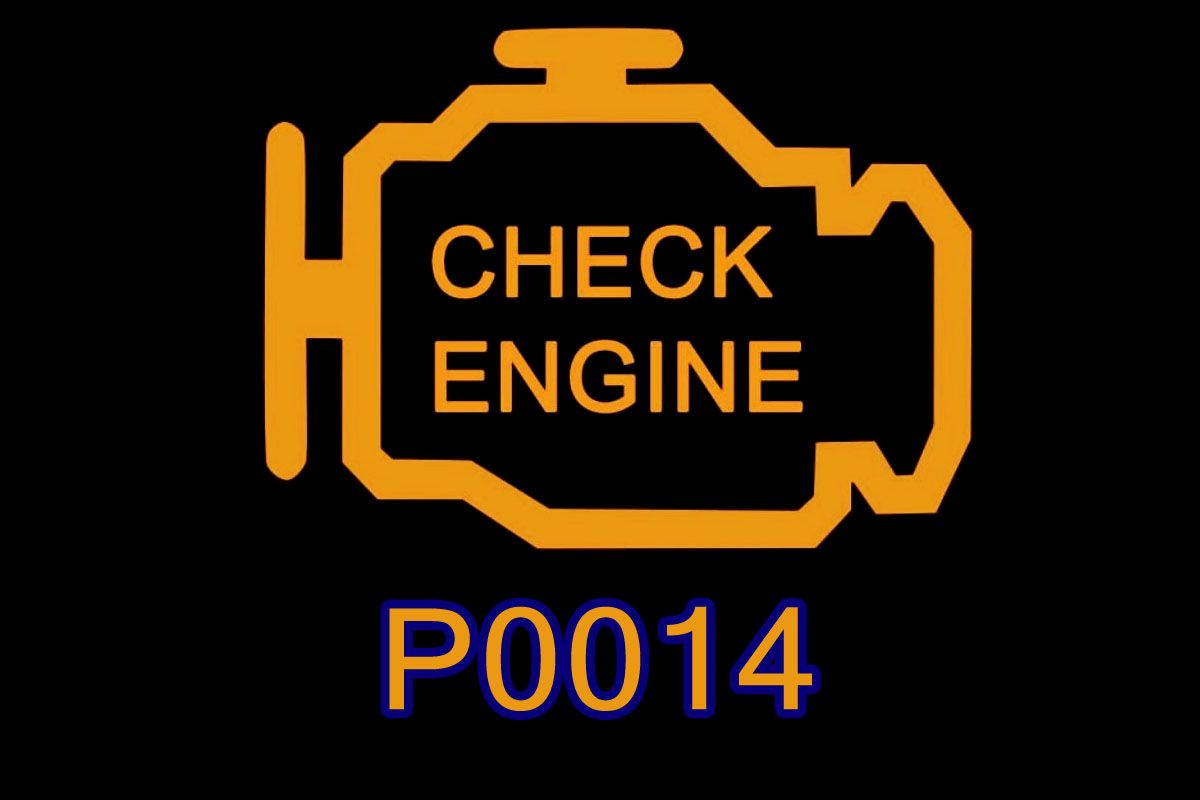
P0014 "B" Camshaft Position - Timing Over-Advanced (Bank 1)
P0014 is triggered when the engine control module (ECM/PCM) determines that the Bank 1 “B” camshaft is positioned further advanced than expected.
The code is closely associated with variable valve timing (VVT) because the VVT system is responsible for changing camshaft position while the engine is running.
But there is an important distinction: P0014 does not automatically mean that the VVT solenoid is defective. The camshaft may actually be too far advanced because of an oil-flow problem, a stuck camshaft phaser, incorrect mechanical timing, or even a problem with the position signals used by the ECM.
What “Over-Advanced” Tells You
The ECM does not simply look at whether the camshaft is turning.
It knows the approximate relationship that should exist between the crankshaft and camshaft at a particular operating condition.
When the ECM commands the camshaft to a certain position, it monitors the camshaft position sensor to see whether the camshaft reaches and maintains that position.
With P0014, the detected camshaft position is more advanced than the ECM expects.
This can happen because the camshaft:
-
Has actually moved too far forward
-
Is stuck in an advanced position
-
Is advancing when it should not
-
Is not returning to the commanded position
-
Is being reported incorrectly because of a sensor or signal problem
So the code describes a timing-position problem, not a specific failed component.
What Is the “B” Camshaft?
“B” is a manufacturer-dependent designation.
On many engines, the B camshaft is associated with the exhaust camshaft, while “A” is often used for the intake camshaft. However, this convention is not universal.
Bank 1 refers to the cylinder bank containing cylinder number 1.
For accurate diagnosis, the exact camshaft represented by “B” should always be confirmed using the manufacturer's service information.
Why Would a Camshaft Become Too Advanced?
There are several ways the VVT system can end up in an over-advanced condition.
VVT solenoid stuck open or restricted
The oil control solenoid regulates oil flow to the camshaft phaser. If it sticks in the wrong position, the phaser may receive oil when it should not.
This can cause the camshaft to remain advanced.
Dirty engine oil
Sludge and debris can interfere with the small passages and moving parts inside the VVT system.
Incorrect engine oil
Using oil with an incorrect viscosity or specification can affect VVT response, particularly on systems that depend heavily on precise oil flow.
Camshaft phaser stuck
The phaser can become mechanically stuck in an advanced position.
Even if the VVT solenoid is functioning correctly, the phaser itself may fail to return the camshaft to the requested position.
Restricted or incorrect oil flow
A VVT system depends on controlled oil pressure and flow. Problems in the oil passages, filters, or related components can prevent proper camshaft control.
Mechanical timing problem
A timing chain or belt that is incorrectly installed, has jumped, or has developed excessive wear can place the camshaft in an incorrect position.
Sensor or wiring problem
The ECM relies on camshaft and crankshaft position signals. A damaged sensor, poor connector, or wiring fault can cause the ECM to calculate an incorrect camshaft position.
Low oil pressure
Insufficient oil pressure can interfere with VVT operation, although the exact effect depends on the engine's VVT design.
A Common Misdiagnosis: “P0014 Means the Solenoid Is Bad”
This is one of the easiest mistakes to make.
The VVT solenoid is certainly a major suspect, but it should not automatically be replaced.
Consider a situation where the solenoid is receiving the correct command but the camshaft phaser is physically stuck in an advanced position.
The ECM will still see an over-advanced camshaft and can set P0014.
Replacing the solenoid in that situation would not solve the underlying problem.
The same applies if the mechanical timing is incorrect.
Symptoms You Might Notice
P0014 can produce anything from a barely noticeable change in engine behavior to significant drivability problems.
Possible symptoms include:
-
Check Engine Light
-
Rough or unstable idle
-
Hesitation
-
Poor acceleration
-
Reduced engine power
-
Increased fuel consumption
-
Difficult starting
-
Longer cranking
-
Engine stalling
-
Misfires
-
Reduced engine response
-
Abnormal timing-system noise
Some vehicles may continue to run normally enough that the driver notices only the warning light.
How to Narrow Down the Cause
The behavior of the fault can provide useful clues.
If P0014 appears after an oil change, verify that the correct oil specification and viscosity were used.
If it appears after timing-chain or engine work, mechanical timing should be checked carefully.
If the engine has rough idle and VVT-related symptoms, inspect the VVT solenoid, oil passages, and phaser.
If the code is intermittent, wiring, connector terminals, and sensor signals become more important.
If the camshaft remains advanced even when the ECM commands it back, the VVT actuator/phaser or oil-control system deserves particular attention.
Diagnosis: Follow the Camshaft's Actual Movement
A useful diagnostic strategy is to stop asking “Which part causes P0014?” and instead ask:
“Why is the camshaft staying more advanced than commanded?”
First, scan all modules and codes.
Look for additional camshaft, crankshaft, VVT, oil-pressure, or misfire codes.
Then inspect the engine oil.
Check the level, condition, viscosity, and specification.
Check live VVT data.
If available, compare:
-
Desired/commanded camshaft position
-
Actual camshaft position
-
VVT command
-
Engine RPM
-
Engine load
This can reveal whether the camshaft is responding correctly to ECM commands.
Test the VVT solenoid.
Depending on the vehicle, the technician may perform electrical checks and an active test.
The solenoid can also be inspected for contamination or mechanical sticking.
Check oil pressure and VVT oil flow.
If the electrical side is working, hydraulic operation should be investigated.
Inspect the camshaft phaser.
A phaser that is mechanically stuck in the advanced position can create exactly the condition represented by P0014.
Verify mechanical timing.
If the VVT system and signals appear correct, inspect the timing chain or belt and related components.
Can Low or Dirty Oil Cause P0014?
Yes, it can contribute significantly on engines that use oil-controlled VVT.
The camshaft phaser depends on controlled oil flow. If oil is contaminated, the level is incorrect, or the oil does not meet the engine's specification, the VVT system may not respond correctly.
But this does not mean every P0014 can be repaired with an oil change.
If the phaser is damaged or the timing chain has a mechanical problem, changing the oil will not correct it.
Could P0014 Be Caused by the Timing Chain?
Yes.
A timing-chain problem can alter the physical relationship between the crankshaft and camshaft.
However, P0014 alone does not prove that the timing chain is stretched or has jumped.
A VVT solenoid or phaser can create a similar camshaft-position error without any problem with the basic timing-chain installation.
Mechanical timing should therefore be verified when the available evidence points in that direction rather than assuming the chain is responsible from the start.
Is the Camshaft Position Sensor the Problem?
It is possible, but again, it should not be assumed.
The camshaft position sensor reports camshaft position to the ECM.
If the sensor or its wiring produces an incorrect signal, the ECM may believe the camshaft is more advanced than it really is.
On the other hand, the sensor may be functioning perfectly and accurately reporting a camshaft that is genuinely too advanced.
Testing the signal and comparing it with actual mechanical/VVT behavior is much more reliable than replacing the sensor immediately.
Can You Drive With P0014?
That depends on how the engine is running.
If the Check Engine Light is steady and the engine operates normally, short-term driving may be possible while arranging diagnosis.
Driving should be minimized or avoided if the vehicle has:
-
Severe rough running
-
Significant power loss
-
Repeated stalling
-
Difficult starting
-
Strong timing-chain noise
-
Severe misfires
-
A flashing Check Engine Light
If a mechanical timing problem is responsible, continued operation can potentially lead to much more serious engine damage.
P0014 Is About Position, Not Just the VVT Solenoid
The most useful way to interpret P0014 is:
The Bank 1 “B” camshaft is more advanced than the ECM expects.
The reason could be hydraulic, electrical, mechanical, or related to the information being supplied to the ECM.
A proper diagnosis should therefore move through:
Oil condition and level → VVT solenoid → oil pressure and passages → commanded versus actual camshaft position → camshaft phaser → sensor signals → mechanical timing.
Only after these possibilities have been evaluated should an expensive component such as a camshaft phaser or timing assembly be condemned.