TR
TR EN
EN

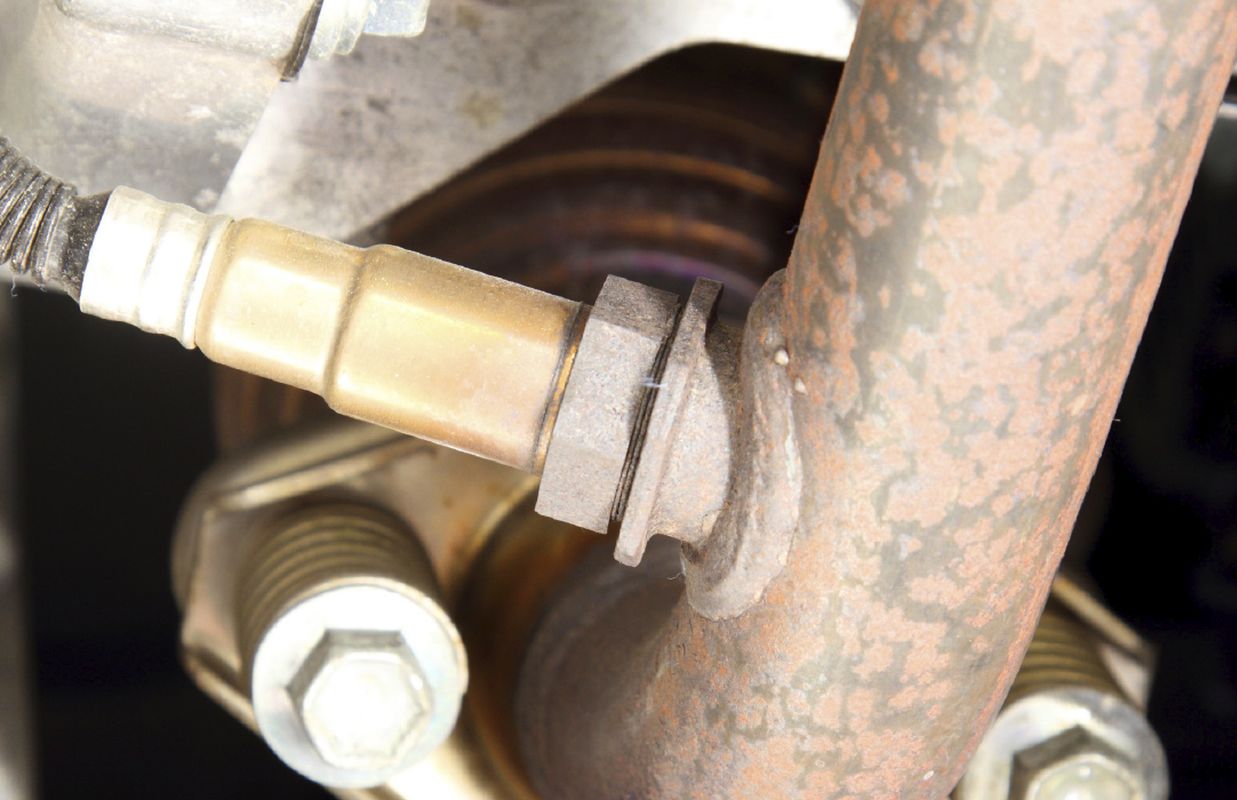
What Are the Symptoms and Causes of a Faulty Oxygen Sensor?
The oxygen sensor is one of the key components in a modern engine's fuel and emissions control system. It measures the amount of oxygen in the exhaust gas and sends this information to the engine control unit (ECU).
The ECU uses this information to determine whether the engine is running with a rich or lean air-fuel mixture and adjusts fuel injection accordingly.
When an oxygen sensor becomes contaminated, slow, electrically faulty, or completely fails, the engine may continue to run, but fuel consumption, emissions, performance, and idle quality can all be affected.
It is also important to remember that an oxygen sensor-related fault code does not always mean that the sensor itself is defective. Exhaust leaks, wiring problems, vacuum leaks, fuel-system faults, and other engine problems can produce similar readings.
What Does an Oxygen Sensor Do?
An oxygen sensor, commonly called an O2 sensor, is installed in the exhaust system.
Its primary function is to detect the oxygen content of exhaust gases.
The ECU uses this information to adjust the air-fuel mixture.
A gasoline engine operating around the ideal stoichiometric mixture needs approximately 14.7 parts of air for every 1 part of gasoline under typical conditions.
The oxygen sensor helps the ECU determine whether combustion is producing:
-
Too much oxygen, indicating a lean condition
-
Too little oxygen, indicating a rich condition
The ECU can then increase or decrease fuel injection.

Where Is the Oxygen Sensor Located?
Oxygen sensors are generally installed in the exhaust system.
Depending on the engine, there may be one or several sensors.
A typical modern vehicle may have:
Upstream oxygen sensor
This sensor is located before the catalytic converter and is primarily involved in monitoring and controlling the air-fuel mixture.
Downstream oxygen sensor
This sensor is generally located after the catalytic converter and is mainly used to monitor catalytic converter performance.
Some newer engines use wideband air-fuel ratio sensors instead of conventional narrowband oxygen sensors for more precise mixture measurement.
Therefore, the exact sensor design and location depend on the vehicle and engine.
What Are the Symptoms of a Faulty Oxygen Sensor?
A failing oxygen sensor can produce several different symptoms.
The most common ones include:
-
Check engine light
-
Increased fuel consumption
-
Rough or unstable idle
-
Poor acceleration
-
Hesitation
-
Engine misfire
-
Difficult starting
-
Reduced engine performance
-
Increased exhaust emissions
-
Failed emissions testing
-
Strong exhaust smell
-
Rich or lean mixture fault codes
The symptoms can vary considerably depending on whether the sensor is completely dead, responding slowly, producing an incorrect signal, or suffering from an electrical problem.
Check Engine Light
One of the most common signs is the check engine light.
The ECU continuously monitors oxygen sensor signals and heater circuits.
If the signal remains outside the expected range, responds too slowly, becomes implausible, or the heater circuit develops a problem, the ECU may store a diagnostic trouble code.
Possible codes can include oxygen-sensor circuit, heater, response, or performance-related faults.
However, the code should be interpreted together with live data and other diagnostic information.
Replacing the sensor immediately without testing the rest of the system can result in an unnecessary repair.
Increased Fuel Consumption
A faulty upstream oxygen sensor can cause fuel consumption to increase.
If the sensor incorrectly reports a lean condition, the ECU may add more fuel than necessary.
This can create a rich mixture.
Depending on the vehicle, the driver may notice that the vehicle needs refueling more frequently even though driving habits have not changed.
However, increased fuel consumption has many possible causes, including:
-
Dirty air filter
-
Faulty fuel injectors
-
Fuel pressure problems
-
Thermostat problems
-
Engine coolant temperature sensor faults
-
Vacuum leaks
-
Ignition problems
-
Low tire pressure
-
Poor engine condition
Therefore, the oxygen sensor should not automatically be blamed.
Rough or Unstable Idle
A faulty oxygen sensor can contribute to unstable idle, particularly when the ECU relies heavily on its feedback.
The engine may:
-
Shake at idle
-
Idle higher or lower than normal
-
Hunt between RPM levels
-
Occasionally stumble
-
Become more likely to stall
A rough idle can also be caused by vacuum leaks, dirty throttle bodies, ignition problems, injectors, PCV problems, and many other faults.
Poor Acceleration and Hesitation
A defective sensor can cause the ECU to receive inaccurate mixture information.
The ECU may then make inappropriate fuel corrections.
The driver may experience:
-
Hesitation when accelerating
-
Weak throttle response
-
Poor low-RPM performance
-
Uneven acceleration
-
Reduced overall engine responsiveness
These symptoms are particularly noticeable when the sensor is slow to respond rather than completely inoperative.
Engine Misfire
An oxygen sensor itself does not normally cause a mechanical misfire.
However, incorrect fuel mixture control can contribute to combustion problems.
A mixture that is excessively rich or lean may cause unstable combustion.
If a vehicle has both oxygen-sensor-related codes and misfire codes, the ignition system, fuel system, air intake system, and engine mechanical condition should also be checked.
A bad oxygen sensor should not be assumed to be the sole cause.
Difficult Starting
Some oxygen sensor faults can contribute to starting problems, particularly if the sensor is providing incorrect information that affects fuel control after the engine starts.
However, the oxygen sensor generally has less influence during the initial cold-start phase than many people assume.
Difficult starting is more commonly associated with problems involving:
-
Battery
-
Starter motor
-
Fuel pressure
-
Injectors
-
Ignition system
-
Engine coolant temperature sensor
-
Crankshaft position sensor
-
Camshaft position sensor
Consequently, an oxygen sensor should be considered based on the diagnostic evidence rather than simply because the engine is difficult to start.
Strong Exhaust Smell
A faulty oxygen sensor can contribute to an excessively rich mixture.
When too much fuel enters the engine, not all of it may be completely burned.
This can produce a strong fuel-like or unpleasant exhaust smell.
A persistently rich mixture is particularly concerning because excessive fuel can overheat and damage the catalytic converter.
Black Exhaust Smoke
Black smoke generally indicates excessive fuel relative to the amount of air entering the engine.
An oxygen sensor that incorrectly reports a lean condition can potentially contribute to excessive fueling.
However, black smoke can also result from:
-
Leaking injectors
-
Excessive fuel pressure
-
Air intake restrictions
-
Faulty mass airflow sensor
-
Faulty manifold pressure sensor
-
Engine management problems
-
Turbocharger or boost-control problems on some engines
The complete fuel and air control system should therefore be investigated.
Can an Oxygen Sensor Cause a Lean Mixture Code?
It can, but this is where diagnosis becomes particularly important.
A lean mixture code does not automatically mean the oxygen sensor is faulty.
For example, an intake vacuum leak can allow unmetered air to enter the engine.
The oxygen sensor then correctly detects excess oxygen in the exhaust.
In this situation, the sensor may be doing exactly what it is supposed to do.
Other possible causes include:
-
Vacuum leaks
-
Intake manifold leaks
-
Exhaust leaks
-
Low fuel pressure
-
Restricted fuel supply
-
Injector problems
-
MAF sensor problems
-
MAP sensor problems
-
PCV system faults
Replacing the oxygen sensor without finding the real cause may not resolve the fault.
Can an Exhaust Leak Damage Oxygen Sensor Readings?
Yes.
This is particularly important for leaks located upstream of the oxygen sensor.
An exhaust leak can allow outside air to enter the exhaust stream.
The additional oxygen can make the sensor detect a leaner condition than actually exists inside the engine.
This can cause incorrect fuel-trim corrections.
A small exhaust manifold crack or exhaust gasket leak can therefore sometimes imitate an oxygen sensor problem.
What Causes Oxygen Sensor Failure?
Oxygen sensors operate in a very hot and chemically aggressive environment.
Over time, their performance can deteriorate.
Common causes include:
Normal aging
Oxygen sensors are wear components. Their response can become slower as mileage increases.
Oil contamination
If the engine burns excessive oil, contaminants can reach the exhaust and contaminate the sensor.
Possible causes include worn piston rings, valve stem seals, PCV problems, or turbocharger issues.
Coolant contamination
An internal coolant leak can introduce coolant-related contaminants into the combustion and exhaust system.
This can damage the oxygen sensor and catalytic converter.
Excessively rich mixture
Continuous over-fueling can contaminate the sensor and expose the catalytic converter to excessive heat.
Silicone contamination
Certain inappropriate sealants or chemical contaminants can damage oxygen sensors.
Physical damage
The sensor or its wiring can be damaged during exhaust repairs, engine work, or underbody impacts.
Wiring problems
Broken wires, melted insulation, poor grounds, corroded connectors, and damaged harnesses can cause oxygen sensor faults.
Exhaust leaks
Leaks can alter the oxygen content around the sensor and produce readings that appear abnormal.
Oxygen Sensor Heater Failure
Most modern oxygen sensors contain an internal heating element.
The heater allows the sensor to reach its operating temperature more quickly.
A faulty heater can cause:
-
Check engine light
-
Heater circuit fault codes
-
Slow sensor activation
-
Incorrect or delayed readings
-
Increased emissions
Possible causes include:
-
Burned-out heater element
-
Blown fuse
-
Wiring damage
-
Corroded connector
-
Power supply problem
-
Ground problem
-
ECU control problem
Therefore, a heater-related code does not automatically mean the sensor itself needs replacement.
Can a Dirty Oxygen Sensor Be Cleaned?
In most cases, replacing a contaminated or aged oxygen sensor is preferable to attempting to clean it.
Oxygen sensors are precision components designed to operate under specific conditions.
Chemical cleaners, solvents, compressed air, or mechanical cleaning can damage the sensing element.
If contamination is caused by an underlying engine problem, installing a new sensor without repairing that problem can cause the replacement sensor to fail again.
The source of the contamination should therefore be identified.
How Is an Oxygen Sensor Diagnosed?
A proper diagnosis usually starts with an OBD scanner.
The technician can examine:
-
Stored fault codes
-
Pending codes
-
Oxygen sensor voltage or current
-
Sensor response
-
Fuel trims
-
Short-term fuel trim
-
Long-term fuel trim
-
Engine coolant temperature
-
MAF or MAP data
-
Engine RPM
-
Air-fuel ratio data
On vehicles equipped with wideband sensors, the diagnostic data may be represented differently from conventional narrowband oxygen sensor voltage.
A multimeter can also be useful for checking heater resistance, power supply, ground, and wiring, but simply measuring resistance does not prove that the sensing element is functioning correctly.
Oxygen Sensor vs. Air-Fuel Ratio Sensor
These terms are sometimes used interchangeably, but they are not always technically identical.
A conventional narrowband oxygen sensor primarily indicates whether the exhaust mixture is richer or leaner than the stoichiometric point.
A wideband air-fuel ratio sensor can provide much more precise information over a broader mixture range.
Modern direct-injection and turbocharged engines frequently use more sophisticated air-fuel sensing systems.
Therefore, the correct replacement part must be selected according to the exact engine and ECU calibration.
Can a Bad Oxygen Sensor Damage the Catalytic Converter?
Yes, indirectly.
If a faulty sensor causes the engine to run excessively rich, unburned fuel can enter the catalytic converter.
The catalytic converter can become extremely hot as it attempts to process the additional hydrocarbons.
Prolonged exposure to excessive temperature can damage or melt the catalyst substrate.
The opposite situation—an excessively lean mixture—can also create drivability and emissions problems.
For this reason, an oxygen sensor problem should not be ignored for an extended period.
Can an Oxygen Sensor Failure Cause P0420?
It can contribute to conditions that eventually result in a P0420 code, but P0420 itself means that the catalytic converter's monitored efficiency is below the expected threshold.
It does not automatically mean the oxygen sensor is faulty.
Possible causes of P0420 include:
-
Worn catalytic converter
-
Exhaust leak
-
Faulty oxygen sensor
-
Incorrect fuel mixture
-
Engine misfire
-
Oil consumption
-
Coolant entering the combustion chamber
A proper diagnosis should determine why catalyst efficiency is being reported as low.
Should Both Oxygen Sensors Be Replaced Together?
Not necessarily.
If a vehicle has separate upstream and downstream sensors, they perform different functions.
A fault in one does not automatically mean the other has failed.
Replacing both sensors without diagnostic evidence can be unnecessarily expensive.
The correct approach is to identify the specific sensor and circuit involved and determine why its signal is abnormal.
Can You Drive With a Faulty Oxygen Sensor?
A vehicle may continue to drive with a faulty oxygen sensor, but that does not mean it should be ignored.
Depending on the fault, the ECU may enter a backup or open-loop strategy and use predetermined fuel calculations.
Short-term driving may be possible, but prolonged operation can result in:
-
Increased fuel consumption
-
Higher emissions
-
Poor engine performance
-
Catalytic converter damage
-
Additional fault codes
-
Increased operating costs
If the engine is misfiring heavily or the check engine light is flashing, the situation is more serious and continued driving should be avoided.
Final Thoughts
Oxygen sensor problems can affect fuel economy, engine operation, emissions, and catalytic converter life. Common symptoms include a check engine light, increased fuel consumption, rough idle, hesitation, poor acceleration, strong exhaust odor, and emissions-related problems.
However, an oxygen sensor fault code does not automatically prove that the oxygen sensor itself has failed.
Exhaust leaks, wiring problems, vacuum leaks, fuel-pressure issues, injectors, MAF or MAP sensors, ignition faults, and engine mechanical problems can all influence oxygen sensor readings.
For this reason, the best approach is to diagnose the sensor signal, heater circuit, wiring, fuel trims, and the overall air-fuel system before replacing the component. A correct diagnosis not only prevents unnecessary parts replacement but also helps prevent a relatively simple oxygen-sensor-related problem from damaging the catalytic converter.