TR
TR EN
EN

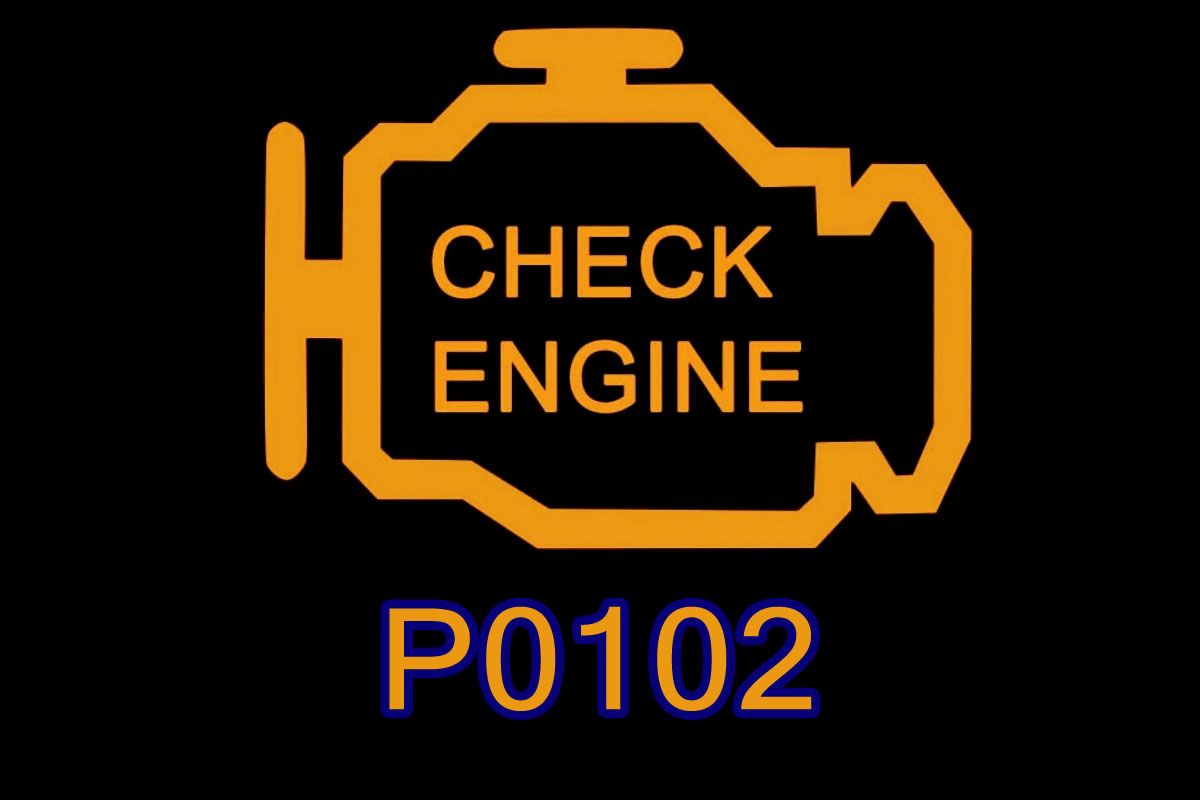
P0102 Mass Air Flow (MAF) Sensor "A"Circuit Low Input
P0102 is an OBD-II diagnostic trouble code indicating that the engine control module (ECM/PCM) has detected a lower-than-expected electrical signal from the Mass Air Flow (MAF) Sensor “A” circuit.
The important point is that “low input” describes the electrical signal seen by the ECU. It does not automatically mean that the engine is actually receiving too little air.
A faulty MAF sensor can cause P0102, but the same code can also be produced by a wiring problem, poor electrical connection, inadequate sensor power, a bad ground, or other intake-system problems.
What the MAF Sensor Does
The MAF sensor measures the amount of air entering the engine.
The ECU uses this information to calculate engine load and determine how much fuel should be injected. MAF information can also be used for ignition control, emissions management, EGR control and turbocharger management, depending on the engine.
A typical MAF sensor is installed in the intake tract, usually between the air filter housing and the throttle body.
Many MAF sensors use a heated sensing element. As air passes over the element, the electrical characteristics of the sensor change. The sensor electronics convert this information into a signal that the ECU can interpret as airflow.
What Does “Low Input” Actually Mean?
P0102 does not simply mean:
“The engine has low airflow.”
It means:
“The ECU is receiving a MAF signal that is lower than the expected range.”
That low signal could be caused by an actual airflow measurement problem, but it could also be an electrical problem.
For example, the ECU could receive a low signal because:
-
The MAF sensor is defective
-
The signal wire is damaged
-
The sensor ground is poor
-
The sensor is not receiving the correct supply voltage
-
A connector terminal has poor contact
-
The sensing element is contaminated
-
The signal circuit is shorted
-
The intake system has a problem affecting the measured airflow
Common Symptoms of P0102
The severity of the symptoms varies between vehicles.
Possible symptoms include:
-
Check Engine Light
-
Poor acceleration
-
Hesitation
-
Rough idle
-
Engine stalling
-
Difficult starting
-
Reduced engine power
-
Increased fuel consumption
-
Surging
-
Poor throttle response
-
Increased exhaust emissions
Some vehicles may continue to drive relatively normally because the ECU can use substitute airflow calculations when MAF information becomes unreliable.
Common Causes of P0102
Defective MAF sensor
The sensor's sensing element or internal electronics may be producing an output that is too low.
Dirty or contaminated MAF element
Dust, oil vapour and other contamination can interfere with the sensing element.
Damaged wiring
A broken or partially damaged signal wire can cause the ECU to receive an abnormally low signal.
Poor connector contact
Loose terminals or corrosion can increase resistance and interfere with the MAF signal.
Bad sensor ground
A poor ground can cause the sensor output to become incorrect.
Incorrect power supply
If the MAF does not receive the required electrical supply, its signal may be too low or otherwise incorrect.
Signal wire shorted to ground
A signal circuit that is being pulled toward ground can result in a low-input condition.
Air intake problems
Cracked intake ducts, loose clamps or incorrectly installed components can disturb the relationship between measured airflow and actual engine airflow.
Start With the MAF Wiring
Because P0102 is specifically an electrical low-input code, the wiring should be inspected before automatically replacing the sensor.
Check the harness for:
-
Broken wires
-
Chafing
-
Melted insulation
-
Corrosion
-
Oil contamination
-
Loose terminals
-
Previous poor-quality repairs
Pay particular attention to the section immediately around the MAF connector.
The wires can be damaged internally even when the insulation looks normal.
Inspect the MAF Connector
Disconnect the connector according to the manufacturer's procedure and inspect the terminals.
Look for:
-
Bent pins
-
Corrosion
-
Water intrusion
-
Loose terminals
-
Damaged locking mechanism
-
Terminals pushed backward into the connector
A terminal that has lost its proper tension may make enough contact to allow the engine to run but still produce an unstable or incorrect MAF signal.
Check Sensor Power and Ground
The exact MAF circuit varies by vehicle, so the manufacturer's wiring diagram should be used.
Depending on the design, the sensor may have:
-
Power supply
-
Ground/return
-
MAF signal
-
Additional signal circuits
-
Integrated intake-air-temperature circuitry
Verify that the appropriate supply voltage reaches the sensor and that the ground/return circuit is reliable.
A defective ground can create a misleading low-signal condition even if the MAF sensor itself is functioning correctly.
Check the MAF Signal
The MAF signal should be evaluated with a scan tool or appropriate electrical test equipment.
Monitor the sensor while the engine is:
-
Idling
-
Increasing RPM
-
Accelerating
-
Cruising
-
Under load
There is no single MAF value that is correct for every engine.
Airflow depends on engine size, RPM, throttle position, engine load, temperature, altitude and whether the engine is naturally aspirated or turbocharged.
What matters is whether the MAF value is plausible and responds appropriately to changes in engine operation.
What Should Happen During Acceleration?
As engine airflow increases, the MAF reading should generally increase.
If the engine is accelerating normally but the MAF value remains extremely low, the sensor or circuit should be investigated.
Likewise, if the MAF signal suddenly falls when the engine speed rises, an electrical problem becomes more likely.
A scan tool with graphing capability can make these changes much easier to identify.
Compare MAF With Engine RPM and Throttle Position
MAF data becomes more useful when viewed together with other parameters.
Monitor:
-
Engine RPM
-
Throttle position
-
MAP
-
Engine load
-
Intake air temperature
-
Fuel trims
For example, if the throttle is opened significantly and engine RPM increases, the MAF reading should generally reflect the increased airflow.
A large disagreement between throttle position, RPM and MAF can indicate a problem.
Check the MAP Sensor Data Too
If the vehicle has both MAF and MAP sensors, their information can be compared.
The MAF measures airflow entering the engine, while MAP measures pressure inside the intake manifold.
They measure different physical quantities, but both provide information about engine load.
If the MAF value is extremely low while MAP, throttle position and RPM indicate substantial engine load, the MAF measurement deserves further investigation.
This comparison does not by itself prove that the MAF sensor is defective.
Inspect the Air Filter and Intake Duct
A basic physical inspection of the intake system should not be overlooked.
Check:
-
Air filter
-
Airbox
-
MAF mounting
-
Intake duct
-
Hose clamps
-
Throttle-body connection
-
Vacuum hoses
-
PCV connections
A badly restricted air filter can reduce airflow, while an improperly installed intake component can disturb airflow around the MAF sensor.
What About an Intake Leak?
An intake leak after the MAF sensor can cause a difference between the air measured by the sensor and the air actually entering the engine.
For example, if the MAF measures air entering through the airbox but additional air enters through a cracked hose downstream, that additional air has not been measured by the MAF.
This can cause fuel-trim and drivability problems.
However, an intake leak does not automatically mean the MAF electrical signal itself is low. The actual MAF signal should still be tested.
Can a Dirty MAF Sensor Cause P0102?
Yes.
Contamination on the sensing element can alter the sensor's ability to measure airflow accurately.
If contamination is suspected, the sensor should only be cleaned using a method specifically appropriate for MAF sensors.
Avoid touching the sensing element.
Do not automatically use:
-
Brake cleaner
-
Carburetor cleaner
-
Aggressive solvents
-
Compressed air at excessive pressure
unless the manufacturer specifically states that the product and method are safe for that sensor.
The sensing element is delicate and can be permanently damaged.
Check for a Signal Short
A low MAF signal can occur if the signal circuit is being pulled toward ground.
With the sensor disconnected and following the vehicle-specific wiring diagram, the signal circuit can be checked for an unwanted short to ground.
Do not apply arbitrary voltage to the MAF terminals. The correct test procedure depends on the sensor design.
Don't Rely Only on Continuity Testing
A wire can have continuity and still fail under operating conditions.
For example, a partially broken conductor may show acceptable continuity while stationary but lose contact when:
-
The engine vibrates
-
The wiring moves
-
Temperature changes
-
The harness is flexed
Voltage-drop testing and live signal monitoring can reveal problems that a basic resistance check misses.
A Wiring Wiggle Test Can Help
If the problem appears intermittently, monitor MAF live data while carefully moving the harness near the connector.
If the signal suddenly changes when the harness is moved, the wiring or connector becomes a strong suspect.
This should be done carefully and without putting excessive force on the wiring.
Fuel Trims Can Provide Additional Evidence
MAF errors can influence fuel-trim values.
If the ECU believes less air is entering the engine than actually is, it may calculate fuel delivery incorrectly.
Fuel trims can therefore provide supporting evidence.
However, abnormal fuel trims are not proof of a MAF failure. Vacuum leaks, fuel-pressure problems, injector problems and other engine faults can produce similar symptoms.
Turbocharged Engines
On turbocharged engines, airflow changes considerably as boost builds.
A MAF problem can therefore affect:
-
Boost control
-
Fuel delivery
-
Engine load calculations
-
Acceleration
-
Emissions
If P0102 appears together with a loss of boost, inspect the intake and charge-air system as well as the MAF circuit.
Possible areas include:
-
Turbocharger inlet
-
Intercooler hoses
-
Charge pipes
-
Hose clamps
-
Intake ducting
-
Boost leaks
A turbocharger should not be condemned simply because a MAF code is present.
When Is the MAF Sensor Actually Bad?
The MAF sensor becomes a strong suspect when testing confirms that:
-
Power supply is correct
-
Ground is correct
-
Connector terminals are good
-
Wiring is intact
-
There is no signal short
-
The intake system is properly sealed
-
The sensor is clean and correctly installed
-
The measured MAF signal remains outside the manufacturer's expected range
At that point, sensor replacement may be appropriate.
Do Not Assume the ECU Is Faulty
ECM failure is possible but should be considered late in the diagnostic process.
Before suspecting the ECU, verify the complete circuit from the MAF sensor to the ECU.
If the sensor produces a correct signal but the signal arriving at the ECU is incorrect, investigate the wiring.
If the correct signal reaches the ECU and the ECU still interprets it incorrectly, ECU-side diagnosis may then be justified.
A Practical Diagnostic Route
A sensible approach to P0102 is:
Read all codes → check freeze-frame data → inspect the intake → inspect the MAF connector → check wiring → verify power and ground → monitor MAF live data → compare MAF with MAP/RPM/throttle → check for intake leaks → test the sensor → repair and retest.
This prevents the common mistake of replacing an expensive MAF sensor when the real problem is a connector or wiring fault.
After the Repair
Once the cause has been repaired:
-
Clear the DTC.
-
Start the engine.
-
Monitor MAF live data.
-
Check idle operation.
-
Increase engine speed gradually.
-
Perform a road test.
-
Monitor airflow under acceleration and load.
-
Check fuel trims where appropriate.
-
Confirm that P0102 does not return.
If the original fault was intermittent, the vehicle should be tested under the conditions in which the code originally appeared.
Final Takeaway
P0102 indicates that the ECU is receiving a MAF Sensor “A” signal that is lower than expected.
The cause may be a defective MAF sensor, but the diagnosis should also consider power supply, ground, wiring, connector terminals, signal-circuit faults, contamination and intake-system problems.
The most important distinction is that a low MAF signal is an electrical/measurement problem, not automatically proof of low engine airflow.
A proper diagnosis should establish whether the sensor is actually under-reporting airflow or whether the electrical circuit is preventing the ECU from receiving the correct MAF signal.