TR
TR EN
EN

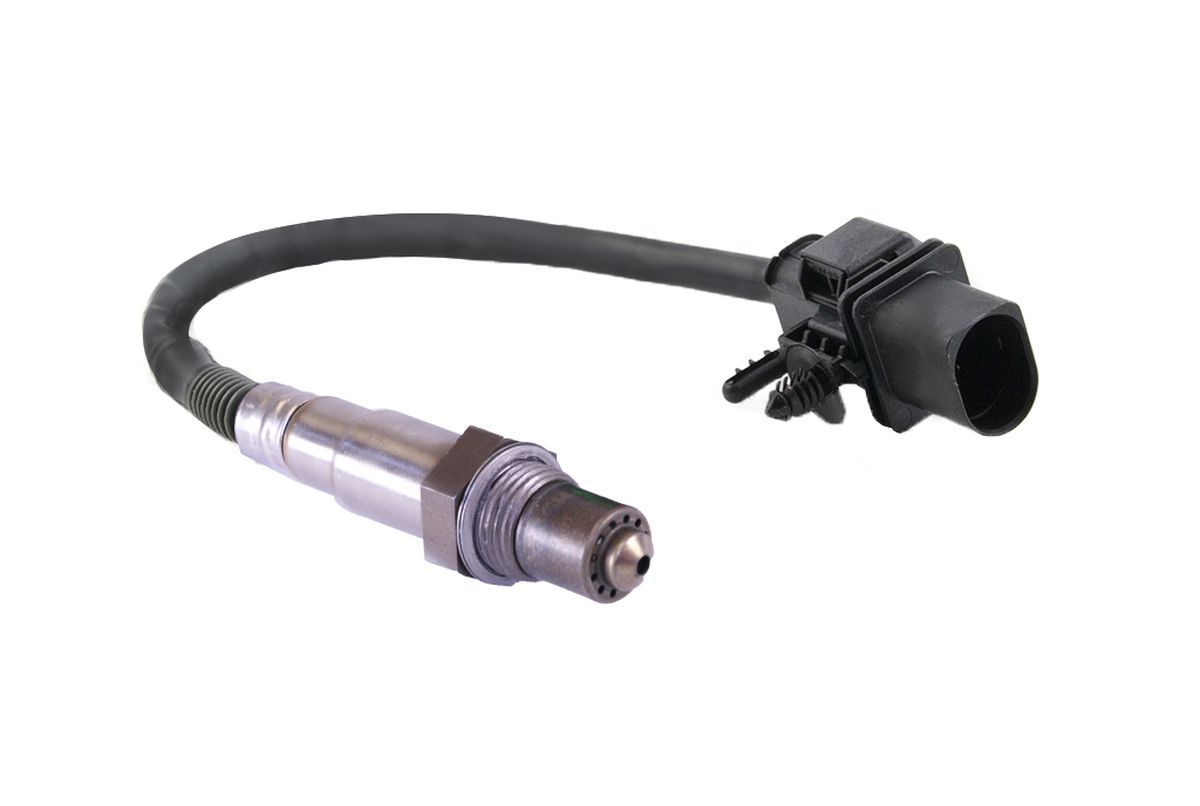
What Is a Wideband Oxygen Sensor?
A wideband oxygen sensor is an advanced type of oxygen sensor used to measure the air-fuel mixture in an engine with much greater accuracy than a conventional narrowband oxygen sensor.
It is also commonly called a wideband O2 sensor, wide-range oxygen sensor, or air-fuel ratio sensor (A/F sensor), depending on the manufacturer and engine design.
The sensor plays a critical role in modern engine management systems. It allows the ECU to determine whether the engine is running rich or lean and, more importantly, to determine how rich or how lean the mixture is.
This precise information helps the ECU continuously adjust fuel injection, improve fuel economy, reduce emissions, and maintain efficient combustion.
What Does a Wideband Oxygen Sensor Do?
The primary purpose of a wideband oxygen sensor is to provide the ECU with detailed information about the oxygen content in the exhaust gas.
A conventional narrowband oxygen sensor mainly indicates whether the mixture is slightly richer or leaner than the stoichiometric point.
A wideband sensor can measure a much broader range of air-fuel mixtures.
This allows the ECU to determine whether the engine is operating:
-
Near the stoichiometric air-fuel ratio
-
Significantly lean
-
Significantly rich
-
During acceleration enrichment
-
During deceleration
-
Under heavy engine load
-
During cold starts
The ECU uses this information to adjust injector operation and maintain the desired air-fuel ratio.
How Does a Wideband O2 Sensor Work?
A wideband oxygen sensor is more complicated than a conventional oxygen sensor.
It generally contains a measurement cell and a pump cell, along with a control circuit and a heater.
The sensor is installed in the exhaust system, where it analyzes the exhaust gases.
Instead of simply producing a voltage that changes around the stoichiometric point, the wideband system uses the pump cell to control the oxygen concentration in the sensor's measurement chamber.
The ECU monitors the electrical current required to maintain the desired condition inside the sensor.
This current is related to the oxygen concentration in the exhaust and therefore to the air-fuel mixture.
In simple terms, the sensor gives the ECU much more detailed information than a traditional narrowband sensor.
Wideband vs. Narrowband Oxygen Sensor
The biggest difference is the amount of information the sensor can provide.
A narrowband sensor is mainly useful around the stoichiometric point. It can tell the ECU that the mixture has moved richer or leaner, but it has limited ability to accurately quantify how far away from the target mixture the engine is operating.
A wideband sensor operates across a much broader range.
This makes it particularly useful for modern engines that need precise mixture control under many different operating conditions.
Wideband sensors are especially valuable in:
-
Turbocharged engines
-
Direct-injection engines
-
High-performance engines
-
Modern low-emission engines
-
Engines requiring precise fuel control
What Is the Stoichiometric Air-Fuel Ratio?
For a gasoline engine, the commonly referenced stoichiometric air-fuel ratio is approximately 14.7 parts air to 1 part fuel by mass when using conventional gasoline.
At this theoretical ratio, the available oxygen and fuel are balanced for combustion.
However, the engine does not operate at exactly this ratio under every condition.
For example, during heavy acceleration, a gasoline engine may intentionally run richer. During certain cruising conditions, the control strategy may target a different mixture.
A wideband oxygen sensor allows the ECU to monitor these changes much more precisely.
Why Are Wideband Sensors Important in Modern Engines?
Modern engines must balance several objectives at the same time.
The ECU needs to provide enough fuel for good combustion and performance while minimizing fuel consumption and emissions.
A wideband oxygen sensor helps achieve this by giving the ECU accurate feedback about the combustion mixture.
This can help with:
-
Fuel economy
-
Emission control
-
Throttle response
-
Engine performance
-
Catalytic converter efficiency
-
Cold-start control
-
Fuel injection accuracy
-
Diagnostic functions
Without accurate exhaust-gas feedback, the ECU may have difficulty maintaining the intended mixture.
Where Is a Wideband Oxygen Sensor Located?
The sensor is normally installed in the exhaust system.
On many vehicles, the primary wideband sensor is located upstream of the catalytic converter, often near the exhaust manifold.
Its position allows it to measure exhaust gases shortly after they leave the engine.
Some vehicles use additional oxygen sensors downstream of the catalytic converter for catalyst monitoring.
The exact sensor configuration depends on the engine and emissions system.
What Are the Symptoms of a Bad Wideband Oxygen Sensor?
A failing wideband oxygen sensor can cause a variety of symptoms.
However, the symptoms are not always obvious because the ECU may compensate for a sensor that is becoming inaccurate.
Common symptoms include:
Check Engine Light
The most common indication is the Check Engine Light.
The ECU continuously monitors the oxygen sensor circuit and its response. If the sensor signal, heater circuit, current, or other operating parameters fall outside expected limits, a diagnostic trouble code may be stored.
The exact code depends on the vehicle and the type of failure.
Increased Fuel Consumption
If the sensor provides incorrect information, the ECU may command an inappropriate fuel mixture.
In some situations, this can result in excessive fuel consumption.
The vehicle may require more fuel than usual even though driving conditions have not changed.
Rough Idle
A defective wideband sensor can contribute to unstable engine operation.
Possible symptoms include:
-
Rough idle
-
RPM fluctuations
-
Engine vibration
-
Hesitation
-
Occasional stalling
However, rough idle can have many other causes, including vacuum leaks, ignition problems, fuel pressure problems, injector faults, throttle-body problems, and intake-air measurement errors.
Poor Acceleration
Incorrect mixture information can affect fuel control during acceleration.
The vehicle may feel sluggish or hesitate when the accelerator is pressed.
In turbocharged engines, mixture-control problems can also affect how the engine responds under boost.
Reduced Engine Performance
If the ECU receives unreliable air-fuel information, it may modify the fuel strategy or enter a protective operating mode.
This can result in reduced engine performance.
In severe cases, the ECU may use substitute values rather than relying on the faulty sensor.
Exhaust Emissions Increase
An inaccurate oxygen sensor can cause the engine to operate with an excessively rich or lean mixture.
This can increase emissions and may eventually affect catalytic converter performance.
Difficult Starting
A severely inaccurate sensor can contribute to starting problems, particularly when combined with other fuel-control issues.
However, the oxygen sensor is generally not the only component responsible for cold-start fuel calculation. The ECU uses multiple inputs when determining how much fuel to inject.
What Causes a Wideband Oxygen Sensor to Fail?
Wideband sensors operate in a harsh environment.
They are exposed to extremely high exhaust temperatures, combustion by-products, vibration, and chemical contamination.
Common causes of failure include:
-
High mileage
-
Aging
-
Excessive exhaust temperature
-
Oil contamination
-
Coolant contamination
-
Fuel contamination
-
Silicone contamination
-
Physical damage
-
Wiring problems
-
Connector corrosion
-
Heater circuit failure
-
Incorrect installation
-
Exhaust leaks near the sensor
An engine that burns excessive oil can shorten oxygen sensor life because oil-derived contaminants can reach the sensor.
Coolant entering the combustion chamber can also contaminate the exhaust system and sensor.
Can an Exhaust Leak Cause a Wideband Oxygen Sensor Problem?
Yes.
An exhaust leak near the sensor can allow outside air to enter the exhaust system.
This introduces additional oxygen into the exhaust stream and can cause the sensor system to interpret the exhaust mixture incorrectly.
As a result, an exhaust leak can sometimes create symptoms that look like an oxygen sensor problem.
This is one reason the exhaust system should be inspected before replacing an expensive wideband sensor.
Can a Vacuum Leak Cause a Wideband O2 Sensor Code?
Yes.
A vacuum or intake-air leak can allow unmetered air into the engine.
The additional air can make the actual mixture leaner than the ECU expects.
The ECU may respond by increasing fuel delivery, and the resulting fuel-trim values can become abnormal.
This can lead to oxygen-sensor-related fault codes even though the sensor itself is functioning correctly.
Therefore, fuel trims, intake leaks, exhaust leaks, and sensor data should be evaluated together.
Wideband Oxygen Sensor Fault Codes
Different manufacturers use different diagnostic strategies and fault-code descriptions.
A fault may relate to:
-
Sensor circuit
-
Heater circuit
-
Signal performance
-
Sensor response
-
Pump current
-
Reference voltage
-
Wiring
-
Sensor calibration
-
Air-fuel ratio performance
An OBD-II fault code should therefore be interpreted according to the specific vehicle, engine, and sensor position.
Simply seeing an oxygen-sensor-related code does not automatically mean that the sensor must be replaced.
How Is a Wideband Oxygen Sensor Diagnosed?
Proper diagnosis usually starts with an OBD scanner capable of displaying live data.
A technician can examine parameters such as:
-
Air-fuel ratio
-
Lambda
-
Fuel trims
-
Sensor current
-
Sensor voltage
-
Heater operation
-
Engine coolant temperature
-
Mass airflow
-
Manifold pressure
-
Injector operation
The exact parameters available depend on the vehicle.
Fuel-trim data can be particularly useful. If the ECU is repeatedly adding or removing a significant amount of fuel, the cause may be a sensor problem, an air leak, a fuel-delivery problem, or another engine-management issue.
The sensor should therefore be evaluated together with the rest of the fuel-control system.
Can a Wideband Oxygen Sensor Be Tested With a Multimeter?
Testing a wideband sensor is more complicated than testing a conventional narrowband oxygen sensor.
A simple voltage measurement is often insufficient because a wideband sensor's operation involves its pump cell and control circuitry.
Depending on the vehicle, a technician may need to check:
-
Heater power and ground
-
Wiring continuity
-
Reference circuits
-
Sensor current
-
ECU control signals
-
Live-data values
-
Fuel-trim behavior
The manufacturer's technical specifications should always be followed.
Applying incorrect voltage directly to a wideband sensor can damage it.
Can a Wideband Oxygen Sensor Be Cleaned?
In general, cleaning a wideband oxygen sensor is not considered a reliable repair method.
The sensing element is delicate, and aggressive chemicals, brushes, compressed air, or physical contact can damage it.
If the sensor has become permanently contaminated or its internal components have failed, replacement is normally the correct solution.
It is also important to determine why the sensor became contaminated in the first place.
If the engine is burning oil or coolant, simply installing another sensor may only provide a temporary solution.
How Long Does a Wideband Oxygen Sensor Last?
There is no single mileage figure that applies to every vehicle.
Sensor lifespan depends on:
-
Engine condition
-
Fuel quality
-
Oil consumption
-
Coolant condition
-
Exhaust temperature
-
Driving conditions
-
Sensor design
-
Maintenance
-
Contamination
A well-maintained engine can allow the sensor to operate for a long time, while an engine with excessive oil consumption or coolant contamination can shorten sensor life considerably.
A sensor should generally be replaced based on confirmed diagnosis and condition rather than mileage alone.
What Happens If You Drive With a Bad Wideband Oxygen Sensor?
The consequences depend on the severity of the failure.
If the ECU can compensate for the inaccurate sensor, the vehicle may continue to run relatively normally for some time.
However, continued operation with incorrect fuel control can result in:
-
Increased fuel consumption
-
Higher emissions
-
Poor engine performance
-
Rough running
-
Spark plug deposits
-
Catalytic converter damage in severe rich-running conditions
A persistent Check Engine Light related to the fuel-control system should therefore be diagnosed rather than ignored.
Wideband Oxygen Sensor and Catalytic Converter
The wideband oxygen sensor and catalytic converter perform different jobs.
The oxygen sensor measures exhaust-gas conditions and helps the ECU control the air-fuel mixture.
The catalytic converter treats pollutants in the exhaust gases.
If a wideband sensor causes the engine to run excessively rich for a prolonged period, the catalytic converter may be exposed to excessive unburned fuel and heat.
Conversely, a damaged catalytic converter can sometimes affect exhaust behavior and create diagnostic symptoms.
This is why sensor and catalyst-related problems should be evaluated together when necessary.
Does Every Modern Car Use a Wideband Oxygen Sensor?
No.
Modern vehicles use different oxygen-sensor technologies depending on the engine, emissions system, market, and model year.
Some vehicles use wideband air-fuel ratio sensors, while others continue to use conventional narrowband oxygen sensors in certain positions.
A vehicle can also use different types of sensors at different locations in the same exhaust system.
The exact sensor technology should therefore be confirmed using the vehicle's technical information and the correct part number.
What Should You Check Before Replacing a Wideband Oxygen Sensor?
Replacing a wideband sensor can be expensive, so unnecessary replacement should be avoided.
Before installing a new sensor, it is worth checking:
-
The exact OBD fault codes
-
Sensor wiring
-
Electrical connectors
-
Heater circuit
-
Exhaust leaks
-
Intake leaks
-
Fuel pressure
-
Fuel injectors
-
Airflow measurement
-
Engine oil consumption
-
Coolant contamination
-
Fuel trims
-
Live sensor data
-
ECU power and grounds
If the sensor itself is confirmed to be faulty, the correct replacement part should be installed.
Universal or incorrect sensors can create compatibility problems, particularly with sophisticated wideband systems.
Why Should You Use the Correct Wideband Sensor?
Wideband sensors are not necessarily interchangeable simply because they physically fit the exhaust system.
Different sensors can have different:
-
Electrical characteristics
-
Pump-cell specifications
-
Heater requirements
-
Connector configurations
-
Calibration characteristics
-
ECU control strategies
Installing an incorrect sensor can produce incorrect readings or cause additional diagnostic problems.
The correct sensor should therefore be selected using the vehicle's engine and manufacturer-specific part information.
Final Thoughts
A wideband oxygen sensor is a sophisticated component that gives the engine control unit highly accurate information about the air-fuel mixture. Unlike a conventional narrowband oxygen sensor, it can operate across a much wider range and provide more detailed information about how rich or lean the engine is running.
This precise feedback is important for modern engines because the ECU must continuously balance performance, fuel economy, drivability, and emissions.
A faulty wideband sensor can cause a Check Engine Light, increased fuel consumption, rough idle, hesitation, poor acceleration, reduced performance, and increased emissions. However, these symptoms do not automatically prove that the sensor itself has failed.
Exhaust leaks, intake leaks, fuel-pressure problems, injector faults, wiring problems, heater failures, oil contamination, and other engine-management issues can produce similar symptoms.
For this reason, the best approach is to diagnose the complete system using fault codes, live data, fuel trims, electrical tests, and physical inspections before replacing the sensor.