TR
TR EN
EN

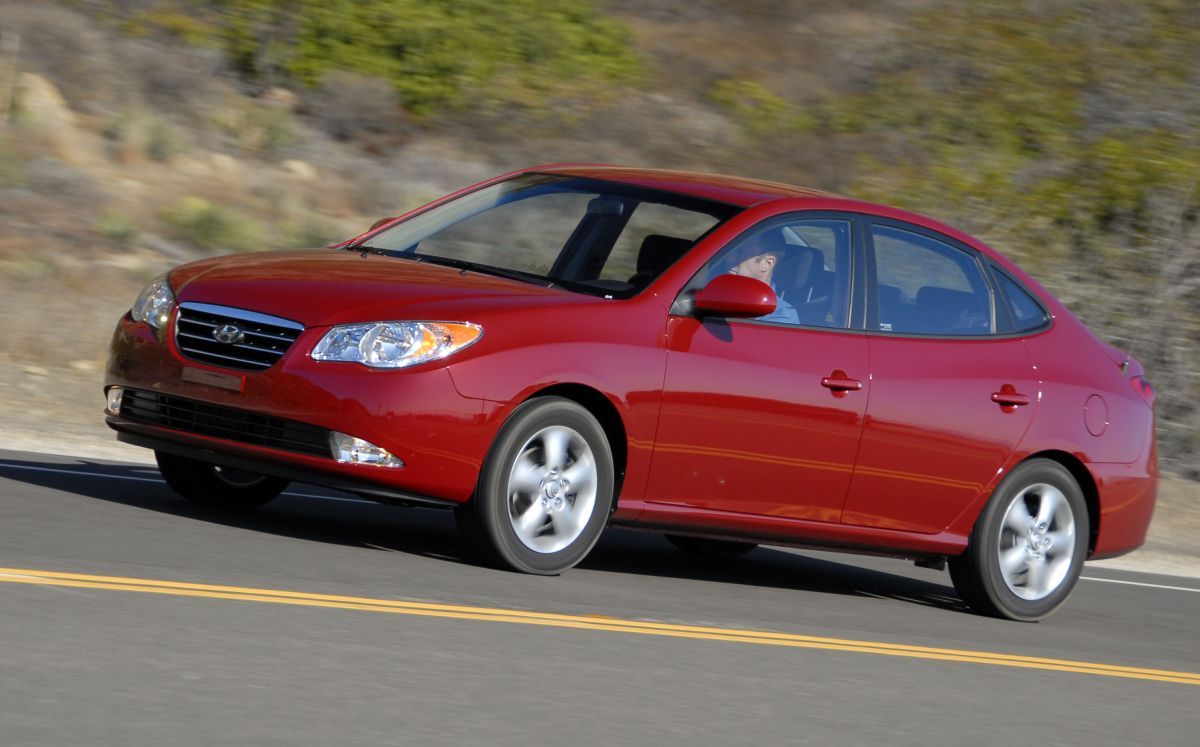
Is a Used Hyundai Accent Worth Buying?
The Hyundai Accent is one of Hyundai's best-known compact cars and has been produced for several generations. It was designed as an affordable, economical, and practical vehicle, making it particularly attractive to people looking for inexpensive daily transportation.
Low fuel consumption, relatively simple mechanical systems, affordable maintenance, and good parts availability have helped the Accent become a popular choice in the used-car market.
But is a used Hyundai Accent really worth buying?
The answer is generally yes, but with some important conditions.
The Accent can be a very reasonable used car when you find a well-maintained example. However, some model years, engines, transmissions, and equipment levels have experienced more complaints and recurring faults than others.
Therefore, anyone considering a used Hyundai Accent should look beyond the purchase price and investigate the vehicle's model year, maintenance history, transmission condition, electrical system, steering system, safety equipment, and accident history.
Hyundai Accent Is It a Reliable Used Car?
The Hyundai Accent has several characteristics that make it attractive as a second-hand vehicle.
It is a relatively small and lightweight car, and many versions use uncomplicated mechanical systems. Routine maintenance is generally straightforward, and replacement parts are widely available in many markets.
The main advantages of the Accent include:
-
Low fuel consumption
-
Affordable routine maintenance
-
Relatively inexpensive replacement parts
-
Simple mechanical structure on many generations
-
Easy urban driving
-
Adequate interior space for a small car
-
Reasonable reliability when properly maintained
-
Generally affordable used-car prices
However, age is an important factor.
Many Hyundai Accents currently found on the used-car market are old enough to have accumulated problems related to wear, corrosion, previous repairs, and poor maintenance.
In other words, the condition of the individual Accent is often more important than the reputation of the model itself.
Which Hyundai Accent Model Years Have More Problems?
Some Accent model years appear more frequently in owner complaint databases than others.
The 2002 and 2004 models, particularly those equipped with automatic transmissions, deserve extra attention because of the number of transmission-related complaints associated with these model years. Reports include shifting problems, slipping, loss of gears, unusual noises, and transmission failures.
The 2012 and 2013 model years are also frequently mentioned in complaint data for various problems.
However, it would be incorrect to say that every 2002, 2004, 2012, or 2013 Accent is a bad car.
Complaint statistics show patterns, but they do not determine the condition of every individual vehicle.
A 2004 Accent with a properly rebuilt transmission, complete maintenance records, and good mechanical condition may be a better purchase than a newer Accent that has been neglected.
Hyundai Accent Automatic Transmission Problems
Automatic transmission problems are among the most important issues to investigate when purchasing certain older Accent models.
The 2002 and 2004 model years are particularly worth examining carefully.
Possible symptoms include:
-
Hard shifting
-
Delayed gear engagement
-
Transmission slipping
-
Failure to shift into certain gears
-
Getting stuck in one gear
-
Loss of overdrive
-
Jerking during acceleration
-
Reverse engagement problems
-
Abnormal transmission noises
-
Check Engine Light
A clicking, rattling, or humming sound should not automatically be blamed on the transmission, however.
Similar noises can originate from:
-
Engine components
-
Exhaust components
-
Driveshafts
-
Differential
-
Wheel bearings
-
Suspension components
Transmission problems can also have multiple causes.
Low or incorrect fluid, solenoid problems, valve-body faults, electronic control problems, wiring faults, and internal mechanical wear can all produce shifting symptoms.
For this reason, replacing the entire transmission without proper diagnosis is not always the correct solution.
Why Should You Be Careful With an Old Automatic Accent?
One of the biggest risks when buying an older Accent is purchasing a vehicle with an automatic transmission that already has internal wear.
A short test drive may not reveal the problem.
The transmission should ideally be tested:
-
When the vehicle is cold
-
After reaching operating temperature
-
During gentle acceleration
-
During hard acceleration
-
During Reverse engagement
-
During stop-and-go driving
-
During highway-speed operation
Delayed engagement, slipping, harsh shifting, or a noticeable change in behavior after the transmission warms up should be investigated before purchase.
Hyundai Accent Airbag Problems
Airbag-related problems deserve special attention because they are safety-related rather than ordinary maintenance issues.
Certain 2015 Hyundai Accent vehicles were subject to an official recall involving the Occupant Detection System (ODS).
The affected vehicles were produced between September 15, 2014 and February 10, 2015. Under certain cold-weather conditions, the occupant detection system could incorrectly recognize an occupant or child restraint in the front passenger seat, affecting passenger-airbag operation.
The issue was addressed through an ODS software update.
This is an important distinction because it would be inaccurate to describe the recall simply as a general “airbag failure.”
When buying a used Accent, however, any airbag warning light should be taken seriously.
The vehicle should be scanned for SRS/airbag fault codes, and the recall history should be checked where applicable.
Hyundai Accent Airbag Warning Light
An airbag warning light can be caused by several different problems.
Possible causes include:
-
Seat wiring
-
Loose connectors
-
Occupant detection system faults
-
Seat-belt pretensioner circuits
-
Clock spring problems
-
Crash-sensor faults
-
Airbag-module faults
-
Low system voltage
An airbag warning light should never simply be erased before selling the vehicle.
The underlying fault should be identified and repaired.
Hyundai Accent EPS and Steering Problems
Some Hyundai Accent variants, including certain Accent Era vehicles, have generated complaints related to the electric power steering system.
Symptoms can include:
-
EPS warning light
-
Steering becoming unusually heavy
-
Intermittent loss of power assistance
-
Steering noise
-
Abnormal steering feel
-
Faults that disappear after restarting the vehicle
The exact steering system depends on the model year and market, so it is not correct to claim that every Accent from a particular period has an EPS defect.
Nevertheless, steering problems deserve more attention than many other used-car faults because they can directly affect vehicle control.
What Causes an EPS Problem?
An electric steering fault can have several possible causes.
For example:
-
EPS motor problems
-
Torque-sensor problems
-
Control-module faults
-
Wiring problems
-
Connector corrosion
-
Low battery voltage
-
Alternator problems
-
Mechanical steering problems
This is why replacing the steering motor or control unit immediately is not always the correct approach.
The electrical supply and charging system should also be checked.
Hyundai Accent Wiring Problems and Rodent Damage
Another issue associated with some Hyundai vehicles concerns rodent damage to wiring.
Certain Hyundai models, including some Accent vehicles, became involved in a California class-action lawsuit concerning soy-based wiring insulation and alleged rodent damage.
The important point is that this should not be interpreted as meaning that every Accent has defective wiring.
Rodents can damage automotive wiring regardless of insulation type.
However, a used Accent that has been parked outdoors or in an area with significant rodent activity should be inspected carefully.
Possible symptoms of damaged wiring include:
-
Random warning lights
-
Engine starting problems
-
Sensor faults
-
Misfires
-
Blown fuses
-
Electrical accessories not working
-
Communication errors between control modules
-
Battery drain
If several unrelated electrical faults suddenly appear, damaged wiring should be considered.
Hyundai Accent Engine Problems
There is no single engine problem that applies to every Accent because Hyundai used different engines throughout the model's generations.
Nevertheless, age- and mileage-related engine problems can include:
-
Oil leaks
-
Ignition-coil problems
-
Spark-plug problems
-
Vacuum leaks
-
Throttle-body contamination
-
Sensor failures
-
Fuel-system problems
-
Oxygen-sensor faults
-
Cooling-system problems
-
Catalytic-converter problems
A Check Engine Light should always be investigated before buying a used Accent.
The diagnostic code itself does not automatically identify the failed component.
For example, an oxygen-sensor fault code does not necessarily mean that the oxygen sensor is defective.
Hyundai Accent Oil Leaks
Oil leaks are not necessarily a unique Accent design problem.
As an older vehicle accumulates mileage, gaskets and seals naturally become harder and less effective.
Potential leak points include:
-
Valve-cover gasket
-
Oil pan
-
Oil filter area
-
Crankshaft seals
-
Camshaft seals
-
Oil-pressure switch
-
Timing-cover area
A small amount of seepage is different from fresh oil actively dripping onto the ground.
Before purchasing an older Accent, inspect the underside of the engine and check the engine-oil level.
Hyundai Accent Cooling System Problems
The cooling system should also be inspected carefully.
Look for:
-
Coolant leaks
-
Low coolant level
-
Radiator problems
-
Thermostat problems
-
Cooling-fan problems
-
Water-pump leaks
-
Damaged hoses
-
Signs of previous overheating
An overheating history is particularly concerning.
Repeated overheating can cause expensive engine damage, including cylinder-head or head-gasket problems.
Hyundai Accent Suspension Problems
Suspension wear is normal on an older compact car, but it can become expensive if several components are worn at the same time.
Possible symptoms include:
-
Front-end knocking
-
Squeaking
-
Steering vibration
-
Uneven tire wear
-
Excessive body movement
-
Poor road holding
-
Pulling to one side
Potential causes include:
-
Control-arm bushings
-
Ball joints
-
Stabilizer links
-
Tie rods
-
Shock absorbers
-
Strut mounts
-
Wheel bearings
-
Wheel alignment
A suspension noise should not automatically be attributed to one component.
A complete inspection is much more reliable.
Hyundai Accent Brake Problems
Brake components are wear items, so their condition is particularly important on older vehicles.
Check:
-
Brake discs
-
Brake pads
-
Brake fluid
-
Calipers
-
Brake hoses
-
Parking brake
-
Brake pedal feel
If the steering wheel vibrates during braking, do not automatically assume that the brake discs are warped.
Disc thickness variation, uneven pad deposits, wheel or hub runout, caliper problems, and suspension issues can also cause braking vibration.
Hyundai Accent Air-Conditioning Problems
The air-conditioning system should be tested before purchasing the vehicle.
Possible problems include:
-
Weak cooling
-
Refrigerant leaks
-
Compressor problems
-
Condenser damage
-
Evaporator leaks
-
Blower-motor problems
-
Electrical faults
If the air conditioner only works after refrigerant is added and then stops cooling again, there may be a leak.
Simply adding refrigerant is not a permanent repair.
Hyundai Accent Electrical Problems
Age-related electrical faults can appear on older Accents.
Pay particular attention to:
-
Battery
-
Alternator
-
Ground connections
-
Fuses
-
Relays
-
Wiring
-
Connectors
-
Power windows
-
Central locking
-
Exterior lighting
-
Dashboard warning lights
A weak battery or charging system can create several apparently unrelated electrical problems.
This is especially important on vehicles equipped with electric power steering and other electronic systems.
Is the Hyundai Accent Good for High Mileage?
A high-mileage Hyundai Accent is not automatically a bad purchase.
Maintenance history is much more important than the number on the odometer alone.
A high-mileage Accent can still be a good daily driver if it has:
-
Regular oil changes
-
Proper cooling-system maintenance
-
A healthy transmission
-
Good suspension
-
Functional steering assistance
-
Properly working safety systems
-
No serious structural corrosion
-
No major oil or coolant leaks
-
Good-quality previous repairs
On the other hand, a cheap Accent with poor maintenance history can quickly become expensive.
Hyundai Accent Advantages
The Accent's strongest argument is value.
For buyers who simply need practical transportation, it can offer a useful combination of economy and low ownership costs.
Low fuel consumption
Many Accent versions are economical enough to make them suitable for daily commuting.
Affordable maintenance
Routine maintenance is generally less expensive than on many larger or more complicated vehicles.
Simple construction
Older versions in particular can be relatively straightforward for independent mechanics to service.
Good city-car characteristics
Its compact dimensions make it convenient for urban driving and parking.
Affordable purchase price
The Accent is often cheaper to purchase than many comparable compact cars.
Hyundai Accent Disadvantages
The same factors that make an older Accent affordable can also become disadvantages.
Older examples may have:
-
More road and engine noise
-
Basic interior materials
-
Limited modern safety technology
-
Age-related electrical problems
-
Suspension wear
-
Corrosion
-
Air-conditioning problems
-
Transmission wear
-
Previous accident repairs
Another important consideration is safety.
A very cheap old Accent may not be a bargain if its airbags, seat belts, ABS, body structure, or steering system are not in good condition.
Which Hyundai Accent Should You Buy?
If you are looking for a used Accent, the safest strategy is not necessarily to choose one particular model year.
Instead, prioritize the individual vehicle's condition.
Look for an Accent with:
-
Complete maintenance records
-
A healthy engine
-
Smooth transmission operation
-
No overheating history
-
No major oil or coolant leaks
-
Good suspension
-
Proper steering operation
-
Working airbags and ABS
-
No unexplained warning lights
-
No serious rust
-
No questionable accident repairs
A properly maintained older Accent can be a better purchase than a newer example with neglected maintenance.
What Should You Check Before Buying a Used Hyundai Accent?
A professional pre-purchase inspection is highly recommended.
The inspection should include the engine, transmission, suspension, steering, brakes, cooling system, electrical system, air conditioning, bodywork, and safety systems.
An OBD diagnostic scan is also important.
Check for:
-
Engine fault codes
-
Transmission fault codes
-
ABS faults
-
Airbag/SRS faults
-
EPS faults where applicable
-
Pending codes
-
Stored codes
-
Communication faults
The technician should also check whether the vehicle's fault codes have recently been erased.
A freshly cleared ECU can make a problematic vehicle appear healthy during a short test drive.
Should You Avoid the Hyundai Accent?
There is no need to automatically avoid the Hyundai Accent.
However, you should be more careful with certain vehicles.
An early-2000s Accent with an automatic transmission that already has shifting problems should be approached cautiously.
Likewise, an Accent with an EPS warning light, airbag warning light, overheating history, major oil leak, structural rust, or multiple unresolved electrical problems deserves serious investigation before purchase.
The important distinction is between a known, properly repaired issue and an unresolved recurring fault.
Is a Used Hyundai Accent Worth Buying?
Yes, a used Hyundai Accent can be worth buying.
Its combination of low fuel consumption, affordable maintenance, simple construction, and relatively low purchase price makes it an attractive option for buyers who prioritize economical transportation.
But the Accent is not a vehicle that should be purchased purely because it is cheap.
Certain model years have accumulated more complaints, and some specific problems deserve particular attention. Early automatic-transmission Accents, certain airbag/occupant-detection systems, EPS-equipped versions, and vehicles with possible wiring damage should all be inspected carefully.
The best Accent is not necessarily the newest one or the cheapest one.
The best Accent is the one with the best maintenance history and the fewest unresolved problems.
Final Verdict
The Hyundai Accent remains a reasonable used-car option for buyers who want an economical and practical compact vehicle.
Its advantages are clear: low fuel consumption, relatively inexpensive maintenance, simple mechanical design, easy urban use, and affordable purchase prices.
Its disadvantages become more significant as the vehicle gets older, particularly when maintenance has been neglected.
The 2002 and 2004 model years deserve particular attention because of automatic-transmission complaints, while certain later vehicles should be checked for airbag/occupant-detection, steering, electrical, and wiring-related issues.
Therefore, it would be wrong to describe the Hyundai Accent as either a completely problem-free car or a model that should always be avoided.
If you find a well-maintained Hyundai Accent with a healthy engine and transmission, functional safety systems, good steering and suspension, and no serious structural or electrical problems, it can still be a very sensible second-hand car.