TR
TR EN
EN

What Does It Mean When a Head Gasket Blows? How Can You Tell?
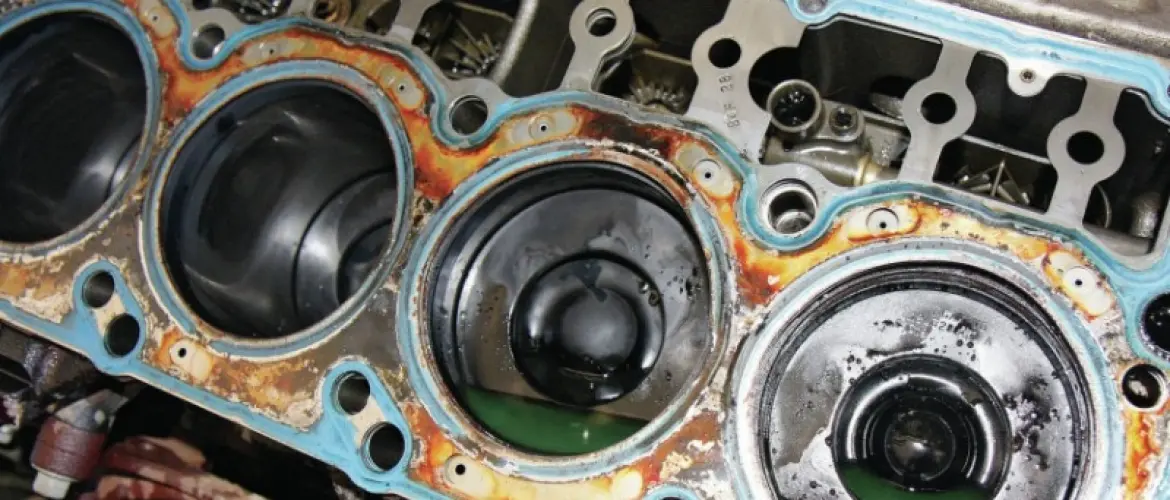
The head gasket is one of the most important sealing components inside an engine. It sits between the engine block and cylinder head and separates the combustion chambers, engine oil passages, and coolant passages.
When people say that an engine has “blown a gasket,” they usually mean that the cylinder head gasket has failed and can no longer maintain proper separation between these areas.
A failed head gasket can cause coolant to enter a cylinder, combustion gases to enter the cooling system, oil to mix with coolant, or compression to escape between cylinders. The symptoms depend on exactly where the gasket has failed.
Why does a head gasket fail?
One of the most common causes is engine overheating.
When an engine operates at excessive temperature, the cylinder head and engine block can experience significant thermal stress. If the overheating is severe enough, the cylinder head may deform, the gasket may lose its sealing ability, or both can happen at the same time.
Possible causes include:
-
Low coolant level
-
Coolant leaks
-
A faulty thermostat
-
Radiator problems
-
Cooling fan failure
-
Water pump problems
-
A blocked cooling system
-
Severe overheating
-
Incorrect gasket installation
-
Incorrect tightening of cylinder-head bolts
-
An unsuitable gasket
-
Previous engine overheating that was not properly repaired
A particularly important warning sign is a history of serious overheating. If an engine has previously reached an abnormally high temperature, the head gasket and cylinder head should be considered during diagnosis.
What happens when a head gasket fails?
A head gasket does more than simply prevent coolant from leaking.
It must maintain the separation between several different areas of the engine. When it fails, the location and severity of the failure determine what happens.
For example, a damaged section between the combustion chamber and a coolant passage can allow combustion gases to enter the cooling system or coolant to enter the cylinder.
If the failure occurs between an oil passage and a coolant passage, engine oil and coolant may mix.
If the gasket fails between two adjacent cylinders, compression can escape from one cylinder into another.
This is why there is no single symptom that proves a head gasket has failed.
How can you tell if a head gasket is blown?
A single symptom is usually not enough to confirm a head gasket failure. However, several symptoms appearing together can make the problem much more suspicious.
Common signs include:
Engine overheating
Repeated overheating can be both a cause and a consequence of head gasket failure.
If the temperature gauge rises above its normal operating range, the cooling system should be diagnosed immediately.
However, overheating by itself does not mean the head gasket is blown. A thermostat, radiator, cooling fan, water pump, coolant leak, or other cooling-system problem can cause the same symptom.
Continuous coolant loss
If coolant keeps disappearing but there is no obvious external leak, coolant may be entering the combustion chamber or another part of the engine.
If you repeatedly need to add coolant, the cause should be investigated instead of simply continuing to top up the reservoir.
Persistent white exhaust smoke
If coolant enters the combustion chamber, it can be converted into steam and produce white exhaust vapor.
However, white vapor during cold startup is often normal, especially in cold or humid weather.
The more concerning situation is thick or persistent white smoke or vapor that continues after the engine reaches normal operating temperature.
Excessive pressure in the cooling system
If combustion gases are entering the cooling system, pressure can build up inside the cooling system.
An unusually rapid increase in pressure or continuous abnormal gas activity in the expansion tank can be an important indication of a possible head gasket leak.
However, this should be confirmed with proper testing rather than diagnosed only by looking at the coolant reservoir.
Oil in the coolant
If engine oil and coolant are crossing paths because of a failed gasket, the coolant may develop an oily or contaminated appearance.
However, a dirty or discolored expansion tank does not automatically prove a blown head gasket. Old coolant, incompatible coolant types, contamination, or other problems can produce abnormal appearances.
Coolant in the engine oil
If coolant enters the lubrication system, the oil can become lighter in color and develop a creamy or milky appearance.
A common place where drivers notice this is underneath the oil filler cap.
However, this symptom must be interpreted carefully. Short trips and condensation can also create a light-colored emulsion under the oil cap, particularly in cold weather.
Therefore, finding a creamy deposit under the oil cap alone does not prove that the head gasket has failed.
Can a blown head gasket cause misfires?
Yes, depending on where the gasket has failed.
If coolant enters a combustion chamber, the affected cylinder may not burn the air-fuel mixture properly. Compression can also be reduced if the gasket fails around the cylinder sealing area.
This can lead to:
-
Rough idle
-
Engine vibration
-
Misfires
-
Loss of power
-
Difficult starting
-
Check Engine light
-
Misfire fault codes
If the same cylinder repeatedly misfires and the engine is also losing coolant without an obvious external leak, a coolant intrusion problem should be investigated.
Can a compression test detect a blown head gasket?
A compression test can provide useful information, but it does not detect every head gasket failure.
For example, if the gasket has failed between two adjacent cylinders, both cylinders may show abnormal compression readings.
However, a relatively small coolant leak may not always produce an obvious compression-test result.
A leak-down test can provide additional information. During a leak-down test, compressed air is introduced into the cylinder while the engine is positioned appropriately. The technician then observes where the air is escaping.
Depending on the results, this can help distinguish between problems involving the head gasket, valves, piston rings, or other engine components.
One useful diagnostic method: a combustion-gas test
A combustion-gas or CO₂ test can be useful when a head gasket failure is suspected.
The test checks whether combustion gases are entering the cooling system.
If combustion gases are detected in the coolant system, this can provide strong evidence of a sealing problem between the combustion chamber and cooling passages.
The test must still be performed correctly and interpreted together with other symptoms and diagnostic results.
Do bubbles in the expansion tank mean the head gasket is blown?
Not necessarily.
Air can enter the cooling system for many reasons. For example, the system may not have been properly bled after a coolant replacement or repair.
However, continuous and abnormal gas production in the cooling system, especially when accompanied by rapid pressure buildup, overheating, coolant loss, or other symptoms, can make a combustion-gas leak more suspicious.
Therefore, “I saw bubbles in the expansion tank, so the head gasket is definitely blown” is not a reliable diagnosis.
Can a car with a blown head gasket still run?
Yes. An engine can continue to run even with a damaged head gasket.
The severity of the failure makes a major difference.
A small leak may initially cause only coolant loss or gradual overheating. A more serious failure can cause immediate misfires, severe overheating, large amounts of white exhaust vapor, or significant loss of compression.
This is one reason head gasket problems can be dangerous. The vehicle may appear to run reasonably well for a while even though internal damage is developing.
Should you continue driving with a suspected head gasket failure?
It is generally better not to continue driving until the problem has been diagnosed.
Continuing to drive while the engine is overheating can turn a relatively manageable repair into a much more expensive engine rebuild.
Potential secondary damage can include:
-
Warped cylinder head
-
Damaged head gasket surfaces
-
Engine oil contamination
-
Bearing damage
-
Piston damage
-
Cylinder damage
-
Turbocharger damage
-
Severe overheating
-
Complete engine failure
If the coolant level is falling rapidly or the engine temperature is rising, continuing to drive can be especially risky.
Why does coolant damage engine oil?
Engine oil is responsible for lubricating and protecting many highly loaded components, including crankshaft bearings, camshafts, pistons, and other moving parts.
If coolant enters the lubrication system, it can significantly reduce the oil's ability to provide proper protection.
This is why coolant contamination should be taken seriously.
If a head gasket has failed and coolant has mixed with engine oil, replacing the gasket alone may not be enough. The lubrication system should be inspected and the engine should be checked for secondary damage.
Does a blown head gasket always mix oil and coolant?
No.
This is a common misconception.
A head gasket can fail in different locations. Depending on the failure point, you may have:
-
Combustion gases entering the cooling system
-
Coolant entering a combustion chamber
-
Oil entering the coolant
-
Coolant entering the engine oil
-
Compression escaping between cylinders
Therefore, the absence of oil in the coolant does not automatically rule out a head gasket problem.
Likewise, clean-looking engine oil does not prove that the gasket is healthy.
Does a blown head gasket always cause white smoke?
No.
White exhaust vapor is strongly associated with coolant entering the combustion chamber, but not every head gasket failure allows coolant to enter a cylinder.
A gasket can fail between combustion and coolant passages and primarily pressurize the cooling system without producing obvious continuous white exhaust smoke.
This is why diagnosis should not depend on exhaust color alone.
Can the spark plugs reveal a head gasket problem?
Sometimes.
If coolant is entering one particular cylinder, its spark plug may look different from the others.
The affected plug may appear unusually clean or show abnormal deposits compared with the remaining plugs.
In some cases, coolant entering the cylinder can effectively remove some of the normal combustion deposits.
However, spark plug appearance is not sufficient by itself to diagnose a head gasket failure. Fuel mixture, oil consumption, ignition problems, and other engine conditions can also change spark plug appearance.
Is a blown head gasket the same as worn piston rings?
No.
These are two different engine problems.
A head gasket provides sealing between the cylinder head and engine block.
Piston rings are mounted around the pistons and help control combustion gases and engine oil inside the cylinders.
Worn or damaged piston rings can cause:
-
Excessive oil consumption
-
Blue exhaust smoke
-
Low compression
-
Blow-by
-
Loss of engine performance
Some of these symptoms can overlap with head gasket problems, which is why a proper diagnosis is important.
What happens to the engine if the cylinder head warps?
Severe overheating can cause the cylinder head to deform.
Even if a new head gasket is installed, a warped cylinder head may prevent the new gasket from sealing correctly.
This is why simply replacing the gasket without checking the cylinder head can lead to another failure.
During a proper repair, the cylinder head should be inspected for flatness and damage. Depending on the engine and the amount of deformation, machining or replacement may be required.
How is a blown head gasket properly diagnosed?
The most reliable approach is to combine several diagnostic methods rather than relying on one symptom.
A technician may start with a visual inspection and cooling-system pressure test.
Depending on the symptoms, additional tests can include:
-
Combustion-gas or CO₂ test
-
Cooling-system pressure test
-
Compression test
-
Leak-down test
-
Engine oil inspection
-
Coolant inspection
-
Spark plug inspection
-
Cylinder inspection with a borescope
The results should then be considered together.
For example, coolant loss combined with a positive combustion-gas test and abnormal cooling-system pressure provides much stronger evidence than coolant loss alone.
Can a head gasket failure be prevented?
Not every head gasket failure can be prevented, but the risk can be reduced significantly by keeping the cooling system in good condition.
The coolant level should be checked regularly, and the correct coolant specification should be used.
The following components also deserve attention:
-
Radiator
-
Thermostat
-
Water pump
-
Cooling fan
-
Radiator or expansion-tank cap
-
Coolant hoses
-
Expansion tank
-
Cooling-system connections
If an engine has experienced serious overheating in the past, it should not simply be considered fixed because the temperature has returned to normal.
The underlying cause of the overheating should be identified, and the cylinder head and head gasket should be checked when appropriate.
The most important point: one symptom does not prove a blown head gasket
Overheating, white exhaust vapor, coolant loss, a creamy deposit under the oil cap, or bubbles in the expansion tank can all have different causes.
For example, white vapor can be normal condensation during cold startup. Coolant loss can be caused by an external leak. A creamy deposit under the oil cap can sometimes be caused by condensation from repeated short trips.
This is why replacing the cylinder head gasket simply because one of these symptoms appears can be a costly mistake.
A proper diagnosis should consider the complete set of symptoms and, when necessary, use combustion-gas testing, cooling-system pressure testing, compression testing, and leak-down testing.
If the head gasket really has failed, early diagnosis is important. Repairing the problem before continued overheating or oil contamination causes additional engine damage can make a major difference to the final repair cost and the long-term reliability of the engine.