TR
TR EN
EN

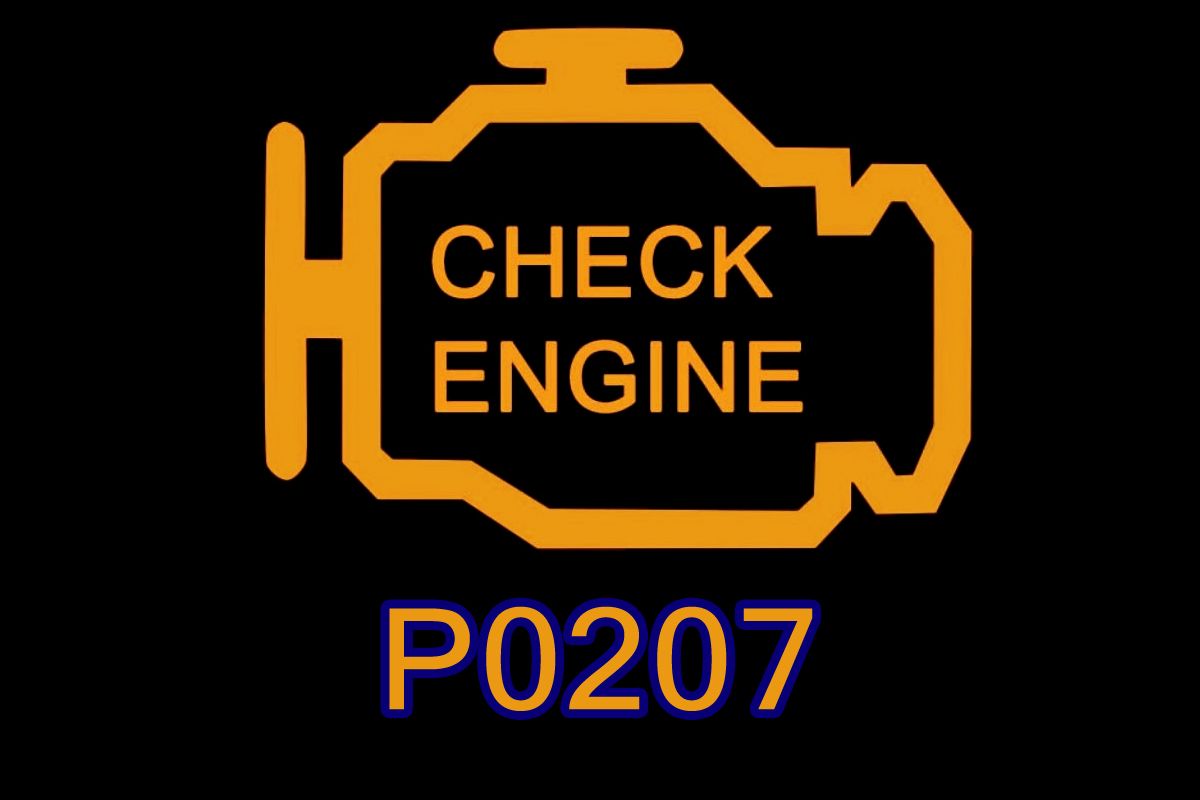
P0207 Cylinder 7 Injector Circuit Malfunction
P0207 is an OBD-II diagnostic trouble code indicating that the engine control module (ECM) has detected an abnormal condition in the electrical circuit controlling the fuel injector for cylinder 7.
The important part of this definition is “circuit malfunction.”
P0207 does not automatically mean that the cylinder 7 injector itself has failed. The injector is certainly one possibility, but the fault can also be caused by its connector, wiring, power supply, control circuit, or the injector driver inside the ECM.
This is particularly important on engines where the injector is expensive or difficult to access. A circuit test can prevent an unnecessary injector replacement.
Start With the Fault, Not the Part
When P0207 is stored, think of the injector as only one component within a larger electrical system.
The ECM commands the injector to open at precisely controlled times. It then monitors the electrical behavior of that circuit.
If the expected electrical response is missing or abnormal, the ECM can set P0207.
The actual fault may therefore be:
-
Inside the injector
-
At the injector connector
-
In the injector wiring
-
In a shared injector power circuit
-
In the ECM control wire
-
At an ECM connector
-
Inside the ECM injector driver
The diagnostic objective is to find where the circuit stops behaving correctly.
What Does Cylinder 7 Mean?
Cylinder numbering is not universal.
On a V-type engine, cylinder 7 may be located in a completely different physical position depending on the manufacturer's numbering convention.
This matters because incorrectly identifying cylinder 7 can lead to testing or replacing the wrong injector.
Before disconnecting anything, use the vehicle's service information to determine:
-
Cylinder 7 location
-
Cylinder 7 injector
-
Injector connector
-
Injector power circuit
-
Injector control wire
-
ECM connector and pin
-
Applicable fuse or relay
Typical Symptoms of P0207
The symptoms depend on whether the problem is permanent or intermittent.
Possible symptoms include:
-
Check Engine Light
-
Rough idle
-
Engine vibration
-
Cylinder misfire
-
Hesitation
-
Poor acceleration
-
Reduced engine power
-
Increased fuel consumption
-
Hard starting
-
Long cranking
-
Engine stalling
-
Limp mode
-
Uneven engine operation
If the cylinder 7 injector completely loses electrical control, the cylinder may contribute little or nothing to engine power.
On a large engine, the problem may initially feel relatively mild. On a smaller engine, a single inactive cylinder can produce a very noticeable misfire.
The Most Common Causes
Faulty cylinder 7 injector
An internal electrical failure can cause the injector to draw abnormal current or fail to respond to the ECM command.
Possible internal faults include an open coil, shorted coil, or another electrical failure depending on injector design.
Damaged wiring
The wiring can be damaged by:
-
Engine vibration
-
High temperatures
-
Chafing
-
Oil contamination
-
Previous repairs
-
Rodent damage
-
Contact with brackets
-
Repeated engine movement
One particularly difficult fault is a conductor that has broken internally while the outer insulation still looks normal.
Injector connector problem
A connector can create P0207 without any problem inside the injector.
Inspect for:
-
Corrosion
-
Loose terminals
-
Bent terminals
-
Water intrusion
-
Oil contamination
-
Broken locking tabs
-
Terminals pushed backward
-
Poor terminal tension
Power supply problem
Depending on the engine, several injectors may share a common power supply.
A blown fuse, damaged relay, poor connection, or broken shared power feed can therefore affect more than one injector.
Control-circuit fault
The ECM's injector control wire can become open or shorted.
A short to ground or voltage can change the electrical behavior of the injector circuit and trigger the DTC.
ECM injector-driver failure
The ECM uses an electronic driver to control the injector.
If everything outside the ECM tests correctly, the driver itself can become a suspect.
It should normally be investigated only after the injector and external wiring have been properly tested.
P0207 Does Not Mean the Injector Is Not Receiving Fuel
This is another important distinction.
P0207 is primarily an electrical circuit diagnosis.
An injector can have a perfect electrical circuit but still have a mechanical fuel-delivery problem.
For example, an injector could be:
-
Restricted
-
Contaminated
-
Sticking
-
Leaking
-
Producing a poor spray pattern
Those problems can cause combustion issues without necessarily producing P0207.
Conversely, an electrically defective injector may set P0207 even before a significant mechanical fuel-delivery problem develops.
First Diagnostic Step: Scan Everything
Do not diagnose P0207 in isolation.
Perform a complete vehicle scan and record all stored and pending codes.
Look for codes relating to:
-
Other injector circuits
-
Cylinder misfires
-
Fuel pressure
-
Engine synchronization
-
Low battery voltage
-
ECM power supply
-
Communication
-
Engine sensors
The relationship between codes can provide a major diagnostic clue.
For example, P0207 appearing alone points toward a cylinder-specific problem.
P0207 appearing together with several injector circuit codes makes a shared electrical supply or harness problem much more interesting.
Use Freeze-Frame Data
If the scan tool provides freeze-frame information, examine the conditions present when P0207 was recorded.
Useful information can include:
-
Engine RPM
-
Engine load
-
Coolant temperature
-
Vehicle speed
-
Battery voltage
-
Fuel pressure
-
Other available engine parameters
The operating conditions can help separate a permanent failure from a temperature- or vibration-dependent fault.
If the code always appears during hard acceleration, for example, inspect the injector harness for movement and vibration-related problems.
Inspect Cylinder 7's Connector Carefully
The connector should be inspected before condemning the injector.
Look closely at the terminals rather than only the plastic housing.
A connector may look perfectly clean while one terminal has lost its ability to maintain proper contact pressure.
Move the harness gently and look for changes in the engine's operation or scan data.
If manipulating the harness causes the fault to appear or disappear, the wiring or connector deserves close attention.
Check the Injector Power Supply
The correct procedure depends on the injector architecture.
Some systems use a common injector power feed, while the ECM switches or controls the other side of the injector circuit.
Other systems use high-side drivers, low-side drivers, or specialized current-control strategies.
Therefore, there is no universal injector voltage value that applies to every vehicle.
The wiring diagram and manufacturer specifications should determine exactly what should be measured and where.
Test the Control Circuit
Once the injector's power supply has been identified, test the control circuit between the injector and ECM.
Look for:
-
Open circuits
-
Short to ground
-
Short to voltage
-
Excessive resistance
-
Voltage drop
-
Damaged terminals
-
Poor ECM connector contact
A continuity test can be useful, but it should not be the only test.
Why a Continuity Test Can Say “Good” When the Circuit Is Bad
Imagine a control wire that has several broken strands inside its insulation.
A multimeter may still show continuity because the remaining strands are touching.
But when the injector is operating and current flows through the circuit, the damaged wire may develop excessive resistance.
The result can be an intermittent injector fault.
For this reason, voltage-drop testing and dynamic testing are often more informative than simple continuity testing.
Check the Harness Under Real Conditions
Intermittent P0207 faults often appear only when the engine is moving.
During acceleration, the engine can move on its mounts. That movement can pull or bend the wiring harness.
A wire that works perfectly at idle may momentarily open when the engine moves.
The same problem can occur when heat changes the physical characteristics of a damaged conductor or connector.
Pay particular attention to wiring near:
-
The injector
-
Exhaust components
-
Engine brackets
-
Harness retaining points
-
Areas with visible rubbing
-
ECM connectors
Test the Injector After the Circuit Checks
Once the external circuit has been verified, test the injector itself.
Depending on the vehicle, appropriate tests may include:
-
Injector resistance
-
Current-draw testing
-
Electrical activation
-
Oscilloscope analysis
-
Injector balance testing
-
Fuel delivery testing
-
Return-flow testing on applicable diesel systems
Injector resistance can provide useful information, but it is not a complete health test.
An injector can have an acceptable resistance measurement and still have a mechanical problem.
It can also develop an electrical fault only when it becomes hot.
Oscilloscope Testing Can Reveal More
For difficult P0207 cases, an oscilloscope can be extremely useful.
The electrical waveform of cylinder 7 can be compared with another known-good injector.
Depending on the injector design, this can reveal:
-
Abnormal current behavior
-
Open circuits
-
Short circuits
-
Incorrect driver operation
-
Abnormal activation
-
Differences between injectors
This can help determine whether the abnormal behavior originates at the injector or in the ECM-controlled circuit.
P0207 With a Misfire Code
P0207 can be accompanied by a cylinder-specific misfire code if the injector is not operating correctly.
However, a misfire does not prove that the injector is the root cause.
Cylinder 7 should also be evaluated for:
-
Ignition problems
-
Compression problems
-
Valve problems
-
Fuel-pressure issues
-
Intake leaks
-
Timing problems
-
Valve timing/VVT problems
-
Mechanical engine damage
The injector circuit should be investigated because of P0207, while the combustion problem should be diagnosed independently.
What If the Injector Tests Good?
This is a common situation.
Suppose the injector has the correct resistance and appears to operate normally on a bench test.
P0207 can still return if the actual problem is:
-
A loose terminal
-
A damaged wire
-
An intermittent open
-
Harness movement
-
Heat-related resistance
-
An ECM connector problem
-
An intermittent ECM driver fault
This is why an intermittent code should be diagnosed under the conditions that caused it.
A static test performed with the engine cold may not reproduce a fault that occurs only after 30 minutes of driving.
What If Several Injector Codes Are Stored?
This changes the diagnostic direction considerably.
If P0207 appears with injector circuit codes for other cylinders, investigate shared electrical components before replacing several injectors.
Look for:
-
Common injector power
-
Fuse
-
Relay
-
Shared wiring
-
Common ground
-
ECM power supply
-
Engine harness damage
-
Connector problems
-
Low system voltage
Several injectors failing electrically at exactly the same time is usually a reason to look for something they have in common.
Gasoline and Diesel Applications
Injector control differs substantially between gasoline and diesel engines.
A gasoline injector may use a relatively conventional electromagnetic coil.
Modern diesel systems can use highly sophisticated electronic injector control, with different voltage and current requirements.
Some diesel injectors require specialized testing equipment.
Consequently, never assume that an injector test procedure from one vehicle can safely be applied to another.
Do not apply battery voltage directly to an injector unless the manufacturer specifically requires that procedure.
An incorrect test can damage the injector or ECM driver.
Could Low Battery Voltage Trigger P0207?
Low system voltage can affect electronic control systems, particularly if several unrelated electrical codes appear at the same time.
Check:
-
Battery condition
-
Charging system
-
Battery terminals
-
Engine grounds
-
ECM power supply
However, if the vehicle consistently reports P0207 while all other electrical systems operate normally, a cylinder 7-specific circuit fault is more likely than a general low-voltage problem.
Could the ECM Be Faulty?
It is possible.
The ECM contains the electronic circuitry responsible for controlling the injector.
If the injector and wiring are confirmed to be correct but the control signal remains abnormal, the ECM driver can become a legitimate suspect.
Before replacing or repairing an ECM, confirm:
-
Correct injector resistance
-
Correct power supply
-
Correct control-circuit continuity
-
No short circuits
-
Acceptable voltage drop
-
Good connector terminals
-
Good ECM power and grounds
Only then should an internal ECM failure be considered seriously.
A Realistic Diagnostic Scenario
A vehicle arrives with P0207 and an intermittent rough-running complaint.
The technician checks the cylinder 7 injector and finds an apparently normal resistance value.
The injector connector is also visually clean.
The next step is to monitor the circuit while the engine is operating.
During acceleration, the engine moves slightly and the injector signal disappears momentarily.
Inspection of the harness reveals that the cylinder 7 injector wire has been rubbing against a metal bracket.
The conductor is partially damaged inside the insulation.
At idle, the remaining conductor strands maintain contact.
During acceleration, engine movement opens the damaged section for a fraction of a second.
The ECM detects the abnormal injector circuit and stores P0207.
In this case, replacing the injector would not solve the real problem.
The repair is the damaged wiring and protection of the harness against further rubbing.
Repairing P0207
The correct repair depends on what the diagnostic tests reveal.
Possible repairs include:
-
Replacing the cylinder 7 injector
-
Repairing damaged wiring
-
Replacing the injector connector
-
Repairing loose terminals
-
Restoring the injector power supply
-
Repairing a shorted control circuit
-
Repairing the engine harness
-
Repairing an ECM connector
-
Repairing or replacing the ECM when its injector driver has been conclusively diagnosed
After the repair, clear the DTC and verify the repair under appropriate operating conditions.
A final scan should confirm that P0207 does not return.
Final Diagnosis
P0207 – Cylinder 7 Injector Circuit Malfunction means that the ECM has detected an abnormal electrical condition in the circuit controlling the cylinder 7 injector.
It does not automatically mean that cylinder 7's injector must be replaced.
The correct diagnostic path is to work through the complete circuit:
Identify cylinder 7 → inspect the connector → verify power supply → test the control circuit → check voltage drop → inspect wiring under movement and heat → test the injector → analyze the injector signal if necessary → evaluate the ECM driver last.
The key principle is simple:
P0207 identifies a problem with the injector circuit, not necessarily a failed injector.
That distinction can make the difference between a precise electrical repair and unnecessarily replacing an expensive injector.