TR
TR EN
EN

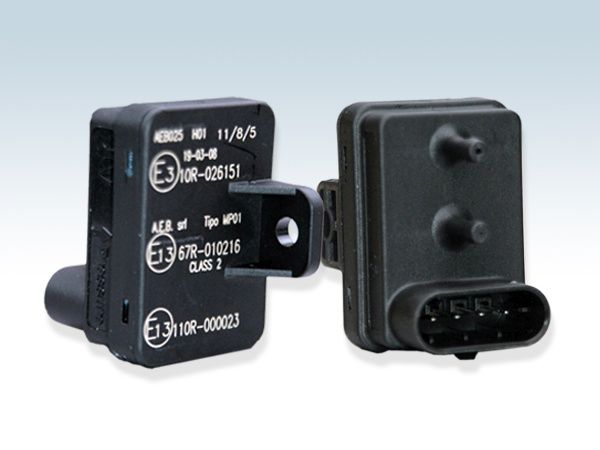
What Is an LPG MAP Sensor? What Are the Symptoms of Failure?
The LPG MAP sensor is an important component in sequential LPG systems. It monitors pressure-related information and sends data to the LPG electronic control unit (ECU), helping the system determine the engine's operating conditions and calculate the appropriate amount of LPG to inject.
Depending on the LPG system, the MAP sensor may be a standalone component or part of a combined sensor that also measures LPG gas pressure and gas temperature.
If the sensor provides incorrect information, the LPG ECU may calculate the fuel quantity incorrectly. This can result in rough running, hesitation, poor acceleration, increased LPG consumption, misfires, or a Check Engine light.
What Does an LPG MAP Sensor Do?
The main function of the LPG MAP sensor is to monitor pressure or vacuum conditions associated with the engine intake system.
The LPG ECU can use this information to estimate engine load and adjust LPG injection accordingly.
Depending on the system design, the sensor may provide information about:
-
Intake manifold pressure
-
LPG gas pressure
-
LPG gas temperature
The LPG ECU can then use this information together with other parameters such as:
-
Engine RPM
-
Gasoline injector pulse width
-
LPG pressure
-
LPG temperature
-
Engine coolant temperature
-
LPG calibration map
-
Engine load
to calculate how long the LPG injectors should remain open.
How Does an LPG MAP Sensor Work?
The pressure inside the intake manifold changes continuously as engine operating conditions change.
At idle, the throttle is mostly closed and the intake manifold generally has relatively high vacuum.
When the accelerator is pressed and engine load increases, manifold pressure changes.
The MAP sensor detects these pressure changes and converts them into an electrical signal that the LPG ECU can interpret.
The LPG ECU uses this information to understand how the engine is operating and to adjust LPG delivery.
A problem occurs when the sensor reports a pressure value that does not correspond to the actual operating condition.
Is an LPG MAP Sensor the Same as the Vehicle's Original MAP Sensor?
Not necessarily.
The vehicle's original engine MAP sensor is part of the factory engine management system and normally communicates with the engine ECU.
An LPG MAP sensor, on the other hand, may be a separate component installed as part of the LPG conversion system.
Many LPG systems use a combined pressure sensor that can monitor both manifold pressure and LPG gas pressure. Some systems also incorporate gas temperature measurement into the same sensor assembly.
Therefore, the exact function of an "LPG MAP sensor" depends on the LPG system's design.
This distinction is important when diagnosing a problem because a fault in the original engine MAP sensor and a fault in the LPG pressure sensor can produce similar symptoms but require different diagnostic procedures.
What Are the Symptoms of a Bad LPG MAP Sensor?
A defective LPG MAP sensor does not always produce the same symptoms.
The behavior depends on whether the sensor has completely failed, is providing an inaccurate signal, or is experiencing an intermittent electrical or hose-related problem.
Common symptoms include the following.
Rough Idle on LPG
One of the first symptoms can be an unstable idle when the engine switches to LPG.
The vehicle may:
-
Vibrate at idle
-
Experience fluctuating RPM
-
Run unevenly
-
Develop occasional hesitation
-
Nearly stall
If the engine runs normally on gasoline but becomes unstable immediately after switching to LPG, the LPG system deserves particular attention.
Poor Acceleration
Incorrect pressure information can cause the LPG ECU to calculate the wrong amount of fuel.
The driver may notice that the vehicle:
-
Accelerates more slowly
-
Hesitates when the accelerator is pressed
-
Feels weak under load
-
Responds poorly to sudden acceleration
The problem may be particularly noticeable when the engine requires a larger amount of fuel.
Engine Misfire
If the LPG ECU receives incorrect pressure information, the mixture may become too rich or too lean.
An incorrect mixture can contribute to combustion instability and misfire.
Misfire may be noticed as:
-
Engine shaking
-
Hesitation
-
Stumbling during acceleration
-
Rough idle
-
Loss of power
However, misfire does not automatically mean that the LPG MAP sensor is defective.
Spark plugs, ignition coils, LPG injectors, regulator pressure, fuel calibration, and engine compression can also cause misfire.
Engine Stalling on LPG
In some cases, an LPG pressure or MAP-related problem can cause the engine to stall.
This may happen:
-
When switching from gasoline to LPG
-
When coming to a stop
-
At idle
-
During sudden throttle changes
-
When engine load changes rapidly
If the vehicle consistently stalls only on LPG, the LPG system should be investigated rather than assuming that the engine itself has a mechanical problem.
Increased LPG Consumption
A sensor that reports incorrect pressure information can cause incorrect LPG fuel calculations.
If the LPG ECU believes that operating conditions require more fuel than they actually do, the engine may consume excessive LPG.
However, high LPG consumption should not automatically be blamed on the MAP sensor.
Incorrect calibration, excessive regulator pressure, leaking injectors, injector sizing, clogged filters, or a faulty regulator can also cause excessive fuel consumption.
Loss of Engine Performance
A faulty LPG MAP or pressure sensor can cause the LPG ECU to use incorrect information when calculating fuel delivery.
As a result, the engine may produce noticeably less power on LPG than on gasoline.
The difference can become more obvious during:
-
Uphill driving
-
Hard acceleration
-
High RPM
-
Heavy engine load
If the vehicle performs normally on gasoline but loses power on LPG, pressure and fuel-delivery data should be checked.
Problems When Switching From Gasoline to LPG
The LPG MAP or pressure sensor can also affect the transition between fuels.
Possible symptoms include:
-
Hesitation when switching to LPG
-
Engine shaking
-
Temporary loss of power
-
Stalling
-
Delayed LPG operation
-
Switching back to gasoline
However, these symptoms can also be caused by incorrect switching temperature, regulator problems, injector issues, or poor LPG calibration.
The LPG System May Switch Back to Gasoline
Some LPG systems are designed to protect the engine when an abnormal pressure or sensor condition is detected.
If the system detects an LPG pressure problem, it may automatically return to gasoline operation.
This can happen because of:
-
Low LPG pressure
-
Pressure sensor problems
-
Regulator problems
-
Insufficient fuel flow
-
Electrical faults
-
Incorrect sensor readings
Therefore, switching back to gasoline does not automatically prove that the MAP sensor is defective.
Can an LPG MAP Sensor Turn On the Check Engine Light?
Yes, it can contribute to a Check Engine light, but the relationship is often indirect.
The LPG MAP sensor may communicate primarily with the LPG ECU rather than directly with the vehicle's engine ECU.
If incorrect LPG pressure information causes the engine to run too rich or too lean, the factory engine ECU may detect the resulting air-fuel problem through the oxygen sensor and fuel-trim system.
The engine ECU may then store an OBD-II code.
Possible codes can include mixture-related or misfire codes such as:
-
P0171 – System Too Lean
-
P0172 – System Too Rich
-
P0300 – Random/Multiple Cylinder Misfire
-
Cylinder-specific misfire codes
These codes do not prove that the LPG MAP sensor itself is faulty.
Why Can a MAP Sensor Hose Cause the Same Problem?
The sensor itself may be working correctly while the hose connected to it has a problem.
A cracked, loose, blocked, or incorrectly connected hose can cause the sensor to receive incorrect pressure information.
Possible problems include:
-
Cracked vacuum hose
-
Loose connection
-
Blocked hose
-
Incorrect hose routing
-
Damaged hose
-
Air leakage around the connection
This is why the hose and connection should be checked before replacing the sensor.
Electrical Problems Can Look Like Sensor Failure
An LPG MAP sensor can also produce incorrect readings because of an electrical problem.
Possible causes include:
-
Corroded connector
-
Loose terminal
-
Damaged wiring
-
Broken wire
-
Poor ground
-
Incorrect supply voltage
-
Intermittent connection
An intermittent wiring fault can be particularly difficult to diagnose because the vehicle may operate normally most of the time.
The sensor should therefore not be condemned solely because its live data appears abnormal.
Why Does an LPG MAP Sensor Fail?
Several factors can contribute to sensor failure.
Common causes include:
-
Normal electronic component aging
-
Excessive heat
-
Moisture
-
Corrosion
-
Damaged wiring
-
Poor electrical connections
-
Contaminated hoses
-
Incorrect installation
-
Physical damage
-
Contamination from the LPG system
The actual cause should be identified before replacing the sensor.
How Is an LPG MAP Sensor Tested?
The first step is usually a visual inspection.
The technician should check:
-
Sensor connector
-
Wiring
-
Vacuum hose
-
LPG pressure connections
-
Hose condition
-
Electrical terminals
After that, the LPG system can be connected to appropriate diagnostic software to monitor live sensor data.
The sensor reading should change logically as engine operating conditions change.
For example, pressure-related values should respond when:
-
The engine starts
-
The throttle opens
-
Engine load increases
-
Engine load decreases
-
RPM changes
A sensor value that remains fixed, changes erratically, or does not correspond to the actual operating condition may indicate a problem.
However, live data should be compared with other parameters before reaching a conclusion.
How Do You Distinguish a MAP Sensor Problem From a Regulator Problem?
This can be challenging because both problems can create similar symptoms.
A faulty MAP or pressure sensor and a regulator problem can both cause:
-
Lean mixture
-
Rich mixture
-
Hesitation
-
Misfire
-
Poor acceleration
-
Loss of power
-
Check Engine light
-
Switching back to gasoline
The key is to examine the actual LPG pressure and sensor readings under different operating conditions.
If LPG pressure itself drops significantly under load, the regulator, filter, fuel supply, or system capacity may be involved.
If actual pressure is stable but the sensor reports an implausible value, the sensor, wiring, hose, or calibration becomes more suspicious.
Can an LPG MAP Sensor Be Cleaned?
There is no universal cleaning procedure that applies to every LPG MAP sensor.
Some sensors contain sensitive electronic and pressure-measuring components that can be damaged by inappropriate chemicals.
For this reason, aggressive solvents should not be sprayed into the sensor unless the manufacturer specifically permits the procedure.
In many cases, inspecting and cleaning the external connections or replacing a damaged hose is more appropriate than attempting to clean the sensor itself.
If the sensor has an internal electronic or measuring-element failure, cleaning will not repair it.
Does an LPG MAP Sensor Need Calibration After Replacement?
This depends on the LPG system.
Some systems may recognize the replacement sensor after installation, while others require sensor configuration, pressure calibration, or LPG ECU adjustments.
After replacement, it is therefore sensible to verify:
-
LPG pressure
-
Sensor readings
-
Gas temperature
-
LPG injector operation
-
Fuel trims
-
LPG calibration
If the old sensor had been reporting incorrect data for a long period, the LPG calibration may also need to be checked.
LPG MAP Sensor vs. LPG Pressure Sensor
Terminology can sometimes create confusion.
Some LPG systems use separate sensors for:
-
Intake manifold pressure
-
LPG gas pressure
-
Gas temperature
Other systems use a combined sensor assembly.
As a result, an LPG technician may refer to a component as a "MAP sensor" even though that component also measures LPG rail or regulator pressure.
Before ordering a replacement, the exact LPG system and sensor part number should be identified.
Installing a sensor that looks similar but has different characteristics can result in incorrect readings and calibration problems.
What Should You Do If You Suspect an LPG MAP Sensor Failure?
The sensor should not be replaced immediately based only on symptoms.
A logical diagnostic process is:
1. Compare gasoline and LPG operation
Determine whether the problem occurs exclusively on LPG.
2. Read the OBD-II fault codes
Check for mixture, misfire, and other relevant codes.
3. Check LPG live data
Look at MAP, gas pressure, gas temperature, and injector-related values.
4. Inspect the sensor hose
Look for cracks, blockages, loose connections, and incorrect routing.
5. Inspect the electrical system
Check the connector, wiring, power supply, and ground.
6. Check LPG pressure under load
A pressure problem may point toward the regulator, filter, fuel supply, or system capacity rather than the sensor.
7. Check LPG injectors
Injector flow and response should be evaluated.
8. Check LPG calibration
A poorly calibrated system can produce symptoms that resemble a sensor failure.
Why Is LPG MAP Sensor Diagnosis Important?
The LPG MAP sensor provides information that can influence how the LPG ECU calculates fuel delivery. If the sensor reports incorrect information, the LPG system may deliver too much or too little fuel.
This can result in rough idle, hesitation, poor acceleration, misfire, increased LPG consumption, loss of power, switching back to gasoline, and sometimes a Check Engine light.
However, these symptoms are not exclusive to the MAP sensor.
A faulty regulator, restricted filter, LPG injector problem, vacuum leak, wiring fault, incorrect calibration, or another engine-management problem can produce very similar symptoms.
For this reason, the most reliable diagnosis is based on OBD-II codes, LPG live data, actual pressure measurements, sensor readings, wiring, hoses, and LPG calibration rather than replacing the MAP sensor based solely on the symptoms.