TR
TR EN
EN

What Is a Fuel Pressure Regulator? What Are the Symptoms of Failure?
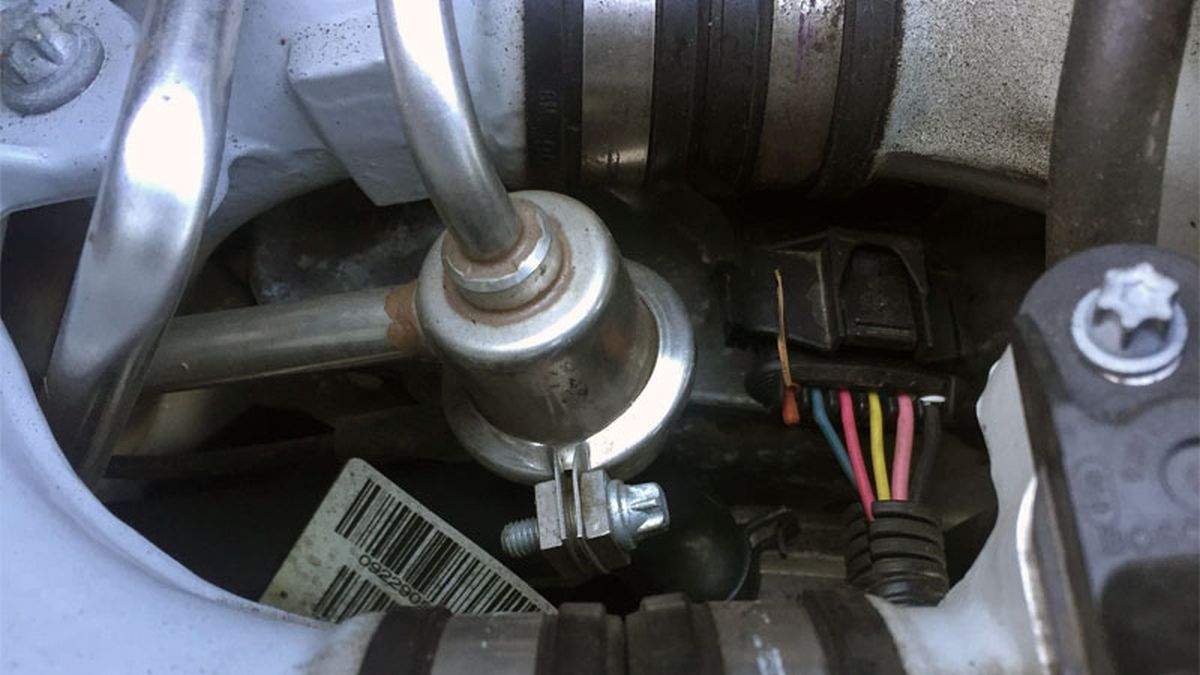
A fuel pressure regulator is an important component of the fuel system that helps maintain or control fuel pressure within the range required by the engine. Proper fuel pressure is essential for delivering the correct amount of fuel through the injectors under different operating conditions.
If fuel pressure becomes too low or too high, the engine may experience starting problems, poor performance, hesitation, misfires, increased fuel consumption, or an illuminated check engine light.
However, modern fuel systems are not all designed the same way. Some vehicles use a traditional mechanical fuel pressure regulator, while newer gasoline and diesel engines may use electronic fuel pressure control valves, fuel pressure sensors, pump control modules, or regulators integrated into the fuel pump or high-pressure fuel pump.
What Does a Fuel Pressure Regulator Do?
The main purpose of a fuel pressure regulator is to control fuel pressure so that the fuel injection system can operate correctly.
The fuel pump delivers fuel from the tank toward the engine. Depending on the design, the regulator controls excess pressure by returning fuel to the tank or by electronically regulating how much fuel pressure is produced.
The engine's fuel requirements constantly change.
For example:
-
Fuel demand is relatively low at idle.
-
Fuel demand increases during acceleration.
-
High engine loads require more fuel.
-
Cold starting uses different fuel strategies.
-
Turbocharged engines may require different fuel pressure control depending on engine load.
-
Direct-injection engines require precise high-pressure fuel control.
The regulator or electronic pressure-control system helps the fuel system respond to these changing conditions.
How Does a Fuel Pressure Regulator Work?
A traditional mechanical fuel pressure regulator typically uses a spring-loaded diaphragm to control fuel pressure.
When fuel pressure rises above the specified range, the regulator can allow excess fuel to flow back through the return system on vehicles equipped with a return fuel line.
Some older and conventional gasoline fuel systems also use a vacuum-referenced regulator. In these systems, intake manifold pressure affects the regulator's operation so that the pressure difference across the injector remains appropriate as engine load changes.
This design should not be assumed for every vehicle. Many modern returnless fuel systems use different methods of regulating pressure.
Do All Cars Have a Separate Fuel Pressure Regulator?
No.
This is an important point when diagnosing fuel pressure problems.
Depending on the vehicle, fuel pressure may be controlled by:
-
A mechanical fuel pressure regulator
-
A regulator integrated into the fuel pump module
-
An electronic fuel pressure control valve
-
A fuel pump control module
-
A high-pressure fuel pump control valve
-
The engine control unit (ECU)
-
A combination of a pressure sensor and electronic control system
Gasoline direct-injection and common-rail diesel engines, in particular, can use much more sophisticated fuel pressure control systems.
Therefore, a fuel pressure problem does not automatically mean that the fuel pressure regulator has failed.
What Are the Symptoms of a Bad Fuel Pressure Regulator?
A faulty fuel pressure regulator can cause different symptoms depending on whether fuel pressure becomes too low, too high, or unstable.
Common symptoms include:
-
Hard starting
-
Long cranking
-
Engine starting and then stalling
-
Rough idle
-
Hesitation during acceleration
-
Loss of engine power
-
Misfires
-
Increased fuel consumption
-
Rich or lean fuel mixture
-
Strong fuel smell
-
Black exhaust smoke on gasoline engines
-
Check engine light
-
Fuel pressure-related diagnostic trouble codes
-
Poor high-RPM performance
-
Engine hesitation under load
The exact symptoms depend on the fuel system design and the nature of the failure.
Hard Starting and Long Cranking
One of the most common symptoms of low fuel pressure is difficult starting.
The engine needs sufficient fuel pressure for the injectors to deliver the required amount of fuel.
If the regulator allows pressure to fall too low, the engine may require a longer cranking period before it starts.
You may notice:
-
Extended cranking before starting
-
Several attempts before the engine starts
-
Difficult cold starts
-
Difficult hot restarts
-
The engine starting and immediately stalling
However, a weak fuel pump, restricted fuel filter, leaking injector, fuel pressure sensor problem, or electrical issue can produce similar symptoms.
Engine Starts and Then Stalls
If fuel pressure cannot be maintained after the engine starts, the engine may run briefly and then stall.
This can happen when the fuel system cannot provide sufficient pressure at idle or when fuel pressure drops significantly after the initial start.
Possible causes include:
-
Fuel pressure regulator failure
-
Weak fuel pump
-
Restricted fuel filter
-
Fuel pressure control valve problem
-
Fuel pressure sensor fault
-
Injector problems
-
Wiring or power supply problems
A proper fuel pressure test is necessary to distinguish these faults.
Rough or Unstable Idle
Fuel pressure has a direct effect on fuel delivery.
If pressure is unstable, the amount of fuel delivered by the injectors may not match the ECU's calculations.
The result can be:
-
Rough idle
-
RPM fluctuations
-
Engine vibration
-
Occasional misfires
-
Stalling at idle
-
Poor throttle response
Fuel pressure problems can therefore sometimes be mistaken for ignition problems, vacuum leaks, or faulty sensors.
Hesitation During Acceleration
A fuel pressure problem may not be obvious during normal driving.
The engine can sometimes idle and cruise relatively normally while developing a problem when the driver suddenly demands more power.
During acceleration, fuel demand increases significantly.
If the fuel system cannot maintain the required pressure, the engine may hesitate or lose power.
Possible symptoms include:
-
Hesitation
-
Jerking
-
Poor acceleration
-
Temporary loss of power
-
Misfire under load
-
Reduced high-RPM performance
This is why fuel pressure should sometimes be monitored under load rather than only at idle.
Loss of Engine Power
Low fuel pressure can prevent the engine from receiving enough fuel when demand is high.
The driver may notice that the vehicle:
-
Feels weaker than normal
-
Struggles on hills
-
Accelerates slowly
-
Loses power at higher RPM
-
Has difficulty maintaining speed under heavy load
A clogged fuel filter or weak fuel pump can produce exactly the same symptoms.
Therefore, replacing the regulator without testing the rest of the fuel system can result in an unnecessary repair.
Increased Fuel Consumption
A fuel pressure regulator that causes excessive fuel pressure can contribute to a rich air-fuel mixture.
When fuel pressure is too high, the injectors can deliver more fuel during the same injection period.
The ECU may attempt to compensate by reducing injector pulse width and fuel trims, but its ability to compensate depends on the system and the severity of the problem.
Possible results include:
-
Increased fuel consumption
-
Rough running
-
Fuel smell
-
Poor emissions
-
Spark plug fouling
-
Black exhaust smoke
Increased fuel consumption can have many other causes, so it should not automatically be attributed to the regulator.
Black Smoke From the Exhaust
On gasoline engines, excessive fueling can produce black exhaust smoke.
If a fuel pressure problem causes the mixture to become excessively rich, the engine may not be able to burn all the injected fuel efficiently.
Black smoke may be accompanied by:
-
Poor fuel economy
-
Fuel smell
-
Rough idle
-
Misfires
-
Fouled spark plugs
-
Reduced engine performance
A rich mixture can also damage the catalytic converter if the condition persists.
Strong Fuel Smell
A strong gasoline smell can occur when the engine is running excessively rich or when fuel is leaking.
A damaged regulator can contribute to an overly rich condition on some systems.
However, fuel smell should never be automatically blamed on the regulator.
The technician should also inspect:
-
Fuel lines
-
Fuel rail
-
Injectors
-
Fuel pump module
-
Fuel tank connections
-
Fuel pressure regulator
-
Fuel system seals
A visible or suspected fuel leak is a safety issue because gasoline is highly flammable.
Check Engine Light
Modern engines monitor fuel pressure and fuel-system operation through sensors and control strategies.
If actual fuel pressure differs significantly from the expected pressure, the ECU may store a diagnostic trouble code.
Depending on the vehicle, codes may relate to:
-
Low fuel pressure
-
High fuel pressure
-
Fuel pressure performance
-
Fuel pressure sensor
-
Fuel pressure control
-
Fuel pressure control circuit
The exact diagnostic code definitions are vehicle-specific.
A fuel pressure code does not automatically prove that the regulator is defective.
What Happens When Fuel Pressure Is Too Low?
Low fuel pressure means the injectors may not be able to deliver the required amount of fuel, particularly when the engine is under heavy load.
Possible symptoms include:
-
Hard starting
-
Long cranking
-
Engine stalling
-
Hesitation
-
Misfires
-
Poor acceleration
-
Loss of power
-
Lean mixture
-
Poor high-RPM performance
Possible causes include:
-
Faulty fuel pressure regulator
-
Weak fuel pump
-
Restricted fuel filter
-
Blocked fuel line
-
Low pump voltage
-
Faulty fuel pressure control valve
-
Fuel pressure sensor problem
-
Electrical or wiring problems
What Happens When Fuel Pressure Is Too High?
Excessive fuel pressure can cause excessive fuel delivery depending on the injection system.
Possible symptoms include:
-
Rich air-fuel mixture
-
Increased fuel consumption
-
Black smoke
-
Fuel smell
-
Rough idle
-
Spark plug fouling
-
Misfires
-
Difficult starting
-
High fuel pressure fault codes
Excessive fueling can also increase the risk of catalytic converter damage.
On high-pressure direct-injection or diesel systems, abnormal pressure can cause additional drivability and safety concerns because these systems operate at much higher pressures.
Fuel Pressure Regulator and Fuel Injectors
The fuel pressure regulator and injectors work closely together.
Injector fuel delivery depends not only on injector opening time but also on the pressure difference across the injector.
If fuel pressure changes unexpectedly, the amount of fuel delivered during the same injector pulse can change.
This means a fuel pressure problem can produce symptoms that initially appear to be an injector problem.
Likewise, a leaking or malfunctioning injector can create symptoms that appear to be related to fuel pressure.
For this reason, both the fuel pressure system and injectors should be evaluated during diagnosis.
Fuel Pressure Regulator vs Fuel Pressure Sensor
A fuel pressure regulator and a fuel pressure sensor perform different functions.
The fuel pressure regulator controls or regulates fuel pressure.
The fuel pressure sensor measures fuel pressure and sends information to the ECU.
In a modern electronic fuel system, the ECU can use the pressure sensor's information to determine whether the actual pressure matches the requested pressure.
If the sensor reports incorrect information, the ECU may make incorrect control decisions.
If the regulator or control valve is faulty, the sensor may correctly report that the actual pressure is too high or too low.
Therefore, these components should not be confused.
Fuel Pressure Regulator in GDI Engines
Gasoline direct-injection engines use a different fuel system from conventional port-injected gasoline engines.
In a GDI system, fuel is injected directly into the combustion chamber.
The system commonly includes:
-
Fuel tank
-
Low-pressure fuel pump
-
High-pressure fuel pump
-
Fuel rail
-
Fuel pressure sensor
-
High-pressure fuel control valve
-
GDI injectors
-
ECU
Depending on the design, the fuel pressure control component may be integrated into the high-pressure pump or another part of the system.
This means a GDI fuel pressure problem requires diagnosis of both the low-pressure and high-pressure sides.
A simple assumption that the vehicle has a conventional fuel pressure regulator mounted on the fuel rail can therefore be incorrect.
Fuel Pressure Regulator in Diesel Engines
Modern common-rail diesel engines also use sophisticated fuel pressure control.
The system can include:
-
High-pressure fuel pump
-
Common rail
-
Rail pressure sensor
-
Fuel metering valve
-
Pressure control valve
-
High-pressure injectors
-
ECU
Different manufacturers use different terminology for these components.
A fuel pressure control problem in a common-rail diesel engine can be caused by the pump, metering valve, pressure-control valve, rail pressure sensor, injectors, wiring, or excessive internal fuel leakage.
Because common-rail systems operate at extremely high pressure, diagnosis and repair must follow the manufacturer's safety procedures.
Why Does a Fuel Pressure Regulator Fail?
Several problems can cause a fuel pressure regulator or fuel pressure control component to fail.
Mechanical wear
Mechanical regulators contain moving components that can wear over time.
Diaphragm damage
Traditional diaphragm-type regulators can develop internal diaphragm failures.
On certain vacuum-referenced designs, a damaged diaphragm can allow fuel to enter the vacuum line. This is a serious fault and requires immediate attention.
Contaminated fuel
Dirt or contamination in the fuel can interfere with the operation of pressure-control components.
Electrical faults
Electronic regulators and control valves depend on proper wiring, connectors, power supply, and ECU control.
Heat and age
Repeated exposure to heat, vibration, and fuel-system pressure can eventually contribute to component deterioration.
Fuel pump problems
A faulty pump can create abnormal fuel pressure that may initially be mistaken for a regulator failure.
How Is a Fuel Pressure Regulator Diagnosed?
Correct diagnosis begins with measuring and evaluating actual fuel pressure rather than simply replacing the regulator.
A technician may:
-
Scan the vehicle for diagnostic trouble codes.
-
Check the manufacturer's specified fuel pressure.
-
Measure fuel pressure using the appropriate test equipment.
-
Compare actual and commanded pressure.
-
Monitor fuel pressure during starting.
-
Check fuel pressure at idle where applicable.
-
Monitor pressure during acceleration or under load.
-
Check whether pressure remains within specification after the engine is switched off.
-
Inspect the regulator or pressure-control valve.
-
Check the fuel pump and filter.
-
Test the fuel pressure sensor.
-
Inspect wiring, connectors, power supply, and grounds.
-
Check injector operation and leakage where necessary.
The exact test procedure depends on the vehicle.
Why Is Actual Fuel Pressure Important?
Replacing a fuel pressure regulator based only on symptoms can lead to incorrect repairs.
For example, if fuel pressure is low, the real problem may be a weak fuel pump rather than the regulator.
Similarly, high fuel pressure could be caused by:
-
A pressure-control problem
-
A faulty sensor
-
A restricted return system
-
A control valve
-
A high-pressure pump problem
-
Wiring or ECU control issues
The most useful approach is to compare commanded fuel pressure with actual fuel pressure and then determine which component is responsible for the difference.
Can a Bad Fuel Pressure Regulator Cause Gasoline to Get Into Engine Oil?
It can contribute to fuel dilution under certain failure conditions, but it is not the only possible cause.
If the engine operates excessively rich, some unburned fuel can enter the cylinder walls and eventually contaminate the engine oil.
Leaking fuel injectors, repeated short trips, cold operation, misfires, and other fuel-system problems can also cause fuel dilution.
Signs of significant gasoline contamination include:
-
Strong gasoline smell from the oil
-
Rising engine oil level
-
Unusually thin oil
-
Increased fuel consumption
Fuel dilution reduces the oil's ability to protect bearings, cylinder walls, turbochargers, timing components, and other engine parts.
If gasoline is suspected in the engine oil, the underlying problem should be diagnosed rather than simply changing the oil.
Can a Fuel Pressure Regulator Be Cleaned?
Cleaning is not a universal solution.
If contamination is preventing a pressure-control component from operating correctly, cleaning may sometimes be part of the repair procedure when specifically permitted by the manufacturer.
However, cleaning cannot repair:
-
A damaged diaphragm
-
Internal mechanical wear
-
A broken spring
-
Electrical failure
-
Internal leakage
-
A damaged electronic control valve
In such cases, replacement is normally required.
Can You Drive With a Bad Fuel Pressure Regulator?
It depends on the severity of the problem.
A vehicle with a minor fuel pressure deviation may continue to run, but continued driving can potentially cause additional problems.
A persistent rich condition can damage the catalytic converter and increase fuel consumption.
A severely low-pressure condition can cause stalling or loss of power, particularly under load.
Driving becomes particularly unsafe if the vehicle has:
-
A fuel leak
-
Strong fuel smell
-
Severe engine misfire
-
Sudden power loss
-
Engine stalling
-
Severe hesitation
-
Abnormal high-pressure fuel-system behavior
In these situations, the vehicle should be inspected as soon as possible.
Fuel Pressure Regulator Replacement
Replacement procedures vary significantly between vehicles.
On some older systems, the regulator may be mounted directly on the fuel rail.
On other vehicles, it may be part of the fuel pump module inside the fuel tank.
In modern GDI engines, the pressure-control component may be integrated with the high-pressure fuel pump.
During replacement, the correct seals and O-rings should be used where applicable, and the manufacturer's fuel-system depressurization procedure should be followed.
After replacement, some vehicles may also require fuel-system relearning, adaptation, or diagnostic procedures.
Fuel System Safety
Fuel-system repairs should always be treated as potentially hazardous.
Gasoline is highly flammable, and high-pressure fuel can cause serious injury.
Important precautions include:
-
Work in a well-ventilated area.
-
Keep flames and ignition sources away.
-
Do not smoke while working on the fuel system.
-
Relieve fuel pressure according to the manufacturer's procedure.
-
Wear appropriate eye protection.
-
Clean fuel spills immediately.
-
Never loosen a high-pressure fuel line simply to check for pressure.
-
Never work on a GDI or common-rail high-pressure system without following the correct safety procedure.
High-pressure fuel can penetrate the skin and cause severe injury even when an external wound appears small.
Conclusion
The fuel pressure regulator plays an important role in maintaining the fuel pressure required for proper engine operation. Depending on the vehicle, this function may be performed by a traditional mechanical regulator, an electronic pressure-control valve, a component inside the fuel pump module, or part of a more sophisticated high-pressure fuel system.
A faulty fuel pressure regulator can cause hard starting, long cranking, rough idle, hesitation, poor acceleration, loss of power, increased fuel consumption, rich or lean conditions, misfires, fuel smell and check engine light warnings.
However, these symptoms do not prove that the regulator itself has failed.
A weak fuel pump, restricted fuel filter, leaking injector, fuel pressure sensor, wiring fault, control valve, or ECU-related problem can produce similar symptoms.
The most reliable diagnosis is therefore based on actual fuel pressure measurements, commanded-versus-actual pressure data, diagnostic trouble codes, electrical tests and inspection of the complete fuel system rather than replacing the regulator based on symptoms alone.