TR
TR EN
EN

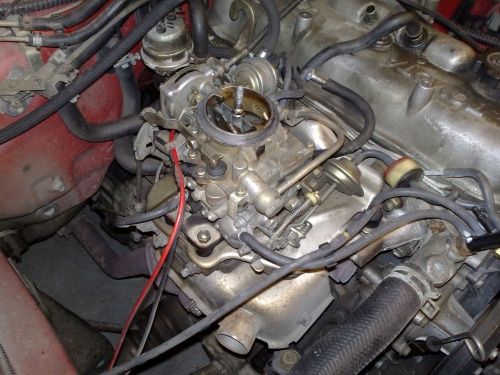
What Is the Function of a Carburetor? How Does a Carburetor Work?
A carburetor is a mechanical fuel-delivery device used primarily in older gasoline engines. Its main function is to prepare the air-fuel mixture required for combustion and deliver it to the engine.
A gasoline engine cannot run properly by simply receiving fuel. Gasoline must be mixed with an appropriate amount of air before it enters the combustion chamber. The carburetor performs this task using airflow, pressure differences, mechanical controls, and calibrated fuel passages.
Carburetors have largely been replaced by electronic fuel-injection systems in modern passenger cars, but they can still be found in classic vehicles, some motorcycles, small engines, generators, agricultural equipment, and other applications.
What Is the Main Function of a Carburetor?
The primary function of a carburetor is to meter fuel and mix it with incoming air according to the engine's operating conditions.
The engine does not require the same amount of fuel at idle, during acceleration, and under heavy load. A carburetor therefore contains several different circuits and components designed to supply the appropriate amount of fuel at different engine speeds and loads.
Its main tasks include:
-
Controlling the amount of fuel entering the engine
-
Mixing gasoline with incoming air
-
Supporting cold starting
-
Providing fuel during idle
-
Supplying additional fuel during acceleration
-
Adjusting fuel delivery as engine demand changes
The exact operation depends on the carburetor design.
How Does a Carburetor Work?
The basic operating principle of a carburetor is based on airflow and pressure differences, particularly the Venturi effect.
Air entering the engine passes through a narrowed section of the carburetor called the Venturi. As the air passes through this restricted section, its velocity increases and its static pressure decreases.
The pressure difference allows fuel from the carburetor's float bowl to move through a calibrated jet and enter the airflow.
The gasoline is then mixed with the incoming air before the mixture travels toward the engine.
In simplified form:
Air enters the carburetor → airflow accelerates through the Venturi → pressure decreases → fuel is drawn through the jet → fuel mixes with air → the mixture enters the engine.
The carburetor therefore does not simply pump gasoline into the engine. It uses the engine's airflow and pressure differences to meter and mix the fuel.
What Is the Venturi Effect?
The Venturi effect is one of the most important principles behind carburetor operation.
When air passes through a narrowed section of a passage, its velocity increases. At the same time, its static pressure decreases.
The carburetor uses this pressure reduction to draw gasoline from the float bowl through a fuel jet.
The size of the Venturi and the design of the fuel passages influence how the carburetor responds to different engine operating conditions.
What Are the Main Parts of a Carburetor?
Although carburetor designs vary considerably, many systems contain similar basic components.
Float bowl
The float bowl temporarily stores a controlled amount of gasoline and provides a relatively stable fuel supply for the metering circuits.
Float
The float moves according to the fuel level in the bowl. It controls the fuel inlet valve to maintain the appropriate fuel level.
Needle valve
The needle valve regulates fuel entering the float bowl. When the fuel reaches the required level, the float moves the needle valve toward the closed position.
Main jet
The main jet controls fuel delivery primarily during medium and higher engine loads.
Idle jet or pilot jet
This circuit supplies fuel when the throttle is mostly closed and the engine is operating at idle or very low throttle openings.
Venturi
The narrowed section of the air passage increases airflow velocity and creates the pressure conditions necessary to draw fuel into the air stream.
Throttle valve
The throttle valve controls how much air can enter the engine. Opening the throttle increases airflow and allows the engine to produce more power.
Choke
The choke system helps provide a richer mixture during cold starting.
Mixture adjustment screw
Depending on the carburetor design, an adjustment screw may be used to influence the air-fuel mixture in the idle or low-speed circuit.
How Does the Float System Work?
Maintaining the correct fuel level is essential for proper carburetor operation.
Gasoline enters the float bowl from the fuel supply. As the fuel level rises, the float also rises.
When the float reaches its specified position, it moves the needle valve and restricts or stops additional fuel from entering the bowl.
As the engine consumes fuel, the level in the bowl falls. The float moves downward and the needle valve allows more fuel to enter.
This process continuously maintains the fuel level within the designed operating range.
A faulty float, incorrect float adjustment, or damaged needle valve can cause the fuel level to become too high or too low.
What Happens When You Press the Accelerator?
When the driver presses the accelerator pedal, the throttle valve opens.
This allows more air to enter the engine. The increased airflow changes the pressure conditions inside the carburetor and causes additional fuel to be drawn through the appropriate fuel circuits.
However, simply opening the throttle can create a temporary situation in which airflow increases faster than fuel delivery.
To compensate for this, many carburetors are equipped with an accelerator pump.
When the throttle is opened rapidly, the accelerator pump delivers a short additional amount of fuel. This helps prevent a temporary lean condition and reduces hesitation during sudden acceleration.
How Does a Carburetor Work at Idle?
At idle, the throttle valve is almost completely closed.
Because the main air passage is restricted, the main fuel circuit may not provide sufficient fuel for stable idle operation. Instead, the carburetor uses a separate idle or pilot circuit.
Engine vacuum created behind the nearly closed throttle valve helps draw fuel through the idle circuit.
The resulting mixture is then supplied to the engine through small passages near the throttle plate.
If the idle jet becomes blocked or the idle circuit develops a problem, the engine may:
-
Idle roughly
-
Stall
-
Experience fluctuating RPM
-
Become difficult to start
-
Respond poorly to small throttle inputs
Why Does a Carburetor Need a Choke?
Starting a cold gasoline engine is more difficult than starting an engine that has already reached operating temperature.
Cold gasoline does not vaporize as easily as warm fuel. As a result, a cold engine may require a richer mixture during startup.
The choke helps create this richer starting mixture.
Depending on the carburetor design, the choke may restrict incoming air or activate a mechanism that increases fuel delivery.
Once the engine warms up, the choke should gradually be released.
Leaving the choke engaged for too long can produce an excessively rich mixture, increasing fuel consumption and potentially causing poor running and carbon deposits on the spark plugs.
What Is a Rich Air-Fuel Mixture?
A rich mixture contains more fuel relative to the amount of air available for combustion.
A carburetor that supplies too much fuel may cause symptoms such as:
-
Increased fuel consumption
-
Black exhaust smoke
-
Strong gasoline odor
-
Fouled spark plugs
-
Rough running
-
Difficult starting when the engine is already warm
A rich mixture can be caused by several problems, including incorrect jetting, excessive fuel level, a faulty needle valve, choke problems, or incorrect adjustment.
What Is a Lean Air-Fuel Mixture?
A lean mixture contains too much air relative to the amount of fuel.
Possible symptoms include:
-
Poor acceleration
-
Hesitation
-
Engine surging
-
Difficult starting
-
Increased operating temperature
-
Stalling
-
Poor throttle response
A lean condition is not necessarily caused by the carburetor itself. Vacuum leaks, restricted fuel supply, incorrect fuel level, blocked jets, and other engine problems can produce similar symptoms.
Why Does a Carburetor Need Adjustment?
Unlike modern electronic fuel-injection systems, a traditional carburetor relies heavily on mechanical components and calibrated passages.
Its operation can therefore be affected by changes such as:
-
Jet contamination
-
Air filter condition
-
Engine wear
-
Float level
-
Fuel quality
-
Vacuum leaks
-
Engine modifications
-
Altitude
-
Air temperature
For example, an engine operating at high altitude receives less oxygen because the air is less dense. This can change the ideal fuel-air relationship and may require different carburetor calibration depending on the application.
What Are the Symptoms of a Faulty Carburetor?
A carburetor problem can produce many different symptoms.
Hard starting
The engine may require excessive cranking before it starts, especially when cold or after sitting for a long time.
Rough idle
The engine may run unevenly or the RPM may continuously rise and fall.
Stalling
The engine may stall when the throttle is released, when coming to a stop, or when operating at idle.
Poor acceleration
The engine may hesitate when the accelerator is pressed.
Acceleration stumble
A faulty accelerator pump or blocked passage can cause hesitation when the throttle is opened quickly.
Excessive fuel consumption
An excessively rich mixture, high float level, or leaking needle valve can increase fuel consumption.
Fuel leakage
A faulty float or needle valve can allow the float bowl to overfill and cause gasoline to leak or enter areas where it should not.
Black exhaust smoke
Black smoke generally indicates excessive fuel relative to available air, although the exact cause must be diagnosed rather than assumed.
Why Does a Carburetor Get Dirty?
Carburetors contain very small fuel passages and calibrated jet openings, making them sensitive to contamination.
Old gasoline, fuel deposits, dirt, and residue can accumulate inside the carburetor.
The problem can become particularly noticeable when a vehicle or machine remains unused for a long period.
A dirty carburetor can cause:
-
Difficult starting
-
Rough idle
-
Poor acceleration
-
Hesitation
-
Stalling
-
Increased fuel consumption
Can a Carburetor Be Cleaned?
Yes. Carburetors can be cleaned, but proper cleaning requires more than simply spraying cleaner onto the outside.
The jets, internal fuel passages, float system, needle valve, and other components may need to be inspected and cleaned.
Small jet openings are precisely calibrated. They should not be enlarged with unsuitable tools because even a small change in their dimensions can alter fuel delivery.
For this reason, carburetor cleaning should preserve the original dimensions and condition of the calibrated components.
What Happens If the Needle Valve Fails?
The needle valve plays an important role in controlling fuel entering the float bowl.
If it does not close properly, fuel can continue entering the bowl after the correct fuel level has been reached.
This can result in:
-
Fuel overflow
-
Fuel leakage
-
Rich running
-
Difficult starting
-
Increased fuel consumption
-
Gasoline entering the intake system
A worn needle valve can therefore create symptoms that may initially appear to be caused by incorrect carburetor adjustment.
What Is the Difference Between a Carburetor and Fuel Injection?
The biggest difference is how fuel delivery is controlled.
A carburetor uses mechanical airflow, pressure differences, calibrated jets, and mechanical controls to meter fuel.
A fuel-injection system uses electronic control and fuel injectors to deliver a precisely controlled amount of fuel.
Modern fuel-injection systems can use information from sensors such as:
-
Engine speed sensor
-
Throttle position sensor
-
Engine coolant temperature sensor
-
Manifold pressure sensor
-
Mass airflow sensor
-
Oxygen sensor
The engine control unit processes this information and adjusts fuel delivery accordingly.
This allows electronic fuel injection to respond much more precisely to changing engine conditions.
Why Were Carburetors Replaced by Fuel Injection?
Carburetors were reliable and relatively simple, but modern engines require increasingly precise fuel control.
Electronic fuel injection provides several important advantages:
-
More precise fuel metering
-
Better cold starting
-
Improved emissions control
-
Better adaptation to changing engine conditions
-
More consistent fuel delivery
-
Better integration with electronic engine management
-
Greater compatibility with modern emission-control systems
As emission regulations became stricter and engine-control technology advanced, fuel injection gradually became the standard for gasoline-powered passenger vehicles.
Are Carburetors Still Used Today?
Yes.
Although carburetors are uncommon in modern passenger cars, they are still used in some applications, including:
-
Motorcycles
-
Classic cars
-
Small gasoline engines
-
Generators
-
Lawn equipment
-
Agricultural machinery
-
Some marine engines
-
Certain specialized machines
Their mechanical simplicity can still be useful where advanced electronic control is unnecessary or where a simple and easily serviceable fuel system is preferred.
Is a Carburetor the Same as a Fuel Injection System?
No.
Both systems perform the same basic job—delivering the appropriate amount of fuel for combustion—but they do it in very different ways.
A carburetor relies primarily on airflow and mechanical fuel metering.
Fuel injection relies on electronically controlled injectors.
This distinction is important because diagnosing and adjusting the two systems requires completely different methods.
Why Is Carburetor Operation Still Important to Understand?
Understanding how a carburetor works provides a useful foundation for understanding gasoline engines in general.
The fundamental requirement has always been the same: the engine needs the correct relationship between air and fuel under different operating conditions.
A carburetor achieves this mechanically through the Venturi effect, jets, fuel passages, the float system, throttle control, choke, and accelerator pump.
Modern fuel-injection systems perform the same basic task with much greater electronic precision, using sensors, injectors, and an engine control unit.
Although carburetors have largely disappeared from modern passenger cars, they remain an important part of automotive history and are still relevant to classic vehicles, motorcycles, small engines, and many mechanical fuel systems.