TR
TR EN
EN

How Is an LPG System Removed in Europe? What Is the Procedure?
Removing an LPG system from a vehicle in Europe is not simply a matter of taking out the LPG tank and disconnecting a few hoses. Because LPG is stored under pressure and the conversion can be recorded as part of the vehicle's fuel-system specification, the process involves both technical removal and, depending on the country, administrative or inspection requirements.
There is no single LPG-removal procedure that applies identically across every European country. Vehicle registration, inspection, modification approval, and documentation are handled under national rules. European countries can also apply different procedures to vehicles converted to LPG under approved conversion systems.
The safest approach is therefore to separate the process into two parts: removing the physical LPG equipment safely and returning the vehicle to its original fuel configuration in the official records where required.
Why Would an LPG System Be Removed?
An LPG system may be removed for several reasons:
-
The owner no longer wants to use LPG.
-
The LPG conversion system is old or unreliable.
-
The LPG tank or other components need replacement.
-
The vehicle is being returned to its original petrol configuration.
-
The vehicle is being prepared for export or registration in another country.
-
The LPG system has suffered damage.
-
The owner wants to eliminate additional LPG components before selling the vehicle.
-
The vehicle is undergoing major mechanical or body repairs.
The reason for removal can affect the documentation required afterward.
Is LPG Removal the Same in Every European Country?
No.
This is one of the most important points when discussing LPG removal in Europe.
The technical principles of safe LPG handling are broadly similar, but registration and inspection procedures are national matters.
For example, the United Kingdom requires the DVLA to be informed when certain vehicle details shown on the V5C are changed, including fuel type, and supporting evidence may be required. (GOV.UK)
Other European countries may require a technical inspection, modification approval, registration-document update, or documentation from an authorised workshop.
Italy, for example, has specific regulatory work concerning the type approval, installation, removal/restoration and registration-document updating of gaseous-fuel conversion systems. This illustrates why the exact procedure must be checked against the rules of the country where the vehicle is registered. (TRIS)
The First Step: Identify the LPG System
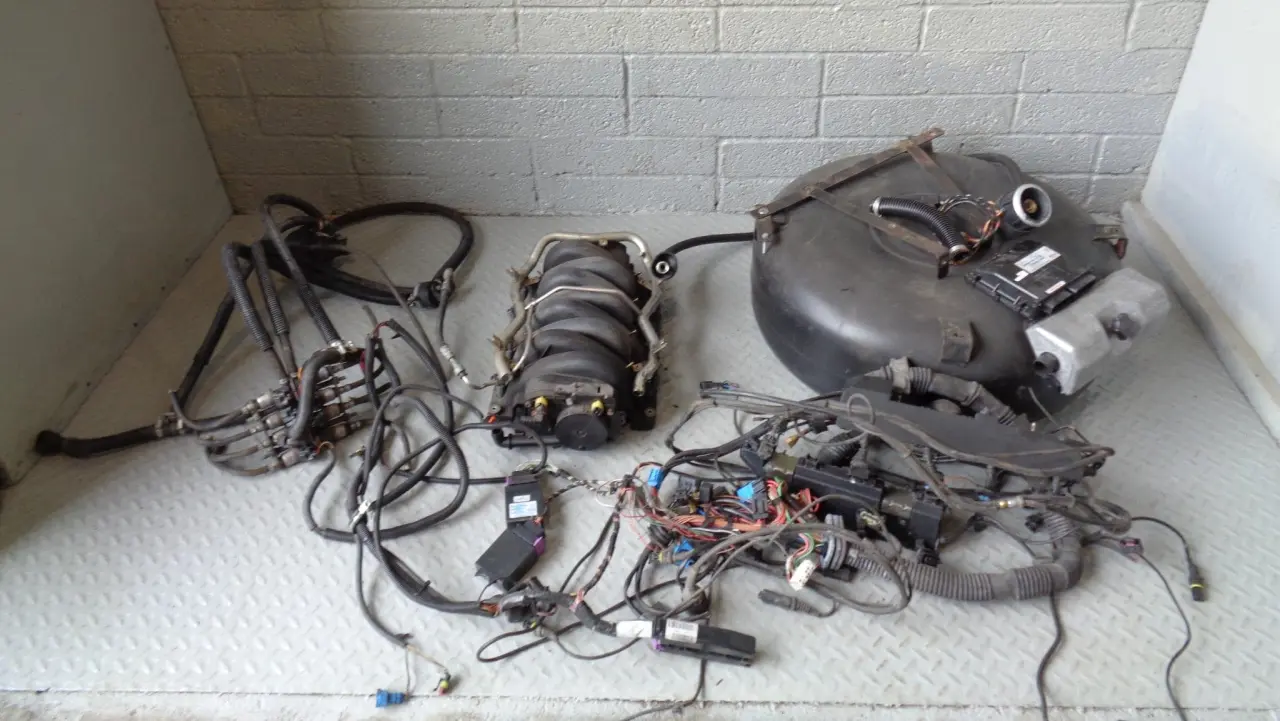
Before removing anything, the workshop should identify the complete LPG installation.
This normally includes:
-
LPG tank
-
Multivalve
-
Filling connection
-
LPG fuel line
-
Regulator/vaporiser
-
LPG injectors
-
LPG ECU
-
LPG switch or control panel
-
Pressure and temperature sensors
-
Electrical wiring
-
Connections to the original engine-management system
The installer should also determine how the LPG system was integrated with the original petrol system.
This is particularly important on sequential LPG systems because the LPG ECU may have been connected to petrol injector circuits and other engine-management signals.
The LPG Tank Is the Most Important Safety Issue
The tank should not be treated like an ordinary fuel container.
Even when the vehicle appears to be empty, an LPG tank can contain residual vapour. Official UK end-of-life vehicle guidance specifically warns that a tank can still contain residual gas vapour even after it has apparently been emptied. (GOV.UK)
For this reason, the tank should not simply be drilled, cut, welded or opened with ordinary workshop tools.
A safe removal process requires the LPG to be handled using equipment and procedures appropriate for LPG tanks.
Can the LPG Tank Simply Be Emptied?
No.
Simply driving the vehicle until the LPG gauge reaches empty does not mean the tank is gas-free.
Residual LPG vapour can remain inside the tank.
Professional removal therefore involves isolating the LPG system and dealing with the remaining fuel using appropriate equipment.
Official guidance for authorised end-of-life treatment facilities requires LPG to be removed using a system specifically designed for purging vehicle LPG tanks. It also requires appropriate controls for the area in which purging and flaring take place. (GOV.UK)
This is one of the strongest reasons why LPG tank removal should be left to qualified personnel.
Removing the LPG Tank
Once the tank has been safely isolated and the LPG has been dealt with, the physical tank removal can begin.
The workshop can then remove:
-
Tank retaining straps or brackets
-
Multivalve connections
-
LPG outlet connections
-
Filling connections
-
Electrical level-sensor wiring
-
Protective covers and associated components
The tank should then be moved to an appropriate safe-storage area.
For professional end-of-life treatment, official guidance also requires removed LPG tanks to be identified as having been purged and sent to an appropriately permitted facility. (GOV.UK)
Removing the LPG Fuel Line
The LPG line running between the tank and the engine compartment must also be removed if the conversion is being completely deleted.
The workshop should inspect the route of the line because it may have been installed underneath the vehicle.
Particular attention should be given to:
-
Mounting clips
-
Protective coverings
-
Connection points
-
Areas close to the exhaust
-
Body penetrations
-
Corrosion around mounting points
Once the LPG line has been removed, any holes or openings created during installation should be properly restored.
Removing the Regulator or Vaporiser
The regulator is normally installed in the engine compartment and is connected to both the LPG system and the engine cooling system.
When it is removed, the coolant connections must be restored correctly.
This is important because an LPG regulator may use engine coolant to vaporise LPG and maintain the required operating temperature.
After removing it, the original coolant circuit must be returned to a correct configuration.
The cooling system should then be checked for leaks and properly refilled and, where necessary, bled.
Removing LPG Injectors
If the vehicle has a sequential LPG system, LPG injectors may be installed near the intake manifold.
When the injectors are removed, the additional connections made to the intake system must be restored correctly.
This is particularly important because an improperly sealed injector port can create an intake-air leak.
An intake leak can cause:
-
Rough idle
-
Lean fuel trims
-
Poor throttle response
-
Misfires
-
Check-engine warnings
-
Increased fuel consumption
Simply pulling out an LPG injector and leaving an unsuitable opening is therefore not an acceptable restoration procedure.
Removing the LPG ECU
A complete LPG removal normally includes removing the LPG ECU and its associated wiring.
However, this part of the job requires particular care.
Some LPG installations interact with the original petrol injector circuits. Depending on the system, the LPG ECU may interrupt or modify signals between the vehicle ECU and petrol injectors.
The original petrol circuit therefore needs to be restored correctly.
The objective is not simply to remove every LPG wire. The objective is to return the original engine-management system to a correct electrical configuration.
Restoring the Petrol Injection System
This is one of the most important stages of the entire procedure.
If the LPG installation modified the petrol injector circuits, those connections must be restored according to the vehicle's original wiring arrangement.
The workshop should check:
-
Petrol injector wiring
-
ECU connections
-
Sensor wiring
-
Grounds
-
Power supplies
-
Relays
-
Fuel-pump control
-
Engine-management connectors
Incorrectly reconnecting the wiring can cause warning lights, misfires, injector faults or even a no-start condition.
Does the Original ECU Need to Be Reprogrammed?
Not necessarily.
There is no universal rule saying that every vehicle requires ECU reprogramming after LPG removal.
Many aftermarket LPG systems use a separate LPG ECU while leaving the original petrol ECU largely unchanged.
However, the situation depends on how the particular conversion was installed and whether the vehicle's original software or coding was modified.
If the original engine-management system was modified during the LPG conversion, the workshop may need to restore the appropriate configuration.
This should be determined from the actual vehicle and LPG installation rather than assumed.
What Happens to the LPG Filler Port?
If the LPG system is completely removed, the filling connection can also be removed.
The exact location depends on the installation.
It may have been installed:
-
In the bumper
-
Behind the fuel-filler flap
-
In the bodywork
-
In another protected area
If removing the filler connection leaves a hole in the bodywork, the opening should be properly restored and protected against water ingress and corrosion.
What Happens to the LPG Switch Inside the Vehicle?
The LPG petrol/gas switch and level indicator can be removed together with the LPG wiring.
The remaining hole in the dashboard or trim should be restored appropriately.
Leaving an unused switch and disconnected wiring behind is not the same as a complete system removal.
Checking the Petrol System After Removal
Once the LPG system has been removed, the vehicle should be tested exclusively on its original fuel.
The workshop should check:
-
Cold starting
-
Warm starting
-
Idle quality
-
Acceleration
-
Throttle response
-
Engine temperature
-
Fuel pressure
-
Injector operation
-
Oxygen-sensor operation
-
Short-term fuel trim
-
Long-term fuel trim
-
Diagnostic trouble codes
An OBD scan is particularly useful after the conversion has been removed.
Any new fault code should be diagnosed rather than simply erased.
Does the Vehicle Need a New Inspection?
This depends on the country.
There is no universal “European LPG removal inspection” that applies identically throughout Europe.
In some countries, returning a converted vehicle to its original configuration may require documentation, inspection or an update to the vehicle registration record.
In other situations, the removal may be treated as restoration to the manufacturer's original specification.
The owner should therefore contact the country's vehicle registration authority or an authorised inspection organisation before the work is completed, particularly if the LPG fuel type is recorded on the registration documents.
Updating Vehicle Registration Documents
The administrative part of LPG removal is important because the vehicle may still officially be recorded as LPG or bi-fuel after the physical system has been removed.
The registration document should accurately reflect the vehicle's actual configuration where national rules require this.
The procedure can involve:
-
Workshop documentation
-
LPG removal certificate
-
Technical inspection
-
Registration authority notification
-
Updated registration document
-
Insurance notification
The exact requirements depend on the country.
Example: United Kingdom
The UK provides a useful example of why the administrative stage matters.
The DVLA states that certain changes to a vehicle's recorded details must be reported, including changes to fuel type. Supporting evidence may be required when updating the vehicle record. (GOV.UK)
This means that the owner should not assume that physically removing the LPG system automatically updates the official vehicle record.
The vehicle should be restored correctly and the relevant registration information updated according to DVLA requirements.
Example: Other European Countries
In continental Europe, the exact procedure varies considerably.
Countries may have their own:
-
Vehicle registration authorities
-
Periodic inspection systems
-
Modification approval procedures
-
LPG conversion requirements
-
Type-approval rules
-
Workshop certification requirements
The European regulatory framework provides common technical foundations in several areas, but registration and inspection procedures remain dependent on national legislation.
For example, current European regulatory activity includes national procedures covering LPG conversion systems, their installation, restoration after removal and updating of vehicle registration documents. (TRIS)
Therefore, an LPG removal procedure suitable for one country should not automatically be assumed to satisfy the legal requirements of another.
Should the Insurance Company Be Notified?
The owner should also check the insurance requirements in the country where the vehicle is registered.
An LPG conversion can affect the vehicle's declared specification and risk profile. If the LPG system is removed, the insurer may need to be informed that the vehicle has returned to its original fuel configuration.
The exact notification requirements depend on the insurance policy and national rules.
Keeping the workshop invoice or removal documentation can be useful if the insurer or registration authority requests evidence.
What Happens to the Removed LPG Tank?
The removed tank should be handled appropriately.
It should not be treated as ordinary scrap while it may still contain LPG vapour.
For professional vehicle dismantling, the tank must be safely emptied and purged before being sent for appropriate recovery or disposal. Official UK guidance specifically requires purged LPG tanks to be identified and sent to suitable permitted facilities. (GOV.UK)
This is particularly important for damaged or heavily corroded tanks.
Can the LPG System Be Removed at Home?
For Europe, the safest general answer is no.
The most dangerous part of the job is not removing a bracket or unscrewing a component. It is safely dealing with LPG remaining inside the tank and fuel lines.
A professional workshop has the appropriate equipment and procedures for:
-
LPG recovery
-
Tank purging
-
Leak detection
-
Safe disconnection
-
Fuel-line removal
-
Electrical restoration
-
Cooling-system restoration
-
OBD diagnostics
Attempting to release LPG into the environment or opening a pressurised tank without the correct equipment can create a serious fire, explosion and frostbite hazard.
What Should the Final Inspection Include?
After the physical removal, the vehicle should be inspected as a petrol vehicle.
A good final inspection should include:
Fuel system:
The original petrol system should operate correctly without LPG-related interruptions.
Electrical system:
LPG wiring should be removed or correctly terminated, while the original wiring should remain intact.
Intake system:
Former LPG injector ports must be properly sealed.
Cooling system:
Regulator coolant connections must be restored correctly and the system checked for leaks.
Exhaust area:
Any LPG components or brackets installed near the exhaust should be removed safely.
Underbody:
LPG fuel lines, clips and mounting brackets should be removed and the bodywork inspected.
Diagnostic system:
The vehicle should be scanned for stored and active fault codes.
Road test:
The vehicle should be tested under normal driving conditions using only the original fuel.
Documents Worth Keeping After LPG Removal
The owner should keep any documentation generated during the process, such as:
-
LPG removal invoice
-
Workshop confirmation
-
Tank disposal or purging documentation where applicable
-
Inspection documentation
-
Updated registration documents
-
Insurance confirmation
These documents can be useful when selling the vehicle, changing registration, exporting it or demonstrating that the LPG system was professionally removed.
A Safe European LPG Removal Procedure
A sensible procedure can therefore be summarized as follows:
1. Check the national requirements.
Before removing the system, determine whether the country requires inspection, registration changes or workshop documentation.
2. Identify the complete LPG installation.
Locate the tank, multivalve, fuel lines, regulator, injectors, ECU, wiring and filler connection.
3. Safely deal with the remaining LPG.
Do not simply release LPG into the atmosphere. Use appropriate professional equipment and procedures.
4. Remove the tank and multivalve.
Only after the tank has been safely isolated and made suitable for removal.
5. Remove the LPG fuel line.
6. Remove the regulator, injectors and LPG ECU.
7. Restore the original petrol system.
Pay particular attention to injector wiring and any circuits modified during the LPG conversion.
8. Restore the intake and cooling systems.
9. Remove the LPG filler and interior controls.
10. Perform an OBD scan and mechanical inspection.
11. Test-drive the vehicle using petrol only.
12. Complete any required inspection or registration update.
The Most Important Point
Removing an LPG system from a European vehicle should be treated as both a technical restoration and, where applicable, a legal/administrative change.
The physical removal should be carried out by personnel who understand LPG systems, particularly the safe handling of residual LPG in tanks and fuel lines. Official guidance for end-of-life treatment confirms that even an apparently empty LPG tank can retain residual vapour and requires a dedicated removal and purging procedure. (GOV.UK)
After the hardware has been removed, the vehicle should be restored to a properly functioning original-fuel configuration. Depending on the country, the owner may then need to update the vehicle's registration documents, complete an inspection or provide workshop evidence.
The key point is that Europe does not have one single LPG-removal procedure. The technical safety principles are broadly consistent, but the registration, inspection and documentation requirements must be checked in the specific country where the vehicle is registered.